

Pan de Muerto Recipe: Tradition and Flavor in your Kitchen
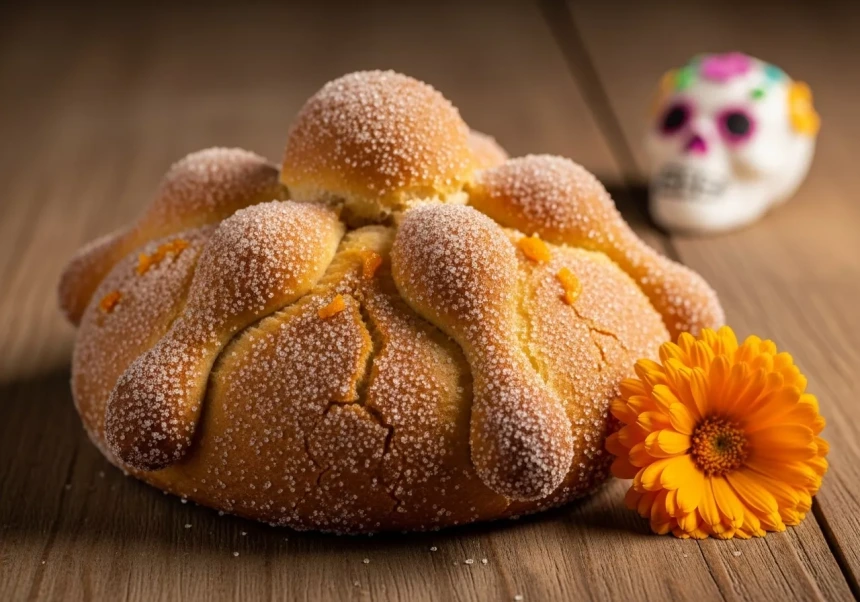
Hello! We are going to prepare a homemade and fluffy Pan de Muerto, that sweet Mexican bread with orange blossom and anise aroma that perfumes the air every autumn. This classic of the Day of the Dead tradition unites history, flavor, and family. You will learn how to make Pan de Muerto step by step, with simple ingredients and results worthy of an artisan bakery.
- Pan de Muerto Recipe: Tradition and Flavor in your Kitchen
- Preparation time
- Ingredients
- Utensils we will use
- Preparation
- 1. Activate the yeast
- 2. Mix the dough
- 3. Knead the mixture
- 4. First proofing
- 5. Shape the bread and decorations
- 6. Second proofing
- 7. Bake and finish
- To finish and serve
- Tips for a perfect Pan de Muerto
- Nutritional Information per serving
- When to enjoy Pan de Muerto
- Comparison with traditional Mexican breads
- Frequently asked questions about Pan de Muerto
Preparation time
Organize your time and enjoy this traditional recipe for fluffy and aromatic pan de muerto:
- Preparation: 30 minutes
- Cooking: 30 minutes
- Resting (proofs): 2 hours
- Total: 3 hours
- Servings: 2 medium loaves
- Difficulty: Intermediate
Ingredients
For the dough
- 3 cups (375 g) all-purpose wheat flour
- ½ cup (100 g) granulated sugar
- 2¼ teaspoons (1 sachet) of dry yeast active
- ½ teaspoon salt
- ½ cup (120 ml) warm milk (approx. 38°C)
- 2 large eggs
- 1 egg yolk (reserve the white for glazing)
- ½ cup (115 g) unsalted butter, softened
- 1½ teaspoons orange blossom water or zest of one orange
- ½ teaspoon ground anise (optional but traditional)
To glaze and decorate
- 1 egg white, lightly beaten
- 2 tablespoons melted butter
- ¼ cup granulated sugar
If you can't find orange blossom water, orange zest is an excellent alternative that provides that essential citrus aroma. Ground anise enhances the sweet and traditional flavor of this artisanal Mexican bread.
Utensils we will use
- Large bowl for mixing and proofing the dough
- Knife and cutting board for dividing the dough
- Spoon or spatula for incorporating ingredients
- Preheated oven or stove with oven
- Baking sheet with parchment or silicone paper
- Pastry brush for glazing the bread
Preparation
1. Activate the yeast
- Mix liquids: In a bowl, combine the warm milk, a tablespoon of sugar, and the dry yeast.
- Rest: Let rest for 10 minutes until the mixture foams, a sign that the yeast is active.
2. Mix the dough
- Combine dry ingredients: In another bowl, mix flour, sugar, salt, anise, and orange zest or orange blossom water.
- Integrate liquids: Add the yeast mixture, the eggs, the yolk, and the butter. Mix until a homogeneous dough is obtained.
3. Knead the mixture
- Knead: Work the dough for 10 minutes until it is smooth and elastic.
- Tip: Do not add more flour to preserve the moist and spongy texture.
4. First proofing
- Fermentation: Place the dough in an oiled bowl, cover with a cloth, and let rest for 1.5 hours until it doubles in size.
5. Shape the bread and decorations
- Divide the dough: Cut into two parts, one for the base and another for the “bones” and the “little ball”.
- Shape: Shape into a round form and flatten slightly. Place the cross-shaped decorations and a small ball in the center.
6. Second proofing
- Rest: Let the formed breads rest for 45 minutes until they almost double in size.
7. Bake and finish
- Brush: Brush with beaten egg white for shine.
- Bake: Bake at 175°C (350°F) for 25 to 30 minutes, until golden brown.
- Glaze: Upon removing from the oven, spread melted butter and sprinkle sugar to achieve its traditional sweet texture.
To finish and serve
Let cool for a few minutes before cutting. Enjoy your Artisanal Pan de Muerto with a café de olla or a champurrado hot. Its fluffy texture and orange and anise aroma will make this moment a celebration of Mexican flavor and tradition.
Tips for a perfect Pan de Muerto
- Use unsalted butter: Control the flavor and avoid excess salt.
- Don't rush the proofs: Prolonged resting improves fluffiness.
- Handle the dough well: If it's sticky, let it rest for a few minutes before continuing.
- Correct glazing: If it browns too quickly, cover it with aluminum foil.
- Final sugar: Sprinkle with butter while still hot for a crispy layer.
Nutritional Information per serving
- Calories: 320 kcal
- Proteins: 6 g
- Fats: 9 g
- Carbohydrates: 54 g
- Fiber: 1.5 g
Approximate values per serving, calculated according to a standard division of the recipe.
When to enjoy Pan de Muerto
The Bread of the Dead is the star of the Day of the Dead in Mexico, celebrated on November 1st and 2nd. It's also perfect for family gatherings or cold afternoons with a hot drink. Its sweet flavor, soft texture, and anise aroma make it the ideal companion for the season.
Comparison with traditional Mexican breads
| Recipe | Key ingredients | Difference / Advantage |
|---|---|---|
| Bread of the Dead | Flour, butter, anise, orange | Citrus-anise flavor with symbolic decoration |
| King's Cake | Flour, candied fruits, sugar | Fruits symbolizing the arrival of the Three Wise Men |
| Conchas | Flour, sugar, butter | Crunchy sugared topping |
| Black Mole Empanaditas | Flour dough, black mole, sugar | Salty-sweet filling, without fermentation |
| Pulque Bread | Flour, pulque, yeast | Natural fermentation with pulque |
| Calaveritas Cookies of cocoa | Cocoa, sugar, flour | Cookies for offering, intense chocolate flavor |
If you liked this traditional pan de muerto recipe, share it or leave your comment. Discover more authentic Mexican recipes at Flavors of My Kitchen.
Frequently asked questions about Pan de Muerto
1. Why is it called Pan de Muerto?
Pan de Muerto gets its name because it is a symbolic food for the Day of the Dead in Mexico. Its shapes represent bones and eternal life, and its orange blossom and anise aroma symbolizes the memory of loved ones who are no longer with us.
2. Can I substitute butter for margarine?
Yes, although the flavor and texture change slightly. Butter provides a softer crumb and a more intense aroma. If you use margarine, the bread will be a little less aromatic, but it is still a good homemade alternative.
3. What do the bones on Pan de Muerto symbolize?
The bones on top represent the remains of the deceased and the central ball symbolizes the skull. These elements evoke the cycle of life and death within the Mexican Day of the Dead tradition.
4. How long does Pan de Muerto stay fresh?
Pan de Muerto can stay soft for up to three days if stored in an airtight container at room temperature. You can also freeze it and heat it for a few minutes in the oven or a pan to restore its original texture.
5. Can I prepare the dough a day in advance?
Yes. You can refrigerate the dough after the first rise and continue the next day with shaping and baking. This slow fermentation enhances the aromas of anise, butter, and orange blossom, resulting in a more aromatic and fluffy bread.
6. What is the difference between Pan de Muerto and Rosca de Reyes?
Pan de Muerto has an anise and orange flavor, and is decorated with dough bones and sugar. Rosca de Reyes, on the other hand, has candied fruits and symbolizes the arrival of the Three Wise Men. Both are traditional festive breads in Mexico, but for different celebrations.