


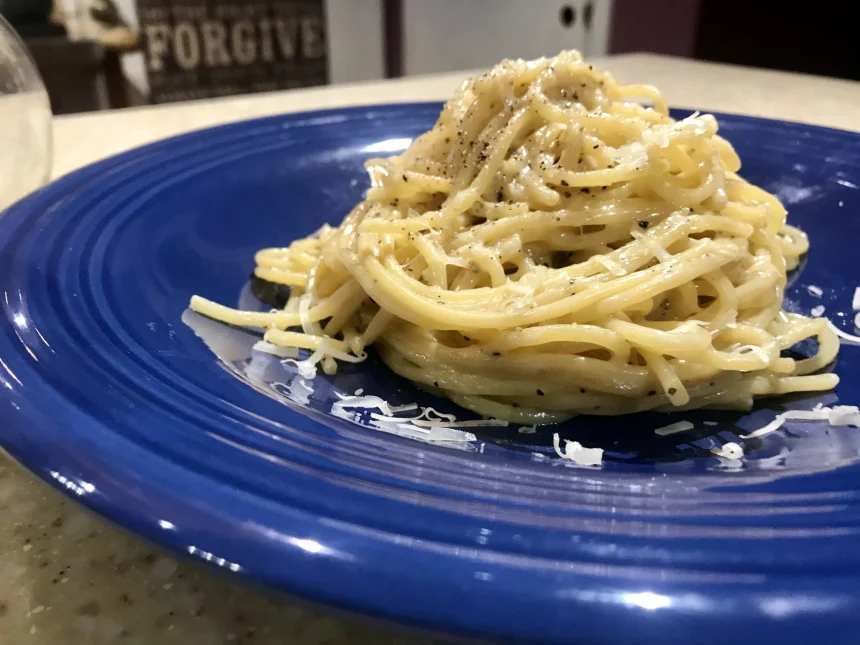
Cacio e Pepe Recipe
Hello! We are going to prepare one of the most emblematic and respected dishes of Roman cuisine. The secret of this pasta lies in creating an incredibly creamy sauce using only cheese, pepper, and cooking water, without the need for cream or butter.
Preparation time
Planning well is the first step to avoid mistakes, especially in recipes where temperature is crucial.
- Preparation: 5 minutes
- Cooking: 15 minutes
- Total: 20 minutes
- Servings: 4 people
- Difficulty: Intermediate (requires emulsion technique)
Ingredients
To achieve the true flavor of Rome, the quality of these few elements is fundamental. Don't skimp on the cheese.
- 400 g of spaghetti
- 200 g Pecorino Romano cheese (whole piece for grating)
- 2 teaspoons whole black peppercorns
- Salt (moderate amount, the cheese is already salty)
Substitution options
I know that sometimes finding authentic Pecorino Romano can be complicated. If you can't find it, you can use Parmesan or Grana Padano cheese, although the flavor will be milder and less salty than the recipe traditional. If you're looking for a different option for hot days, you might prefer to see how to make a pasta salad with spinach and walnuts, but if you stay here, try to use aged sheep's cheese to get closer to the original.
Utensils we will use
You don't need professional equipment, but you do need the right tools to handle the pasta and heat.
- Large pot for boiling water
- Large stainless steel or non-stick pan
- Fine grater (Microplane type is ideal)
- Kitchen tongs
- Mortar and pestle or pepper mill
- Cup or ladle to reserve water
How to make Cacio e Pepe
The key to this dish is not cooking, it's managing temperature and starch. Follow these steps carefully to achieve that silky texture.
Prepare the flavor base
- Grating the cheese: Grate the Pecorino Romano cheese very finely. The finer the cheese powder, the easier it will melt with the hot water to form a lump-free cream.
- Toasting the pepper: In a large pan over medium heat, toast the crushed or freshly coarsely ground black peppercorns. Move them constantly so they release their essential oils and the aroma intensifies. Do this until you smell the pungent aroma, being careful not to burn them to avoid bitterness.
- Grating the cheese: Grate the Pecorino Romano cheese very finely. The finer the cheese powder, the easier it will melt with the hot water to form a lump-free cream.
- Toasting the pepper: In a large pan over medium heat, toast the crushed or freshly coarsely ground black peppercorns. Move them constantly so they release their essential oils and the aroma intensifies. Do this until you smell the pungent aroma, being careful not to burn them to avoid bitterness.
Cooking the pasta
- Boil the water: Put a pot of water to boil. Use less water than usual (just enough to cover the pasta) so that the liquid becomes very concentrated in starch.
- Salting: Add salt to the boiling water, but sparingly. Remember that pecorino is a very salty and potent cheese.
- Cook the pasta: Add the spaghetti. Cook them for approximately half the time indicated on the package. We will finish cooking in the pan so that the pasta absorbs the pepper flavor.
- Boil the water: Put a pot of water to boil. Use less water than usual (just enough to cover the pasta) so that the liquid becomes very concentrated in starch.
- Salting: Add salt to the boiling water, but sparingly. Remember that pecorino is a very salty and potent cheese.
- Cook the pasta: Add the spaghetti. Cook them for approximately half the time indicated on the package. We will finish cooking in the pan so that the pasta absorbs the pepper flavor.
Create the emulsion
- Reserve water: Before draining, scoop out a generous cup of the starchy cooking water. This is liquid gold for our sauce.
- Combine pasta and pepper: Pour a ladleful of cooking water into the pan with the toasted pepper (be careful, it will splatter). Transfer the half-cooked spaghetti to the pan using tongs.
- Risotto the pasta: Continue cooking the pasta in the pan, adding cooking water little by little as if it were a risotto, stirring constantly to release the starch.
- Reserve water: Before draining, scoop out a generous cup of the starchy cooking water. This is liquid gold for our sauce.
- Combine pasta and pepper: Pour a ladleful of cooking water into the pan with the toasted pepper (be careful, it will splatter). Transfer the half-cooked spaghetti to the pan using tongs.
- Risotto the pasta: Continue cooking the pasta in the pan, adding cooking water little by little as if it were a risotto, stirring constantly to release the starch.
Final mantecado
- Lower temperature: When the pasta is al dente, remove the pan from the heat. It is vital to wait a few seconds for the temperature to drop; if it's too hot, the cheese will separate and become stringy.
- Add the cheese: Add the grated Pecorino little by little while vigorously shaking the pan and mixing with tongs. Add a splash more warm water if necessary.
- Achieve the cream: The friction and correct temperature will turn the cheese and water into a sauce creamy that coats each spaghetti.
- Lower temperature: When the pasta is al dente, remove the pan from the heat. It is vital to wait a few seconds for the temperature to drop; if it's too hot, the cheese will separate and become stringy.
- Add the cheese: Add the grated Pecorino little by little while vigorously shaking the pan and mixing with tongs. Add a splash more warm water if necessary.
- Achieve the cream: The friction and correct temperature will turn the cheese and water into a sauce creamy that coats each spaghetti.
To finish and serve
Once you see that the sauce has a shiny and dense consistency, serve immediately on hot plates. Sprinkle a little more freshly ground black pepper and an extra touch of cheese on top. This dish waits for no one; it must be eaten immediately to appreciate its perfect texture. If you have leftover cheese and want to try another successful combination, you can get inspiration from this shrimp and avocado pasta for your next dinner.
Nutritional Information
These values are estimates per serving to give you a reference of what this energetic dish provides.
- Calories: 450 kcal
- Proteins: 18 g
- Fats: 15 g
- Carbohydrates: 60 g
- Fiber: 3 g
Values may vary depending on the pasta brand and the aging degree of the cheese used.
5 keys to make it perfect
Cacio e Pepe seems simple due to its ingredients, but technique is what separates a mediocre dish from an excellent one. Here are my tips to ensure success.
First, the cooking water must be rich in starch. By using less water in the pot, we concentrate the starch released by the pasta. This starch acts as a natural glue that prevents the cheese from splitting and helps form that silky emulsion we're looking for. Without enough starch, you'll have cheese water, not a sauce.
Second, toasting the pepper is a game-changer. It's not the same to add ground pepper at the end as it is to activate it with heat. Heat awakens the oils in the grains and gives them a complexity and aroma that permeates the pasta from the very first moment.
Third, the cheese temperature. Never add the cheese with the heat on or with the water boiling vigorously. Pecorino coagulates at very high temperatures, turning into an impossible-to-eat rubbery mass. Removing the pan from the heat and letting it breathe for a few seconds before adding the cheese is the ultimate trick.
Fourth, the fine grating. If you leave large pieces of cheese, they will take longer to melt and require more heat, which increases the risk of the fat separating. We need almost a cheese powder that dissolves on contact with the warm water and pasta.
Fifth, the speed. Once you start mixing the cheese with the pasta, you can't stop. The vigorous movement creates friction, and that friction helps emulsify the cheese fat with the water. It's an arm workout, but it's worth it.
When is it ideal to enjoy it?
This dish is perfect for those nights when you need something comforting but don't have much time, or the fridge is almost empty. Its simplicity makes it ideal for a quick weeknight dinner, but its sophisticated flavor makes it an excellent choice for impressing guests at an impromptu gathering. Being a hearty and rich-flavored dish, it works very well as a main course or accompanied by a light salad to balance it out.
Comparison table
This recipe is often confused with other gems of Italian cuisine. Here I show you the differences so you know exactly what you are eating.
| Recipe | Key ingredients | Difference/advantage |
|---|---|---|
| Cacio e Pepe | Pecorino, Black Pepper, Pasta | Intense and spicy flavor, no egg or meat. |
| Carbonara | Egg, Guanciale, Pecorino, Pepper | Contains egg and cured meat, it is richer and heavier. |
| Aglio e Olio | Garlic, Olive Oil, Chili | Oil and garlic base, no cheese in the sauce. |
| Pasta alla Gricia | Guanciale, Pecorino, Pepper | Like Cacio e Pepe but with pork fat. |
| Fettuccine Alfredo | Butter, Parmesan | Uses a lot of butter and is smoother and sweeter. |
| Genovese Pesto | Basil, Pine Nuts, Garlic, Oil | Herbal and fresh base, very different in flavor profile. |
| Lemon Pasta | Lemon, Cream (sometimes), Parmesan | Citrusy and tart, ideal for summer. |
Frequently asked questions (FAQ)
Share your experience
Cooking is for experimenting and sharing. I'd love to know if you achieved that perfect emulsion on the first try or if you had to struggle a bit (it happens to all of us!). Leave your comment below and share your own tricks for mastering this Roman technique.
Culinary glossary
So you don't get lost with technical terms, here's a little help with the words we've used.
- Emulsion: Process of mixing two liquids that normally do not combine well (like fat and water) to create a homogeneous and creamy mixture.
- To cream/butter: Final technique of mixing the pasta with the sauce and cheese, shaking vigorously to achieve a cohesive and smooth texture.
- Al dente: Cooking point of pasta where it is cooked but still offers a slight resistance when bitten.
- Pecorino: Italian sheep's milk cheese, with a strong, salty, and spicy flavor, typical of the Rome area.
- Starch: Carbohydrate present in pasta that is released into the water during cooking and acts as a natural thickener for the sauce.




What a great idea this ‘Cacio e Pepe’ is. the recipe is very well explained. it's really worth it.
Impeccable texture and flavor this ‘Cacio e Pepe’ has. it turned out delicious, thanks for the tips.