


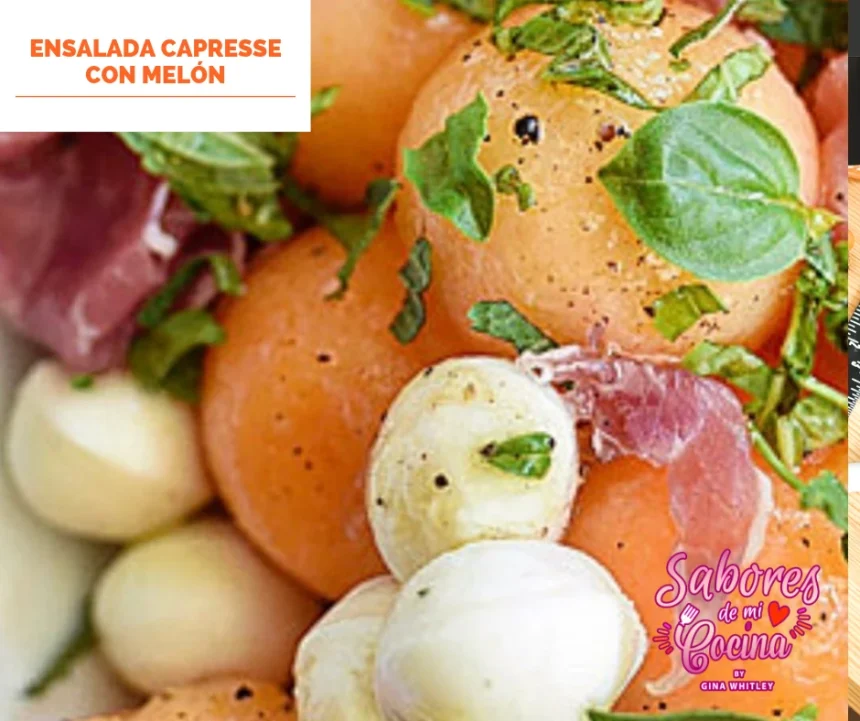
Refreshing Melon Caprese Salad Recipe
Hello! We're going to prepare a vibrant and juicy version of an Italian classic. This recipe combines the natural sweetness of two types of melon with the creaminess of cheese and a citrus dressing that changes everything. It's the perfect balance between sweet, savory, and acidic, ideal for when you're looking for absolute freshness without complications.
- Refreshing Melon Caprese Salad Recipe
- Preparation time
- Ingredients
- Utensils we will use
- Preparation
- Creation of the citrus vinaigrette
- Cutting and preparation of the fruit
- Assembling the base
- Dressed and final mix
- Incorporation of basil
- To finish and serve
- Nutritional Information
- 5 keys to make it perfect
- When is it ideal to enjoy it?
- Comparison table
- Frequently asked questions (FAQ)
- Share your experience
- Culinary glossary
Preparation time
Here's the exact breakdown to organize your time in the kitchen. It's a quick recipe, but requires attention to detail in the cutting.
- Preparation: 15 minutes
- Cooking: 0 minutes
- Total: 15 minutes
- Servings: 6 people
- Difficulty: Easy
Ingredients
The quality of the fruit is vital here. Look for melons at their exact point of ripeness to ensure the contrast of textures.
- 1 small Cantaloupe Melon
- 1 seedless mini Watermelon
- 8 ounces (225 g) Bocconcini (fresh mozzarella balls)
- 3 tablespoons fresh chopped Basil
For the lime and honey dressing
- 1/4 cup extra virgin Olive Oil
- 2 medium Limes (zest and juice)
- 2 tablespoons Honey
- 1/4 teaspoon black Pepper
- 1/2 teaspoon Salt
In case you can't find Cantaloupe melon, you can substitute it with Galia or Piel de Sapo melon, as long as it's sweet. If you can't find Bocconcini, buy a large fresh mozzarella ball and cut it into 2 cm cubes. For honey, agave syrup works as a vegan alternative.
Utensils we will use
You don't need sophisticated equipment, but these tools will make the dish visually appealing and well-mixed.
- Large bowl for mixing and serving
- Melon baller (Parisienne spoon) or sharp knife
- Fine grater (for the lime)
- Manual juicer or fork
- Small bowl or jug for the vinaigrette
- Small hand whisk or fork
- Cutting board
- Large spoon or silicone spatula
Preparation
Creation of the citrus vinaigrette
In a small bowl or jug, first place the honey and the juice of the two limes. Whisk vigorously until the honey is completely dissolved in the acid. Then, add the salt, black pepper, and lime zest. Finally, incorporate the olive oil in a thin stream (little by little) while continuing to whisk to achieve a stable emulsion. Set this dressing aside for the flavors to meld.
Cutting and preparation of the fruit
Wash the skin of the melons well before cutting them. Cut the Cantaloupe melon and watermelon in half. Remove the seeds from the Cantaloupe with a spoon. Using the melon baller, scoop out spheres from the pulp of both fruits. If you don't have this tool, cut the pulp into uniform cubes of approximately 2 to 3 centimeters. The important thing is that the size is similar to that of the bocconcini so that each bite is balanced.
Assembling the base
Place the melon and watermelon spheres (or cubes) in the large bowl. Drain the preservation liquid from the bocconcini and lightly pat them dry with kitchen paper if they are very wet. Add the cheese to the bowl with the fruit. It is crucial not to over-handle the fruit so that it doesn't release excess water prematurely.
Dressed and final mix
Pour the dressing you prepared earlier over the fruit and cheese mixture. With the help of a spatula or two large spoons, mix with gentle, enveloping movements. The goal is for each sphere to be shiny and covered by the vinaigrette without breaking the structure of the watermelon, which is more fragile.
Incorporation of basil
Just before finishing, add the 3 tablespoons of basil fresh chopped. It is preferable to chop it at the last moment to prevent it from oxidizing and turning black. Give a final light mix to distribute the herbs evenly throughout the salad.
To finish and serve
If you notice a lot of liquid has accumulated at the bottom of the bowl, you can drain a little before serving, although that juice is delicious. Serve the salad immediately to enjoy the contrast of temperatures if the ingredients were cold. Accompany it with some crispy bread toasts or serve it as a side dish for grilled fish. Sprinkle a few extra whole basil leaves on top for decoration.
Nutritional Information
- Calories: 228 kcal
- Proteins: 8 g
- Fats: 16 g
- Carbohydrates: 16 g
- Fiber: 1 g
Nutritional values are approximate estimates per serving and may vary depending on the brands of ingredients used.
5 keys to make it perfect
Making a fruit and cheese salad go from «good» to «memorable» depends on small technical details that we sometimes overlook. Here's how to elevate your dish.
1. Temperature is crucial.
Make sure both the melons and the cheese are very cold before starting. The magic of this dish lies in its refreshing capacity. If you cut the melon at room temperature, the texture will be less crisp and the contrast with the dressing will be lost. Keep the fruits in the fridge for at least 4 hours before cutting.
2. Cutting the basil.
Basil is a very delicate herb. If you chop it with a dull knife or crush it too much, it will oxidize quickly, turning black and bitter. Use a very sharp knife and apply the «chiffonade» technique (rolling the leaves and cutting thin strips) only seconds before serving. This preserves the bright green color and intense aroma.
3. Properly emulsifying the vinaigrette.
Don't just pour the oil and lemon over the fruit. By whisking the honey with the lime juice and then adding the oil, you create an emulsion that adheres to the melon spheres. If you don't, the oil will slide to the bottom of the plate and the fruit will only taste acidic. Honey acts as a stabilizer and balances the acidity.
4. Draining the cheese.
Bocconcini usually come in whey. If you add them directly from the package without drying them, they will water down your dressing. Take them out, put them in a colander, and gently pat them with absorbent paper. We want the dairy flavor to be pure and for the cheese to absorb the lime vinaigrette, not to add extra water.
5. Choosing melon by its weight.
To know if a melon is juicy and sweet without opening it, hold it in your hand. It should feel heavy for its size; this indicates it is full of water and sugar. Also, gently press the end opposite the stem; it should yield slightly and give off a sweet, floral aroma. If it's hard as a rock or doesn't smell like anything, it lacks ripeness and your salad will be bland.
When is it ideal to enjoy it?
This salad is the definition of summer on a plate, but its versatility goes beyond a simple quick lunch. It's perfect for whetting the appetite at a family barbecue, as its freshness cleanses the palate before heavier meats. It also works wonderfully as a single dish for a light dinner on hot nights when you don't want to turn on the stove.
Being visually colorful, it's an excellent option to bring to picnics or «potluck» gatherings where everyone brings a dish. Just remember to bring the dressing in a separate jar and mix it at the moment. If you like refreshing fruit combinations, you'll also love trying this cucumber, melon, and yogurt salad, which shares that hydrating essence ideal for sunny days.
Comparison table
Sometimes we confuse the original Caprese with its modern variants. Here I show you how our recipe compares to other popular options so you can choose the one that best suits your craving today.
| Recipe | Key ingredients | Difference/advantage |
|---|---|---|
| Caprese with Melon (This recipe) | Melon, Watermelon, Bocconcini, Lime | Sweeter and more refreshing, without tomato |
| Classic Caprese | Tomato, Mozzarella, Basil, Balsamic | Traditional salty and sour flavor |
| Watermelon and Feta Salad | Watermelon, Feta Cheese, Mint | More intense and salty flavor due to cured cheese |
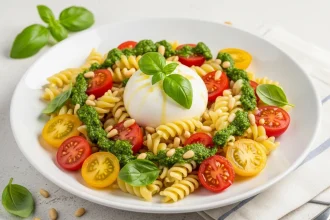
| Pasta, burrata and pesto salad | Pasta, Burrata, Pesto Sauce | More substantial, ideal as a main course |
| Fruit Salad | Mixed fruits, orange juice | Completely sweet, dessert without cheese |
| Hearts of palm and passion fruit salad | Hearts of Palm, Passion Fruit, Lettuces | Tropical touch and crunchy vegetable texture |
| Warm quinoa salad | Quinoa, Almonds, Cranberries | Warm and grain-rich option, more wintery |
Frequently asked questions (FAQ)
Share your experience
Cooking is for experimenting and sharing. Did you dare to try it with another type of fruit or did you give your personal touch to the dressing? Leave your comment and share your own findings! I'd love to read how it turned out for you.
Culinary glossary
Sometimes we use terms in the kitchen that we take for granted, but it's good to review them to understand exactly what we are doing.
- Bocconcini: Small balls of fresh mozzarella cheese, bite-sized or cherry tomato-sized, usually preserved in whey or salted water.
- Emulsify: The process of mixing two liquids that normally do not combine (such as oil and lime juice) by beating vigorously until a creamy and homogeneous mixture is achieved.
- Zest: The outermost colored part of citrus peel, which contains the most aromatic essential oils, not including the bitter white part.
- Chiffonade: Cutting technique for large leaves (such as basil or spinach) that involves stacking them, rolling them like a cigar, and cutting them into very thin strips.
- Melon baller (Parisienne): Kitchen utensil with a small hemispherical metal cup, used to extract balls of flesh from fruits or vegetables.
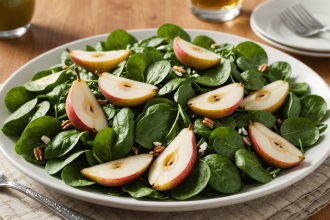
If you are interested in cutting and presentation techniques, take a look at the elegance of this caramelized pear salad, where visual detail also plays a fundamental role.
Perfect for sharing ✨.
I loved the combination of flavors. It was very generous and perfect for sharing.