

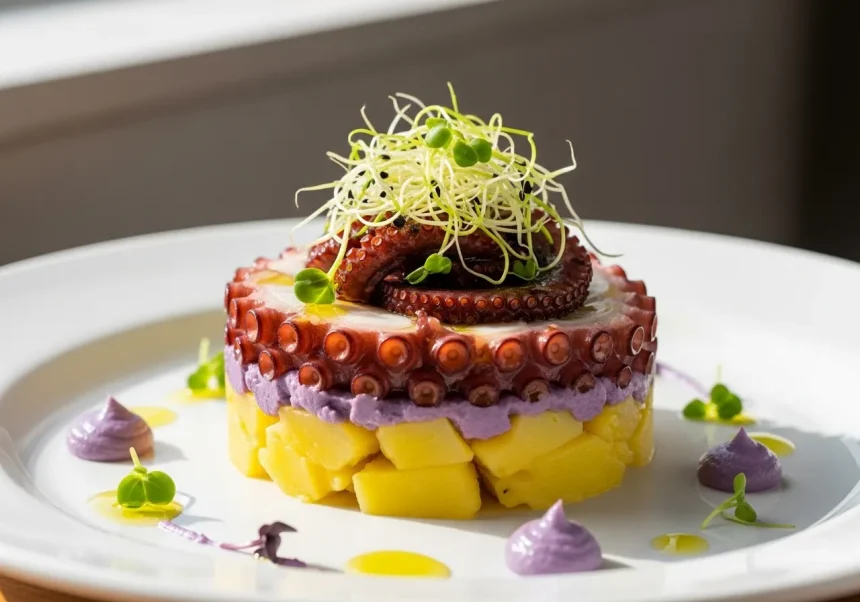
Recipe for Causa limeña with olive octopus
Hello! Let's prepare together a Causa Limeña. Don't be scared by the name, it's basically a Peruvian mashed potato, but full of flavor!, which we will fill with delicious octopus in olive cream. It's a fresh dish, eaten cold and perfect for surprising the family. It's a recipe that has passed from grandmothers' kitchens to the most modern restaurants, and today you'll learn to make it without complications.
- Recipe for Causa limeña with olive octopus
- Preparation time
- Ingredients
- Utensils we will use
- Preparation
- Phase 1: Cooking the bases
- Phase 2: The perfect dough
- Phase 3: The filling and assembly
- To finish and serve
- Nutritional Information
- 5 keys to make it perfect
- When is it ideal to enjoy it?
- Comparison table
- Frequently asked questions (FAQ)
- Share your experience
- Culinary glossary
Preparation time
To organize ourselves well, here is the time breakdown. Remember that Peruvian cuisine requires patience and care to achieve those intense flavors.
- Preparation: 30 minutes
- Cooking: 50 minutes
- Total: 1 hour and 20 minutes (plus refrigeration)
- Servings: 4-6 units
- Difficulty: Intermediate
Ingredients
The base of a good causa is the quality of the potato and the exact point of the chili. Here's what you need to succeed. If you like seafood dishes, such as shrimp stuffed scallops, you'll love this star ingredient.
For the Potato Dough (The Causa)
- 4 large yellow potatoes
- 2 tablespoons yellow chili paste
- 3 tablespoons vegetable oil
- Juice of 1 lime (or 2, if small)
- Salt to taste
For the Creamy Octopus Filling
- 200 g octopus (fresh or frozen)
- 4 tablespoons of mayonnaise
- 3 tablespoons black olive paste
- Salt and pepper to taste
For Decorating (Optional)
- Parsley or cilantro leaves
- Sliced black olives
- 1 hard-boiled egg (cooked)
Note on substitutions: If you can't find the yellow potato, which is ideal for its floury texture, you can use Yukon Gold potatoes. Ultimately, use white potatoes, but try to ensure they are not too watery. The yellow chili is key for color and aroma; you can find the paste in Latin stores. If it's impossible to find, an emergency trick is to blend half an orange bell pepper with a dash of oil and a pinch of chili powder or cayenne, although the flavor will change slightly. This same chili is used in emblematic dishes such as aji de gallina with parmesan and walnuts.
Utensils we will use
You don't need professional equipment for this appetizer. We are going to use basic tools that you surely already have in your drawers.
- A medium pot for cooking the potatoes
- A large pot for the octopus
- A large bowl or container for kneading
- A potato masher or a large, strong fork
- A blender (or hand blender/immersion blender)
- Tablespoon and kitchen knife
- Cutting board
- Glass dish or mold for assembly
Preparation
Let's go step by step. Follow the order and you'll see it's simpler than it seems. The key is to treat the product well, especially the octopus and the potato.
Phase 1: Cooking the bases
- Cook the potatoes. Wash the 4 potatoes very well under the tap to remove dirt, but leave the skin on. Put them in the pot, cover them with cold water, and add a good handful of salt. Bring them to medium-high heat. You'll know they're ready when, upon piercing them with a knife, it goes in and out smoothly, as if it were butter (approx. 40 minutes).
- Prepare and "scare" the octopus. While the potatoes boil, put unsalted water in the other pot over high heat. If the octopus is fresh, wash it well. When the water is boiling vigorously, hold the octopus by the head and submerge its tentacles in the water and remove them immediately. Repeat this 3 times. We call this «scaring» the octopus; it helps prevent the skin from detaching and makes the tentacles curl nicely. Then, leave it in the water and cook over medium heat for about 40-50 minutes. It should be tender when you pierce the thickest part of the tentacle. Drain and let cool.
Phase 2: The perfect dough
- Mash while hot. This is the secret! Take the potatoes out of the water. Carefully (use a cloth) peel them while they are still hot. If you wait for them to cool, the dough will be gummy or lumpy. Immediately pass them through the potato masher or mash them very well with a fork in the large bowl until you have a smooth purée. Let cool slightly for a few minutes.
- Season and knead. Add 2 tablespoons of yellow chili paste, lemon juice, 3 tablespoons of oil, and salt to taste to the warm purée. With clean hands, mix everything, kneading gently until the yellow color is uniform and the texture is soft and moldable. Taste the dough: it should have a balance between the acidity of the lemon and the sweet spiciness of the chili. Cover with a cloth and refrigerate for 15 minutes.
Phase 3: The filling and assembly
- Prepare the olive cream. Cut the already cold octopus into thin slices or small cubes (approx. 1 cm). In a separate bowl, mix the mayonnaise with the black olive paste until an intense and homogeneous purple color is achieved. If you have leftover mayonnaise or fresh ingredients, you could use them another day for a chickpea and cucumber salad.
- Integrate the filling. Incorporate the chopped octopus into the olive cream. Stir well so that each piece is impregnated with that delicious sauce. Adjust with a pinch of salt and pepper if necessary.
- Easy assembly in a dish. Take your dish. Divide the potato dough into two parts. Place the first half at the bottom and spread it with a spoon or your fingers until it covers the base. Pour all the filling of octopus al olivo on top and distribute it evenly. Cover with the second half of the potato dough, carefully smoothing the surface.
To finish and serve
Refrigerate the causa for at least 30 minutes before serving; this helps it compact and makes it easier to cut. When serving, cut neat squares. Decorate each portion with a slice of hard-boiled egg, a whole olive, and a small parsley leaf to give it visual freshness. Serve cold. You can accompany it with a refreshing drink or even after a main course like lomo saltado with soy for a 100% Peruvian menu.
Nutritional Information
Here are the approximate values per serving so you can consider what this dish contributes to your day.
- Calories: 350 kcal
- Proteins: 15 g
- Fats: 18 g
- Carbohydrates: 30 g
- Fiber: 4 g
Note: Values are estimates based on standard ingredients and may vary depending on portion size and brands used.
5 keys to make it perfect
As a private chef, I've seen many attempts at causa, and these are the details that make the difference between a lumpy dough and a silky one on the palate.
1. The potato temperature: I insist a lot on this because it is vital. Yellow potato has a lot of starch. If you press it cold, it becomes elastic and gummy. When done hot, the structure breaks easily and you get that sandy and smooth puree characteristic of Lima cuisine.
2. The octopus's doneness: Do not let it boil forever. Pierce it at 40 minutes. If the fork goes in, take it out. If it's overcooked, paradoxically it becomes hard again or the skin falls apart, losing that pleasant texture when biting.
3. Acidity balance: The causa should not taste only of lemon, nor only of potato. You must keep tasting the dough. Lemon lightly «cooks» the potato and gives it freshness, but if you overdo it, you will overpower the delicate flavor of the yellow chili.
4. Oiled hands: When assembling, the dough can be a bit sticky. An infallible trick is to put a few drops of oil on the palms of your hands before handling it. This way you can smooth the surface of the causa without it sticking to your fingers.
5. Cold rest: Even if you're hungry, give it that fridge time. The cold makes the fat from the mayonnaise and the oil from the dough firm up, allowing for clean, professional cuts, almost like a cake.
When is it ideal to enjoy it?
Causa de pulpo al olivo (Octopus with olive causa) is an extremely versatile dish, but it shines on hot days. Served cold, it is the appetizer or perfect appetizer for a summer lunch on the terrace or in the garden. It's a dish that invites sharing, very typical at family gatherings or national celebrations in Peru.
It also works wonderfully for elegant dinners where you want to serve something sophisticated but can prepare it in advance, leaving you free time to get ready and receive guests. If you're looking for a dessert that matches this elegance to close the evening, a red fruit pavlova would be the ideal finishing touch.
Comparison table
To better understand where our recipe fits in the universe of causas and cold dishes, here's a quick comparison.
| Recipe | Key ingredients | Difference/advantage |
|---|---|---|
| Octopus with Olive Causa | Octopus, black olive, mayonnaise | Intense, sophisticated flavor and unique purple color. |
| Chicken Causa | Shredded chicken breast, mayonnaise, celery | Softer, classic, and economical. |
| Tuna Causa | Canned tuna, chopped onion | The quickest and easiest to prepare. |
| Shrimp Causa | Shrimp tails, golf sauce | Sweet seafood touch, visually pink. |
| Classic Ceviche | Raw fish, lime, red onion | It «cooks» in acid, does not contain potato mash. |
| Tiradito | Sliced fish, chili cream | Without onion, sashimi-like texture with sauce. |
| Papa a la Huancaína | Sliced cooked potato, cheese and chili sauce | The potato goes whole, not mashed, and bathed in sauce. |
Frequently asked questions (FAQ)
Share your experience
Did you dare to prepare this causa at home? Tell us how it turned out! Did you add any secret ingredients? Did you try it with tuna or shrimp? We love to learn from your experience. Cooking is for experimenting and sharing. Leave your comment and share your own little tricks! And if you have room for something sweet, you might want to check out how to make some delicious sweet empanadas for the afternoon.
Culinary glossary
So you can move like a fish in water in Peruvian cuisine, here are some terms we use today:
- Shock: Technique of repeatedly dipping and removing the octopus from boiling water before finally cooking it. This prevents the skin from breaking and helps the tentacles curl aesthetically.
- Potato ricer: Kitchen utensil similar to a giant juicer, designed to mash cooked potatoes and turn them into purée or fine threads without needing to beat them.
- Ají Amarillo: Variety of Peruvian chili (Capsicum baccatum) with a bright orange color, medium spiciness level, and fruity flavor, essential in Peruvian cuisine.
- Plating: The act of placing food on the plate (or platter) in an organized and decorative way before serving it to diners.
- Olive sauce: Emulsion made from black olives (generally of the botija variety) blended with oil and/or mayonnaise, resulting in a purple and flavorful cream.



Perfect for sharing ❤️. It saved me time and was delicious.
Perfect for sharing . the recipe is very well explained.
Perfect for sharing this ‘Causa limeña with olive octopus’ . it reminded me of a version I tried on a trip.