

Caldillo Durangueño Recipe
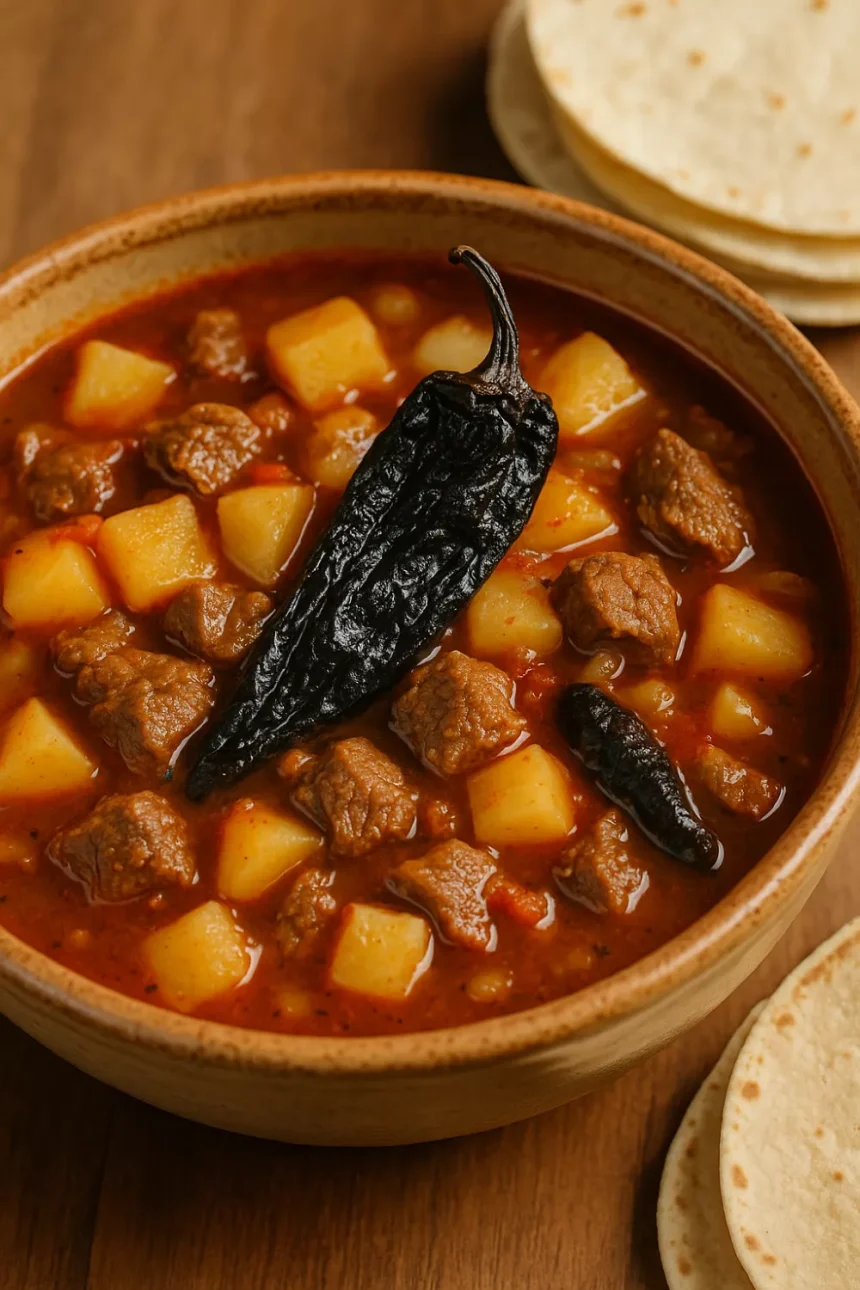
This traditional dish from Durango stands out for its strong and comforting flavor, ideal for sharing with family. The Caldillo Durangueño combines simple ingredients that are easily found and offers a meat broth with the characteristic touch of guajillo chili and tomatoes, reflecting the authenticity of the Mexican gastronomy and the Durango culture. Learning to prepare it at home is a simple way to bring a piece of this regional dish to your table.
- Caldillo Durangueño Recipe
- Preparation time
- Ingredients
- Utensils we will use
- Preparation
- 1. Prepare the ancho chilies
- 2. Cook the meat
- 3. Prepare the sofrito
- 4. Prepare and add the chili puree
- 5. Final cooking
- To finish and serve
- Nutritional Information
- 5 keys to make it perfect
- When is it ideal to enjoy it?
- Comparison with similar recipes from Mexican gastronomy
- Frequently asked questions about Caldillo Durangueño
- Share your experience
- Culinary glossary
Preparation time
To better organize your time in the kitchen, here are the approximate times needed to prepare this dish so appreciated in Durango.
- Preparation: 25 minutes
- Cooking: 60 minutes
- Total: 85 minutes
- Servings: 4
- Difficulty: Intermediate
Ingredients
For the broth
- 4 ancho chilies
- 2 tablespoons of safflower, corn, or olive oil
- 450 grams lean beef, cut into 1.3 cm cubes
- 1 medium white onion, finely chopped
- 2 medium garlic cloves, finely chopped
- 4 medium tomatoes, peeled and finely chopped
- ½ teaspoon dried oregano (preferably Mexican), crumbled
- ¼ teaspoon dried thyme
- 1 can of 414.5 grams beef broth
- Salt and freshly ground black pepper to taste
- Lime wedges for serving
If you don't have ancho chilies, you can substitute them with guajillo chilies, maintaining the traditional flavor with a slight variation in intensity. The jitomate can be replaced by ripe red tomato in the same amount, peeled to avoid rough textures.
Utensils we will use
- Large heavy-bottomed pot or casserole
- Pan for toasting chilies
- Small colander for washing vegetables
- Cutting board and sharp kitchen knife
- Blender for chili puree (can be substituted with a manual grinder or large spoon for mashing)
- Wooden spoon or spatula
- Container for soaking chilies
Preparation
1. Prepare the ancho chilies
- Cut and clean: Open the chilies lengthwise and remove stems, seeds, and veins to avoid bitterness or excessive spiciness.
- Toast: In a dry pan, place the chilies over medium heat. Flip them with a spatula and press lightly for approximately 1 to 2 minutes until they release aroma but without burning.
- Soak: Place the chilies in a container and cover them with hot tap water. Let them soak for 20 to 25 minutes to soften them before blending.
2. Cook the meat
- Heat oil: In the pot, add the chosen oil and heat over medium heat.
- Brown the meat: Add the beef cubes and stir constantly so they brown on all sides, approximately 8 to 10 minutes.
- Reserve: Remove the meat and store it in a bowl to add later.
3. Prepare the sofrito
- Sauté onion: In the same pot, add the onion and cook until transparent and soft, about 3 to 4 minutes.
- Add garlic: Add the minced garlic and cook one more minute to release its aromas.
- Add tomato and herbs: Add the chopped tomatoes, oregano, and thyme. Cook until the tomatoes reduce their juice and the mixture thickens slightly, between 4 and 5 minutes.
4. Prepare and add the chili puree
- Blend chilies: Drain the chilies and discard the soaking water. Place them in the blender along with ½ cup of beef broth and process until you get a mixture as homogeneous as possible.
- Add to the pot: Add the chili puree to the pot with the sofrito and mix well.
- Add meat and broth: Return the browned meat to the pot and pour in the rest of the beef broth.
5. Final cooking
- Boil and reduce heat: Bring the mixture to a boil, then reduce to medium-low heat.
- Cover and simmer: Cook covered, stirring occasionally, for approximately 1 hour or until the meat is tender and juicy.
To finish and serve
Adjust the seasoning with salt and pepper before removing. Serve the broth very hot accompanied with fresh lemon slices for those who like to add a sour touch. You can accompany it with corn tortillas or rustic bread to help intensely enjoy the broth. The Caldillo Durangueño is perfect for a typical meal that connects with the essence of Durango and its appreciated Mexican gastronomy.
Nutritional Information
- Calories: 380 kcal
- Proteins: 35 g
- Fats: 18 g
- Carbohydrates: 12 g
- Fiber: 4 g
Approximate values per serving of this traditional recipe.
5 keys to make it perfect
Achieving an Caldillo Durangueño ideal depends on some basic but fundamental details:
1. Selection of chilies: Use good quality, dry ancho chilies, not moistened or old, for a cleaner and deeper flavor.
2. Toasting control: Toasting the chilies just until they release their aroma without burning them prevents the broth from becoming bitter and the color from being too dark.
3. Fresh tomato pulp: The tomato must be well ripe to provide natural sweetness that balances the chili's spiciness.
4. Slow cooking: Cooking over low heat and covered enhances the tenderness of the meat and concentrates the flavors without losing moisture.
5. Adjust the texture: If the broth is too thick, add a little more beef broth to maintain the light consistency typical of the regional caldillo.
When is it ideal to enjoy it?
The Caldillo Durangueño it is a very suitable option for cool days or family celebrations where typical food is enjoyed, as its flavor and texture comfort and fill with tradition. It is common for breakfasts or hearty meals and is an emblematic regional dish that invites one to remember the culture of Durango.
Comparison with similar recipes from Mexican gastronomy
Although caldillo shares similarities with some stews and broths in the country, its differences make it unique within Mexican gastronomy:
- Durango-style Caldillo: uses ancho chili, tomato and beef; it is a mild broth with an earthy and subtly spicy flavor.
- Chili con carne: generally includes beans and is thicker; it usually has a spicier and more robust flavor.
- Tortilla soup: uses fried tortilla strips, tomato and chilies; the texture is creamier and a bit crispy. You can discover more in this tortilla soup recipe.
- Stewed meat: drier and spicier, with less broth but a similar meat base.
- Soup of guajillo chili: similar but with a distinct spiciness and exclusive use of guajillo, instead of ancho.
- Traditional beef broth: includes large bones and vegetables, lighter in spices.
Frequently asked questions about Caldillo Durangueño
Share your experience
Cooking always invites experimentation and improvement. Share your experience preparing the Caldillo Durangueño, how your broth turned out, if you tried any variations or accompaniments. The Mexican gastronomy grows with every voice and homemade recipe.
Culinary glossary
- Toast: To cook a dry food in a pan to intensify its aroma and flavor without burning it.
- Soak: To leave a food in water to hydrate or soften it before cooking.
- Sofrito: Mixture of slowly cooked ingredients, which serves as a base for broths and stews.
- Blend: To crush ingredients with a blender or food processor to make a puree or sauce.
- Beef broth: Liquid resulting from boiling meat and bones, used as a base in many recipes.




I was surprised by the flavor .
I tried it today. It was a total success with my family. Thanks for sharing.
The flavor surprised me. It turned out delicious, thanks for the tips. I added a light salad and it elevated the flavor.