


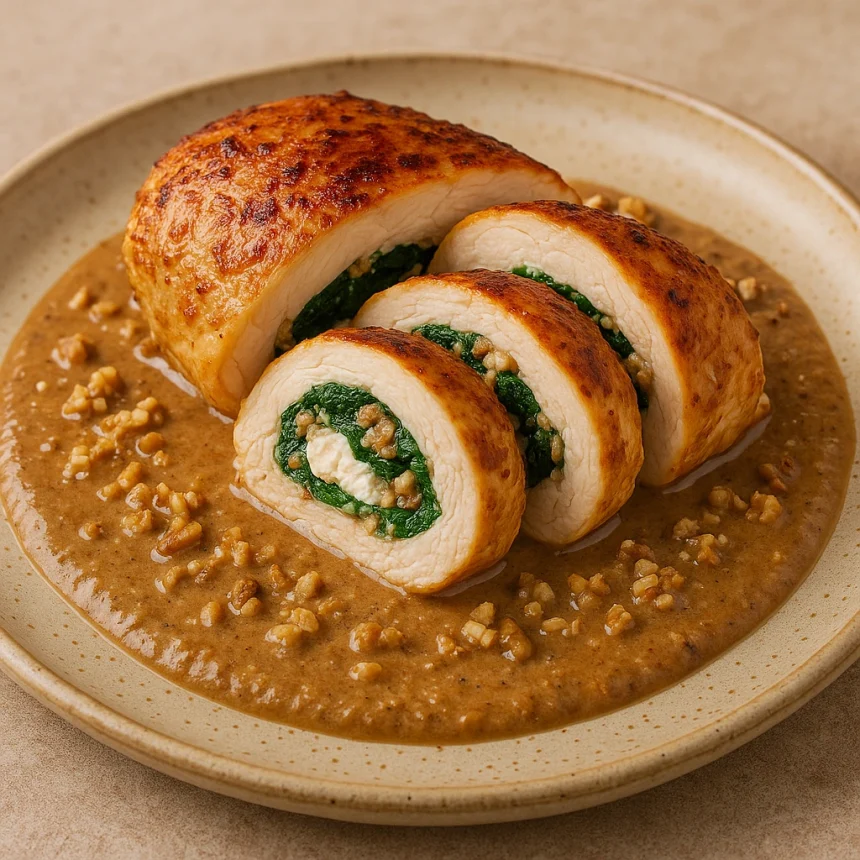
Recipe for Chicken breast stuffed with spinach, goat cheese and walnut in nut sauce: A creamy delight
Hello! Today we are going to prepare a dish that always triumphs at my table and combines incredible textures. The stuffed chicken breast is a classic, but by adding the intensity of the goat cheese, the crunchy touch of the walnut and bathing it all in a nut sauce, we elevate it to another level. It's a comforting recipe, full of flavor and perfect to show you that elegant cooking can also be done at home without complications. Let's get to work!
- Recipe for Chicken breast stuffed with spinach, goat cheese and walnut in nut sauce: A creamy delight
- Preparation time
- Ingredients
- Utensils we will use
- Step-by-step preparation
- Preparation of the stuffing (Mise en place)
- Cutting and stuffing the chicken
- Sealing the meat
- Preparation of the nut sauce
- Final Cooking
- To finish and serve
- Nutritional Information
- 5 keys to make it perfect
- When is it ideal to enjoy it?
- Comparison table
- Frequently asked questions
- Share your experience
- Culinary glossary
Preparation time
Getting organized is key in the kitchen. Here's the breakdown so you can plan your time and enjoy the process without rushing.
- Preparation: 25 minutes
- Cooking: 30 minutes
- Total: 55 minutes
- Servings: 4 people
- Difficulty: Intermediate
Ingredients
To achieve that authentic and balanced flavor, we need quality ingredients. Don't worry, they are easy to find.
For the chicken and the stuffing
- 4 boneless, skinless chicken breasts (approx. 180g each)
- 200g of spinach fresh (washed and dried)
- 150g of goat cheese (log or soft)
- 50g of shelled and roughly chopped walnuts
- 1 finely chopped garlic clove
- Salt to taste
- Freshly ground black pepper
- 2 tablespoons of extra virgin olive oil
For the nut sauce
- 200ml of whipping cream (liquid cooking cream)
- 100ml of chicken broth (homemade or quality)
- 50g of walnuts
- 30g of shelled almonds (unsalted)
- 1 small white onion, chopped
- 1 splash of white wine (optional)
- 1 tablespoon of butter
- Nutmeg (a pinch)
If you are interested in seeing other classic variations before starting with this gourmet version, you can check out this base recipe for stuffed chicken breasts to inspire you with alternative fillings.
Substitution options: If you can't find goat cheese, you can use cream cheese Philadelphia type or feta cheese, although the flavor will be less intense. For the sauce, if someone is allergic to nuts, you can use cashews (previously soaked) to add creaminess, although it will change the original «nutty» flavor profile.
Utensils we will use
You don't need professional equipment, your kitchen basics are enough.
- Sharp knife (chef's or boning type)
- Cutting board (preferably plastic for chicken)
- Large non-stick pan
- Small pot or saucepan (for the sauce)
- Blender or hand food processor
- Wooden toothpicks or kitchen twine
- Kitchen tongs
Step-by-step preparation
Let's cook calmly. Follow these steps and you'll see that the result is spectacular.
Preparation of the stuffing (Mise en place)
The first thing is to have the filling ready. In a pan with a little oil over medium heat, lightly brown the garlic clove. Add the spinach fresh. At first they will seem like a lot, but in two minutes they will drastically reduce their volume. Cook only until they wilt. Remove from heat and drain any excess liquid well (this is vital so that the filling does not become watery).
In a bowl, mix the already warm spinach with the goat cheese crumbled and chopped walnuts. Add a pinch of pepper. Do not add too much salt here, as goat cheese is usually salty. Set aside.
Cutting and stuffing the chicken
Place the breast on the cutting board. With the knife parallel to the board, make a longitudinal cut in the thickest part without going all the way through, opening it like a book (butterfly cut). Season the inside and outside of the meat with salt and pepper.
Place a generous portion of the spinach, cheese, and walnut mixture in the center. Close the breast and secure the opening with crossed wooden toothpicks or tie it with kitchen twine so that the filling does not escape during cooking.
Sealing the meat
Heat the large skillet with olive oil over medium-high heat. When hot, place the breasts. Let them brown well on each side, about 4 or 5 minutes per side. We are looking for an appetizing golden color and to create a flavorful crust. Don't worry if they are not completely cooked through yet, they will finish cooking in the sauce.
Preparation of the nut sauce
While the chicken rests for a moment, we will use another pot (or the same clean skillet if you prefer to take advantage of the juices, though be careful with burnt bits). Melt the butter and sauté the chopped onion until transparent. Add the walnuts and almonds to lightly toast them (this releases their essential oils).
Pour in the splash of white wine and let the alcohol evaporate for a few seconds. Then, add the chicken broth and heavy cream. Let it cook over low heat for 5 minutes.
Transfer this mixture to the blender cup and blend until a fine and creamy texture is obtained. If you like it more rustic, blend for less time. Return the nut sauce to the skillet over low heat and season with salt, pepper, and a pinch of nutmeg.
Final Cooking
Place the seared breasts into the hot sauce. Cover the skillet and let it cook over low heat for about 10-12 minutes. The time will depend on the thickness of the chicken. The sauce will thicken and the chicken will absorb those walnut and cream aromas.
To finish and serve
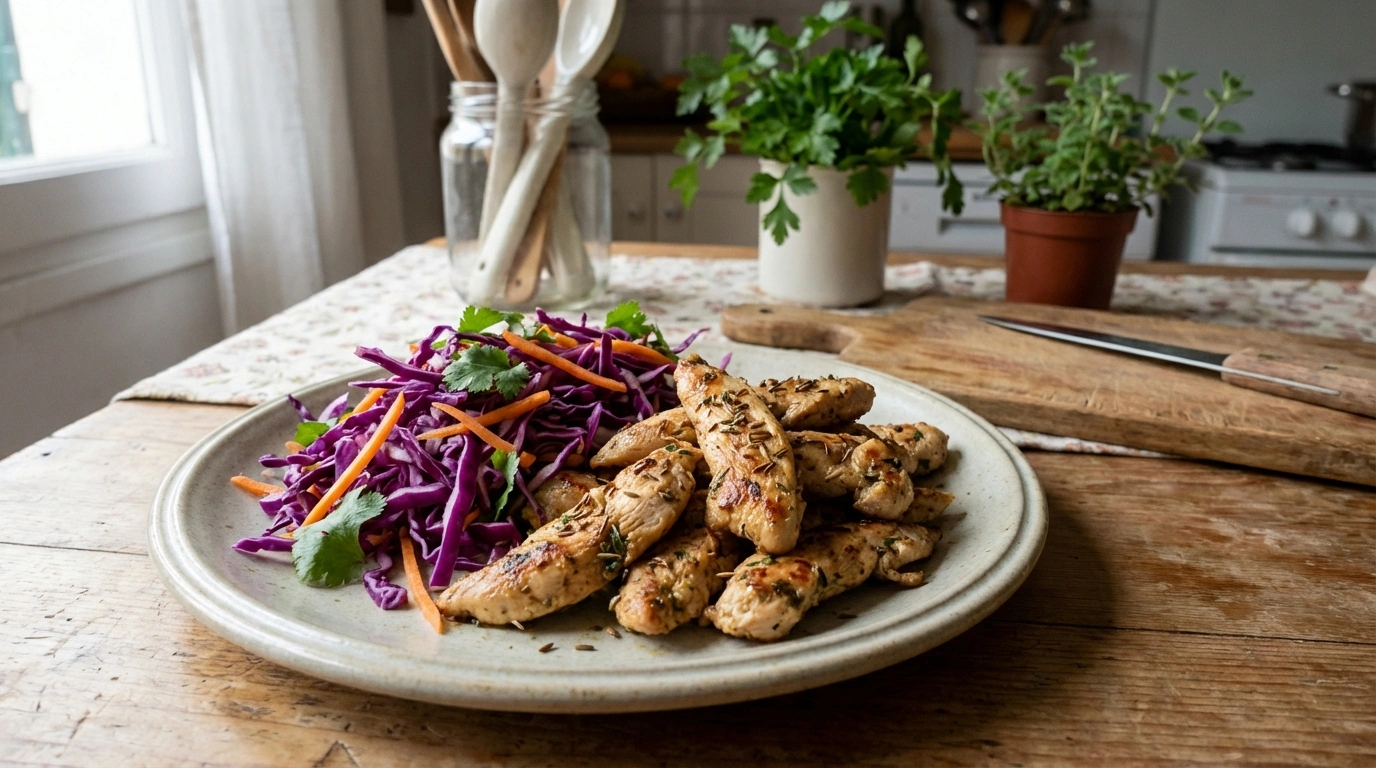
Once the chicken is cooked (it should feel firm to the touch but juicy), remove it from the heat. It is essential to remove the toothpicks or kitchen twine before serving to avoid accidents. Cut each breast into diagonal slices to show the beautiful green and white filling. Serve immediately, generously drizzling with the nut sauce hot. To balance the creaminess of the dish, I suggest serving it with something fresh and crispy, such as a endive and fennel salad, which wonderfully cleanses the palate.
Nutritional Information
These values are estimates per serving so you have a reference of what you are consuming.
- Calories: 580 kcal
- Proteins: 42 g
- Fats: 45 g
- Carbohydrates: 8 g
- Fiber: 3 g
Note: Values may vary depending on the brand of dairy products and the size of the chicken breasts used.
5 keys to make it perfect
Sometimes, small details make the difference between a good dish and an unforgettable one. Here are my secrets:
- Dry the spinach well: If you leave water in the sautéed spinach, the filling will release liquid inside the chicken, watering down the sauce and boiling the meat from the inside instead of keeping it juicy.
- Toast the nuts: Before making the sauce or filling, passing the walnuts through a hot pan without oil for a few seconds intensifies their nutty flavor. If you like intense flavors, I recommend trying this technique also if you make a side dish like the pumpkin risotto with walnuts.
- Room temperature: Take the goat cheese out of the fridge about 20 minutes beforehand. It will be much easier to mix with the spinach and will result in a more homogeneous paste.
- Don't overcook: Chicken breast dries out quickly. If you have a thermometer, aim for an internal temperature of 74°C. If not, trust the timings and the final gentle heat in the sauce.
- Sauce balance: If the sauce is too thick after reducing, add a splash more broth or milk. If it's too thin, let it simmer uncovered for a couple more minutes.
When is it ideal to enjoy it?
This stuffed chicken breast is a gastronomic chameleon. Due to its elegant presentation when sliced, it is ideal for an anniversary dinner or a Christmas celebration where you don't want to slave away in the kitchen all day. However, by using accessible ingredients, it also fits perfectly into a family Sunday where you want to give them an extra treat. It's a hearty dish, so in summer you might prefer to serve it with just a light salad, while in winter it goes wonderfully with mashed potatoes or rice.
Comparison table
We often confuse similar recipes. Here I show you how our recipe today differs from other popular options so you can choose the one you fancy the most.
| Recipe | Key ingredients | Difference/advantage |
|---|---|---|
| Stuffed Chicken (Our recipe) | Spinach, Goat cheese, Walnut | Intense flavor and crunchy texture from the walnut |
| Chicken Cordon Bleu | Ham, Swiss cheese, Breaded | It's fried and breaded, crispier on the outside |
| Chicken Florentine | Spinach, White sauce, Parmesan | The chicken is usually not stuffed, but covered in sauce |
| Caprese Chicken Breast | Tomato, Mozzarella, Basil | Fresher and lighter, without heavy sauces |
| Chicken Kiev | Herb butter, Garlic | Liquid butter filling that explodes when cut |
| Chicken stuffed with dried fruits | Dried apricots, Plums, Pine nuts | Sweet and savory profile, very typical of Christmas |
| Chicken rolls with vegetables | Carrot, Zucchini, Pepper | Lighter and more colorful option for daily |
If you like the combination of sweet and savory ingredients as in Christmas options, you might be interested in trying this caramelized pear and blue cheese salad as a starter.
Frequently asked questions
Share your experience
Cooking is for experimenting and sharing. I'd love to know how this stuffed breast turned out for you. Did you go for the goat cheese or use a milder variant? What did you serve with the sauce? Leave your comment below and share your own little tricks so we can all learn together! And if you're craving something sweet to finish this special meal, some cocoa cookies could be the perfect ending.
Culinary glossary
Sometimes we use terms that sound strange but are simple actions. Here I explain today's:
- Butterfly cut: A cutting technique to open a thick piece of meat (like a breast) in half without fully separating it, making it flat and with double the surface area, resembling an open butterfly.
- Sear: Briefly cook the meat over high heat on the outside to brown it and create flavor, without intending to cook it through at that moment.
- Reduce: Let a sauce or liquid boil uncovered so that the water evaporates, the flavor concentrates, and the texture thickens.
- Plating: The action of aesthetically and neatly arranging food on a plate before serving it at the table.
- Mise en place: French term meaning «placed in its spot.» It refers to having all ingredients measured, cut, and ready before starting to cook.



What a great idea this ‘Chicken breast stuffed with spinach, goat cheese, and walnuts in nut sauce’ is. It was very yielding and perfect for sharing.
Perfect for sharing .
Very practical and tasty. I prepared it yesterday and it was spectacular. What a great guide.