


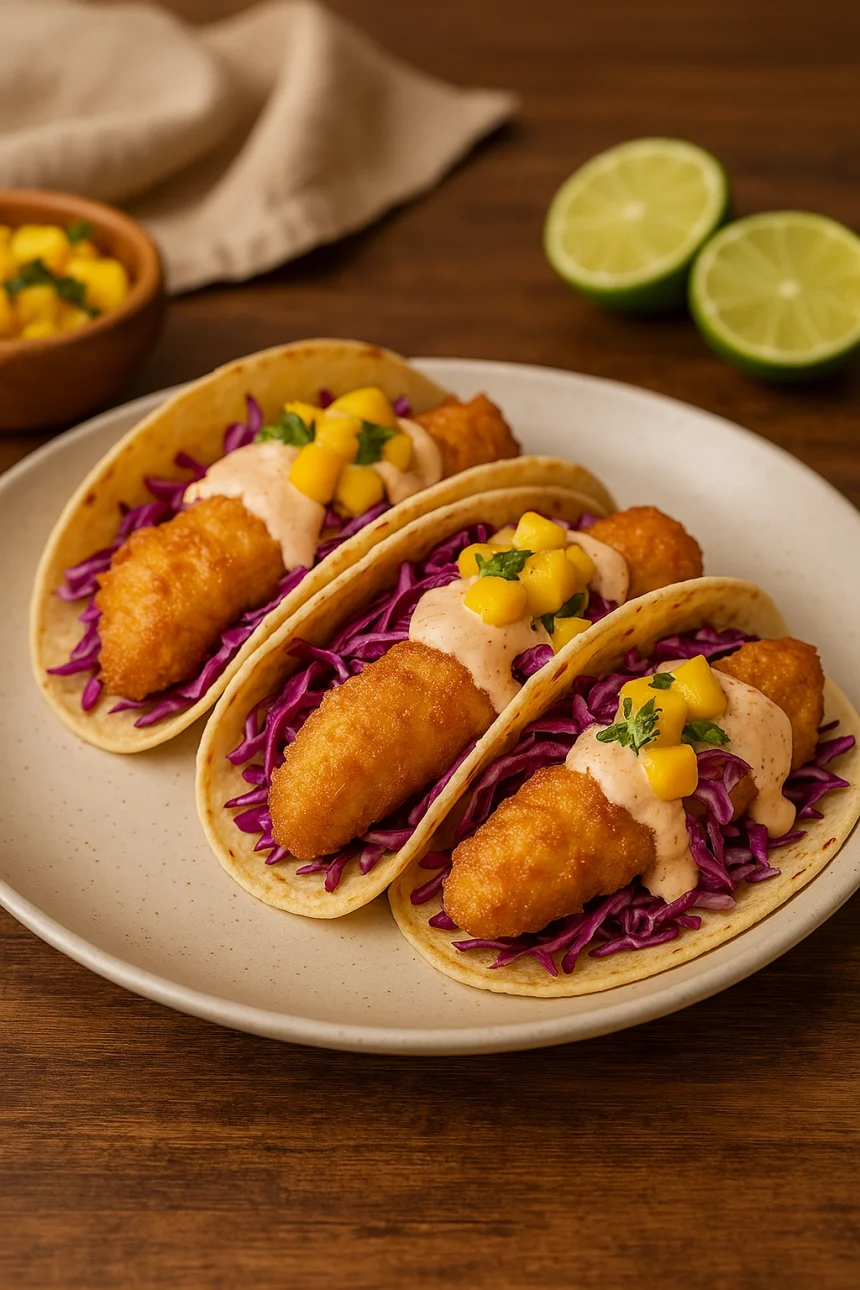
Baja California Style Fish Tacos Recipe
Hello! We are going to prepare one of the most iconic dishes of the Mexican coast. The essence of these tacos lies in the contrast between the soft fish, the super crispy batter, and the freshness of the salad. It's an ideal recipe to feel the sea breeze in your own kitchen without complicating your life.
- Baja California Style Fish Tacos Recipe
- Preparation time
- Ingredients
- Utensils we will use
- Step-by-step preparation of Baja California Style Fish Tacos
- Nutritional Information
- 7 chef tricks to make them perfect
- When is it ideal to enjoy it?
- Taco comparison chart
- Frequently asked questions (FAQ)
- Share your experience
- Culinary glossary
Preparation time
Organizing is key to enjoying cooking. Here is the time breakdown to make everything perfect:
- Preparation: 15 minutes
- Cooking: 10 minutes
- Total: 25 minutes
- Servings: 4-6 tacos
- Difficulty: Easy/Intermediate
Ingredients
To achieve the authentic flavor of Ensenada, we need to respect these ingredients. Freshness is your best ally here.
For the fish preparation
- 500 g of white fish fillet (hake, sea bass or dogfish)
- 1 cup of wheat flour
- 1 large egg
- 1 cup very cold light beer
- 1 teaspoon of baking powder
- Salt and freshly ground black pepper to taste
- Vegetable oil sufficient for frying
To accompany and serve
- Corn tortillas (preferably freshly made or good quality)
- Finely shredded purple cabbage
- Chipotle cream (or mayonnaise mixed with chipotle adobo)
- Mango salsa
- Limes cut into quarters
If you have difficulty finding dogfish or sea bass, you can substitute it with any firm white fish like fresh cod or tilapia. The important thing is that it doesn't fall apart easily when frying. If you don't consume alcohol, you can replace the beer with very cold sparkling mineral water; the result will still be crispy thanks to the bubbles. If you're looking for an interesting variation, I suggest looking at how traditional fish tacos are prepared to notice the differences in the batter.
Utensils we will use
You don't need professional equipment; the basics of your kitchen are enough to achieve a spectacular result.
- Deep frying pan or a medium pot for frying
- A medium bowl for the batter mixture
- Whisk (or a large fork)
- Cutting board and sharp knife
- Kitchen tongs (to handle the fish without burning yourself)
- Kitchen paper towels
- Comal or flat pan for heating tortillas
Step-by-step preparation of Baja California Style Fish Tacos
Follow these steps calmly. The secret is in the temperature and not being afraid to fry. We're going to divide it into stages to make it simpler.
Stage 1: Fish preparation
- Cleaning and cutting the fish. Lightly wash the fillets under the tap if necessary and dry them very well with paper towels. Cut the fish into strips approximately 5 to 7 centimeters long and 2 wide. It is vital that they have a uniform size so that cooking is even across all pieces.
- Initial seasoning. Sprinkle a little salt and pepper directly onto the raw fish strips. This ensures that the flavor comes from within and not just from the batter.
Stage 2: The perfect batter
- Dry mix. In your bowl, sift the flour together with the baking powder, salt, and pepper. This prevents unwanted lumps in the batter.
- Incorporation of liquids. Add the egg and start pouring the light beer little by little while whisking with the balloon whisk. The beer must be very cold; the thermal shock is what will create that crispy crust. Whisk until you get a homogeneous mixture, similar to the consistency of pancake batter, neither too liquid nor too thick.
Stage 3: Deep frying
- Heat the oil. Pour plenty of oil into the deep pan or pot. Heat it over medium-high heat. To know if it's ready, drop a tiny bit of the mixture; if it immediately bubbles up, we're at the correct point (approx. 180°C).
- Battering and frying. Dip each fish strip into the mixture, making sure it is well covered. Lightly drain the excess and carefully place it into the hot oil.
- Golden cooking. Fry the strips in batches, without overcrowding them, for about 3 to 4 minutes. Flip them halfway through so they brown evenly. They should have a deep golden color and feel rigid to the touch of the tongs.
- Drained. Remove the fish and place it on a plate with absorbent paper to remove excess fat. This will keep the batter crispy for longer.
To finish and serve
Just before eating, heat the corn tortillas on the griddle until they are soft and flexible; a cold tortilla breaks and ruins the experience. For assembly, place two hot fish strips on each tortilla. Crown generously with the shredded purple cabbage, a touch of chipotle cream and mango salsa for that sweet contrast. Serve immediately with a few drops of lemon. If you have leftover tortillas and want to try something different another day, gobernador tacos are an excellent option that also uses seafood but with melted cheese.
Nutritional Information
Here is an estimate of what each taco provides for you to consider in your daily balance.
- Calories: 250 kcal
- Proteins: 12 g
- Fats: 14 g
- Carbohydrates: 22 g
- Fiber: 3 g
Note: Values are approximate per unit and may vary depending on the amount of oil absorbed and the sauces used.
7 chef tricks to make them perfect
Sometimes, small details make a big difference in the final result. Here I share my secrets to make these tacos unforgettable.
1. The beer temperature is non-negotiable.
Using almost ice-cold beer is essential. The temperature shock between the cold batter and the hot oil is what causes a physical reaction that rapidly expands the gas, creating an airy and super crispy coating. If the beer is at room temperature, the batter will absorb more oil and become heavy.
2. Dry the fish thoroughly.
Water is the enemy of oil and adhesion. If the fish strips are wet, the flour mixture will slip off and the fish will be «bald» in areas. Use kitchen paper and gently press each fillet before coating it in the mixture.
3. Do not overcrowd the pan.
When frying, if you put too many pieces at once, the oil temperature will drop drastically. This causes the fish to cook instead of fry and absorb excess fat. Fry 3 by 3 or 4 by 4 pieces depending on the size of your pot.
4. The sauce makes all the difference.
White fish has a mild flavor, so the accompaniments should have character. The chipotle cream provides the necessary smokiness and spice, while the cabbage adds texture. If you want to experiment with more intense flavors, you could try adding a little tamarind and chipotle sauce for a deeper sweet and sour touch.
5. Keep it crispy.
If you have to make a large quantity, do not stack the fried fish one on top of the other, the steam will soften them. Place them on a rack inside the oven turned off (but warm) to keep them hot and dry while you finish frying the rest.
6. The cabbage cut.
The purple cabbage should be cut very thin, almost like threads. If the pieces are too thick, it will be difficult to bite the taco and everything will fall apart. Use a mandoline if you have one, or a very sharp knife with patience.
7. Drink alternatives.
This dish cries out for a refreshing drink to cleanse the palate of the fried grease. A cold beer is classic, but if you prefer something non-alcoholic and very fresh, a pineapple and ginger agua fresca pairs wonderfully with the flavors of the sea.
When is it ideal to enjoy it?
Baja California style fish tacos are synonymous with relaxation and warm weather. They are the perfect dish for a weekend lunch in the garden or on the terrace, when you have time to fry unhurriedly and enjoy a beer while you cook. Being a seafood dish, they immediately evoke summer and holidays.
They are also an excellent option for Lent or for those looking to reduce their red meat consumption without sacrificing flavor or the feeling of fullness. Their versatility allows them to be served as a main dish at an informal gathering with friends, where you can place all the ingredients in the center and let everyone assemble their own tacos. If you like this «assemble your own tacos» dynamic, I also recommend keeping in mind the recipe for cabrito al pastor for more festive and carnivorous occasions.
Taco comparison chart
It's common to confuse seafood taco styles or look for similar alternatives. Here I show you how Baja-style Tacos differ from other popular options so you can choose the best one for your craving today.
| Recipe | Key ingredients | Difference/advantage |
|---|---|---|
| Baja Style Tacos (Main) | Battered fish, cabbage, chipotle cream | Very crispy texture and vegetable freshness |
| Gobernador Tacos | Shrimp, Manchego cheese, poblano chile | They are creamy and melted, less crispy |
| Fish Tacos al Pastor | Fish in guajillo marinade, pineapple | Spicy pastor flavor but lighter |
| Tacos of Smoked Marlin | Marlin, tomato, onion, cheese | Intense smoky flavor, stewed not fried |
| Enchilado Shrimp Tacos | Shrimp, spicy red sauce, garlic | Spicier and without flour batter |
| Grilled Fish Tacos | Marinated fillet, pico de gallo | Lighter and lower calorie option |
| Lobster Tacos (Rosarito) | Lobster, beans, rice, flour tortilla | Luxury ingredient, served with side dishes |
If you are interested in exploring more about regional variations, the smoked marlin tacos are another gem of the peninsula that offers a totally different flavor profile, much more intense and salty.
Frequently asked questions (FAQ)
Share your experience
Cooking is for experimenting and sharing. I'd love to know how these tacos turned out for you. Did you dare to try another sauce? Did you use cazón or prefer sea bass? Leave your comment and share your own little tricks so we can all keep learning!
Culinary glossary
So you don't miss any details, here I explain some terms we used today:
- Battered/Coated: A technique that consists of covering food with a semi-liquid mixture (flour, egg, liquid) before frying it to protect it and give it texture.
- Cazón (Dogfish/Smooth-hound): A type of small shark very common in Mexican cuisine, appreciated for its firm, white meat that has no small bones.
- Smoke point: The temperature at which oil begins to burn and smoke, giving food a bad taste. We want to avoid reaching this point.
- To coat (in batter): In Mexico, it is synonymous with covering a food with egg or batter before frying.
- Comal: Traditional Mexican cooking utensil, generally a flat metal or clay disc, used for cooking or heating tortillas.
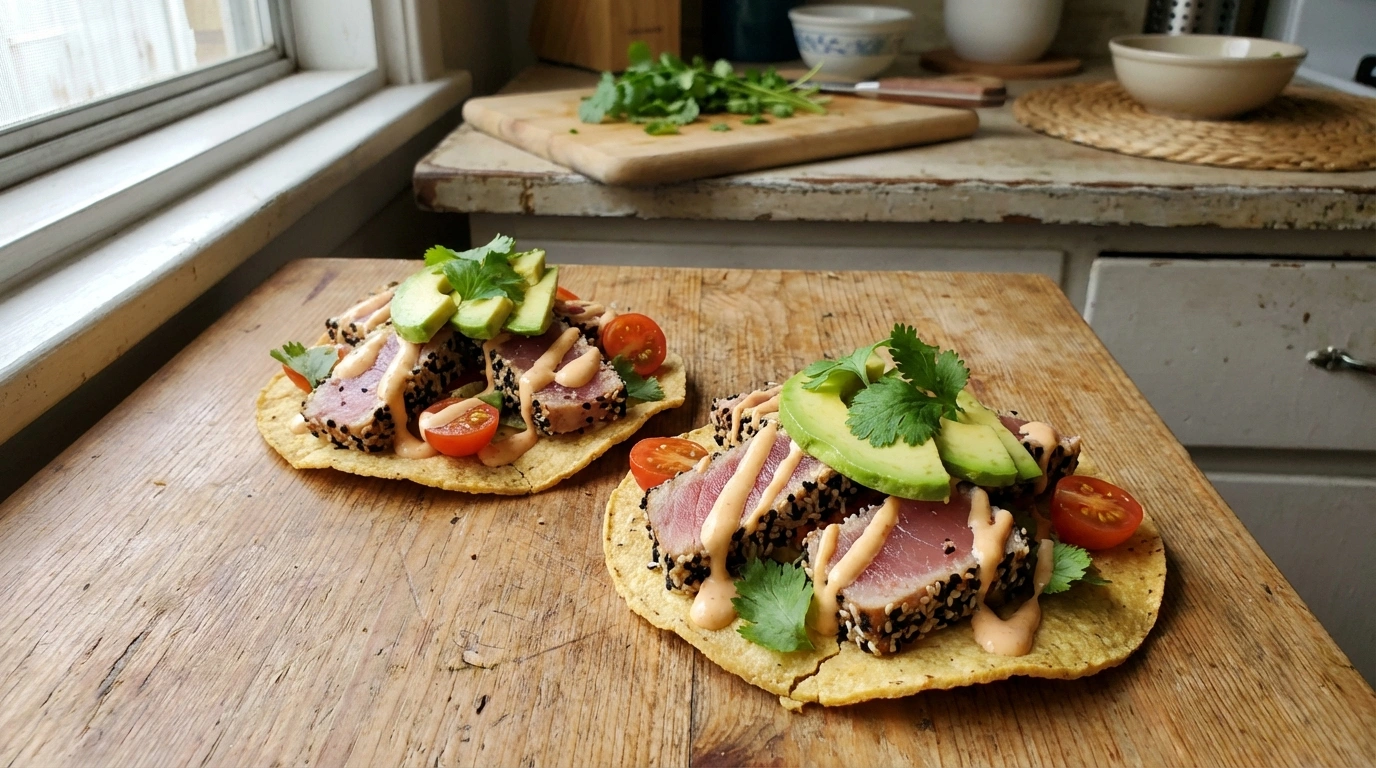



I was surprised by the flavor. I will make it again this weekend. We served it with white rice and it was a hit .
I prepared it exactly as it is from ‘Baja California Style Fish Tacos’ . It saved me time and was delicious.