
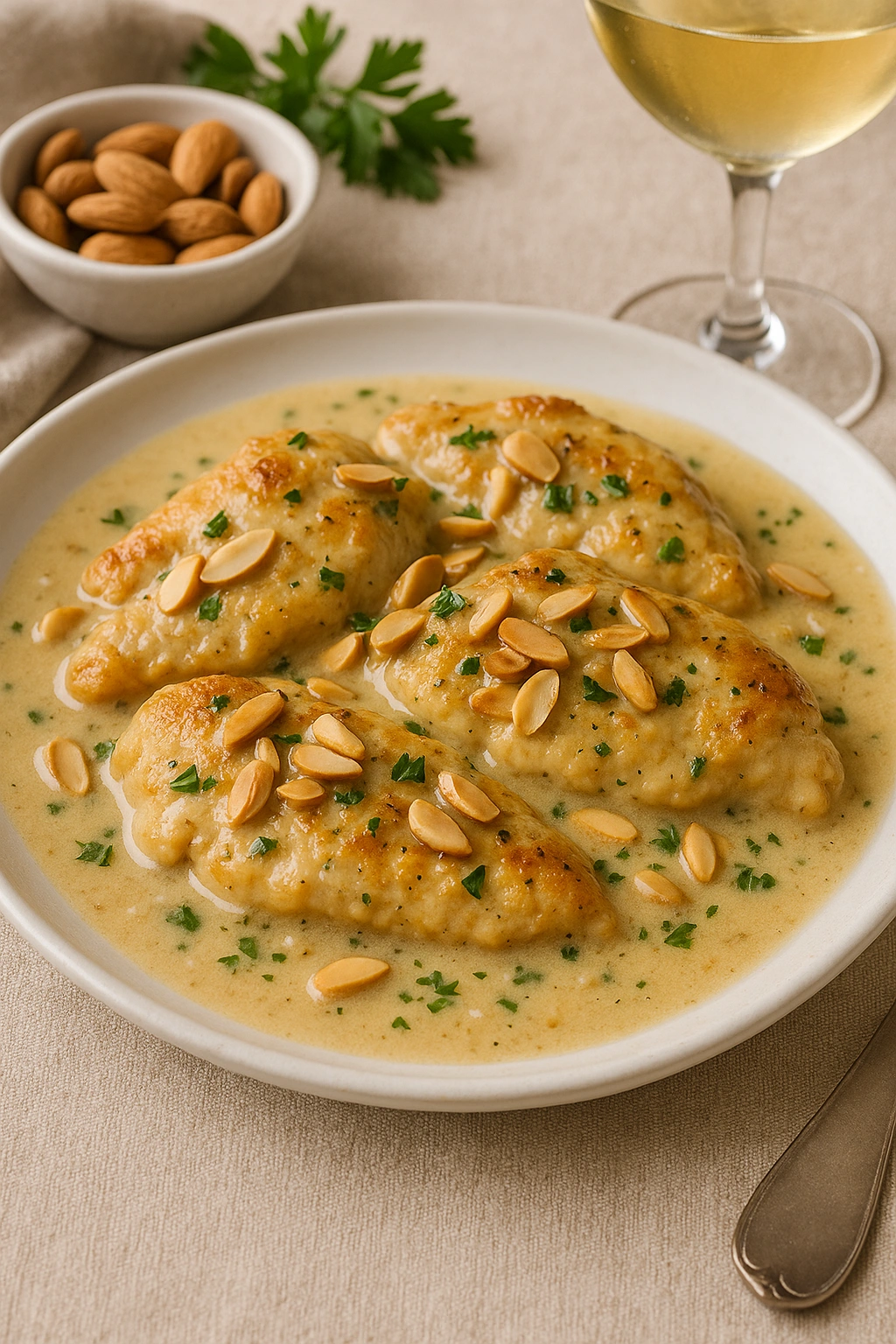
Chicken in almond and white wine sauce recipe
Hello! We are going to prepare a dish that is pure comfort and tradition: the chicken in almond and white wine sauce. It's a classic recipe from the Spanish cuisine that transforms simple ingredients into a stew spectacular dish, with a thick sauce full of flavor thanks to the paste, perfect for those days when you're looking for real homemade food.
Preparation time
Organizing yourself in the kitchen is essential to enjoy the process. Here's the time breakdown so you can plan your cooking without rushing.
- Preparation: 20 minutes
- Cooking: 45 minutes
- Total: 65 minutes
- Servings: 4 people
- Difficulty: Easy
Ingredients
- 8 pieces of chicken (thighs and drumsticks are ideal for their juiciness)
- 100 g of almonds raw peeled (whole)
- 2 large garlic cloves
- 1 slice of day-old bread (from a loaf or baguette)
- 1 large onion
- 150 ml of white wine dry
- 500 ml of chicken broth (preferably homemade)
- Extra virgin olive oil
- Fine salt
- Freshly ground black pepper
- Fresh chopped parsley for garnish
- Saffron threads (Optional)
Substitutions and Notes
In home cooking, we can always adapt to what we have in the pantry. If you can't find bone-in thighs or drumsticks, you can use chicken breast cut into large cubes, although the cooking time will be shorter to prevent it from drying out; if you're looking for a different option with chicken breast, you might prefer to check how to make stuffed chicken breasts for another occasion. If you don't have chicken broth on hand, a mild vegetable broth works well, or even water as a last resort, although you'll have to adjust the salt level more. Regarding bread, if you are celiac, use a slice of gluten-free bread to fry and thicken the sauce without problems.
Utensils we will use
- Wide, shallow casserole or deep skillet
- Cutting board
- Well-sharpened chef's knife
- Kitchen tongs
- Skimmer
- Mortar (or blender cup if you prefer speed)
- Wooden spoon or silicone spatula
Preparation
Pre-preparation and searing of the meat
- Cleaning and seasoning: Check the pieces of chicken to remove excess fat or loose feathers. Pat the meat dry with kitchen paper; this is vital for good browning. Season generously with salt and pepper on all sides.
- Hot searing: Place the casserole over medium-high heat with a layer of olive oil. When hot, add the chicken. Do not overcrowd it; if necessary, do it in two batches.
- The browning: Let it brown well on each side, about 4 or 5 minutes, until the skin has a nice toasted color. We are not looking to cook it through, only to seal in the juices and create flavor at the bottom of the pot. Remove the chicken and set it aside on a plate.
- Cleaning and seasoning: Check the pieces of chicken to remove excess fat or loose feathers. Pat the meat dry with kitchen paper; this is vital for good browning. Season generously with salt and pepper on all sides.
- Hot searing: Place the casserole over medium-high heat with a layer of olive oil. When hot, add the chicken. Do not overcrowd it; if necessary, do it in two batches.
- The browning: Let it brown well on each side, about 4 or 5 minutes, until the skin has a nice toasted color. We are not looking to cook it through, only to seal in the juices and create flavor at the bottom of the pot. Remove the chicken and set it aside on a plate.
Preparation of the paste and sofrito
- Frying aromatics: In the same oil where you browned the chicken (if there's too much, remove a little), add the whole peeled garlic cloves and the slice of bread. Fry them until golden. Watch the garlic, if it burns it will be bitter. Remove them to the mortar or blender cup.
- Toasted almonds: In that same flavored oil, add the almonds raw ones. Stir them constantly so they toast evenly and don't burn. When they have a dark honey color, remove them and combine them with the bread and garlic.
- The base sofrito: Lower the heat to medium-low. Add the onion chopped into small cubes (brunoise). Let it cook slowly, scraping the bottom of the pot to lift the remnants of the chicken browning (this is pure flavor). Cook for about 10-12 minutes until the onion is transparent and tender.
- Creation of the paste: While the onion is poaching, crush or mash in the mortar the garlic, fried bread, almonds, and a few saffron threads if you decided to use them. You can add a splash of broth to facilitate the process. It should form a paste; it doesn't need to be a fine purée, finding almond pieces is delicious.
- Frying aromatics: In the same oil where you browned the chicken (if there's too much, remove a little), add the whole peeled garlic cloves and the slice of bread. Fry them until golden. Watch the garlic, if it burns it will be bitter. Remove them to the mortar or blender cup.
- Toasted almonds: In that same flavored oil, add the almonds raw ones. Stir them constantly so they toast evenly and don't burn. When they have a dark honey color, remove them and combine them with the bread and garlic.
- The base sofrito: Lower the heat to medium-low. Add the onion chopped into small cubes (brunoise). Let it cook slowly, scraping the bottom of the pot to lift the remnants of the chicken browning (this is pure flavor). Cook for about 10-12 minutes until the onion is transparent and tender.
- Creation of the paste: While the onion is poaching, crush or mash in the mortar the garlic, fried bread, almonds, and a few saffron threads if you decided to use them. You can add a splash of broth to facilitate the process. It should form a paste; it doesn't need to be a fine purée, finding almond pieces is delicious.
Cooking and reduction of the sauce
- Deglazing: When the onion is ready, raise the heat and pour in the white wine. Let it boil vigorously for 2 or 3 minutes so that all the alcohol evaporates and only the aromatic essence of the grape remains.
- Union of elements: Return the reserved chicken to the pot, along with any juices it released on the plate. Add the almond paste you prepared and mix carefully to coat the meat.
- The slow-cooked stew: Cover everything with chicken broth. Bring to a boil and, as soon as it starts boiling, lower the heat to minimum. Cover the pot and let it cook for about 30 or 35 minutes.
- Texture control: After this time, uncover. The sauce should have reduced and thickened thanks to the bread and almond. If you see it too liquid, let it cook uncovered for 5 more minutes over medium heat. If it's too thick, add a splash of water or broth.
- Rectification: Taste the sauce. This is the time to adjust the salt if needed.
- Deglazing: When the onion is ready, raise the heat and pour in the white wine. Let it boil vigorously for 2 or 3 minutes so that all the alcohol evaporates and only the aromatic essence of the grape remains.
- Union of elements: Return the reserved chicken to the pot, along with any juices it released on the plate. Add the almond paste you prepared and mix carefully to coat the meat.
- The slow-cooked stew: Cover everything with chicken broth. Bring to a boil and, as soon as it starts boiling, lower the heat to minimum. Cover the pot and let it cook for about 30 or 35 minutes.
- Texture control: After this time, uncover. The sauce should have reduced and thickened thanks to the bread and almond. If you see it too liquid, let it cook uncovered for 5 more minutes over medium heat. If it's too thick, add a splash of water or broth.
- Rectification: Taste the sauce. This is the time to adjust the salt if needed.
Nutritional Information
The following values are approximate estimates per serving.
- Calories: 480 kcal
- Proteins: 36 g
- Fats: 32 g
- Carbohydrates: 10 g
- Fiber: 3 g
5 keys to make it perfect
To make this main dish stand out and have that authentic flavor of the Spanish cuisine, there are small details that make a big difference. It's not just about mixing ingredients, but about treating them with care.
First, toasting the almonds is crucial. Don't use pre-fried, salted almonds from a bag; buy raw ones and toast them yourself in the chicken oil. The flavor is much deeper and fresher. If you over-toast them, it will taste burnt, and if you under-toast them, the sauce will be bland. Look for that «honey» golden color.
Second, the pounding/mashing. Although a blender is fast, a mortar and pestle extracts the essential oils from the garlic and almonds in a way that blades cannot. If you have time, do it by hand. That rustic texture is part of the charm of the Mediterranean flavors. If you're looking for intense but different flavors, you might be interested in trying a chicken curry coconut, but for this recipe, let's stick to the traditional.
Third, the quality of the wine. Don't use a «cooking wine» that you wouldn't drink in a glass. A poor quality dry white wine will add an aggressive acidity to the stew. A good Verdejo or a simple Albariño will elevate the category of your sauce.
Fourth, patience with the onion. The sofrito is the bed of the stew. Don't rush. Slowly poaching the onion adds a natural sweetness that balances the strength of the garlic and wine. If you burn it or leave it raw, the stew will lose balance.
And fifth, resting. Like all traditional stews, this chicken improves with time. If you can prepare it the night before, the flavors will have melded and the sauce will have more body. It's one of those grateful recipes that make your life easier.
When is it ideal to enjoy it?
The chicken in almond and white wine sauce is a tremendously versatile dish, but it has its star moment. It's the perfect lunch for a family Sunday, when you have time to let the pot «simmer» without watching the clock. Its comforting nature makes it ideal for the autumn and winter months, when the body craves spoon dishes and hot sauces.
However, it's also an excellent option if you have guests and don't want to be enslaved in the kitchen until the last minute. Being a stew that improves with resting, you can have it ready in advance and simply heat it before serving. It's more formal than some chicken fajitas, but just as cozy. If you're looking for something for a lighter summer dinner, you might prefer a lemon and rosemary chicken, but for a hearty meal, this stew is king.
Comparison table
Sometimes we confuse recipes or look for alternatives depending on what we have in the fridge. Here's how our dish compares to other classics.
| Recipe | Key ingredients | Difference/advantage |
|---|---|---|
| Chicken in almond sauce | Almonds, fried bread, white wine | Thick sauce, flavor of nuts and rustic texture. |
| Chicken in Pepitoria | Almonds, hard-boiled egg, saffron | The sauce is thickened with cooked egg yolk, milder flavor. |
| Chicken Cacciatore | Tomato, peppers, herbs | Tomato and vegetable base, more acidic and fresh Italian profile. |
| Garlic Chicken | Lots of garlic, wine/vinegar | Without creamy sauce, it's a fry with aromatic and powerful oil. |
| Curry Chicken | Coconut milk, curry spices | Asian aromatic profile, spicy and sweet, very different from Spanish stew. |
| Chicken Chilindrón | Red bell pepper, tomato, ham | Stands out for the flavor of the pepper and the serrano ham in the sofrito. |
| Beer Chicken | Blonde or dark beer, onion | More bitter and malty flavor, lighter and darker sauce. |
Frequently asked questions (FAQ)
Share your experience
Cooking is for experimenting and sharing. I would love to know how this stew turned out for you. Did you give it your personal touch? Perhaps you added a little more garlic or accompanied it with a different side dish like a whole wheat pasta salad? Leave your comment and share your own tricks so we can all learn!
Culinary glossary
- Majado (Pound/Crush): A technique that consists of crushing ingredients in a mortar (garlic, parsley, spices, fried bread, nuts) until a paste is obtained, which is added to stews to give flavor and thicken the sauce.
- Deglaze: To add a liquid (such as wine or broth) to a hot pan where meat or vegetables have been cooked, to dissolve and recover the caramelized juices stuck to the bottom.
- Sweat: To cook a food, usually onion or vegetables, over low heat in fat or oil until it softens and loses its raw color, without browning excessively.
- Sear: To cook meat over high heat briefly on the outside to seal the pores and keep the juices inside before a longer cooking.
- Reduce: To cook a sauce or liquid uncovered so that part of the water evaporates, thus concentrating the flavors and thickening the texture.
This ‘Chicken in almond and white wine sauce’ turned out better than I expected. I added a touch of lemon and it was luxurious.
Perfect for sharing, this ‘Chicken in almond and white wine sauce’. .