


Chicken Cacciatore Recipe
Hello! Let's prepare together this Italian classic that brings back so many memories for me and that, I'm sure, will become a favorite at your table. Chicken Cacciatore, or «hunter's style,» is a rustic stew, full of love, where chicken is slowly cooked in a vibrant tomato sauce with fresh herbs, wine, and olives. It's perfect for those days when you need a hug in the form of food.
Preparation time
Getting organized is key in the kitchen, so here's the time breakdown for you to plan your meal stress-free.
- Preparation: 10 minutes
- Cooking: 50 minutes
- Total: 60 minutes
- Servings: 4 people
- Difficulty: Easy
Ingredients
- 6 to 8 skinless chicken thighs (you can use boneless chicken thighs if you prefer)
- 2 teaspoons sea salt
- 1 teaspoon freshly ground black pepper
- 3 tablespoons extra virgin olive oil
- 1 small red onion
- 1 small carrot
- 3 celery stalks
- 2 large garlic cloves
- ½!– /wp:list-item –>
- 3 fresh sage leaves
- 1 heaped teaspoon fresh rosemary (leaves only)
- 1 can of 28 ounces (approx. 800g) of cherry tomatoes with their juice (or whole/chopped pear tomatoes)
- ½ cup Taggiasca olives or pitted black olives
If you can't find Taggiasca olives, good quality black olives work perfectly. If you don't want to use wine, you can substitute it with the same amount of chicken or vegetable broth, although the flavor will be a little less deep.
Utensils we will use
- Large, deep skillet or a casserole-type pot (cast iron is ideal)
- Sharp kitchen knife
- Cutting board
- Kitchen tongs
- Wooden spoon
- Small bowls to organize chopped ingredients
Preparation
Sear the chicken
Thoroughly dry the chicken pieces with paper towels. Sprinkle salt and pepper evenly on all sides of the chicken. Heat 2 tablespoons of olive oil in your large skillet over medium-high heat. When the oil is hot, place the chicken pieces (without crowding them, do it in batches if necessary). Cook for about 5 minutes per side until they have a nice golden color. Remove the chicken from the skillet and set it aside on a separate plate.
Prepare the base sofrito
While the chicken was cooking, you will have finely chopped the red onion, carrot, and celery. In the same skillet where you browned the chicken (do not wash it, that's where the flavor is), lower the heat a bit and add the onion. Sauté for about 3-4 minutes until transparent. Add the chopped carrot and celery, mix well. Add the minced garlic and cook for about 30 seconds until fragrant. Incorporate the olives and herbs (sage and chopped rosemary). Cook everything together for about 5 minutes until the vegetables soften slightly. Season lightly with salt and pepper.
Deglaze and reduce
Slightly raise the heat and pour in the red wine. With a wooden spoon, scrape the bottom of the skillet to release all those golden bits left by the chicken (this is pure flavor). Bring to a boil and cook for about 3 minutes until the liquid is reduced by approximately half.
Create the sauce
Add the canned tomatoes with all their juice. Use the wooden spoon to break up the tomatoes a bit as you mix them with the rest of the ingredients. Taste the sauce and adjust salt and pepper to your liking. If you like intense flavors, this step is crucial to balance the acidity.
Slow cooking
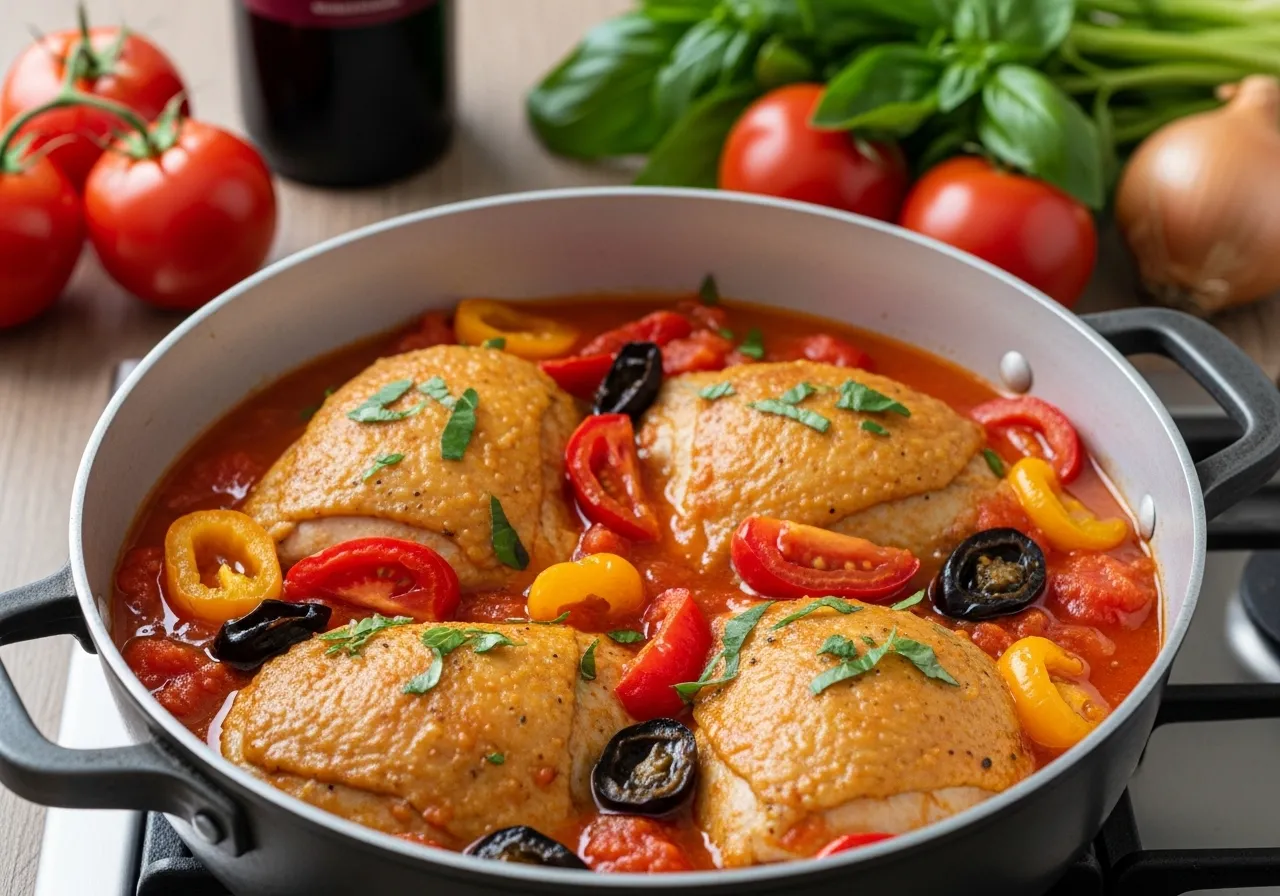
Return the reserved chicken pieces to the skillet, making sure to coat them well with the sauce. Partially cover the skillet and let it simmer for 20 minutes, stirring occasionally. If you see the sauce thickening too quickly, you can add a splash of water.
Final point of tenderness
Remove the lid and continue cooking for another 25 minutes approximately. Maintain a gentle simmer. The chicken will be ready when the meat is very tender, almost falling off the bone, and the internal temperature reaches 165°F (74°C). The sauce should look shiny and thick.
To finish and serve
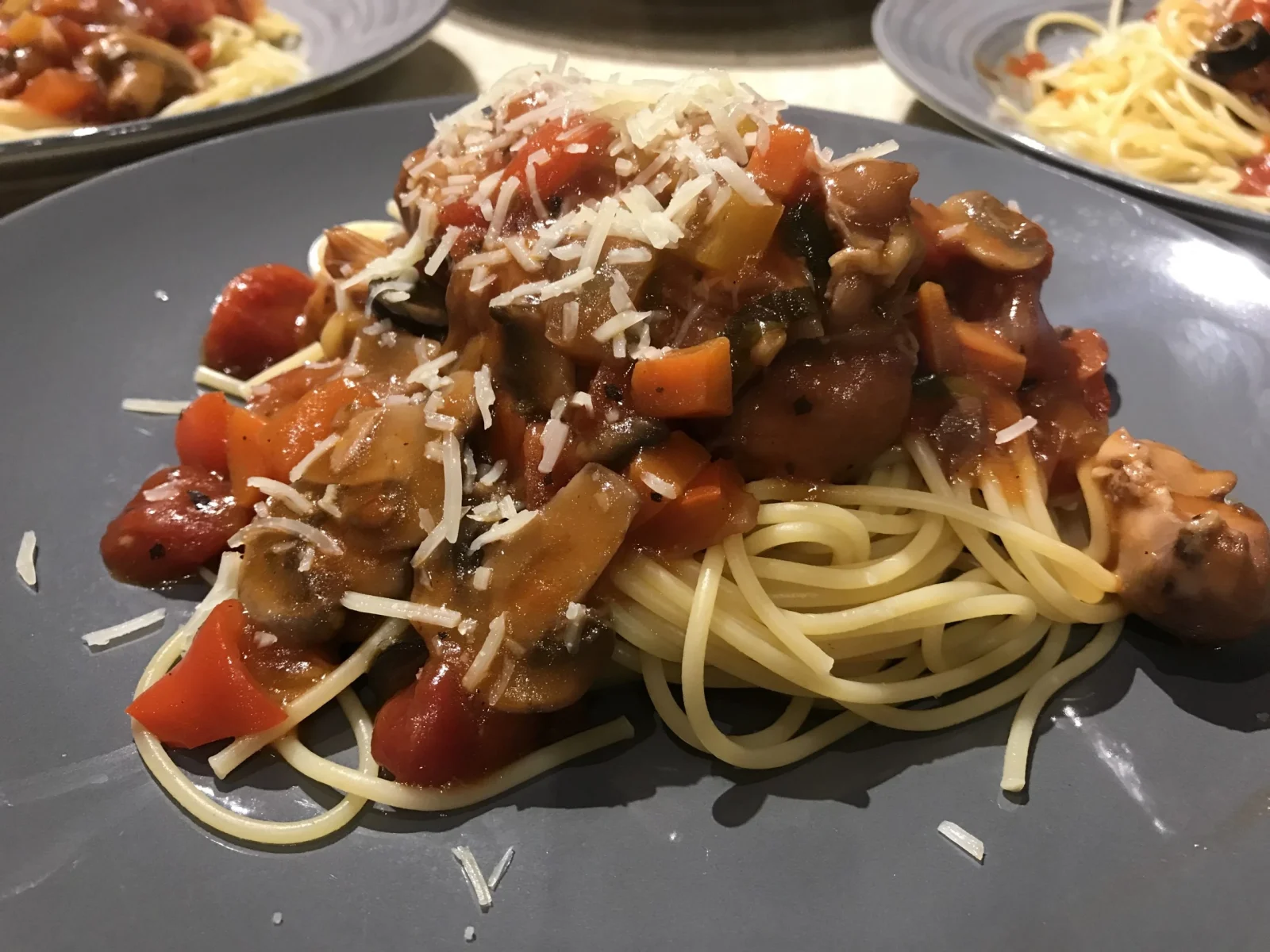
Once the chicken is done, remove the skillet from the heat. If you see excess fat on the surface of the sauce, you can carefully remove it with a spoon. Serve the chicken pieces hot, generously covering them with that rustic sauce full of vegetables and olives. Accompany it with a good piece of crusty bread so as not to waste a single drop, or serve it over a bed of pasta or creamy polenta.
Nutritional Information
- Calories: 475 kcal
- Proteins: 30 g
- Fats: 42 g
- Carbohydrates: 4 g
- Fiber: 0.2 g
Note: Nutritional values are approximate estimates per serving and may vary depending on the specific ingredients used.
5 keys to make it perfect
Sometimes, small details make the big difference between a good dish and a memorable one. Here I share my secrets so that this chicken cacciatore turns out restaurant-quality.
1. Golden is flavor: Don't rush when searing the chicken. That golden brown color we achieve at the beginning isn't just aesthetics; it's the Maillard reaction that brings incredible depth of flavor to the final stew. If the chicken looks pale, the flavor will be flatter.
2. Wine quality matters: Many times we use «cheap» wine for cooking, but remember the golden rule: if you wouldn't drink it in a glass, don't put it in the pot. A full-bodied red wine will bring rich nuances to the sauce, while a bad one can bring unpleasant acidity.
3. Fresh vs. dried herbs: In this recipe, fresh rosemary and sage make all the difference. Dried herbs have their place, but here we're looking for that vibrant aroma that only fresh can give. If you have leftover herbs, you can always use them for a lemon and rosemary chicken another day.
4. Patience with reduction: When you add the wine, let it reduce well. We need the alcohol to evaporate and only the sugars and grape flavor to remain. If you skip this step, the sauce might taste a bit raw or alcoholic.
5. The final rest: Although the smell invites you to eat immediately, letting the stew rest for about 5 or 10 minutes off the heat allows the meat juices to redistribute and the sauce flavors to settle. It tastes much more flavorful.
When is it ideal to enjoy it?
Chicken Cacciatore is, par excellence, a family Sunday dish. Its slow-cooking nature invites you to enjoy the process without rushing, filling the house with incredible aromas that whet everyone's appetite. It's that kind of comforting food perfect for colder months or rainy days, when we seek the warmth of home.
However, it's also a fantastic option for preparing in advance (meal prep). In fact, like many stews, it tastes even better the next day when the flavors have had time to blend even more. You can make it on the weekend and have a luxurious dinner ready for Monday. If you have leftover sauce, it's delicious mixed with a bit of pasta, similar to a creamy chicken pasta but tomato-based.
Comparison table
Sometimes we get confused among so many delicious chicken with sauce recipes. Here's a table for you to see what makes our Cacciatore unique compared to other options you might also like.
| Recipe | Key ingredients | Difference/advantage |
|---|---|---|
| Chicken Cacciatore | Tomato, red wine, olives, rosemary | Rustic hunter-style stew, intense herb and wine flavor. |
| Authentic Chicken Cacciatora | Whole chicken cut into pieces, fresh vegetables | The most traditional version, often uses rabbit or bone-in chicken. |
| Chicken Parmesan | Mozzarella cheese, breadcrumbs, marinara | It's breaded and baked with cheese, crispy vs stewed texture. |
| Chicken Marsala | Marsala wine, mushrooms | Sweeter and darker sauce based on fortified wine, no tomato. |
| Chicken in Almond Sauce | Almonds, white wine, saffron | White and creamy sauce with nuts, very different flavor profile. |
| Chicken Provençal | Herbs de Provence, olives, garlic | French style, very aromatic but less focused on thick tomato sauce. |
| Chicken Tinga | Chipotle, tomato, onion | Spicy and shredded, ideal for tacos, not a whole-piece stew. |
Frequently asked questions (FAQ)
Share your experience
Cooking is for experimenting and sharing. I would love to know how your Chicken Cacciatore turned out. Did you add your own touch? Perhaps some different herbs or a special wine? Leave your comment and share your own little tricks! I'm very excited to read how everyone adapts the recipe to their taste.
Culinary glossary
So you don't get lost with any terms, here I briefly explain some words we use in the recipe:
Sear: Cooking meat over high heat for a short time to brown the surface without fully cooking the inside. This creates flavor and texture.
Deglaze: The action of adding a liquid (like wine or broth) to a hot pan to dissolve food bits stuck to the bottom after cooking meat or vegetables.
Reduce: Cooking a sauce or liquid over medium/high heat so that some of the water evaporates, causing it to thicken and the flavors to concentrate.
Sofrito: Sauce base made by cooking chopped vegetables (like onion, garlic, carrot) in oil over low heat until tender and flavorful.
Point of tenderness: The moment when the meat is perfectly cooked, soft and easy to cut or separate from the bone, without being dry.


Perfect for sharing. I loved how clear the explanation is. I added chipotle sauce and it elevated the flavor.
Impeccable texture and flavor of this ‘Pollo a la Caccitore’. It was a total success with my family. I loved it, I will repeat it soon.
Impeccable texture and flavor of this ‘Pollo a la Caccitore’.