


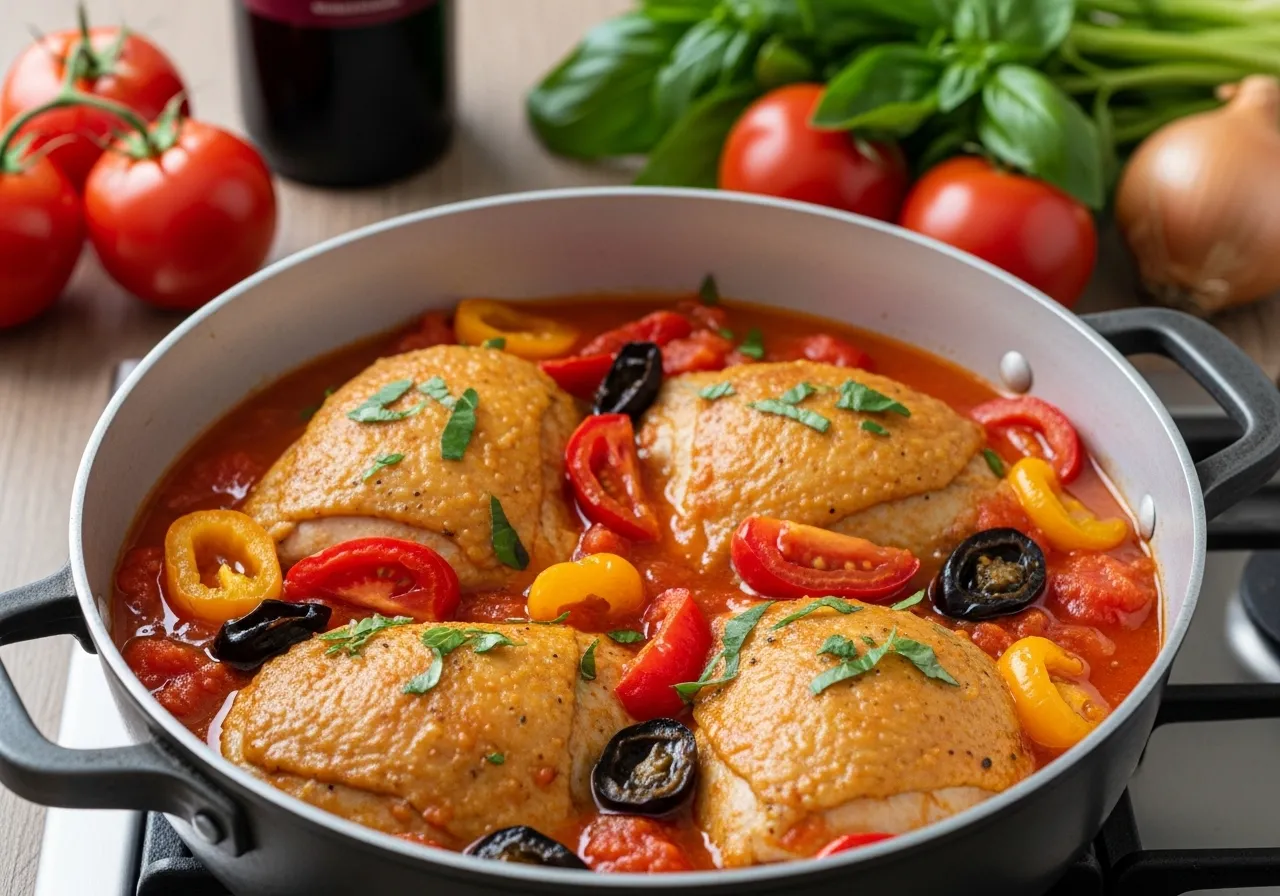
Chicken Cacciatore Recipe
Hello! Let's prepare together an absolute classic of rustic cuisine. This recipe for chicken cacciatore is one of my favorites because it connects us directly with the most authentic Tuscan tradition, where simple ingredients are transformed into a comforting dish. It's a stew full of flavor, with that rustic touch that we love to enjoy at home.
Preparation time
To organize ourselves well, here is the breakdown of the times. It's a recipe that requires a little patience for the flavors to integrate, but the process is very relaxed.
- Preparation: 20 minutes
- Cooking: 50 minutes
- Total: 70 minutes
- Servings: 4 people
- Difficulty: Easy
Ingredients
We are going to use fresh and easy-to-find ingredients. The quality of the base product will make a difference in this stew.
For the chicken and the base
- Whole chicken (cut into 12 pieces: breasts, thighs, split wings)
- Salt (to taste)
- Pepper (to taste)
- Flour (for dredging)
- Vegetable oil
- 4 tablespoons olive oil (divided)
- Onions (chopped)
- Wine (red or white, according to preference)
- Tomatoes (chopped or crushed)
- Oregano
For the vegetables
- Mushrooms (cleaned and chopped)
- Bell peppers (cut into strips or pieces)
- Water (only if necessary to adjust the liquid)
If you can't find good quality fresh tomatoes, you can replace them with a can of good brand whole peeled tomatoes; just make sure to chop them a bit before adding them.
Utensils we will use
We don't need sophisticated equipment, what you have in your kitchen will be enough to achieve a spectacular result.
- Sturdy chef's knife or kitchen shears (for chopping the chicken)
- Large cutting board
- Wide pot or thick-bottomed casserole (minimum 30 cm in diameter)
- Large frying pan
- Kitchen tongs or skimmer
- Wooden spoon
Preparation
This is where the magic happens. Follow these steps calmly and you'll see how your kitchen fills with incredible aromas. If you like chicken cacciatore, you'll love this version for its authenticity.
- Chopping the chicken. Place the chicken on the board. With a sturdy knife or scissors, remove the backbone by cutting along both sides (you can save it for broth). Cut the chicken in half along the breastbone. Separate the wings and cut them in half at the joint. Separate the leg quarters and divide thigh and drumstick. Cut each breast half into two crosswise, giving the knife a firm tap to cleanly cut through the bone. You should have 12 pieces.
- Seasoned and floured. Generously season all chicken pieces with salt and pepper. Dredge them in flour, making sure to lightly coat them and shaking off any excess so it doesn't clump.
- Initial browning. In the wide pot, heat the vegetable oil along with 2 tablespoons of olive oil. Wait until, when inserting a tip of the chicken, the oil emits a lively sizzle. Add the chicken pieces without crowding them (do it in batches if necessary). Brown well on all sides and remove the pieces to a plate as they are ready.
- Onion sauté. Remove all chicken from the pot. In the same fat remaining at the bottom, add the onions and cook, stirring constantly, for 5 minutes until tender.
- Wine reduction. Pour the wine in the pot, raise the heat until it boils and cook for about 3 minutes until the liquid reduces by half. This will concentrate the flavors.
- Sauce creation. Add the tomatoes and oregano. Season lightly with salt and pepper. Bring everything to a boil. Return the chicken pieces to the sauce, adjust the heat to maintain a gentle simmer, cover the pot and cook for 20 minutes, stirring a couple of times.
- Vegetable cooking. While the chicken cooks, heat the remaining 2 tablespoons of olive oil in the large skillet over medium-high heat. Add the mushrooms and the peppers. Sauté until the peppers are «wilted» but still crisp, about 8 minutes. Season the vegetables with salt.
- Final integration. Add the peppers and mushrooms to the pot with the chicken. Cover and cook everything together until the chicken and vegetables are tender, about 10 to 15 minutes more. Watch the liquid; it should just barely cover the chicken. If it dries out too much, add small amounts of water.
To finish and serve
Before serving, taste the sauce and adjust the salt if necessary. The stew should have a rich, not too liquid consistency. Serve hot. This dish is very versatile; you can accompany it with good rustic bread to soak up the sauce, or if you prefer something different, it goes excellently with a whole wheat pasta salad with grilled chicken and yogurt served as a light first course.
Nutritional Information
Below, I detail the approximate values for each serving of this delicious dish.
- Calories: 776 kcal
- Proteins: 57.9 g
- Fats: 52.6 g
- Carbohydrates: 11.6 g
- Fiber: 3.4 g
Note: Nutritional values are estimates based on standard ingredients and may vary depending on the specific products you use at home.
5 keys to make it perfect
Achieving the authentic taste of Tuscany for this dish requires attention to certain details that we sometimes overlook. Here I share my secrets.
1. Browning is essential. Don't rush this step. The color the chicken takes when frying not only improves its appearance but also creates a layer of flavor at the bottom of the pot that then deglazes with the wine. If the chicken remains pale, the sauce will have less depth.
2. Control the wine reduction. It is vital to let the alcohol evaporate and the liquid reduce by half. If you skip this step, the stew can end up with an acidic or overly alcoholic taste that will overshadow the sweetness of the tomatoes.
3. Don't overcrowd the pot. When browning the chicken, if you put all the pieces together, the oil temperature will drop drastically and the chicken will start to cook in its own juices instead of frying. Do it in batches to ensure that lively sizzle we're looking for.
4. The point of the vegetables. Cooking the mushrooms and peppers in a separate pan is a great success of this recipe. If you add them raw directly to the stew from the beginning, they will release too much water and become too soft. By sautéing them first, we maintain their texture and intense flavor.
5. Rest before serving. Like many stews and braises, this chicken greatly benefits if you let it rest for a few minutes off the heat before serving. The juices redistribute in the meat and the sauce takes on a more velvety texture.
When is it ideal to enjoy it?
This dish has a very homely character that makes it perfect for family Sunday lunches. It's the kind of food that invites you to stay at the table chatting. Due to its caloric and comforting nature, it is ideal for cooler months or rainy days, although with good seasonal tomatoes in summer it is also a delight.
It also works wonderfully if you have guests and don't want to be enslaved in the kitchen when serving, as you can have it ready in advance. If you're looking for a lighter option for a quick weeknight dinner, you might prefer some Parmesan chicken breasts, but for unhurried enjoyment, cacciatore is king.
Comparison table
Sometimes we get confused among so many delicious chicken recipes. Here I help you differentiate our star dish from other popular options.
| Recipe | Key ingredients | Difference/advantage |
|---|---|---|
| Chicken alla Cacciatore | Chicken, tomato, wine, peppers, mushrooms | Rustic stew slowly cooked in red sauce and vegetables. |
| Lemon and rosemary chicken | Lemon, rosemary, garlic, oil | Citrus and roasted flavor, without tomato sauce, lighter. |
| Chicken Marsala | Marsala wine, mushrooms, butter | Dark and sweet wine sauce, without tomato or peppers. |
| Coq au Vin | Red wine (Burgundy), bacon, pearl onions | More intense and dark French stew, long marination. |
| Chicken Stroganoff | Cream, mushrooms, mustard | Creamy and dairy base, totally different from tomato. |
| Chicken Pizzaiola | Oregano, tomato, garlic (sometimes cheese) | Faster cooking, pizza flavors, fewer varied vegetables. |
| Chicken Tinga | Chipotle, onion, tomato | Spicy and shredded Mexican profile, not in whole pieces. |
Frequently asked questions (FAQ)
Share your experience
Cooking is for experimenting and sharing. I would love to know how this stew turned out for you. Did you use red or white wine? Did you add your personal touch? Leave your comment and share your own tips with the community! I'm very excited to read how everyone adapts these recipes to their home.
Culinary glossary
- Flour: To coat a food in flour before frying or stewing it. This helps to seal the surface and also contributes to slightly thickening the sauce afterwards.
- Reduce: To cook a liquid over high heat so that part of the water evaporates, thus concentrating its flavor and thickening its consistency.
- Brown: To cook a food over medium-high heat until its surface acquires a toasted or golden color, which adds flavor through the Maillard reaction.
- Stew: A mixed cooking technique where ingredients are first sautéed and then cooked in a liquid (sauce, broth, wine) over low heat and covered.
- Brunoise: Although here we simply chop the onion, this term refers to cutting vegetables into very small and regular dice.

I was surprised by the flavor. I made it with the ingredients I had and it worked perfectly. Next time I will make it with toasted nuts .
Impeccable texture and flavor this ‘Pollo alla cacciatore’. The recipe is very well explained. With toasted nuts it was even better .