
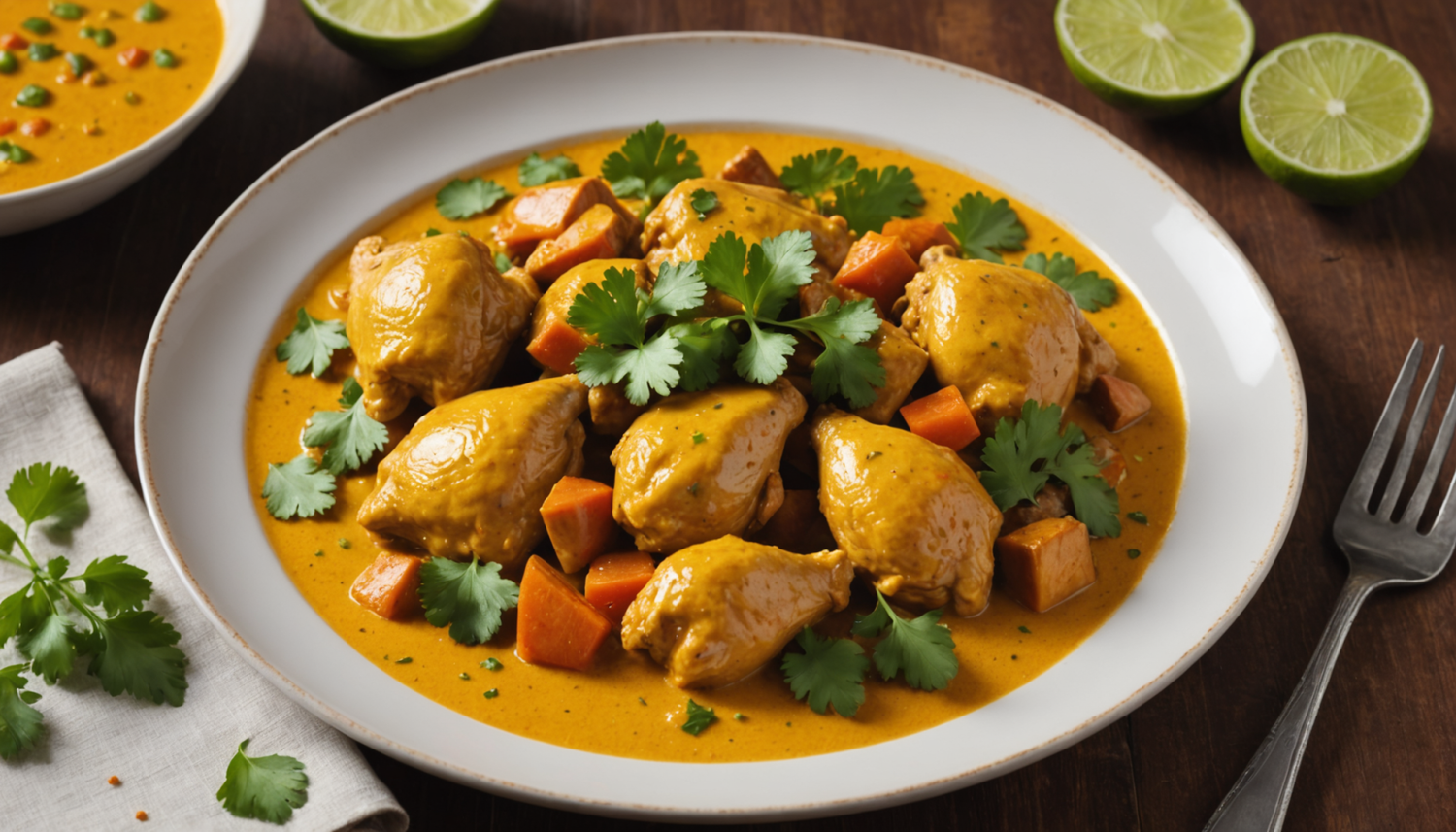
Coconut Curry Chicken Recipe: creamy, aromatic and very easy
Hello! We are going to prepare a dish that has become a staple in my house due to its irresistible combination of textures and aromas. This coconut curry chicken is a recipe that hugs your stomach; it's comforting, incredibly creamy and has just the right touch of exotic without being complicated to make. The magic is in how coconut milk softens the spices, creating a sauce in which you'll want to dip bread non-stop. You don't need to be an expert for it to turn out perfectly, just follow the step-by-step.
Preparation time
Getting organized in the kitchen is half the battle. Here are the estimated times for you to plan your cooking without stress:
- Preparation: 20 minutes
- Cooking: 60 minutes (approximately, over low heat)
- Total: 1 hour and 20 minutes
- Servings: 4 to 6 people
- Difficulty: Easy
Ingredients
To achieve that authentic and aromatic, it is essential to respect the quantities. Let's divide the ingredients so you have everything organized before turning on the heat.
For the chicken and the sauce
- 1.500 kg of finely chopped chicken (you can ask for it like this at the butcher shop)
- 600 ml of coconut milk
- 200 ml of chicken broth or water
- 1 fresh spring onion
- 3 cloves of garlic
- 25 g of curry powder (divided into 20 g for the sauce and 5 g for the marinade)
- Olive oil
- Salt
- Freshly ground black pepper
- 2 chilies (Optional, if you like spicy food)
- Fresh cilantro for garnish
For the rice and vegetable garnish
- 300 g of long-grain rice
- 1 pepper (green or red, as you prefer)
- Carrots (amount to taste)
- Onion (for the vegetable stir-fry)
- Thyme
- Rosemary
- Bay leaves (Optional)
In case you can't find coconut milk, you could try substituting it with liquid cooking cream, although you will lose that exotic characteristic touch. If you prefer a dish with a different profile, such as a chicken stroganoff, cream is ideal, but here coconut is the star. Similarly, if you don't have spring onion, a sweet white onion will work perfectly.
Utensils we will use
We don't need sophisticated equipment; the basics in your kitchen are enough to succeed with this dish.
- A shallow pot or large casserole dish (where all the chicken fits loosely)
- A second medium pot (to cook the vegetables and then the rice)
- Cutting board
- Sharp kitchen knife
- Wooden or silicone spatula
- Colander (essential for washing the rice)
- Small bowl (to set aside chopped ingredients)
How to make Coconut Curry Chicken
We are going to build the flavor layer by layer. Follow this order and you will see how the aromas flood your kitchen.
Pre-marinating the chicken
The first thing is to flavor the meat from within. Season the pieces of chicken generously and sprinkle the 5 g of curry we had set aside. Massage the meat a little so it is well coated. Cover the container and store it in the fridge while we take care of the vegetables. This resting period helps prevent the meat from being bland inside.
Vegetable preparation (Mise en place)
Organization is key. Wash all the vegetables well. Cut the onions into julienne (thin strips), the bell pepper into strips, the garlic finely chopped, and the carrots also into strips or sticks. Set everything aside separately. Having this ready allows us to cook relaxed and without rushing.
Washing the rice
This step is vital for the rice to be loose and not clumpy. Put the rice in a colander and wash it under the tap with cold water, stirring with your hand, until the water runs clear and transparent. This removes excess starch. Drain well and set aside.
Browning the chicken
Pour a good splash of olive oil into the shallow pot over medium-high heat. When hot, add the chicken we had in the fridge. We are going to sear it on both sides until golden. We are not looking to cook it through, just to seal it to enhance the flavor. Once golden, remove it to a plate and set aside.
The base sofrito
In the same pot, taking advantage of the juices released by the chicken (add a little more oil if you see it's too dry), lower the heat to medium. Add half of the chopped garlic and the chopped spring onion. Sprinkle a pinch of salt to help the onion sweat and let it sauté gently until transparent and tender.
Awakening the spices and creating the sauce
Make a small well in the center of the pot by pushing the sautéed vegetables aside and add the rest of the curry powder (the 20 g). Let it toast for a few seconds; you'll smell how the aroma intensifies immediately. Right after, pour in the coconut milk and chicken broth. If you like spicy food, this is the time to add the 2 chilies (remember they are optional). Stir well to integrate everything from the bottom of the pot.
Slow cooking
When the sauce starts to bubble gently, adjust the salt and reincorporate the chicken we had reserved, along with any juices it released on the plate. Lower the heat to medium-low, partially cover, and let it cook for approximately 1 hour. We want the chicken to be tender and the sauce to reduce and thicken.
Preparation of the vegetable garnish
While the chicken is simmering, grab the other pot. Put a drizzle of oil on the heat, add the rest of the garlic and the carrots in strips. Cover and cook until al dente. Then, add the green bell pepper in strips and cook for about 5 more minutes uncovered. We want them to retain color and texture, so be careful not to overcook them. Remove the vegetables to a platter and set aside.
Cooking the aromatic rice
In the same pot where we cooked the vegetables (thus taking advantage of the residual flavor), add a little more oil if needed and incorporate the washed and drained rice. Sauté it for a couple of minutes until the grains look pearly. Add the corresponding water (as indicated on your rice package), salt, and a couple of bay leaves (optional). Cook until it is ready and fluffy.
To finish and serve
Once the chicken has cooked for an hour, the sauce should be thick and shiny. If you added chilies or bay leaves, now is the time to remove them to avoid surprises on the plate. Serve a good portion of chicken bathed in that creamy sauce, accompanied by white rice and sautéed vegetables on the side. If you have any leftover chicken (which I doubt because it's delicious), you could use it the next day shredded in a rich Roasted chicken salad cold, but freshly made it is unbeatable. Sprinkle some fresh chopped cilantro on top just before serving to give it a fresh touch and color.
Nutritional Information
Here's an estimate of the nutritional values per serving for your reference:
- Calories: 580 kcal
- Proteins: 35 g
- Fats: 32 g
- Carbohydrates: 40 g
- Fiber: 4 g
Note: Values are approximate and may vary depending on the type of coconut milk used (full-fat or light) and the exact amount of oil used in the sauté.
5 keys to make it perfect
Sometimes the small details make the difference between a good dish and a memorable one. Here are my secrets:
- Toasting the curry: Don't skip the step of toasting the curry powder for a few seconds in the oil before adding the liquids. The heat releases the essential oils from the spices and enhances the final flavor immensely.
- Quality coconut milk: Try to use coconut milk with a fat percentage higher than 15% (they usually come in cans). This ensures the sauce is creamy and well-bound, not watery.
- The doneness of the vegetables: By cooking the accompanying vegetables separately and leaving them «al dente,» you add a crunchy texture that contrasts wonderfully with the tenderness of the chicken.
- Slow cooking: Patience is an ingredient. Cooking the chicken over low heat for that hour allows the collagen to soften and the meat to almost fall off the bone by itself.
- Fluffy rice: Washing the rice until the starch is removed is essential for it to act as a sponge for the sauce without becoming a sticky paste. If you prefer a fresher touch, a lemon chicken also goes great with rice, but the washing technique is the same.
When is it ideal to enjoy it?
This dish is a true wildcard. It's perfect for a family Sunday meal because it yields a lot and is liked by everyone, from children to grandparents, thanks to the coconut milk greatly softening the spices. It's also a fantastic option if you practice «batch cooking,» as stews gain flavor with resting; the next day it's even better. If you have guests and want something different that doesn't force you to be stuck in the kitchen while they arrive, this is your recipe. Furthermore, if you like to organize themed and summer dinners, a tropical salad with chicken and coconut would be a wonderful appetizer before this main.
Comparison table
Sometimes we get confused with so many curry and sauce recipes. Here I show you how our dish today differs from other popular options.
| Recipe | Key ingredients | Difference/advantage |
|---|---|---|
| Coconut Curry Chicken (Main) | Coconut milk, yellow curry, diced chicken | Perfect balance between creaminess and mild spices. |
| Chicken Tikka Masala | Tomato, yogurt, garam masala | Redder, more acidic and spicier sauce, without dominant coconut. |
| Chicken Korma | Almonds/cashews, yogurt, cream | Much milder, sweeter and with a texture of nuts. |
| Chicken Stroganoff | Mushrooms, sour cream, mustard | European profile, creamy but without Indian spices. |
| Green Curry Thai | Green curry paste, Thai basil, lime | Much spicier, herbaceous and fresh. |
| Butter Chicken | Butter, tomato, cream | Rich butter and tomato flavor, velvety texture. |
| Chicken Fajitas | Peppers, Tex-Mex spices, tortillas | Dry food (no dipping sauce), eaten with hands. |
Frequently asked questions (FAQ)
Share your experience
Cooking is for experimenting and sharing. I'd love to know how it turned out for you, if you dared to use the chilies or if you made any variations with the vegetables. Leave your comment and share your own little tricks with the community!
Culinary glossary
So you don't get lost in any step, here I clarify some terms we have used:
- Julienne: Cutting technique that consists of chopping vegetables (like onion) into long, very thin strips.
- Sweat: Cooking a food (usually onion or garlic) in oil over low heat until it softens and loses its raw color, without browning excessively.
- Sear / Mark: Cooking meat over high heat briefly to brown the surface, keeping the juices inside before a longer cooking.
- Al dente: Cooking point for pasta or vegetables where the food is cooked but maintains a slight firmness when bitten.
- Reduce: Process of boiling a sauce or liquid so that part of the water evaporates, thus concentrating the flavors and thickening the texture.
If you liked this recipe, I encourage you to also try fresh options like the chicken and yogurt pasta salad, ideal for when temperatures rise.
I tried this ‘Chicken Curry with Coconut’ today.
I tried this ‘Chicken Curry with Coconut’ today. I loved how clear the explanation is.
This ‘Chicken Curry with Coconut’ looks amazing. It was a total hit with my family.