



Fresh and Juicy Marinated Tuna Recipe
Hello! We're going to prepare a dish that always saves me when I want to eat something delicious, healthy, and that looks like it's from a restaurant without complicating my life. It's pure flavor, freshness, and that incredible texture that only good tuna gives us.
Preparation time
Getting organized is half the battle in the kitchen, so here are the clear timings so nothing catches you by surprise.
- Preparation: 15 minutes
- Cooking: 0 minutes
- Total: 15 minutes (plus marinating time)
- Servings: 2 people
- Difficulty: Easy
Ingredients
The key here is the quality of the base product; the rest are accompaniments that enhance its natural flavor.
- 200 g fresh tuna loin (previously frozen)
- 3 tablespoons low-sodium soy sauce
- 1 tablespoon extra virgin olive oil
- 1 tablespoon sesame oil (optional)
- 1 teaspoon fresh grated ginger
- 1 small garlic clove
- The juice of half a lemon or lime
- Fresh chopped chives
- Toasted sesame seeds
If you can't find good quality fresh tuna at your fishmonger, you can use good brand frozen tuna; just make sure to thaw it slowly in the bottom part of the fridge a day before to maintain its firm texture.
Utensils we will use
You don't need sophisticated equipment for this, the basics from your kitchen are more than enough.
- Well-sharpened knife (essential for not ruining the fish)
- Clean cutting board
- Medium glass or ceramic bowl
- Small grater (for ginger and garlic)
- Manual juicer or a fork
- Mixing spoons
- Absorbent kitchen paper
Preparation
We are going to go step by step, without rushing but without pausing, to treat this product with the care it deserves.
Fish preparation
- Cleaning and drying. Take the tuna loin out of the fridge. With kitchen paper, thoroughly dry the entire surface of the piece to remove excess moisture or blood; this helps the marinade penetrate better and the flavor be cleaner.
- Cut into cubes. Place the tuna on the board. With the well-sharpened knife, first cut thick fillets approximately 2 centimeters wide. Then, cut those fillets into strips and finally into uniform cubes of about 2x2 centimeters. Try to make a single firm movement with the knife (from back to front) so as not to saw the meat and keep it intact.
- Chill. Once all the tuna is cut, place it in the glass bowl and put it in the fridge for a moment while we prepare the sauce, so it doesn't lose temperature and stays firm.
Marinade preparation
- Aromatic base. In a separate bowl or measuring cup, grate the garlic clove and the piece of fresh ginger. If you don't have a grater, chop them as finely as you can, almost pureed, so you don't find large pieces when eating.
- Liquid emulsion. Add the soy sauce, olive oil, sesame oil (if using), and lemon juice to the bowl. Beat vigorously with a spoon or fork until you see the oil and soy integrate a little.
- Union of flavors. Take the tuna out of the fridge. Pour the marinade mixture over the fish cubes. With a spoon, stir with gentle, enveloping movements so that all pieces are well coated without breaking.
- Resting time. Cover the bowl with a plate or cling film (kitchen plastic wrap) and let it rest in the fridge. The time will depend on your taste: 15 minutes for a mild flavor where the fish predominates, or up to 45 minutes if you like a more intense soy flavor. Don't overdo the time or the lemon will «cook» the meat too much.
To finish and serve
Just before serving, take the bowl out of the fridge. Sprinkle generously with sesame seeds and chopped chives to give it that crunchy and fresh touch. Serve immediately. You can accompany it with some crispy bread toasts or use it to top a bowl of warm white rice. If you have leftover marinade at the bottom of the bowl, don't throw it away, use it to dress the rice or a side salad. Accompany it with white rice or some crackers.
Nutritional Information
Here are the approximate figures so you know what you're eating, without complications.
- Calories: 210 kcal
- Proteins: 28 g
- Fats: 10 g
- Carbohydrates: 2 g
- Fiber: 0.5 g
Values are estimates per serving and may vary depending on the specific ingredients used.
5 keys to make it perfect
Sometimes, the small details are what make the difference between a correct dish and a memorable one. As a private chef, I have learned that success in raw preparations lies in respecting the product and understanding how ingredients interact. Here are my secrets to make your marinated tuna a resounding success.
1. The golden rule of freezing. I won't tire of repeating it because it's for your safety and peace of mind. To avoid problems with anisakis, you must freeze fish at -20ºC for a minimum of 5 days if your freezer is domestic (3 stars or more). This is non-negotiable for raw preparations. Furthermore, cutting the fish when it is still slightly frozen (not a block of ice, but firm) makes it much easier to obtain perfect and straight cubes, as the flesh offers more resistance to the knife.
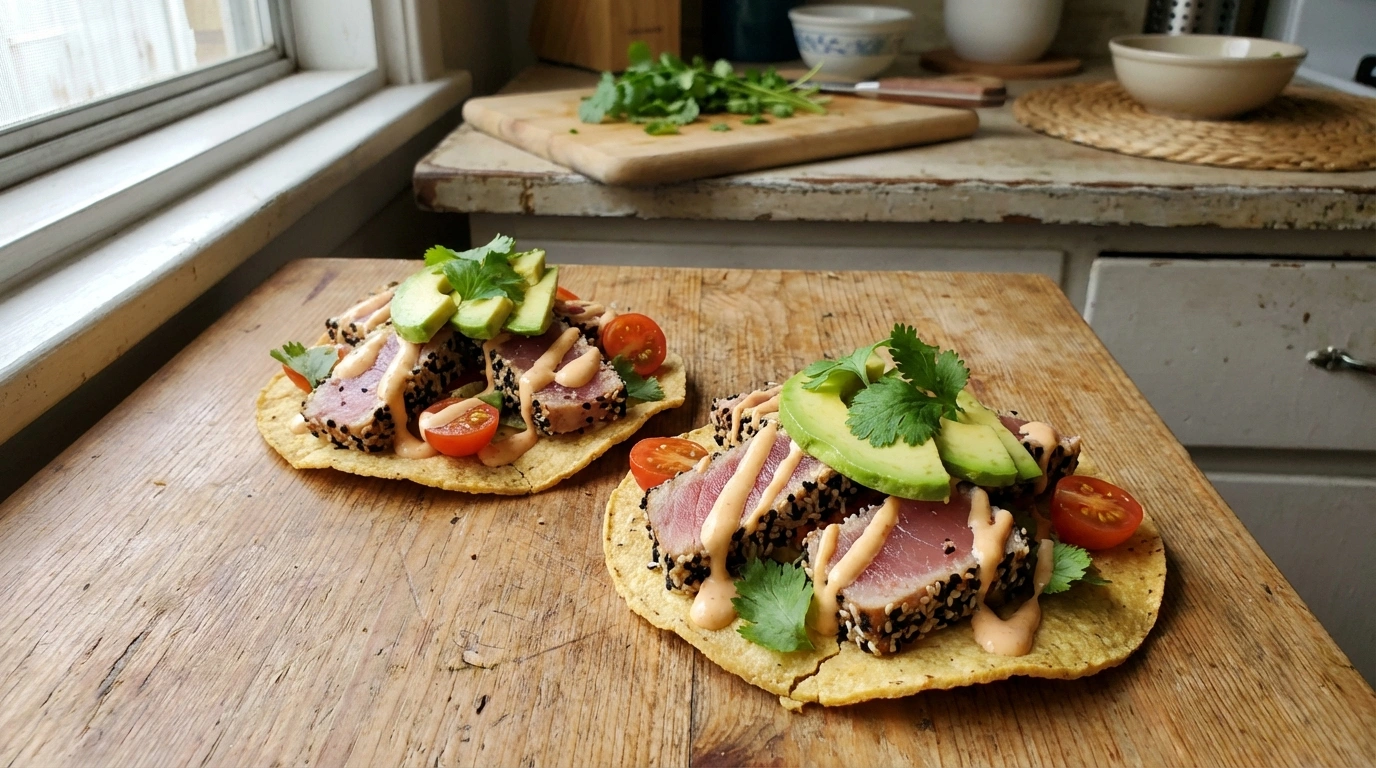
2. Acid balance is vital. The lemon or lime in the marinade not only adds flavor, but chemically begins to denature the fish proteins, changing their color from intense red to a more whitish or grayish tone. If you overdo the amount of citrus or the exposure time, you will end up with tuna with a floury and dry texture instead of juicy. If you like the acidic flavor but want to keep the raw texture intact, add the lemon just at the moment of serving, not in the resting mixture. If you enjoy more intense flavors and seared textures, you might also want to try techniques like tuna tataki, where heat plays that role.
3. Don't drown the fish. Tuna should taste like tuna. The marinade is an accompaniment, not a disguise. A common mistake is to add so much soy sauce that the dish becomes an impossible-to-eat salt bomb. Use good quality soy sauce and respect the quantities. If you feel it's too strong, you can dilute the marinade with a little water or cold fish broth. The goal is to enhance the umami, not to overwhelm the palate.
4. The cut matters more than you think. Using a dull knife is not only dangerous, but it will crush the tuna fibers, causing it to lose its natural juices prematurely. We want clean cuts that shine. Also, try to cut against the grain (the white lines of fat or connective tissue) so that, when chewed, the bite is tender and melts in your mouth. If you cut with the grain, it can be chewy.
5. Play with temperatures. This dish gains a lot from contrast. The tuna should be very cold, freshly taken from the fridge, while the accompaniment can be warm (like sushi rice) or at room temperature. That thermal shock in the mouth is very pleasant. Never leave marinated tuna out of the fridge for too long before eating it, as the fish fat oxidizes quickly and the flavor changes.
When is it ideal to enjoy it?
Marinated tuna is a gastronomic chameleon. Its versatility makes it perfect for those summer dinners on the terrace where no one wants to light a fire and get hot. It's refreshing, light, and very easy to digest, so you won't go to bed feeling heavy. Furthermore, by not requiring immediate cooking, it allows you to enjoy the company of your guests without being enslaved in the kitchen.
It is also a fantastic option as a starter for more formal celebrations. Served in individual tasting spoons or on small toasts, it adds a touch of elegance and sophistication without much effort. It's the kind of dish that looks «luxurious» but is actually very accessible if you know how to shop well. If you have guests who like to take care of themselves, you're sure to succeed, as it fits low-carb, high-protein diets. Even for a quick weekday meal, if you combine it with a good vegetable base, you have a complete meal; something similar to what you would get with a rich salad with fresh tuna, but with a more intense flavor profile thanks to soy.
Comparison table
Sometimes we get confused with so many names for raw fish dishes. Here's a table so you can see where our recipe fits compared to other delicious options.
| Recipe | Key ingredients | Difference/advantage |
|---|---|---|
| Marinated Tuna (This recipe) | Tuna, soy, oil, lemon | Intense flavor by absorption, tender texture |
| Tataki | Whole loin, sesame, fire | Seared on the outside, raw on the inside |
| Ceviche | White fish, lots of lemon, cilantro | Completely «cooked» in citric acid |
| Tartare | Very fine cut, mustard, yolk | Creamy and seasoned on the spot texture |
| Sashimi | Very high-quality fish | No pre-sauce, total purity of the cut |
| Carpaccio | Translucent slices, oil, parmesan | Extremely thin cut, superficial dressing |
| Poke | Large cubes, rice, fruits, seaweed | Complete bowl dish, sweeter and more varied |
Frequently asked questions (FAQ)
Share your experience
Cooking is for experimenting and sharing. Leave your comment and share your own tricks! I'd love to know if you added any secret ingredients or what you served it with.
Culinary glossary
So you don't get lost with any terms and cook properly, here I explain some words we have used.
- Marinate: Technique that consists of submerging a food (raw or cooked) in an aromatic liquid to give it flavor and change its texture before consuming or cooking it.
- Anisakis: Parasite that can be found in fish and cephalopods. It is eliminated by cooking the fish or freezing it beforehand, an essential step for eating it raw.
- Emulsion: Mixture of two liquids that initially do not combine (like oil and lemon or soy) achieving a more or less homogeneous sauce when beaten.
- Umami: Known as the «fifth taste,» it is that savory and deep flavor present in ingredients like soy sauce, ripe tomato, or Parmesan.
- Brunoise: (Although here we use larger cubes) It is a type of cut in cooking that consists of dicing vegetables into very small and regular cubes.






I was surprised by the flavor of this ‘Marinated Tuna’.
What a great idea this ‘Marinated Tuna’ is. I took it to a meeting and it flew off the table. Thanks for sharing.
What a delight!. I loved how clear the explanation is. With lemon and cilantro, it was even better. .
This ‘Marinated Tuna’ looks incredible ✨. I'll make it again this weekend. We all loved it.