Panna cotta with raspberry recipe
The panna cotta with raspberry is a dessert creamy and smooth that combines the delicate texture of cream with the fresh and tart flavor of raspberries. It's perfect for ending a meal with a sweet touch without being cloying, ideal for enjoying in any season. Furthermore, its preparation doesn't require complicated techniques, making it accessible for home cooks.
Preparation time
Knowing the time needed to make this panna cotta will help you better plan your cooking and make the most of the chilling time.
- Preparation: 25 minutes
- Cooking: 10 minutes
- Refrigeration: minimum 4 hours
- Total: approximately 4 hours and 35 minutes
- Servings: 6 individual
- Difficulty: Easy
Ingredients for panna cotta with raspberry
For the panna cotta
- 500 ml of whipping cream (liquid cream)
- 100 ml of whole milk
- 120 g of sugar
- 1 teaspoon of vanilla extract
- 2 ½ teaspoons of unflavored gelatin
- 3 tablespoons of cold water to hydrate the gelatin
For the raspberry coulis
- 200 g of fresh or frozen raspberries
- 80 g of sugar
- 1 teaspoon of lemon juice
- Water (optional) to adjust the texture
If you can't find unflavored gelatin, you can use gelatin sheets, which you should hydrate in cold water before use. For raspberries, if they are frozen, make sure to thaw them beforehand to avoid excess water in the coulis.
Utensils we will use for panna cotta with raspberry
- A saucepan to heat the cream and milk mixture
- Individual molds or serving cups
- A small bowl to hydrate the gelatin
- Fine sieve for the raspberry coulis
- Blender or hand mixer to blend the raspberries
- Spoon or silicone spatula for mixing
- Measuring jug or cup for liquids
How to make panna cotta with raspberry step by step
Prepare the gelatin
- Hydrate the gelatin: Place the 2 ½ teaspoons unflavored gelatin in a bowl with 3 tablespoons of cold water. Wait 5 minutes until it absorbs the liquid and takes on a spongy texture. This is important so that the gelatin dissolves well without lumps and the panna cotta sets correctly.
Prepare the creamy base
- Heat the cream and milk with sugar: In a saucepan combine 500 ml whipping cream, 100 ml whole milk y 120 g of sugar. Cook over medium heat, stirring constantly to dissolve the sugar without letting the mixture boil. It is essential to avoid boiling so that the cream does not curdle and maintains the desired creamy texture.
- Add vanilla and gelatin: Remove the saucepan from the heat, stir in a teaspoon of vanilla extract and add the hydrated gelatin. Stir well until the gelatin is completely dissolved, leaving no visible pieces.
- Pour into molds: Distribute the mixture into individual molds or cups. Let it cool to room temperature for a few minutes before transferring to the refrigerator.
Refrigerate to set
- Chill the panna cotta: Place the molds in the refrigerator for at least 4 hours so that the mixture acquires a firm but smooth texture. Patience is key here to achieve the classic panna cotta body.
Prepare the raspberry coulis
- Cook raspberries and sugar: In a separate saucepan combine 200 g of raspberries, 80 g of sugar and a teaspoon of lemon juice. Cook over medium heat for 5 to 7 minutes, stirring occasionally until the fruit breaks down and releases juice. The lemon enhances the natural acidity and balances the sweetness.
- Blend and strain the sauce: Blend the mixture and pass it through a fine sieve to remove the seeds, achieving a smooth coulis. You can adjust the texture with a little water if it's too thick.
To finish and serve
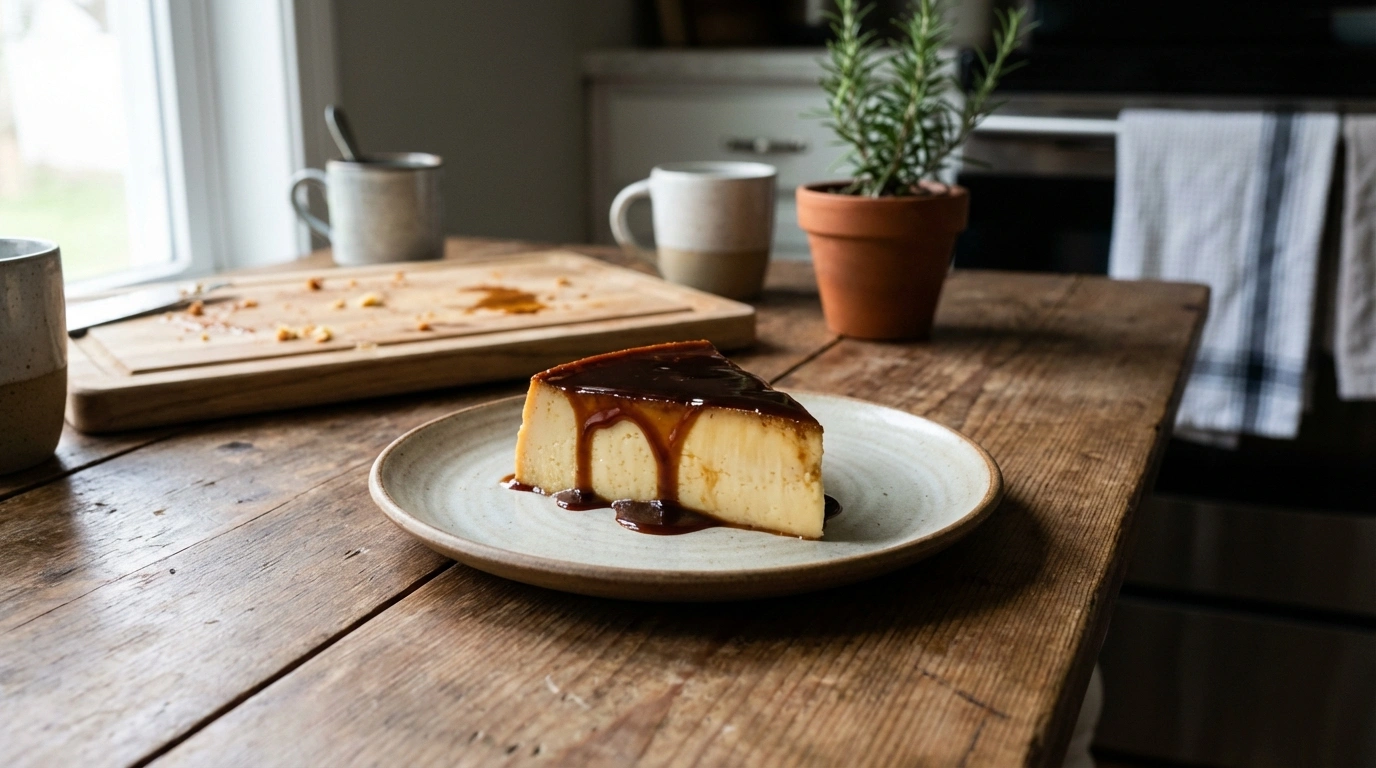
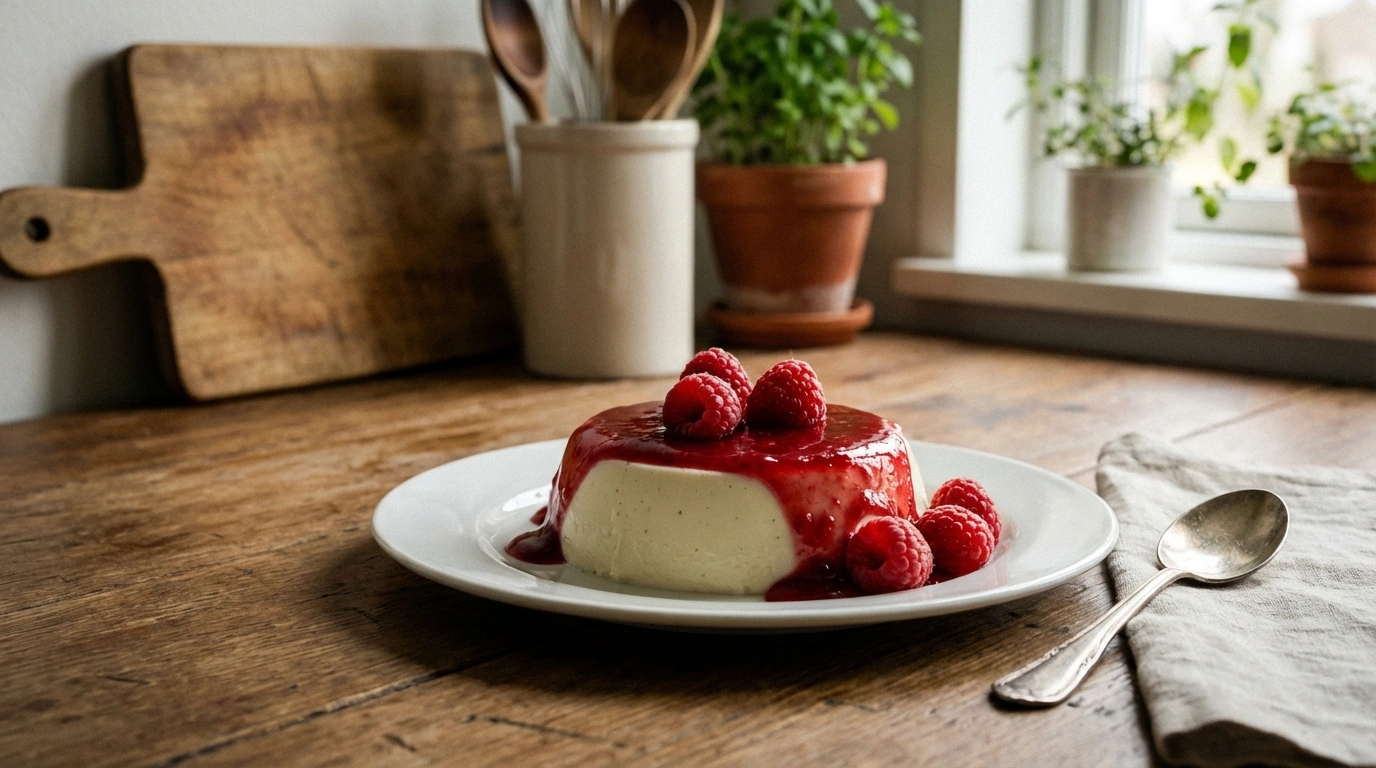
Before serving, unmold the panna cotta by briefly dipping the molds in warm water to facilitate extraction. Place the panna cotta on the plate or serve directly in glasses. Cover with a generous layer of raspberry coulis and decorate with some fresh raspberries and, if desired, a mint leaf for a fresh visual touch. You can accompany it with more panna cotta recipes with red fruits for various presentations.
The benefits of key ingredients in panna cotta with raspberry
Each ingredient is important not only for its flavor but also for its nutritional properties. Whipping cream provides healthy fats and essential calcium for bones. Whole milk contributes proteins and vitamins D and B12. Raspberries are rich in antioxidants, vitamin C, and fiber, elements that support the immune system and improve digestion. Gelatin, in addition to shaping the dessert, has benefits for skin, joints, and intestinal health.
By integrating these components, this dessert is not only a pleasure for the palate but also complements a balanced diet when consumed in moderation.
Ideal pairings for panna cotta with raspberries
The contrast between creaminess and acidity facilitates several options to accompany this dessert. A sparkling rosé wine enhances the freshness of the raspberries, while an iced hibiscus tea adds floral aromas and a slight acidity that harmonize with the coulis. For a warm contrast, a black espresso coffee highlights the smoothness of the panna cotta. For breakfasts or snacks, accompanying it with almond cookies adds a crunchy texture that complements the delicacy of the dessert. These pairings can be adapted to tastes and occasions.
Creative variations with panna cotta and red fruits
Beyond raspberries, panna cotta allows for mixtures with different red fruits to enrich flavors and textures. The combination with strawberries and coconut cream, for example, adds a tropical profile and a distinct sweet note. Another alternative is to mix with red berries and lemon cream for a dessert with more acidity and freshness. It is also common to add a crunchy layer of cookie or sponge cake at the base to vary the experience. Taking advantage of different fruits and presenting varieties on a table can transform a simple dessert into a highlight of your menu.
For those who want to explore, one option is to prepare the yogurt jelly with red berries, which offers a lighter and more refreshing texture.
Key steps to ensure success in panna cotta with raspberry
Heat control: It is vital not to let the cream and milk mixture boil to prevent the texture from changing. Maintaining a medium heat and stirring helps dissolve the sugar without problems.
Correct gelatin hydration: This stage is key for the panna cotta to set well without becoming lumpy. A 5-minute soak in cold water is ideal.
Sufficient refrigeration time: Respecting the minimum 4 hours for the dessert to acquire firmness and texture allows for better handling when serving.
Blend and strain the coulis: This step gives a professional and subtle finish by removing the seeds, leaving only the essence of the fruit.
Careful unmolding: A brief bath in warm water softens the panna cotta for extraction without breaking it.
Panna cotta with raspberry in different seasons and occasions
This dessert is light and fresh, making it ideal for spring and summer celebrations, when red fruits are at their best. At family events or special dinners, it provides a sweet and elegant finish that is not heavy. Its creamy texture and balanced flavor allow it to be offered as an option for guests of all ages. In informal gatherings, it can be presented in individual glasses to facilitate consumption and serve as a sweet treat.
Questions to explore more about panna cotta with raspberry
What gelatin alternatives exist to make panna cotta without animal-derived ingredients? How does the freshness of raspberries influence the flavor of the coulis? Can the sweetness be adjusted for specific diets? How important is the quality of the cream? What are the differences between unmolding panna cotta and serving it directly in glasses? These questions open avenues for experimentation and improvement according to personal preferences. Furthermore, knowing techniques such as correct gelatin hydration or coulis execution helps perfect the final result.
Inspiration for more creamy and fruity desserts at home
If you liked this dessert, you can continue experimenting with similar creations such as chocolate and Baileys mousse or mango cheesecake cups. These desserts share the characteristic of being unctuous and delicate, combining well with fresh fruits that provide freshness and color. The variety in textures and flavors will add versatility to your home recipe book and allow you to adapt desserts for all kinds of situations.
Remember that opting for desserts with a creamy base and fruit sauces it is an excellent way to maintain flavor without complexity in daily cooking.
This video clearly explains the basic technique to achieve a perfect panna cotta with raspberry coulis, showing each stage in detail and tips to avoid common mistakes.
A useful guide for specific tips on preparing homemade panna cotta, from ingredient selection to unmolding and final presentation.