


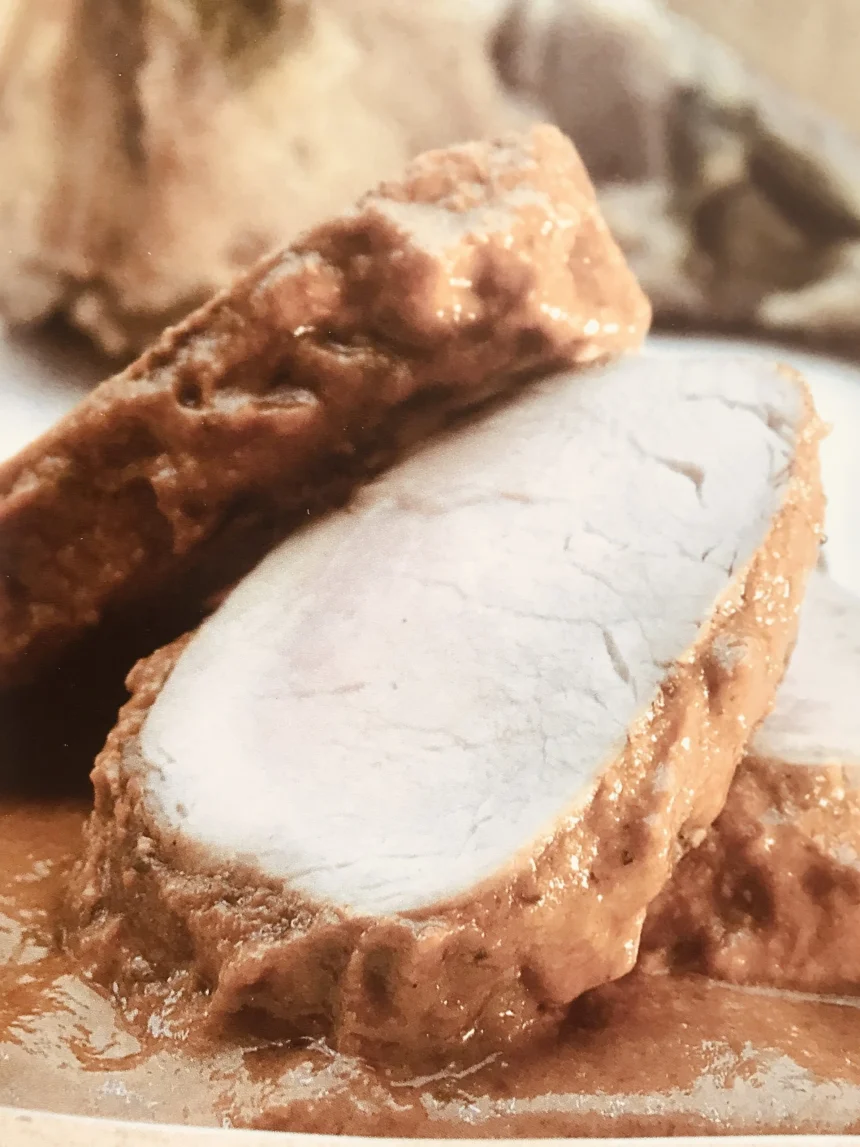
Peanut Pork Recipe from Mom's Kitchen
Hello! We're going to prepare one of those soul-hugging dishes. This recipe is a family treasure that my mother prepared with great affection and that was always a celebration at home. It's about tender pork bathed in a smooth and aromatic peanut and dried chili sauce. It's comforting, full of flavor, and perfect for showing love through food.
- Peanut Pork Recipe from Mom's Kitchen
- Preparation time
- Ingredients
- Utensils we will use
- Step-by-step preparation
- Initial cooking of the meat
- Preparation of the sauce base
- Blending and forming the sauce
- Seasoning and blending of flavors
- To finish and serve
- Nutritional Information
- 5 keys to make it perfect
- When is it ideal to enjoy it?
- Comparison table
- Frequently asked questions (FAQ)
- Share your experience
- Culinary glossary
Preparation time
Getting organized is key in the kitchen, so here are the estimated times so nothing takes you by surprise:
- Preparation: 20 minutes
- Cooking: 60 minutes
- Total: 1 hour 20 minutes
- Servings: 4 to 6 people
- Difficulty: Intermediate
Ingredients
- 1 kg of solid pork meat
- 2 liters of water
- 3 guajillo chilies (washed, deveined, and deseeded)
- 1 charred tortilla (lightly burned directly over the fire)
- 1 cup of peanuts (natural, unsalted, and not spicy)
- ½ white onion
- 1 ripe red tomato
- 2 cloves of garlic
- Vegetable oil for frying (as needed)
- Salt to taste
If you can't find solid pork meat, you can substitute it with loin or leg cut into pieces; the result will be just as delicious although cooking times may vary slightly. If you don't have a tortilla to char, a piece of toasted stale bread can serve to thicken, but the smoky flavor of the tortilla is special.
Utensils we will use
- Large pot for cooking the meat
- Large frying pan for frying
- Blender
- Fine mesh strainer
- Wooden spoon or spatula
- Knife and cutting board
- Kitchen tongs (optional, for handling the chilies)
Step-by-step preparation
Initial cooking of the meat
The first thing is to make sure the meat is perfectly cooked. There's nothing worse than tough meat in a stew, so we'll give it its time.
- Place the kilo of solid meat in the large pot.
- Pour 2 liters of water until the meat is completely covered.
- Add a teaspoon of salt (or to taste) to the water.
- Turn the heat to medium-high and let it cook.
- Continue cooking until the water is almost completely consumed and the meat feels soft when pricked with a fork. If you notice that there's not enough water and the meat is still tough, add a little more hot water.
- Place the kilo of solid meat in the large pot.
- Pour 2 liters of water until the meat is completely covered.
- Add a teaspoon of salt (or to taste) to the water.
- Turn the heat to medium-high and let it cook.
- Continue cooking until the water is almost completely consumed and the meat feels soft when pricked with a fork. If you notice that there's not enough water and the meat is still tough, add a little more hot water.
Preparation of the sauce base
This is where the magic of flavor is born. We are going to awaken the aromas of our ingredients through direct heat.
- Place the frying pan over medium heat without oil first to char the tortilla until it's well burnt (black in parts), set it aside.
- In the same frying pan, now, add a drizzle of oil and let it heat up.
- Add the 3 guajillo chilies (already cleaned), the cup of peanuts, the half chopped onion, the whole tomato, and the 2 cloves of garlic.
- Fry everything, stirring constantly. Be careful with the chilies and peanuts, as if they burn too much they can make the sauce bitter. We are looking for a nice golden color and for the onion to look transparent.
- When everything is well browned and aromatic, remove from heat immediately.
- Place the frying pan over medium heat without oil first to char the tortilla until it's well burnt (black in parts), set it aside.
- In the same frying pan, now, add a drizzle of oil and let it heat up.
- Add the 3 guajillo chilies (already cleaned), the cup of peanuts, the half chopped onion, the whole tomato, and the 2 cloves of garlic.
- Fry everything, stirring constantly. Be careful with the chilies and peanuts, as if they burn too much they can make the sauce bitter. We are looking for a nice golden color and for the onion to look transparent.
- When everything is well browned and aromatic, remove from heat immediately.
Blending and forming the sauce
We are going to integrate everything to achieve that characteristic velvety texture of the encacahuatado. Patience when blending is important.
- Place all the fried ingredients (chilies, peanuts, onion, garlic) in the blender cup.
- Take the tomato you fried and carefully remove its skin (it will detach easily due to the heat). Add it to the cup.
- Add the charred tortilla we reserved at the beginning.
- Add a little of the meat cooking broth or clean water to facilitate blending.
- Blend at high speed until you get a mixture as smooth and soft as possible. Take your time here so that the peanuts are well ground.
- Place all the fried ingredients (chilies, peanuts, onion, garlic) in the blender cup.
- Take the tomato you fried and carefully remove its skin (it will detach easily due to the heat). Add it to the cup.
- Add the charred tortilla we reserved at the beginning.
- Add a little of the meat cooking broth or clean water to facilitate blending.
- Blend at high speed until you get a mixture as smooth and soft as possible. Take your time here so that the peanuts are well ground.
Seasoning and blending of flavors
The final step where the meat and sauce meet to create the definitive dish.
- In a saucepan or deep skillet, heat a little oil over medium heat.
- Lightly brown the already cooked meat pieces to seal their flavor and give them texture. This step is a bit reminiscent of how we started the pork carnitas, looking for that appetizing golden color.
- Pour the sauce from the blender over the meat, obligatorily passing it through a strainer to remove any chili skin or peanut piece that has not been ground.
- Let everything cook together over low heat. Stir gently so that the sauce does not stick to the bottom.
- Wait for the sauce to change from a bright red color to a darker one and become thick, a sign that it is well seasoned. Adjust salt if necessary.
- In a saucepan or deep skillet, heat a little oil over medium heat.
- Lightly brown the already cooked meat pieces to seal their flavor and give them texture. This step is a bit reminiscent of how we started the pork carnitas, looking for that appetizing golden color.
- Pour the sauce from the blender over the meat, obligatorily passing it through a strainer to remove any chili skin or peanut piece that has not been ground.
- Let everything cook together over low heat. Stir gently so that the sauce does not stick to the bottom.
- Wait for the sauce to change from a bright red color to a darker one and become thick, a sign that it is well seasoned. Adjust salt if necessary.
To finish and serve
Once the sauce has thickened and the fat has risen slightly to the surface, the stew is ready. Remove from heat and let rest for about 5 minutes for the flavors to settle. Serve hot. The traditional and most delicious way to accompany it is with fluffy white rice to absorb the sauce and freshly made black beans from the pot. If you like to experiment with pork, you will see that this texture is very different from that of the stuffed pork loin, as here the sauce is the absolute protagonist.
Nutritional Information
- Calories: 450 kcal
- Proteins: 35 g
- Fats: 28 g
- Carbohydrates: 15 g
- Fiber: 4 g
Note: Values are approximate estimates per serving and may vary depending on the size of the meat cuts and the amount of oil used in frying.
5 keys to make it perfect
Achieving a perfect encacahuatado requires attention to detail. Sometimes, recipes seem simple, but the secret lies in the technique. Here are my tips to make it spectacular on your first try:
1. The peanut's point: When frying the peanuts, don't get distracted. They go from golden to burnt in a matter of seconds. A burnt peanut will bitter your entire sauce, and there will be no way to fix it. Stir them constantly and remove them as soon as they smell toasted.
2. The charred tortilla: Do not omit this step or substitute it with cornstarch if you can avoid it. The slightly burnt tortilla not only thickens the sauce but also gives it a rustic and deep flavor that defines this dish. It's grandmothers' secret to giving body to stews.
3. Strain the sauce: Even if you have a very powerful blender, I recommend straining the sauce. The texture of the encacahuatado should be velvety, elegant on the palate. Residues from the chili skin can be bothersome when eating.
4. Cooking the meat: Make sure the meat is truly tender before adding the sauce. The sauce is dense, and if you cook raw meat directly in it, it will take much longer, and you run the risk of it sticking or burning the bottom of the pot.
5. The salt balance: Peanuts can sometimes trick the palate. If you use water from cooking the meat that already had salt, taste the sauce before adding more salt at the end. It's better to adjust during the final simmer.
When is it ideal to enjoy it?
This dish is synonymous with home and family celebration. It's ideal for a Sunday lunch where the whole family gathers around the table. It's not a quick everyday meal, but a stew that invites conversation and dipping the sauce with warm tortillas. It also works wonderfully for birthdays or national holidays, as it yields a good amount and is usually liked by everyone for not being excessively spicy, unlike other complex dishes like Oaxacan black mole, which can be more intense for some palates. In 2026, we continue to value these moments of real connection without screens, and a good stew is the perfect excuse.
Comparison table
| Recipe | Key ingredients | Difference/advantage |
|---|---|---|
| Pork Encacahuatado (Main) | Peanut, guajillo chili, solid meat | Creamy and smooth flavor, thickened with tortilla. |
| Red Pipian | Pumpkin seeds, ancho chili | Pumpkin seed base, more earthy flavor. |
| Pork Roast | Ancho chili, orange, bay leaf | More acidic and spicy, without nuts. |
| Pork Adobo | Vinegar, dried chilies, spices | Lighter and more vinegary sauce for preservation. |
| Cochinita Pibil | Annatto, sour orange, banana leaf | Oven or steam cooking, distinctive citrus flavor. |
| Mole Poblano | Chocolate, multiple chilies, spices | Much more complex, sweet, and dark than the encacahuatado. |
| Pork in Green Sauce | Tomatillo, serrano chili, cilantro | Acidic and fresh profile, not creamy or dry. |
Frequently asked questions (FAQ)
Share your experience
Cooking is for experimenting and sharing. I would love to know how your encacahuatado turned out. Did you add your personal touch? Perhaps a little more garlic or did you accompany it with something different? Leave your comment and share your own findings! It makes me very happy to read how everyone adapts these mom's recipes to their own home.
Culinary glossary
So that you have no doubts, here I explain some terms we use in the recipe:
Tatemada: Comes from the Nahuatl «tlatemati». It means to place a food (such as tortillas, chilies, or tomatoes) over direct fire or on a comal until it is lightly toasted or charred. This provides a unique smoky flavor.
Devein: It is the process of opening dried chilies to remove their internal veins and seeds. This is done to reduce the spiciness and prevent the sauce from being too aggressive or having unwanted textures.
Solid Meat: A term widely used in Mexico to refer to pork that is pure pulp, without bone, skin, or excess fat. It is firm and clean meat.
Sauté until translucent: It is frying onion and garlic over medium heat until they become transparent or translucent, releasing their sweet flavor before they get too browned.
Season: It's not just adding salt. It is the process of cooking the sauce (usually after blending it) in hot oil so that the raw or cooked ingredients integrate, change color, and develop their final flavor.






I loved the combination of flavors in this ‘Peanut Pork’. The recipe is very well explained.
Impeccable texture and flavor .
What a great idea this ‘Peanut Pork’ is. I prepared it yesterday and it turned out spectacular.