


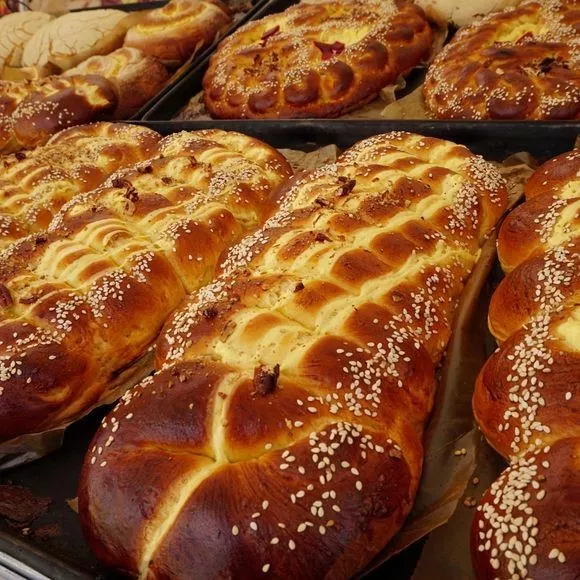
Pulque Bread Recipe (Coahuila)
Pulque Bread is an emblematic traditional bread from Saltillo, Coahuila, known for its spongy texture and unique flavor thanks to the use of pulque as a natural ferment. This recipe blends the history and culture of the region with simple and natural ingredients to create a sweet bread that is a true Mexican gastronomic treasure.
- Pulque Bread Recipe (Coahuila)
- Preparation time
- Ingredients
- Utensils we will use
- Preparation
- 1. Ingredient preparation
- 2. Integration of dry ingredients and butter
- 3. Resting and fermentation
- 4. Assembling and baking the bread
- To finish and serve
- Nutritional Information
- 5 keys to perfect Pulque Bread
- When is it ideal to enjoy Pulque Bread?
- Comparison with other traditional Mexican breads
- Share your experience with Pulque Bread
- Culinary glossary to understand Pulque Bread
Preparation time
Learn the time needed to prepare this artisanal delight from Coahuila.
- Preparation: 20 minutes
- Cooking: 30 minutes
- Total: 50 minutes
- Servings: 8
- Difficulty: Easy
Ingredients
For the dough
- 5 eggs
- 1 cup white pulque
- 1 cup of sugar
- 4½ cups sifted wheat flour
- 1 cup melted butter at room temperature
- 1 tablespoon of dry yeast dissolved in 2 tablespoons of water
If you can't easily find pulque, you can substitute it with a mixture of warm milk with a little vinegar or lemon to create a similar acidic environment that helps fermentation, although the flavor will be less characteristic.
Utensils we will use
- Large pot or baking tray
- Mixer or hand whisk (you can use a sturdy fork or whisk to beat the egg whites)
- Spoon or spatula for mixing
- Large mixing bowl
- Sieve for the flour
- Wax paper to place on the tray and prevent the bread from sticking
Preparation
1. Ingredient preparation
- Beat egg whites with pulque: Break the 5 eggs and separate the whites from the yolks. In a bowl, mix the whites with the cup of white pulque and beat for approximately 10 minutes until you get a frothy and light mixture. The action of the pulque helps the bread become fluffy by fermenting naturally.
- Incorporate yolks and sugar: Without stopping beating the egg whites, add the yolks and sugar little by little. Mix until completely integrated to achieve a homogeneous and sweet dough.
2. Integration of dry ingredients and butter
- Add flour: Sift the 4½ cups of wheat flour and add it gradually to the mixture; this prevents lumps and facilitates homogeneous absorption.
- Incorporate butter and yeast: Add the melted butter at room temperature for better integration and a smooth texture. Add the tablespoon of dry yeast dissolved in two tablespoons of water, which replaces traditional yeast with fermentation assisted by pulque.
- Form dough: Mix all ingredients until an elastic and sticky dough is obtained.
3. Resting and fermentation
- Let rest: Cover the bowl with a clean cloth or plastic and let the dough rest for 30 minutes. This resting period allows the yeast and pulque to act to ferment the dough and achieve the characteristic texture.
4. Assembling and baking the bread
- Prepare baking sheet: Place parchment paper on the baking sheet to prevent the bread from sticking during baking.
- Form the breads: Divide the dough into individual portions and form the breads with wet hands to prevent the dough from sticking.
- Bake: Preheat the oven to 220 ºC. Bake the breads for 30 minutes or until the surface is golden and a toothpick inserted comes out clean.
To finish and serve
Remove the breads from the oven and let them cool on a wire rack or clean surface to prevent moisture at the base. Pulque bread is best enjoyed fresh, accompanied by a café de olla or a traditional atole that enhances its sweet flavor and soft texture. It is ideal for breakfast or a snack, and also as a light dessert at any time of day.
Nutritional Information
- Calories: 320 kcal
- Proteins: 7 g
- Fats: 10 g
- Carbohydrates: 48 g
- Fiber: 2 g
These values are approximate per serving and may vary depending on the brand and type of ingredients used.
5 keys to perfect Pulque Bread
The texture and flavor of Pulque Bread depend on some details that make a big difference. Here I share 5 keys to always achieve a fluffy and delicious bread.
- Use fresh pulque: Pulque is the natural leavening agent and its freshness makes a difference in fermentation. If it's too old, it can affect the final texture of the bread.
- Beat the egg whites well with the pulque: This step incorporates air into the dough, essential for a light bread. Don't rush it, take your time for the aerated mixture to form.
- Don't add all the flour at once: Incorporate the flour little by little to avoid lumps and not overload the dough, which could make the bread denser.
- Butter at room temperature: If the butter is too cold, it won't integrate well. Melt it and let it cool before adding to achieve a smooth texture.
- Respect the resting time: Fermentation is vital for that unique flavor and spongy texture. Don't rush the process or omit this stage.
When is it ideal to enjoy Pulque Bread?
Pulque Bread is ideal to enjoy during breakfast accompanied by a café de olla or atole, especially during cold days, where its soft texture and sweet flavor provide warmth. It is also an excellent option for family snacks or local celebrations in Coahuila, where its tradition remains alive. Its versatility allows it to be combined with pastry cream or jams, reinforcing its presence in regional gastronomy.
Comparison with other traditional Mexican breads
| Recipe | Key ingredients | Difference/advantage |
|---|---|---|
| Pulque Bread (Coahuila) | Pulque, wheat flour, butter | Use of pulque as a natural ferment for spongy texture and unique flavor |
| Bread of the Dead | Egg, flour, sugar | Sweet flavor with orange blossom flavoring, special bread for Day of the Dead |
| Corn Bread | Corn, flour, sugar | Moist texture and corn flavor, different from wheat bread |
| Concha | Flour, sugar, butter | Sweet bread with a crunchy topping and granulated sugar |
| King's Cake | Candied fruits, flour, sugar | Festive bread with fruits and a circular shape, a tradition of Three Kings' Day |
| Telera | Flour, yeast, water | Basic white bread for tortas in Mexico, saltier and denser |
| Bolillo | Flour, yeast, water | Crunchy bread, similar to a baguette in size, not sweet |
Share your experience with Pulque Bread
The kitchen is for experimenting and sharing. Pulque Bread is a traditional recipe that invites you to add your personal touch. Did you try adding pastry cream in the center or pairing it with a special coffee? Tell us how it turned out, if you tried variations, or if you have any tricks to achieve the best texture. Your experience can inspire others to discover this gem of Mexican artisanal bakery.
Culinary glossary to understand Pulque Bread
- Pulque: Fermented drink from maguey sap, used here as a natural leavening agent in the bread dough.
- Sift: Sifting flour to remove lumps and aerate the ingredient, facilitating mixing.
- Dry yeast: Culture of microorganisms that ferment the dough and promote bread growth.
- Fermentation: Biological chemical process that produces gases in the dough, making it grow and become spongy.
- Beat: Action of mixing ingredients to incorporate air and achieve a light and homogeneous texture.




What a great idea this ‘Pulque Bread (Coahuila)’ is. I made it for dinner and everyone was happy. With toasted walnuts it was even better. .
I loved the combination of flavors in this ‘Pulque Bread (Coahuila)’. It reminded me of a version I tried on a trip. Next time I'll make it with chipotle sauce. .
What a delight! this ‘Pulque Bread (Coahuila)’ ❤️. I took it to a meeting and it flew off the table.