
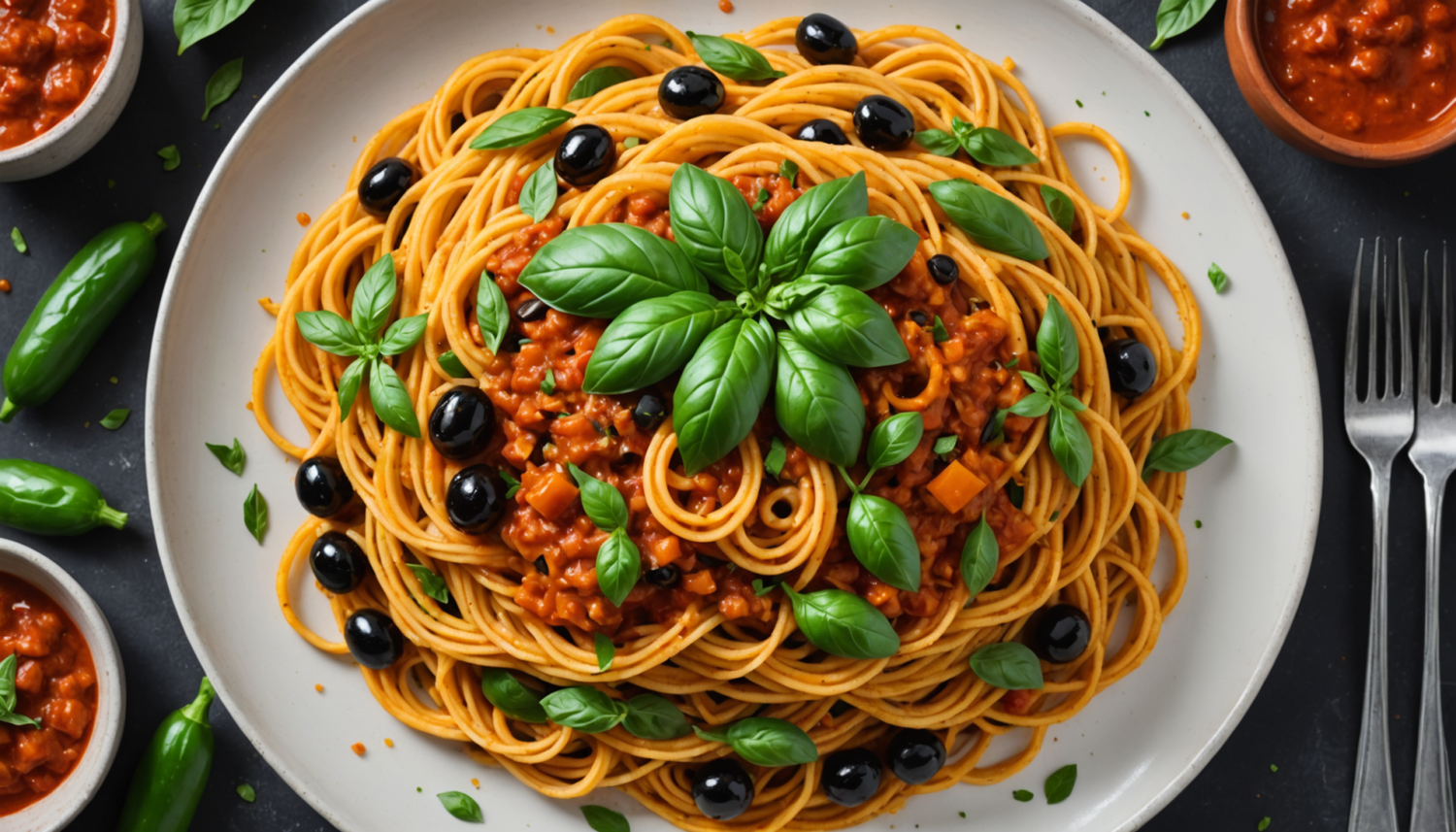
Spaghetti Squash Recipe with Mediterranean Sauce
Hello! Let's prepare some delicious spaghetti squash that will surprise you. It's an incredible way to eat vegetables with the feeling of enjoying a good plate of pasta, but much lighter and fresher. Today we'll give it a special touch with a Mediterranean sauce full of aromas that will turn this vegetable into a complete and flavorful meal. It's ideal if you're looking for a comforting dinner or a light, uncomplicated meal.
Preparation time
Getting organized is key in the kitchen, so here are the times for you to plan your cooking without stress.
- Preparation: 15 minutes
- Cooking: 45 minutes
- Total: 1 hour
- Servings: 2 to 4 people
- Difficulty: Easy
Ingredients
- 1 medium spaghetti squash (approx. 1.5 kg)
- 2 tablespoons extra virgin olive oil (for the squash)
- Salt and black pepper to taste
For the Mediterranean Sauce
- 2 tablespoons of extra virgin olive oil
- 1 red onion or medium white
- 2 cloves of garlic
- 400 g crushed tomatoes (natural or good quality canned)
- 1 handful pitted black olives (Kalamata type are ideal)
- 1 teaspoon dried oregano
- 10 fresh basil leaves
- 100 g of feta cheese crumbled (Optional)
If you can't find spaghetti squash, unfortunately there isn't an exact substitute that creates the natural strands, but you could use spiralized zucchini (zoodles), although the cooking time would be much shorter (just sautéed). If you don't have feta cheese, goat cheese or a little grated Parmesan work very well to give that final salty touch.
Utensils we will use
- Large cutting board (squash is hard and you need stability)
- Well-sharpened chef's knife
- Tablespoon (to remove seeds)
- Baking tray
- Fork (essential for pulling out the strands)
- Large frying pan or saucepan for the sauce
- Wooden or silicone spatula
Preparation
Prepare the squash
Preheat your oven to 200°C. While it heats up, wash the squash skin very well under the tap and dry it. Firmly and carefully, cut the squash in half lengthwise. Use a spoon to scrape out and remove all the seeds and central fibers; the cavity should be clean.
Roast the base
Brush the inside of both halves with olive oil and season with salt and pepper. Place them face down (skin side up) on the baking sheet. This creates steam inside and cooks the pulp perfectly. Bake for about 40 to 50 minutes. You'll know it's ready if, when you prick the skin with a fork, it goes in smoothly without resistance.
Make the sofrito
While the squash is in the oven, we'll make good use of the time. Dice the onion into small cubes and thinly slice the garlic. In a frying pan over medium heat, warm the oil and add the onion. Let it sauté gently until transparent, about 5-7 minutes. Add the garlic and cook for 1 more minute until fragrant, being careful not to burn it.
Cook the sauce
Add the crushed tomatoes and oregano to the pan. Lower the heat and let it cook slowly for about 15 minutes for the tomato to lose acidity and thicken. Add the sliced black olives. Taste and adjust salt if necessary.
Create the spaghetti
Take the squash out of the oven and let it rest for 5 minutes so you don't burn yourself. With the help of a fork, scrape the pulp from the edge towards the center. You'll see how long, pasta-like strands magically come off. Separate all the flesh from the skin.
To finish and serve
Incorporate the strands of spaghetti squash directly into the pan with the hot sauce and mix gently so that they are well impregnated with the flavors without breaking too much. Turn off the heat. Add the fresh basil torn with your hands and crumbled feta cheese on top just before serving. Serve hot to enjoy this healthy gourmet experience.
Nutritional Information
- Calories: 320 kcal
- Proteins: 8 g
- Fats: 22 g
- Carbohydrates: 28 g
- Fiber: 6 g
Note: Values are approximate estimates per serving and may vary depending on the size of the squash and the exact amount of cheese or oil used.
5 keys to make it perfect
Making this dish shine depends on small details that we sometimes overlook. Here are my secrets to ensure success:
- The cooking point is vital: If you overcook it in the oven, the squash will turn into a puree instead of strands. Check at 40 minutes; it should be tender but firm, what we call «al dente» in traditional pasta.
- Avoid excess water: The squash releases a lot of water. If, when scraping it, you notice a lot of liquid at the bottom of the shell, place the strands on a colander a few minutes before mixing them with the sauce. A watery sauce ruins the experience.
- Season the squash: Don't rely only on the sauce. The squash pulp is sweet and needs its own pinch of salt before baking to balance the final flavors.
- Fresh ingredients: Being a vegetarian recipe with few elements, the quality of the tomato, olive oil, and fresh basil makes all the difference between a mediocre dish and a delicious one.
- Correct cut: Always cut the squash lengthwise (from stem to base) to get long, beautiful strands. If you cut it crosswise, the fibers will be shorter.
When is it ideal to enjoy it?
This dish of vegetable pasta is incredibly versatile. It's perfect for weeknight dinners when you want something comforting but that won't leave you feeling heavy before bed, as it is a low-carb meal. It's also a star option for when you have vegetarian or celiac guests, as it is naturally gluten-free and looks very appealing on the plate. In the autumn and winter months, when pumpkin is at its best, is when I most enjoy preparing it for the family.
Comparison table
| Recipe | Key ingredients | Difference/advantage |
|---|---|---|
| Pumpkin Spaghetti (Current recipe) | Pumpkin, tomato, olives | Vegetable base, light and gluten-free |
| Carbonara Pasta Classic | Wheat pasta, egg, guanciale | Much more caloric and heavy |
| Zoodles (Zucchini Spaghetti) | Raw or sautéed zucchini | More watery and crunchy texture, quick cooking |
| Spaghetti Bolognese | Minced meat, tomato, pasta | Meat dish with more protein and fat |
| Sweet Potato Noodles (Yam) | Spiralized sweet potato | Sweeter and with more starch/carbohydrates |
| Pesto Pasta Genoese | Basil, pine nuts, parmesan | Intense herbaceous flavor, no tomato base |
| Salad of Cold Pasta | Short pasta, mayonnaise or vinaigrette | Served cold, ideal for summer, less comforting |
Frequently asked questions (FAQ)
Share your experience
Cooking is for experimenting and sharing. I would love to know how your spaghetti squash strands turned out or if you gave it your personal touch with a different herb. Leave your comment and share your own little tricks so we can all learn!
Culinary glossary
Sometimes we use words in cooking that we take for granted, but it's good to review them so there are no doubts:
- Spaghetti Squash: A variety of winter squash, oval-shaped and yellow in color, whose flesh separates into pasta-like strands when cooked.
- Sweat: To cook a food, usually onion, in fat over low heat until it softens and loses color without browning much.
- Al dente: Italian term describing the cooking point where the food is cooked but offers a slight resistance when bitten, not completely soft.
- Brush: To apply a thin layer of liquid (such as oil or egg) over a food using a pastry brush.
- Plating: The action of placing food on the plate aesthetically and neatly before serving it to diners.
I loved the combination of flavors . super easy to follow, ideal for beginners. I added a touch of chili and it elevated the flavor .
This ‘Pumpkin Spaghetti with Mediterranean Sauce’ turned out better than I expected. it turned out delicious, thanks for the tips. we all loved it.
This ‘Pumpkin Spaghetti with Mediterranean Sauce’ turned out better than I expected . I added a touch of lemon and it was amazing. it earned a place in my recipe book.