


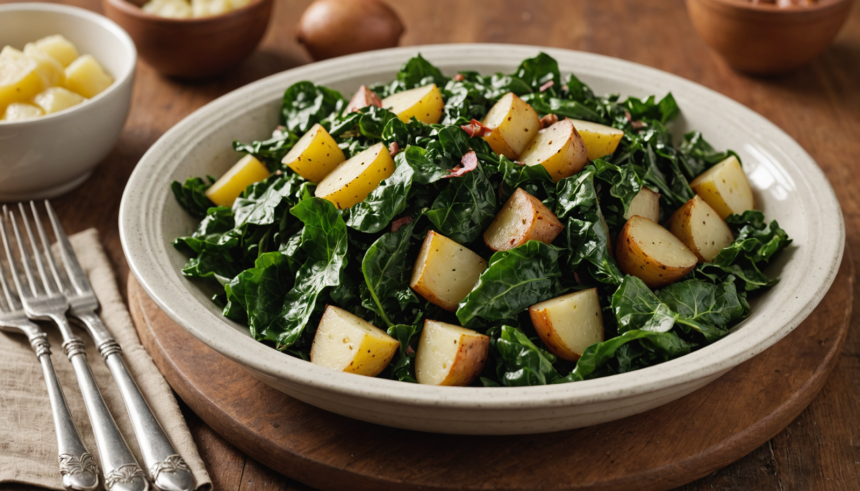
Swiss Chard with Potato Recipe
Hello! Let's prepare together a dish that is pure comfort and simplicity: delicious Swiss chard with potato. It's a recipe I love because it combines the softness of the potato with the earthy and fresh flavor of the Swiss chard, creating a perfect balance on the palate. It's ideal for those days when you're looking for homemade food comforting, uncomplicated yet full of flavor, very popular in our home kitchens and with both Latin and Mediterranean roots.
- Swiss Chard with Potato Recipe
- Preparation time
- Ingredients
- Utensils we will use
- Preparation
- Aromatic garlic sofrito
- Sautéing the onion
- Incorporation of the peppers
- Frying the potatoes
- Combining the Swiss chard and moist cooking
- Final slow simmer
- To finish and serve
- 5 keys to make it perfect
- When is it ideal to enjoy it?
- Comparison table
- Nutritional Information
- Frequently asked questions (FAQ)
- Share your experience
- Culinary glossary
Preparation time
Before putting on our apron, it's essential to get organized. This stew is quite quick, but it requires attention to cooking times so that the potato is cooked to its exact point without falling apart and the Swiss chard retains its color.
- Preparation: 13 minutes
- Cooking: 25 minutes
- Total: 38 minutes
- Servings: 3 servings
- Difficulty: Easy
Ingredients
For this dish to turn out perfect, we need to respect the quality of the raw ingredients. There are no secrets here, just good vegetables. Make sure you have everything ready before turning on the heat.
- 1/2 kilo of Swiss chard, chopped
- 1 cup of hot water
- 4 tablespoons of oil
- 3 cloves of garlic, finely chopped
- 1/2 kilo of clean potatoes, chopped
- 2 red bell peppers
- 3 tablespoons of onion, finely chopped
- 1 pinch of salt
- Chopped parsley (for serving)
If you're missing an ingredient in your pantry or want to try a variation, I'll tell you about some options. If you can't find red bell pepper fresh, you could use green bell pepper, although the flavor will be a bit less sweet. Regarding potatoes, look for a variety that holds up to cooking without falling apart too quickly. If you're looking for another way to integrate vegetables and tubers, you might be interested in checking out how we make the Swiss chard stew with potato and tomato, which is a very similar variation to this one but with a more acidic touch.
Utensils we will use
You don't need sophisticated equipment to succeed with this recipe. The most important thing is to have enough space in the pan so that the vegetables cook evenly and don't pile up too much at the beginning.
- Large pan with a lid (essential for the final steaming)
- Cutting board
- Sharp knife (chef's knife type)
- Wooden spoon or heat-resistant spatula
- Measuring cup (for water)
- Vegetable peeler (optional, if you prefer to peel the potatoes, although the recipe says clean and chopped, sometimes the skin adds rustic flavor)
Preparation
Follow these steps calmly. The key to the Spanish cuisine and Latin home is in the care we put into the initial sofrito. We are going to build layers of flavor.
Aromatic garlic sofrito
In a large pan, heat the four tablespoons of oil over medium heat. Once the oil is hot (but not smoking), add the 3 finely chopped garlic cloves. Sauté them gently. It is vital to constantly monitor this step: if the garlic burns, it will make the entire stew bitter. We are looking for a pale golden color and for it to release its aroma.
Sautéing the onion
Next, add the 3 tablespoons of chopped onion to the pan. Stir to mix with the garlic and cook until the onion becomes transparent and tender. This process helps the onion release its natural sugars, providing a sweet and flavorful base for the dish.
Incorporation of the peppers
Afterwards, add the red peppers (which we will have cut into strips or pieces according to your taste) to the onion and garlic mixture. Sauté them for a few minutes. You will notice that the pepper skin begins to shine and the flesh softens slightly. The red pepper provides a fundamental contrast of color and flavor.
Frying the potatoes
Once the pepper has started to soften, add the 1/2 kilo of chopped potatoes to the pan. Fry them together with the other ingredients for a few minutes, stirring occasionally with the wooden spoon. The goal here is for the potatoes to brown on their surface; this creates a light crust that will prevent them from completely falling apart when the liquid is added later. It's a technique similar to what we would use in a rustic potato salad where we seek texture.
Combining the Swiss chard and moist cooking
Immediately after, add the 1/2 kilo of chopped Swiss chard to the pan. At first it will seem like a lot of volume, but they will reduce quickly. Mix everything homogeneously so that the chard is impregnated with the flavored oil. Next, pour in the cup of hot water, making sure to cover the mixture enough to generate steam.
Final slow simmer
Cover the pan with its lid and reduce the heat to low. Allow everything to simmer for approximately 20 minutes. The generated steam will cook the potatoes inside and finish wilting the Swiss chard. You will know it's ready when the potatoes are tender when pricked with a knife and the Swiss chard has completely wilted.
To finish and serve
While it cooks, it's time to season with a pinch of salt to taste, tasting the broth to adjust if necessary. Once the heat is off, let it rest for a minute. To serve, place a generous portion in a deep or shallow plate and sprinkle fresh chopped parsley on top, which will give it a touch of herbaceous freshness and vibrant color. Accompany it with a good piece of bread to soak up the juice left at the bottom.
5 keys to make it perfect
Sometimes, the simplest dishes benefit the most from small technical details. Here I share my secrets to elevate these Swiss chard to another level.
- The potato cut: Try to make sure all potato cubes or pieces are the same size. If some are very large and others small, you will have some raw and others mushy. Uniformity ensures even cooking.
- Don't drown the stew: The recipe calls for one cup of hot water. It's important not to overdo it. We are not making a soup, but a stew where the water should be almost completely consumed, leaving a sauce thickened with the potato starch.
- The water temperature: Add the water already hot. If you add cold water, you stop the cooking of the potatoes and «shock» them, which can make them hard inside or with an unpleasant sandy texture.
- The garlic doneness: I insist on this because it is the most common mistake. If the garlic burns at the beginning (turns black), the whole dish will taste bitter. If you see it browning too quickly, remove the pan from the heat a few seconds before adding the onion.
- Swiss chard freshness: Use Swiss chard with firm stems and shiny leaves. If the leaves are limp before cooking, the final result will be fibrous. If you have leftover leafy greens, you can always use them to make spinach balls or fried Swiss chard.
When is it ideal to enjoy it?
This dish of vegetables is incredibly versatile. Personally, I think it's perfect for a light weekday dinner, as it's digestive and doesn't feel heavy in the stomach before sleeping. It also works wonderfully as a first course in a family lunch, followed by something more substantial.
Due to its nature as a side dish or a light single dish, it goes very well during Lent or when we want to reduce meat consumption. However, if you serve it as an accompaniment, imagine these potatoes next to a robust main course like an ossobuco, where the simplicity of Swiss chard balances the richness of the meat.
Comparison table
Sometimes we confuse recipes or look for alternatives. Here I show you how our dish today compares to other popular options you might have in mind.
| Recipe | Key ingredients | Difference/advantage |
|---|---|---|
| Swiss Chard with Potato (This recipe) | Swiss chard, potato, bell pepper, garlic | Perfect balance of textures, moist and light cooking. |
| Potatoes with chorizo | Potato, chorizo, onion | Much more caloric and intense fatty flavor, without green vegetables. |
| Creamed spinach | Spinach, cream/milk, cheese | Creamy and milky texture, heavier than our stew. |
| Swiss chard omelet | Egg, Swiss chard, onion | Solid and dry format, ideal for taking away, high in protein due to the egg. |
| Alboronía | Eggplant, pumpkin, tomato | Sweeter and creamier Andalusian stew, without green leaf. |
| Poor man's potatoes | Potato, green pepper, onion | It's fried in abundant oil, it doesn't contain chard or water. |
| Valencian boiled dish | Green bean, potato, onion | Simple boiled cooking, more neutral and mild flavor. |
If you like to experiment with traditional dishes that have a lot of history and flavor, I suggest you take a look at the traditional chile en nogada, another classic that handles the mix of vegetable ingredients and textures very well.
Nutritional Information
Although I am not a nutritionist, as a cook I know that this dish is a bomb of positive nutrients. Here is an estimate of what you provide to your body with a standard serving of this homemade stew.
- Calories: 210 kcal
- Proteins: 5 g
- Fats: 9 g
- Carbohydrates: 30 g
- Fiber: 6 g
Note: Values are approximate per serving and may vary depending on the size of the potatoes or the exact amount of oil you use in the sofrito.
Frequently asked questions (FAQ)
Share your experience
Cooking is for experimenting and sharing. I would love to know how this dish turned out for you. Did you add your own special touch? Perhaps a little paprika or did you swap potatoes for sweet potato? Leave your comment and share your own little tricks! I'm very excited to read how you adapt these recipes in your homes.
Culinary glossary
So you don't get lost with any term, here I briefly explain some words we have used or that will be useful in the kitchen:
- Sofrito: A technique that consists of frying ingredients (such as onion and garlic) over low heat until tender, serving as the base for the stew.
- Sweated: To cook a vegetable in fat (oil) at a moderate temperature so that it softens without browning excessively.
- Wilt: Cook leafy greens (like chard or spinach) briefly until they lose their stiffness and volume due to heat.
- Rectify: Taste the food almost at the end of cooking to adjust salt or spices if necessary.
- Al dente: Although widely used for pasta, for vegetables it means they are cooked but still offer a slight resistance when bitten, without being mushy.









I was surprised by the flavor. I'll make it again this weekend.
It looks incredible ❤️. It reminded me of a version I tried on a trip. It's really worth it.
I was surprised by the flavor of this ‘Swiss Chard with Potato’. I made it for dinner and everyone was happy.