

Osso Buco Recipe
Hello! We are going to prepare a classic that transforms a humble cut into meat that melts in your mouth just by looking at it. The Osso Buco is the pure essence of comforting home food, a dish of Milanese origin that requires little active technique but delivers a memorable result. Its secret lies in cooking with a lot of patience so that the marrow melts and naturally enriches the sauce.
Preparation time
Organizing the timings is essential to enjoy the process without rushing in the kitchen.
- Preparation: 20 minutes
- Cooking: 120 minutes
- Total: 140 minutes
- Servings: 4
- Difficulty: Intermediate
The Science Behind the Timings
In this type of dish, the clock works in our favor. The 20 minutes of active preparation are essential to create the flavor base. During this phase, we dedicate ourselves to browning the meat of ternera and sautéing the vegetables correctly. This initial step requires our full attention to prevent ingredients from burning and imparting bitter flavors. Once the liquid enters the pot, our manual work is almost done.
The 120 minutes of cooking are non-negotiable. This stew depends on low, constant heat to achieve its characteristic texture. The collagen present in tougher cuts of meat does not soften quickly; it needs time and moisture to transform into gelatin. This gelatin is responsible for thickening the liquid and giving it that silky, shiny texture we all look for. If we try to speed up the process by raising the heat, the liquid will boil abruptly and the muscle fibers will contract, leaving the meat tough and dry.
Furthermore, cooking a day ahead is always an excellent idea. When the dish rests in the refrigerator, the aromatic compounds of the ingredients continue to blend. By gently reheating it the next day, you will notice that the flavors are much deeper and more balanced. Patience is the invisible ingredient we can never omit.
Ingredients
For the Meat and Stew
- Veal osso buco slices (about 3 to 4 cm thick): 4 units
- Wheat flour for dredging: 50 g
- Aceite de oliva: 2 cucharadas
- Unsalted butter: 50 g
- Smoked pancetta or thick-cut bacon, diced: 115 g
- Medium yellow onion, chopped: 1 unit
- Carrot, chopped: 1 unit
- Celery stalk, chopped: 1 unit
- Garlic cloves, minced: 2 units
- White wine dry: 100 ml
- Good quality chicken broth: 600 ml
- Concentrated tomato paste: 1 tablespoon
- Fresh or dried bay leaf: 1 unit
- Dried thyme: 1 teaspoon
- Fine salt: as needed
- Ground black pepper: as needed
For the Gremolata
- Fresh chopped parsley: 1 small bunch
- Lemon zest: 1 unit
- Finely chopped garlic clove: 1 unit
If you don't have veal osso buco, you can replace it with similar beef cuts. Keep in mind that adult beef has firmer fibers, so it will require approximately 30 to 45 additional minutes of cooking to reach the desired tenderness. If you prefer not to use butter, you can substitute it with more olive oil, although you will lose a bit of the classic dairy flavor.
Ingredient Selection and Function
Each component of this recipe serves a clear technical purpose. Choosing broth chicken instead of a dark beef one seems contradictory, but the chicken one provides a lightness that allows the marrow flavor to shine without masking it. For its part, the flour serves a dual function: it helps form a golden crust on the meat during the initial searing and, later, dissolves in the liquid to naturally thicken the sauce.
Dry white wine provides the necessary acidity to balance the fat from the butter, pancetta, and marrow. Without this acidity, the dish would be excessively heavy. Finally, Gremolata is not just a garnish. This mixture of parsley, raw garlic, and lemon zest cuts through the deep richness of the meat with fresh, citrus notes, awakening the palate with every bite.
Utensils we will use
- Wide, heavy-bottomed pot with lid (preferably enameled cast iron)
- Thick wooden or plastic cutting board
- Well-sharpened chef's knife
- Long kitchen tongs
- Wooden spoon or spatula
- Fine grater for citrus
- Small mixing bowl
- Kitchen scissors
Importance of the Right Equipment
For these types of long-cooking preparations, the vessel is fundamental. A heavy-bottomed pot absorbs heat slowly and distributes it evenly, preventing food from burning in specific spots. Cast iron is ideal for its excellent thermal retention. If you don't have a cast iron pot, you can use any heavy pot you have at home. The most important thing is that it has a lid that seals tightly to trap steam and moisture during hours of low heat.
If your pot doesn't seal well, a very effective homemade trick is to place a sheet of aluminum foil over the pot's opening before putting on the lid. This creates an improvised seal that prevents liquids from evaporating quickly, ensuring the meat cooks in its own moist environment.
The fine grater is indispensable for Gremolata. We only want to extract the superficial, yellow layer of the lemon peel, where the essential oils are concentrated. If we grate the white part, we will add a bitter taste that will ruin the final balance of the dressing. Additionally, clean kitchen shears will greatly facilitate the preparation of the pieces before cooking them.
Preparation
Preparation of the meat
- Cutting the tissue: Quickly wash the meat under the tap and dry very well with absorbent paper. Take the kitchen shears and make 3 or 4 small cuts in the white membrane that surrounds the outer edge of each slice. This will prevent the meat from curling up like a deep plate when it comes into contact with heat.
- Flour coating: Pass each piece through the flour in a deep plate. Firmly shake each piece with your hands to remove the excess. We only need an almost invisible layer to help with browning.
- Searing the meat: Place the pot over medium-high heat with the oil and butter. When the butter stops foaming, add the meat. If the pot is small, do it in two batches to avoid lowering the temperature. Let it brown without moving for about 4 or 5 minutes per side. Remove to a plate and set aside.
The Flavor Base
- Cooking the pancetta: In the same pot, reduce to medium heat and add the diced pancetta. Cook until they release their fat and are slightly crispy.
- Sautéed vegetables: Add the onion chopped into small cubes (~5 mm). Cook, stirring with a wooden spatula, for about 5 to 7 minutes, until transparent.
- Flavoring: Add the carrot and celery cut to the same size as the onion, along with the minced garlic. Cook for 4 more minutes until everything begins to soften.
- Deglazing: Pour in the white wine. Use the spatula to gently scrape the bottom of the pot and loosen all the stuck-on dark bits. Let it boil until the liquid reduces by half and no longer smells strongly of alcohol.
The Slow Stew
- Liquid integration: Add the hot chicken broth, tomato paste, thyme, bay leaf, salt, and pepper. Stir well to dissolve the tomato.
- Simmering: Return the meat to the pot along with any juices it released on the plate. The liquid should reach halfway up the meat, not cover it completely.
- Temperature control: Wait for it to come to a gentle simmer, lower the heat to the lowest possible setting, cover the pot well, and let it cook.
- Doneness indicators: Check every 30 minutes. Carefully flip the meat using tongs. If you see the liquid reducing too quickly, add a little hot water. It will be ready between an hour and a half and two hours, when, upon piercing the center with a fork, the meat offers no resistance and easily separates from the bone.
The Gremolata
- Chopping herbs: While the pot is on the stove, finely chop the parsley as much as you can on a very dry cutting board.
- Flavor mix: In the small bowl, combine the parsley with the fresh lemon zest and very finely chopped garlic. Mix well and set aside until serving time.
To finish and serve
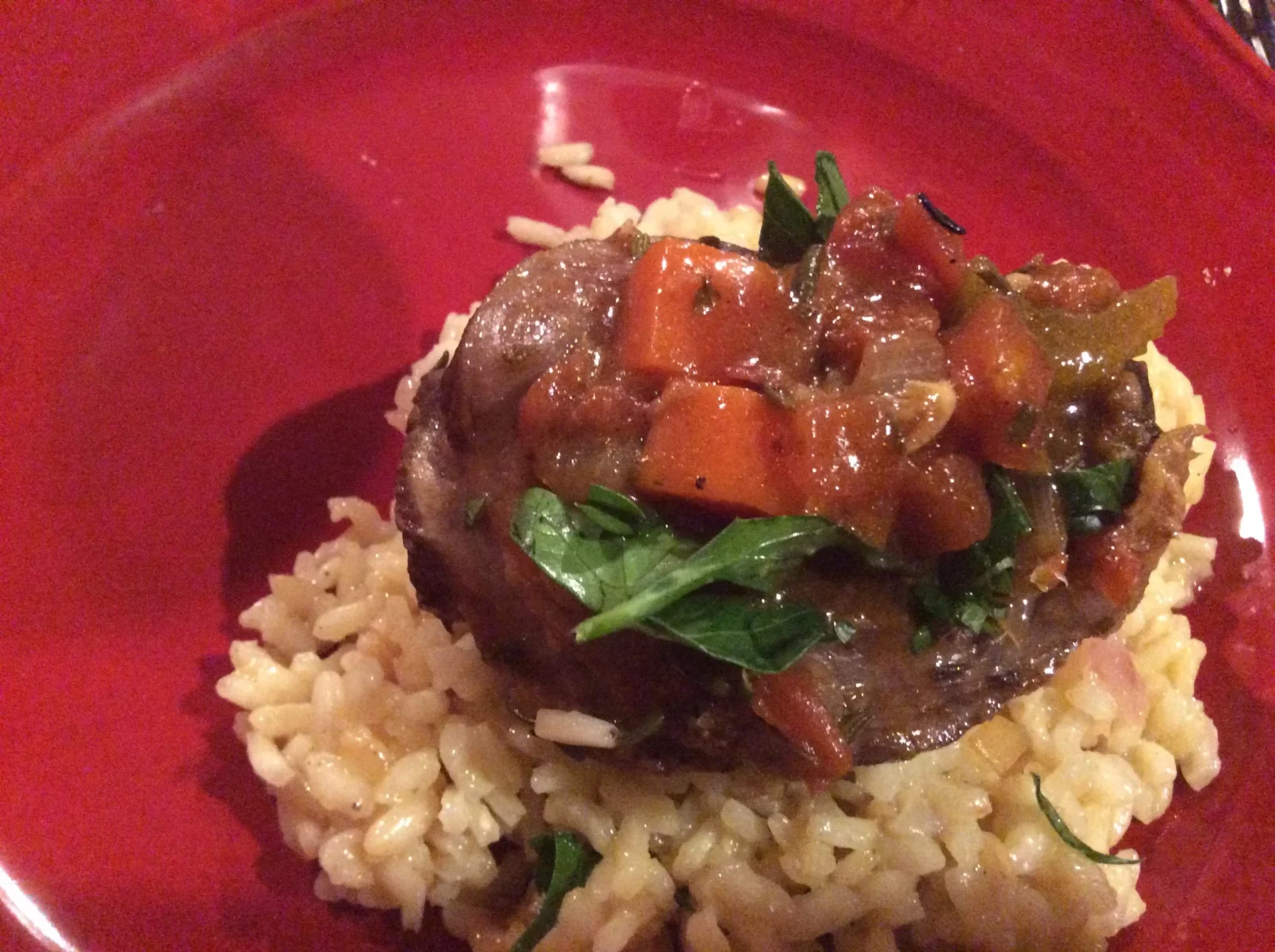
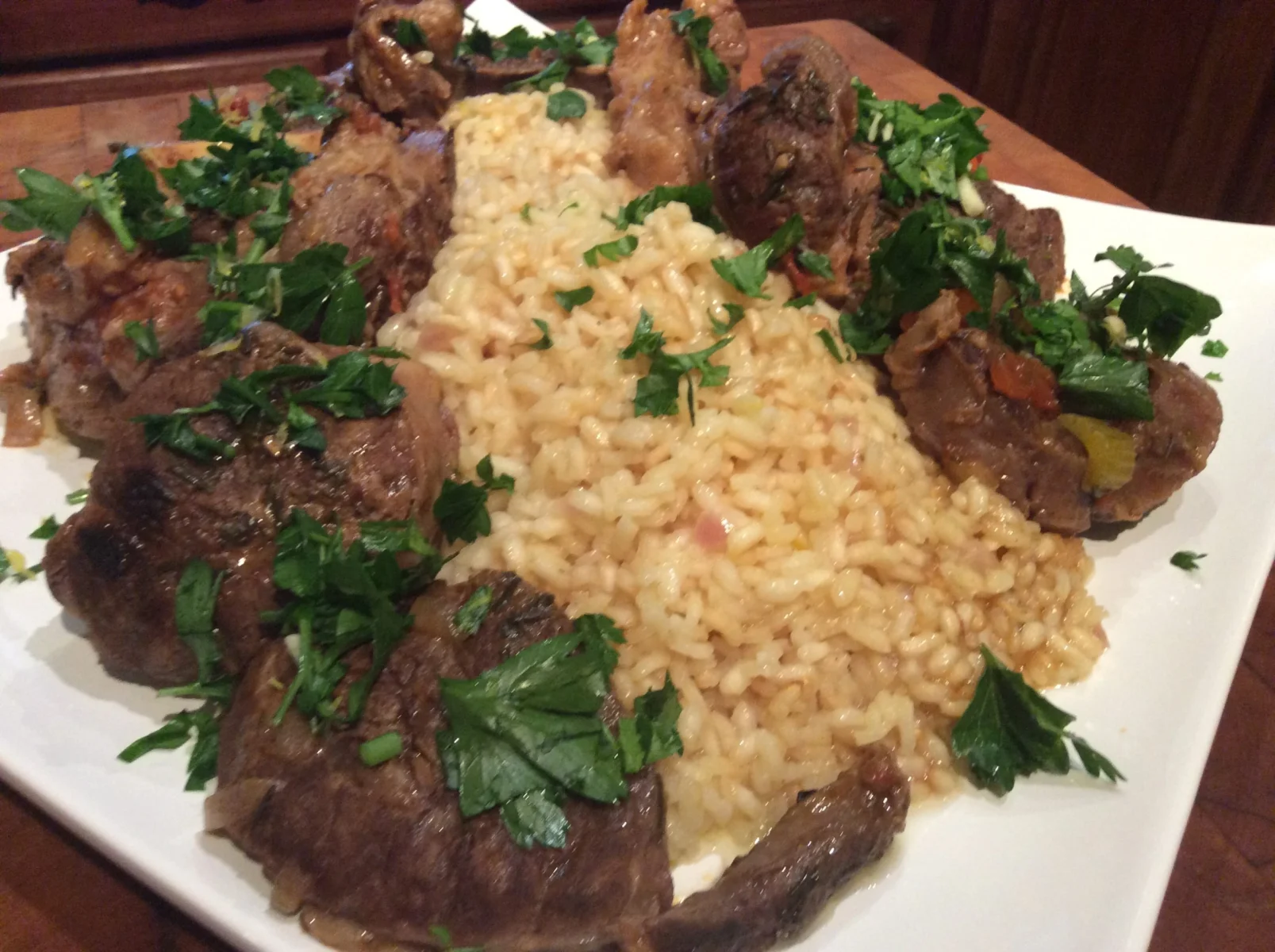
Turn off the heat and let the uncovered pot rest for 10 minutes. With tongs, find and remove the bay leaf, as it has fulfilled its aromatic function. Taste the sauce with a spoon and, if necessary, add a pinch more salt or pepper. Very carefully, transfer each piece of meat to a deep plate or serving dish. Serve hot, generously spooning the vegetables and thick liquid from the pot over the meat. Accompany with creamy rice or mashed potatoes, and sprinkle a tablespoon of fresh Gremolata over each portion just before bringing it to the table.
Nutritional Information
- Calories: 355 kcal
- Protein: 29 g
- Fats: 20 g
- Carbohydrates: 10 g
- Fiber: 2 g
The nutritional values provided are approximate estimates per serving and may vary depending on the precision of cuts and brands of ingredients used.
5 keys to make it perfect
Achieving an stew with restaurant texture in our own home does not depend on expensive ingredients, but on understanding how the product responds to our thermal and mechanical actions. These are the technical keys to not fail.
1. Rigorous drying before cooking
Surface moisture is the greatest enemy of browning. If the meat enters the pot wet from its own juices or from washing water, the heat energy will be spent evaporating that water instead of raising the surface temperature. The result is that the meat steams, remaining gray and without that deep toasted flavor provided by the Maillard reaction. Use absorbent kitchen paper and firmly press the piece on all sides. Once dry, the flour layer will adhere thinly and uniformly, sealing in the juices without forming pasty clumps.
2. Controlling tissue contraction
The outer ring surrounding this cut is formed by a very strong connective tissue membrane. When subjected to high temperatures during the initial searing, this membrane contracts like an elastic band. If we don't make small cuts around the edge, the meat will curl, lifting the center of the pot. This prevents even browning and expels the precious marrow from its cavity. Three clean cuts with scissors ensure the slice stays flat from start to finish.
3. Deglazing the bottom
After browning the meat and sautéing the vegetables, you'll notice that the bottom of your pot is covered by a dark brown layer. It's not dirt and it's not burnt. This layer, technically known as «fond,» is a pure concentration of caramelized sugars and proteins. Adding white wine and scrubbing with a wooden spoon allows this fond to dissolve and integrate into the liquid. This is where the deep color and complex flavor that differentiates a mediocre dish from an extraordinary one is born.
4. The balance of temperatures
The key phrase here is barely perceptible bubbling. If the liquid boils aggressively, the meat proteins will toughen, expelling all their internal moisture. We will see dry meat swimming in liquid. The goal is to maintain a temperature close to 85-90°C. If you see too many bubbles, lower the heat. If your stove is very powerful even on the lowest setting, place a heat diffuser under the pot or transfer the container to an oven preheated to 150°C, where the enveloping heat is much gentler and more constant.
5. The correct application of Gremolata
Never cook the Gremolata. Raw garlic, the essential oil from lemon peel, and the chlorophyll from parsley are volatile and fragile elements. If you add them to the pot while it's still boiling, they will lose their freshness, becoming dull in flavor and color. This mixture should fall onto the hot meat just as it is presented at the table. The residual heat of the dish will activate the aromas of lemon and garlic, creating a fundamental aromatic contrast against the richness of the sauce.
When is it ideal to enjoy it?
This dish is the exact definition of leisurely celebratory cooking. Its warm and enveloping nature makes it the perfect candidate for weekend afternoons, when the rush of the week is behind us and we can afford the luxury of having a pot perfuming the house for hours. It is the logical choice for months when the temperature starts to drop, offering comfort through the palate.
For Sunday family gatherings, it is incredibly practical. By requiring very little direct attention once the lid is on, it allows you to enjoy the company of your guests instead of being stuck in front of the stove. Furthermore, as it improves when prepared a day in advance, you can have the heavy lifting done on Saturday, and on Sunday simply dedicate yourself to gently reheating and preparing the side dish in real time.
Milanese tradition requires serving it with a yellow risotto perfumed with saffron and abundant parmigiano, creating a creamy canvas that perfectly absorbs the stew's juices. However, one should not be limited to that option. A well-worked mashed potato, hot-pressed to avoid lumps, works wonderfully. To balance the menu, if you are looking for something less heavy, you can always resort to lighter options. For example, a good dish of Swiss chard with potato steamed or sautéed provides an earthy and clean touch that cleanses the palate between bites of intense meat. Even serving a homemade recipe of leafy greens and root vegetables as a starter, will prepare the stomach for the main feast without overwhelming it.
Culinary glossary
Understanding cooking terms gives us the confidence to master any recipe without fear.
Osso buco
Término de origen italiano que se traduce literalmente como «hueso con agujero». En la carnicería, hace referencia al corte transversal del corvejón o pantorrilla de la vaca o ternera. Al cortarse en rodajas, se expone el hueso tubular en el centro, el cual alberga una porción de tuétano. Este corte es famoso por su dureza inicial, debido al trabajo constante de las patas del animal, pero es altamente valorado por la cantidad de tejido conectivo que, bien tratado, aporta una textura melosa inigualable.
Gremolata
Aderezo o condimento clásico originario de Lombardía, Italia. Se compone tradicionalmente de solo tres ingredientes crudos: perejil plano picado, ralladura fina de limón y ajo muy picado. No es una salsa líquida, sino una mezcla seca que se espolvorea. Su función gastronómica es aportar acidez, frescura y un toque picante suave para equilibrar los platos grasos y estofados de cocción larga.
Deglaze
Técnica básica que consiste en verter un líquido frío (generalmente vino, caldo o agua) en un recipiente de cocción caliente donde previamente se han dorado alimentos. El contraste de temperatura, junto con la acción mecánica de raspar con una espátula, permite despegar los jugos caramelizados adheridos al fondo. Este proceso recupera sabores intensos y forma la base principal para salsas de gran cuerpo.
Tejido conectivo
Es la red de colágeno y elastina que mantiene unidas las fibras musculares en los animales. En la cocina casera, es lo que comúnmente llamamos «nervios» o las partes duras de cortes económicos. Aunque en cocciones rápidas resulta imposible de masticar, si lo exponemos a calor suave y humedad constante durante horas, el colágeno se derrite y se convierte en gelatina, aportando suavidad a la carne y espesor al líquido.
Punto de tenedor
Es una señal de textura utilizada en guisos y estofados para determinar si la cocción ha finalizado con éxito. Significa que, al introducir las puntas de un tenedor en el centro de la pieza de carne y girar suavemente, las fibras se separan sin aplicar fuerza ni usar cuchillo. Si la carne todavía ofrece resistencia o se siente elástica, necesita más tiempo al fuego. Es la guía sensorial más confiable, muy por encima de los minutos que marque un reloj.
La cocina es para experimentar y compartir. Anímate a probar esta preparación el fin de semana, controla bien el fuego y déjate llevar por los aromas clásicos de Italia. ¡Deja tu comentario y comparte tu experiencia con nosotros!




Simple and delicious this ‘Osso Buco’. It reminded me of a version I tried on a trip. Highly recommended.
I tried this ‘Osso Buco’ today ✨. It turned out delicious, thanks for the tips. It's really worth it.
This ‘Osso Buco’ was delicious at home . I'll make it again this weekend. What a great guide.