


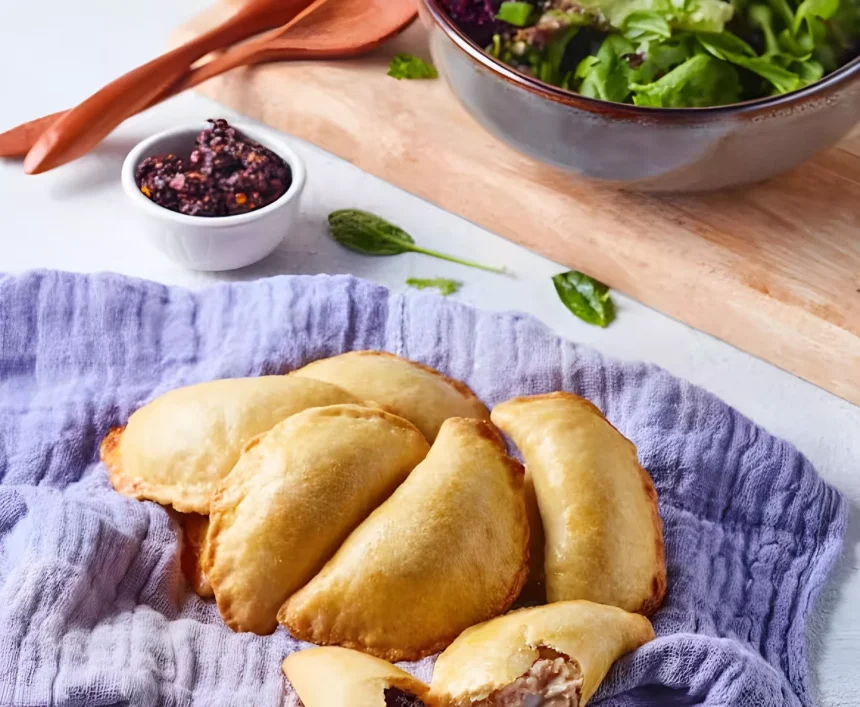
Traditional Hidalguense Paste Recipe
Hello! We are going to prepare a classic of the gastronomy of Hidalgo, the Traditional Hidalguense Paste. This dish is more than an empanada; it is a cultural expression that blends English and Mexican influences. Furthermore, it is practical and filling, perfect for any time of day and easy to carry. Let's discover its secrets and how to achieve that traditional flavor at home.
- Traditional Hidalguense Paste Recipe
- Preparation time
- Ingredients
- Utensils we will use
- Preparation
- Nutritional Information
- 5 keys for the Hidalguense Paste to be perfect
- When is it ideal to enjoy the Traditional Hidalguense Paste?
- Comparative table of Traditional Hidalguense Paste and similar dishes
- Do you want to know more about the wonderful world of traditional cuisine? Discover other flavors like Oaxaca's black mole or the crispy texture of a good tinga puff pastry. You can also try the sweet contrast with guava paste that combines with various typical dishes.
Preparation time
To better organize your time, here are the exact details of the process:
- Preparation: 15 minutes
- Cooking: 30-35 minutes
- Total: 45-50 minutes
- Servings: 6 medium pasties
- Difficulty: Intermediate
Ingredients
For the dough
- Wheat flour: 4 cups
- Salt: 1 teaspoon
- Unsalted butter, cold and cubed: 1 cup
- Eggs: 2
- Cold water: 1/3 cup
For the filling
- Mexican chorizo without casing: 227 grams (1/2 pound)
- Medium potatoes, peeled and cut into small cubes: 2
- Medium onion, finely chopped: 1/2
- Salt and pepper to taste
- Egg for brushing (optional): 1 and 1 tablespoon of water
If you can't find Mexican chorizo, you can substitute it with fresh chorizo of another type or even a spicy sausage you have on hand. For the dough, if you don't have butter, vegetable shortening can be used, but it will slightly change the traditional texture.
Utensils we will use
- Large mixing bowl
- Rolling pin for stretching dough
- Knife and cutting board
- Frying pan for cooking chorizo
- Pot for boiling potatoes
- Oven and baking sheet
- Spoons and spatula
Preparation
1. Prepare the filling
- Cook potatoes: Wash and peel the potatoes. Cut into small cubes (~1 cm) so they cook quickly. Boil in salted water until tender when pierced, approximately 5 to 7 minutes. Drain and set aside.
- Cook chorizo: Heat a skillet over medium heat. Add the casing-free chorizo and crumble it while it cooks until golden and free of pink juices. Add the chopped onion and sauté until translucent.
- Mix filling: Incorporate the potatoes into the chorizo and onion. Mix well, season with salt and pepper to taste, and let cool so it doesn't moisten the dough.
2. Prepare the dough
- Mix dry ingredients: In a large bowl, combine the wheat flour with the salt.
- Incorporate butter: Add the cold butter in cubes. Use your fingertips or a pastry cutter to integrate until a sandy texture with small lumps is obtained.
- Add eggs and water: Lightly beat the eggs with the cold water and pour them over the previous mixture. Integrate with enveloping movements until a homogeneous dough is formed. If it's too sticky, add a little more flour.
- Knead and chill: Form a ball, wrap it in plastic, and refrigerate for 30 minutes to facilitate handling and keep the butter firm.
3. Form the pastes
- Roll out the dough: Sprinkle flour on your work surface. With a rolling pin, roll out the dough to an approximate thickness of 3 mm.
- Cut circles: Use a mold or the edge of a plate to make circles about 15 cm (6 inches) in diameter.
- Fill and seal: Place a portion of filling (approximately 2 tablespoons) on one side of the circle, leaving room to close. Fold the dough to form a «D».
- Seal with a braid: Press the edges to seal, forming a kind of braid or fold. This technique prevents the filling's juice from escaping and refers to the traditional design used by miners to eat it without contaminating it.
4. Bake
- Preheat oven: To 190 °C (375 °F).
- Place pastes on tray: On a baking sheet with parchment paper, arrange the pastes leaving space between them.
- Glaze (optional): Mix egg with water and brush the surface to achieve an appetizing golden color.
- Bake: Place the tray in the oven and bake for 30 to 35 minutes or until the dough is golden and crispy.
To finish and serve
Before serving, let rest for a few minutes so that the juices settle and don't burn when eating. Hidalguense pastes can be accompanied with hot sauce or a traditional drink like café de olla. They are ideal for eating with your hands, preserving their essence as practical street food.
Nutritional Information
- Calories: 350 kcal
- Proteins: 14 g
- Fats: 18 g
- Carbohydrates: 32 g
- Fiber: 3 g
These values are approximate estimates per serving, based on the traditional quantities and techniques used in the recipe.
5 keys for the Hidalguense Paste to be perfect
To achieve that balance between a crispy crust and a juicy filling that characterizes the traditional paste, consider these recommendations:
- Use cold butter for the dough: Helps create a flaky texture that doesn't fall apart during cooking.
- Cut potatoes into small cubes: This way they cook evenly and mix better with the chorizo.
- Let the filling cool before assembling: So that the dough doesn't absorb moisture and stays crispy.
- Seal the edge well with the braid: Prevents the juice from escaping and gives that characteristic traditional finish.
- Brush with egg mixed with water: Contributes to a golden and appetizing color.
When is it ideal to enjoy the Traditional Hidalguense Paste?
This typical dish is very versatile for different times and occasions. Perfect for a quick meal at work, especially if you want to transport it easily. It is also ideal for family gatherings, festivals, or simply for an afternoon craving. Its historical strength as a miners' food makes it a symbol of Mexican culture and of the gastronomy that unites tradition with practical and substantial flavor.
Comparative table of Traditional Hidalguense Paste and similar dishes
| Recipe | Key ingredients | Difference/advantage |
|---|---|---|
| Traditional Hidalguense Paste | Wheat flour, chorizo, potato | Wheat pasta dough with braided edge, raw filling that is baked |
| Common empanada | Puff pastry, stewed chicken or meat | Uses puff pastry, already cooked filling, sweeter or varied |
| English meat pie | Ground meat, vegetables, shortcrust pastry | Usually larger and with different dough, without braided edge |
| Guadalajara pastries | Flour dough, ground meat, spices | Stewed and fried filling before baking |
| Chipilín tamal | Corn husk, corn dough, chipilín | Corn dough, vegetable flavor, more moist |
| Mozzarella and sauce pockets | Mozzarella cheese, tomato sauce, flour dough | Focused on fresh, meat-free ingredients |
| Sweet Pastes (pineapple and cream cheese) | Pineapple, cream cheese, wheat dough | Sweet filling, ideal for dessert, within the pastes line |
Do you want to know more about the wonderful world of traditional cuisine? Discover other flavors like the Oaxacan black mole or the crispy texture of a good tinga puff pastry. You can also try the sweet contrast with guava paste that combines with various typical dishes.
This video is a visual resource that will help you better understand the process of preparing and assembling the pastes.
Explore how this delicacy arrived in Hidalgo and became a cultural symbol thanks to its mining history and fusion of traditions.





Very practical and tasty. I added a touch of lemon and it was luxurious. A thousand thanks for the recipe.
It was delicious at home. It reminded me of a version I tried on a trip.
This ‘Traditional Hidalguense Paste (Hidalgo)’ turned out better than I expected. It reminded me of a version I tried on a trip. We all loved it.