
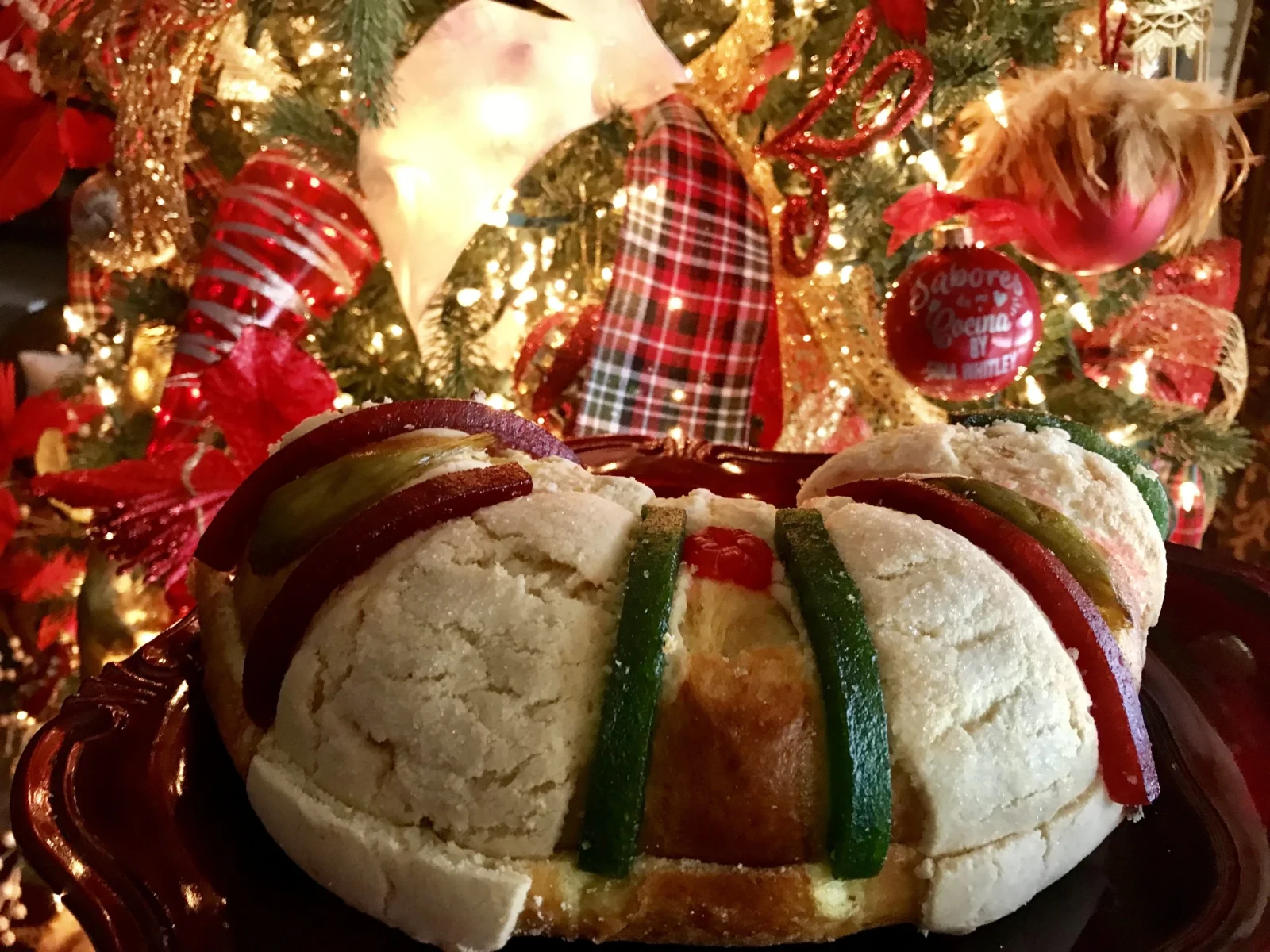
Traditional Rosca de Reyes Recipe
Hello! We are going to prepare a King's Cake full of love and flavor to celebrate this special day. This recipe seeks to recover that homemade, fluffy, and aromatic taste that brings the family together around the table with a good cup of chocolate, keeping alive the illusion of finding the little doll.
Preparation time
Organization is key in baking, and although yeast requires patience, the result is worth every minute of waiting. Here are the estimated times:
- Preparation: 40 minutes
- Cooking: 25 minutes
- Resting (fermentation): 2 hours and 15 minutes (approximate)
- Total: 3 hours and 20 minutes
- Servings: 12 to 14 generous portions
- Difficulty: Intermediate
Ingredients
To achieve that sweet bread authentic, we need fresh ingredients at room temperature. Don't skimp on the quality of the butter, as it is the soul of the flavor.
For the dough
- 500 g of wheat flour (all-purpose or medium-strength)
- 15 g of dry yeast instant (or 45 g of fresh yeast)
- 150 g of standard white sugar
- 1/2 teaspoon of fine salt
- 3 large eggs (at room temperature)
- 130 ml of warm milk (not hot, this is vital)
- 135 g of unsalted butter (at room temperature, softened)
- 1 tablespoon of vanilla extract
- Zest of 1 orange (provides the classic aroma)
For the sugar crust (topping)
- 100 g of wheat flour
- 100 g of powdered sugar
- 100 g of vegetable shortening (or butter if you prefer, although shortening gives the classic sandy texture)
- 1 egg yolk
For decorating
- Strips of guava paste or quince paste (red and green)
- Candied figs (optional)
- Cherries in syrup (optional)
- 1 beaten egg (for glazing)
- Plastic figures (the amount you wish to hide)
If you don't have traditional "ate" (fruit paste), you can replace it with strips of candied orange peel or even just use the sugar crust if you prefer a simpler version; if using dried fruit, hydrate it a little beforehand.
Utensils we will use
You don't need a professional bakery at home, with these basics we'll achieve it:
- A large bowl or wide basin (for mixing and fermenting)
- A clean and smooth surface (table or countertop for kneading)
- A large baking sheet or tray
- Wax paper or silicone mat
- Kitchen brush (for glazing)
- Citrus grater
- Plastic wrap or a clean, damp kitchen towel
Preparation
Follow these steps calmly. Baking is an art of patience and observation. Let's get to work!
Activate the yeast
In a small bowl, mix the warm milk (which feels bearable to the touch, like the temperature of a baby bottle), one tablespoon of sugar, and one tablespoon of flour. Sprinkle the yeast on top and mix gently. Let it rest in a warm place for about 10 to 15 minutes until you see a dense foam form on the surface. This indicates that the yeast is alive and ready to work.
Form the base dough
In your large bowl or on the clean table, form a well with the remaining flour. Sprinkle the salt around the outer edge (so it doesn't touch the yeast directly at first). In the center, place the eggs, the rest of the sugar, vanilla, orange zest, and the already activated yeast mixture. Begin to integrate the ingredients from the center outwards with your hands or a spatula.
Kneading and fat integration
Once you have a rough, cohesive dough, incorporate the diced butter. At first, it will seem like a sticky mess; don't panic or add more flour! Keep kneading vigorously. You can use the technique of slapping the dough against the table and folding it over itself. We need to develop the gluten. Knead for about 15 to 20 minutes until the dough peels away from the table and your hands, looking smooth, elastic, and shiny.
First rest (Fermentation)
Lightly grease a bowl with a little oil or butter. Place your dough ball inside and turn it to coat it with grease (this prevents it from drying out). Cover the bowl with plastic wrap or a damp cloth. Let it rest in the warmest spot in your kitchen until it doubles in volume. This can take between 1 hour and 1 and a half hours, depending on the climate.
Shaping the rosca and the hiding place
Once the dough has risen, gently punch it down with your fist to release the gas. Form a ball and make a hole in the center with your fingers, gradually enlarging it as if forming a giant donut, until it has the characteristic oval shape. Place the rosca on the prepared baking sheet with parchment paper. Lift the dough from underneath and insert the plastic figurines randomly, making sure to seal the dough well so they are not visible.
Preparation of the sugar crust
While the rosca relaxes, mix the vegetable shortening, powdered sugar, and flour in a bowl. Add the egg yolk and mix with a fork or your fingers until you get a smooth and homogeneous paste, similar to play-doh. Divide it into small portions.
Decoration and second rest
Brush the entire surface of the rosca with the beaten egg; do it gently so as not to deform it. Flatten the portions of the sugar paste with your hands, forming wide strips, and place them on the rosca, pressing lightly. Alternate with strips of ate (fruit paste) and the candied fruits (figs or cherries). Let the decorated rosca rest for another 30-45 minutes to rise again.
Baked
Preheat your oven to 180°C (350°F) about 20 minutes before putting in the rosca. Bake for 20 to 25 minutes. You'll know it's ready when it has a deep, beautiful golden color, and when you gently tap the base, it sounds hollow. The kitchen will smell incredibly of orange and butter.
To finish and serve
Remove the rosca from the oven and let it cool on a wire rack to prevent the base from sweating and becoming damp. If you want extra shine, you can brush the bread parts (without sugar or fruit) with a little melted butter while it's still warm and sprinkle a final touch of sugar. Serve in the center of the table, cut generous slices, and accompany with your favorite hot drink. It's the moment of truth to see who gets the tamales!
Nutritional Information
- Calories: 380 kcal
- Proteins: 8 g
- Fats: 14 g
- Carbohydrates: 52 g
- Fiber: 2 g
Note: The values presented are approximate estimates for a standard slice and may vary depending on portion size and the specific brands of ingredients used.
5 keys to make it perfect
To ensure your rosca is the envy of the family and doesn't turn out dry or hard, keep these vital points in mind:
1. The temperature of the ingredients: Taking the eggs and butter out of the refrigerator an hour beforehand makes a huge difference. If the butter is cold, it won't integrate well; if we melt it completely, the dough will be greasy and heavy. The "pomada" (softened) stage is the secret.
2. Be careful with salt and yeast: Never put them in direct contact at the beginning of mixing. Salt can kill or inhibit the action of yeast, preventing the bread from rising correctly. That's why we make the well with the salt outside.
3. The extra flour myth: It's very tempting to add more flour when we feel the dough sticky during kneading. Resist! Excess flour hardens the crumb. Trust the kneading; friction and gluten development will dry the dough naturally.
4. Do not over-ferment: If you leave the dough proofing for too many hours (especially in very hot places), the yeast will be exhausted and the bread will have an acidic, alcoholic taste and will collapse in the oven. Watch the volume, not the clock.
5. Precise baking: Every oven is a world of its own. If your oven heats up a lot, lower the temperature to 170°C. If you see that it browns too quickly on top but is still raw inside, cover it with aluminum foil for the last 10 minutes of baking.
When is it ideal to enjoy it?
Traditionally, this bread is cut on the night of January 5th or throughout the day of January 6th, Three Kings' Day. It is the grand finale of the Christmas festivities. However, in a more modern context, like in this 2026, bakeries start offering them days before.
The perfect time is for an afternoon snack or an early dinner. It's a bread designed for dipping (soaking). Its absorbent crumb combines wonderfully with a hot chocolate frothy drink or a very warm atole. It's a perfect excuse to gather loved ones, share anecdotes, and organize the future tamaliza.
Comparison table
| Recipe | Key ingredients | Difference/advantage |
|---|---|---|
| Traditional Rosca de Reyes | Orange zest, ate (fruit paste), sugar crust | Spongy crumb and classic citrus flavor |
| Roscón de Reyes (Spain) | Orange blossom water, sliced almond | Distinctive floral aroma and usually filled with cream |
| Galette des Rois (France) | Puff pastry, almond cream (frangipane) | Crispy texture and creamy filling, not brioche-like |
| Filled Rosca | Cream cheese, cajeta or chocolate | More decadent and sweet, ideal for those with a sweet tooth |
| King Cake (New Orleans) | Colored icing (green, purple, gold), cinnamon | Intense cinnamon and sugar flavor, more visually festive |
| Bread of the Dead | Orange blossom water, anise, sprinkled with sugar | Very similar dough but with a round shape and "little bones" |
| Bolo Rei (Portugal) | Raisins, Port wine, nuts chopped | Denser crumb and loaded with fruit pieces inside |
Frequently asked questions (FAQ)
Share your experience
Cooking is for experimenting and sharing. I would love to know how your rosca turned out, if you decided to add a surprise filling, or if you got the little figure in the celebration. Leave your comment and share your own little tricks so we can all learn more!
Culinary glossary
- Activate: Process of hydrating yeast in warm liquid with a little sugar to «wake it up» and ensure it is alive before using it.
- Pomade consistency: The state of butter when it is soft, pliable, and creamy at room temperature, similar to the texture of a face cream.
- Proof/Ferment: To let dough rest so that the yeast produces gas, causing the bread to rise and develop flavor.
- Punch down: The action of pressing fermented dough to release accumulated gas and redistribute the yeast before giving it its final shape.
- Brush: Apply a thin layer of beaten egg or milk on raw dough with a brush so that it has shine and golden color when baked.




This ‘Traditional King's Cake’ ❤️ turned out delicious at home. It came out delicious, thanks for the tips.
It turned out delicious at home. I followed the steps and it worked on the first try.
What a delight! This ‘Traditional King's Cake’ ❤️. I followed the steps and it worked on the first try. We all loved it.