
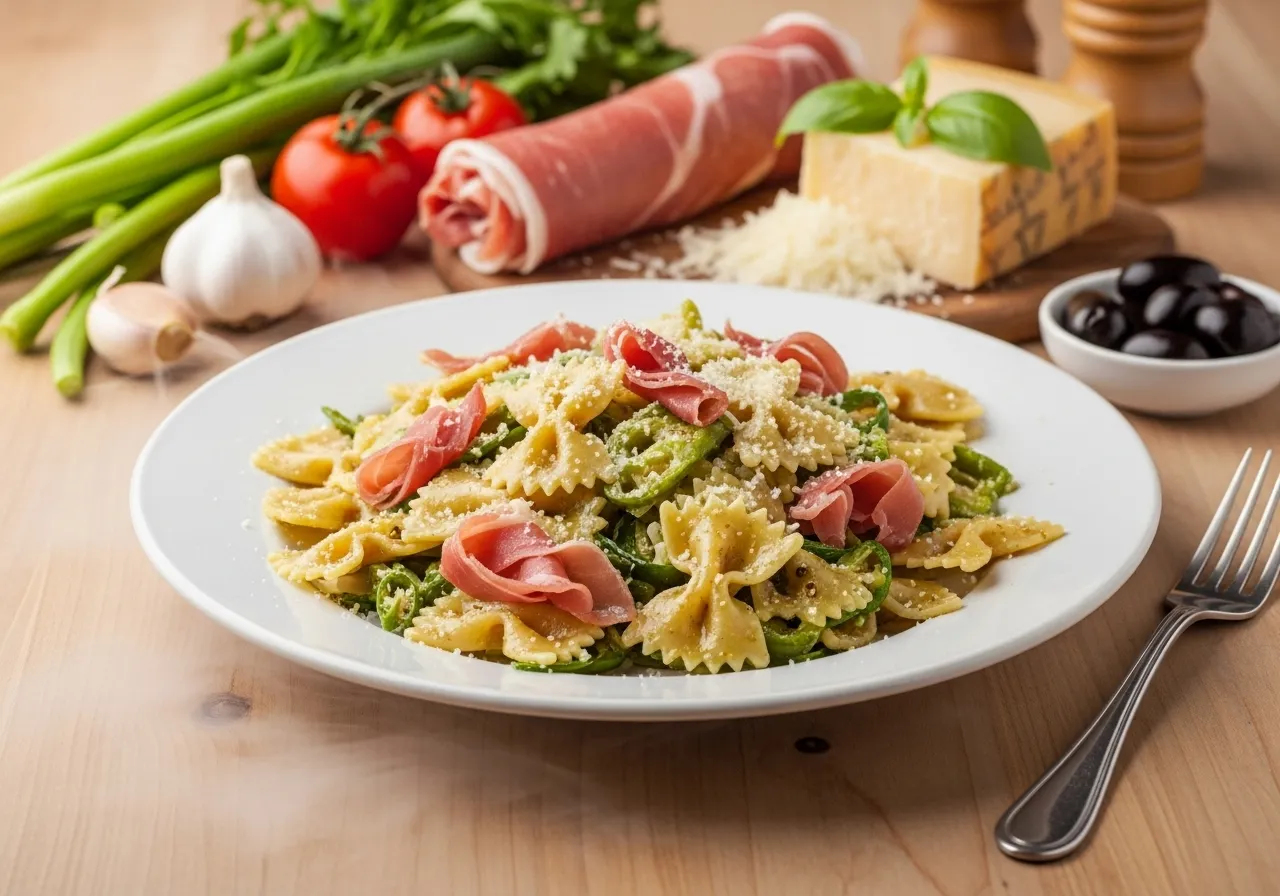
Irresistible Warm Farfalle Salad Recipe with Asparagus, Prosciutto, and Parmesan
Hello! Let's prepare a salad that combines the warmth of freshly made pasta with the freshness of spring vegetables. This recipe balances the saltiness of cured ham with the crunchy touch of asparagus, ideal for breaking the routine with a dish that looks like it's from a restaurant but is very easy to make at home.
Preparation time
Organizing our times is vital so that the pasta doesn't overcook and the vegetables maintain their vibrant color.
- Preparation: 15 minutes
- Cooking: 15 minutes
- Total: 30 minutes
- Servings: 4 people
- Difficulty: Easy
Ingredients
- 300 g Farfalle pasta (bow-tie pasta)
- 1 bunch fresh green asparagus (approximately 250 g)
- 100 g Prosciutto (thinly sliced Italian cured ham)
- 80 g Parmesan cheese (in a block for shaving)
- 4 tablespoons extra virgin olive oil
- 1 yellow lemon (juice only and a little zest)
- Sea salt (to taste)
- Freshly ground black pepper
- 1 clove of garlic (Optional)
If you don't have Prosciutto, you can replace it with serrano ham of good quality or even crispy pancetta, although the flavor will be smokier. If you can't find Farfalle, look for fusilli or penne rigate, as we need a short pasta that will catch the dressing. If you're interested in trying other combinations with short pasta, you can see how the farfalle and asparagus salad in its classic cold version.
Utensils we will use
- Large pot for boiling pasta
- Large non-stick pan
- Pasta strainer
- Cutting board
- Well-sharpened chef's knife
- Grater or vegetable peeler (for cheese shavings)
- Manual lemon juicer
- Kitchen tongs or wooden spatula
- Large bowl or salad bowl for mixing
Preparation
Preparation of the asparagus
We wash the asparagus under cold running water to remove any remaining dirt, especially on the tips. Dry well with kitchen paper or a clean cloth. To remove the tough part, take each asparagus spear by the ends and bend until it breaks naturally; the stem will indicate where the woody part ends. Discard the tough lower part. Cut the tender stalks into diagonal pieces about 3 centimeters long, leaving the tips intact for decoration.
Cooking the pasta to perfection
Fill the large pot with plenty of water and bring it to high heat. When it comes to a vigorous boil, add a generous handful of salt (it should taste like seawater). Add the farfalle pasta and stir gently for the first few seconds to prevent sticking. Cook according to package directions, but taste a minute before; we're looking for «al dente,» meaning cooked but with a slight resistance when bitten. Before draining, reserve half a cup of the cooking water (this is liquid gold for the sauce). Drain the pasta and transfer it directly to the large bowl.
Sautéing the vegetables
While the pasta cooks, place the large skillet over medium-high heat with a tablespoon of olive oil. If you decided to use the optional garlic, peel and lightly crush it, add it to the oil to infuse for a minute, then remove it. Add the asparagus pieces (including the tips) to the skillet. Sauté, stirring constantly, for 3 to 4 minutes. We're looking for them to turn a bright green color and lightly brown on the outside, but still remain crisp on the inside. Remove from heat. If you like vegetables with texture in your dishes, this technique is similar to the one we use in the green bean salad with hazelnuts and cheese.
Unification of temperatures and flavors
Pour the hot asparagus over the pasta in the bowl. Immediately, add the remaining extra virgin olive oil and two tablespoons of the reserved cooking water. Stir vigorously; the heat from the pasta and the starch from the water will create a light emulsion with the oil that will coat each pasta bow. Add the juice of half a lemon and its zest.
Incorporation of fresh elements
Take the slices of prosciutto and tear them with your hands into irregular pieces; no knife is needed, the rustic look is better. Incorporate them into the warm mixture; the residual heat will cause the ham fat to melt slightly, releasing its aroma. Add freshly ground black pepper to taste.
To finish and serve
Check for salt (be careful, the ham and cheese already provide quite a bit of saltiness). With the vegetable peeler, shave generous flakes from the Parmesan block and let them fall over the salad just before serving. Serve warm to better appreciate the contrasts. Accompany it with a glass of white wine dry or sparkling water. If you have leftovers, keep in mind that although it's a warm salad, it can be eaten cold the next day, similar to how we enjoy a chicken and yogurt pasta salad.
Nutritional Information
- Calories: 480 kcal
- Proteins: 18 g
- Fats: 22 g
- Carbohydrates: 55 g
- Fiber: 4 g
Nutritional values are approximate estimates per serving and may vary depending on the brands of products used.
5 keys to make it perfect
1. The exact point of the pasta
The difference between a mediocre and an excellent salad lies in the texture of the farfalle. Being a «warm» salad, the pasta will continue to cook very slightly with its own heat once out of the water. Therefore, it is vital to remove it strictly «al dente.» If you overcook it, when mixed with the asparagus and oil, it will break apart and become mushy. We want each little bow tie to maintain its integral shape.
2. The dressing emulsion
Don't pour all the cooking water down the drain. That whitish liquid is full of starch released by the pasta. By mixing a little of that hot water with olive oil and tossing it with the pasta, we create an invisible «sauce» that makes the dish feel silky, not dry or oily. It's the secret of Italian restaurants.
3. Quality of olive oil
Being a recipe with few ingredients, the quality of each one shines. Use your best extra virgin olive oil here. We are looking for one with fruity or spicy notes that enhances the asparagus. Avoid refined or seed oils, as we would lose much of the personality of the Mediterranean dish.
4. The cut of the asparagus
Cutting the asparagus diagonally (on the bias) is not just aesthetics. By doing so, we expose more surface of the vegetable to the heat of the pan, allowing for faster and more uniform cooking, while keeping the center crispy. Additionally, visually it blends better with the geometric shape of the farfalle.
5. Serving temperature
The name says it: warm. It's not steaming hot like a winter dish, nor fridge-cold like a shrimp pasta salad summer one. The ideal point is to wait about 3 or 4 minutes after mixing everything before serving. This allows the flavors to settle.
When is it ideal to enjoy it?
This warm salad shines especially in transitional seasons, such as early spring or the first days of autumn. It's the perfect dish for an elegant Sunday «brunch» or a light weekday dinner when you want to treat yourself without feeling heavy. As it doesn't have heavy cream-based sauces, it's excellent for outdoor meals where ambient temperature won't spoil the texture. It also works wonderfully as a first course in a romantic dinner, as it's light and leaves room for a second course, or as a main option if you're looking for something similar to a warm quinoa salad but with the comfort of pasta.
Comparison table
| Recipe | Key ingredients | Difference/advantage |
|---|---|---|
| Warm Farfalle Salad (This recipe) | Asparagus, Prosciutto, Parmesan | Perfect balance between warm temperature, salty, and crunchy. |
| Caesar Salad with Pasta | Romaine lettuce, Caesar dressing, croutons | Creamier flavor and softer texture due to the dressing. |
| Caprese Salad Pasta | Tomato, fresh mozzarella, basil | Much fresher profile, served completely cold. |
| Tuna Pasta Salad | Canned tuna, mayonnaise, corn | More economical and pantry-friendly option, less «gourmet». |
| Pasta Primavera | Variety of boiled or steamed vegetables | Usually has cream or butter sauce, it's more of a main course. |
| Pear and Blue Cheese Salad | Pears, walnut, blue cheese, green leaves | Without pasta, focus on intense sweet-savory contrast. |
| Elbow Macaroni Salad with Ham | Elbow pasta, cooked ham, cream | Children's and family classic, very soft and creamy texture. |
Frequently asked questions (FAQ)
Share your experience
Cooking is for experimenting and sharing. I would love to know if you dared to prepare this warm salad. Did you add any personal touches? Perhaps a little chili for spice or did you change the cheese? Leave your comment and share your own tricks so we can all learn new ways to enjoy it!
Culinary glossary
- Al dente: Italian expression referring to the cooking point of pasta where it is cooked but firm to the bite, not soft.
- Emulsion: Mixture of two liquids that normally do not combine (like water and oil) achieving a creamy sauce and unified when beaten.
- Curing: Food preservation process (like ham) using salt and time, which intensifies flavor and changes texture without the need for fire cooking.
- Julienne: Cutting technique into thin, elongated strips. Although here we use diagonal pieces, it is a basic term for vegetables.
- Sear: To cook a food quickly over high heat to brown the surface and preserve its juices and internal texture.


I loved the combination of flavors. It turned out delicious, thanks for the tips. Thanks for sharing.
Impeccable texture and flavor. I added a touch of lemon and it was luxurious.
This ‘Warm Farfalle Salad with Asparagus, Prosciutto, and Parmesan’ was delicious at home. I made it for dinner and everyone was happy.