


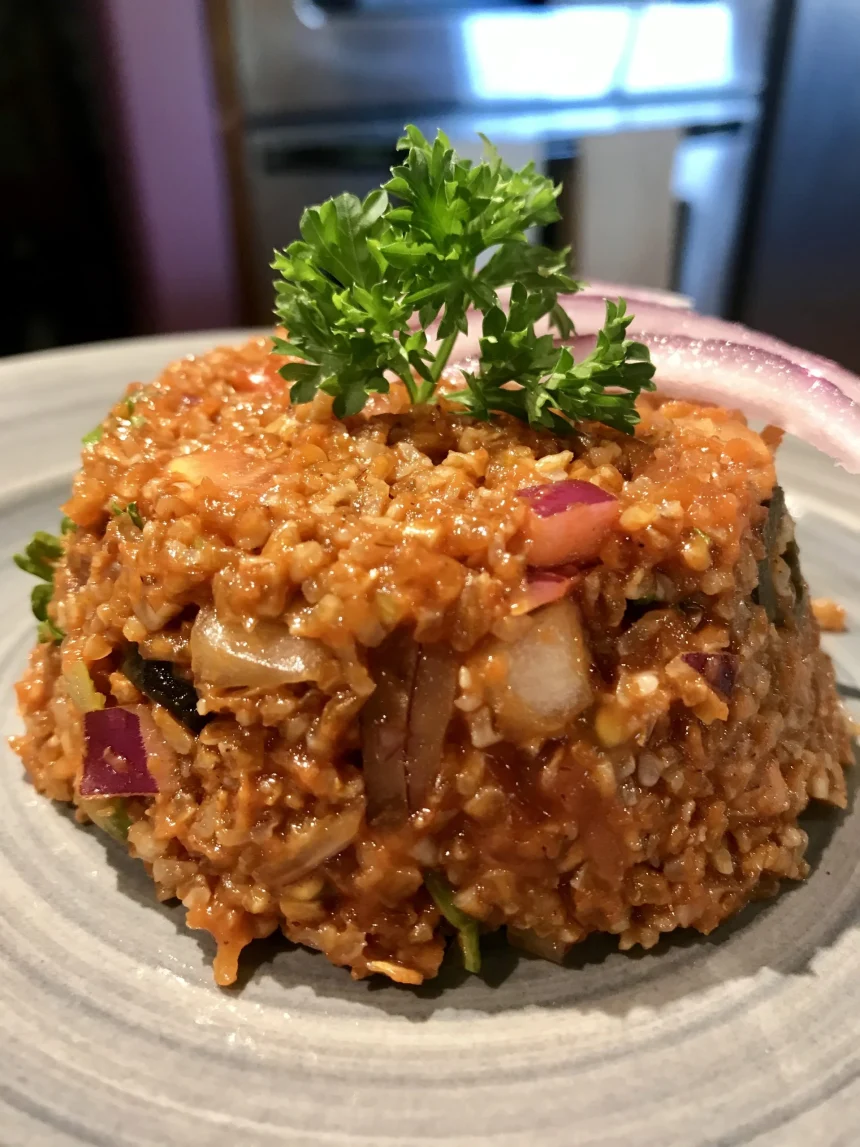
Bulgur Wheat Pilaf Recipe
Hello! Let's prepare a dish that will change the way you see grains: a delicious bulgur pilaf with vegetables. It's a fantastic alternative to rice, full of nutty flavor, fluffy texture, and much more nutritious, perfect for breaking out of the daily kitchen routine.
- Bulgur Wheat Pilaf Recipe
- Preparation time
- Ingredients
- Utensils we will use
- Preparation
- Sauté the aromatics
- Activate the flavor with paste and spices
- Toast the bulgur
- Incorporate liquid and fruit
- Slow and controlled cooking
- The cloth technique and resting
- To finish and serve
- Nutritional Information
- 5 keys to make it perfect
- When is it ideal to enjoy it?
- Comparison table
- Frequently asked questions (FAQ)
- Share your experience
- Culinary glossary
Preparation time
Organization is key in the kitchen, and for this wheat bulgur, the magic happens quickly but requires patience during resting.
- Preparation: 10 minutes
- Cooking: 15 minutes
- Total: 35 minutes (including resting)
- Servings: 6 people
- Difficulty: Easy
Ingredients
To achieve that authentic and comforting flavor, we will use fresh and pantry ingredients. The quality of the grain is fundamental here.
- 2 cups coarse grain bulgur (or medium, #2 or #3)
- 2 tablespoons vegan butter or olive oil
- 1 medium onion, finely chopped
- 1 cup carrots, cut into small cubes
- 1 cup bell pepper (red or green), cut into cubes
- 4 cloves garlic, finely chopped
- 1 ½ tablespoons tomato paste
- 3 ½ cups hot vegetable broth
- 1 teaspoon salt (adjust to taste)
- ½ teaspoon ground black pepper
- 1 teaspoon paprika
- 1 teaspoon ground cumin
- ¼ cup dried cranberries or raisins
- ¼ cup sliced almonds or toasted pine nuts
- ¼ cup fresh chopped parsley
Optional for serving
- Vegan tzatziki or natural yogurt
If you're missing an ingredient in your pantry, don't worry. If you don't have coarse bulgur, you can use quinoa, although the cooking time will vary (similar to a Mediterranean quinoa salad). If you don't have cranberries, golden raisins work great for that sweet touch. In case you don't have vegetable broth, water with a good adjustment of salt and spices will save the dish, although you'll lose a bit of depth in flavor.
Utensils we will use
We don't need sophisticated equipment, but we do need specific tools to ensure cooking uniform and that loose finish we're looking for.
- Medium pot with a tight-fitting lid (essential)
- Wooden spoon or silicone spatula
- Cutting board
- Well-sharpened chef's knife
- Clean, dry kitchen towel (the secret to the technique)
- Fork (to fluff at the end)
Preparation
Follow these steps carefully. The technique is what differentiates a simple cereal boiled from a spectacular pilaf. We're going to treat the product with care.
Sauté the aromatics
Place the pot over medium heat. Add the vegan butter or oil. When hot (without smoking), add the onion, garlic, carrots, and bell pepper. Cook, stirring gently, for about 4 or 5 minutes. We're looking for the onion to be translucent and the vegetables to start softening, releasing their natural juices.
Activate the flavor with paste and spices
Add the tomato paste to the sofrito. Cook it for 2 minutes, stirring constantly; this is vital to remove the acidity from the tomato and caramelize its sugars. Then, sprinkle in the salt, black pepper, paprika, and cumin. Stir for 30 more seconds until the spices fill the kitchen with their aroma. If you like Middle Eastern cuisine, this smell will remind you of preparations like kibbeh with yogurt sauce.
Toast the bulgur
Incorporate the bulgur into the pot. Mix well so that each grain is coated with the fat and red sofrito. Sauté the grain for 1 or 2 minutes. This step, known as pearling or sealing, helps the grain maintain its shape and enhances its characteristic nutty flavor.
Incorporate liquid and fruit
Pour in the vegetable broth (preferably hot so as not to stop the cooking) and add the dried cranberries. Turn the heat to maximum until it comes to a vigorous boil. At this point, give it a final stir to distribute everything.
Slow and controlled cooking
As soon as it boils, reduce the heat to the absolute minimum. Cover the pot and let it cook for 15 to 20 minutes. Important: Do not lift the lid or stir. If you stir now, you will release the starch and get a sticky mass instead of a loose pilaf. Trust the time and the doneness cues: the liquid should have been completely absorbed.
The cloth technique and resting
Once the liquid is absorbed, turn off the heat. Quickly remove the lid, place a clean, dry kitchen towel covering the pot, and put the lid back on top of the towel (be careful that the towel does not touch the heat). Let it rest like this, off the heat, for 10 minutes. The towel will absorb excess steam, preventing the dish from becoming watery.
To finish and serve
After the resting time, remove the towel and the lid. Use a fork to «fluff» or aerate the bulgur gently, separating the grains. Add the toasted almonds and chopped fresh parsley, mixing with enveloping movements. Serve it hot. It is the ideal accompaniment for proteins or as a main dish if you add chickpeas, similar to a complete chickpea salad but hot. If you notice a golden and crispy layer at the bottom (called kazandibi), congratulations! It is the most coveted part by connoisseurs.
Nutritional Information
Bulgur is a nutritional powerhouse. Here are the estimated values for a standard serving of this delicious accompaniment.
- Calories: 276 kcal
- Proteins: 8 g
- Fats: 7 g
- Carbohydrates: 50 g
- Fiber: 11 g
Note: Daily percentage values are based on a 2000-calorie diet and are approximate estimates that may vary depending on the brands of ingredients used.
5 keys to make it perfect
To master this recipe and make it taste like a restaurant dish in your own home, there are secrets that make all the difference.
- Toasting is non-negotiable: Don't skip the step of sautéing the bulgur with the fat and vegetables before adding the water. That extra minute develops a deep flavor and helps the grains stay loose, keeping you away from a mushy texture.
- Hot broth, always: By adding hot liquid, you avoid a thermal shock that stops the cooking. This ensures that the timing is exact and the cooking is uniform from the very first second.
- No stirring allowed: Once you add the liquid and lower the heat, forget the spoon. Stirring the bulgur while it hydrates breaks the grain's structure and releases unnecessary starch, creating a gummy texture.
- The steam trap: The trick of placing a kitchen towel between the pot and the lid at the end is a traditional Turkish technique. The towel traps condensation that would normally fall back onto the pilaf, ensuring it remains fluffy and light.
- The final rest: Those 10 minutes off the heat allow residual moisture to distribute evenly within each grain. It's the difference between a good dish and an exceptional one.
When is it ideal to enjoy it?
This pilaf is a culinary chameleon. It's perfect for weeknight family dinners because it's made in a single pot, making cleanup easy. It also shines at celebrations where you need a side dish that serves many, such as on a buffet-style table alongside some grape leaves and tabbouleh. Additionally, by maintaining its firm texture, it's ideal for Sunday «meal prep»; it lasts several days in the fridge without losing quality, solving your office lunches.
Comparison table
Sometimes we confuse bulgur with other grains. Here I show you how our star dish compares to other popular options.
| Recipe | Key ingredients | Difference/advantage |
|---|---|---|
| Bulgur Wheat Pilaf | Bulgur, tomato paste, broth | Nutty flavor, chewy texture, and quick cooking. |
| Classic Pilaf Rice | Long-grain rice, onion | Softer and more neutral texture, less fiber than bulgur. |
| Israeli Couscous | Semolina pasta (pearls), water | It's pasta, not a whole grain, more slippery texture (see Israeli salad). |
| Quinoa with vegetables | Quinoa, bell peppers, zucchini | Gluten-free and more protein-rich, earthier flavor. |
| Risotto | Arborio rice, cheese, wine | Creamy and heavy, requires constant stirring. |
| Tabbouleh | Fine bulgur, lots of parsley, lemon | Eaten cold as a salad, the bulgur is only hydrated. |
| Cauliflower Rice | Grated cauliflower, oil | Low-carb option, not a real cereal. |
Frequently asked questions (FAQ)
Share your experience
Cooking is for experimenting and sharing. I'd love to know how this pilaf turned out for you. Did you achieve the famous crispy bottom or kazandibi? Did you add your own touch with a different spice? Leave your comment and share your own little tricks so we can all learn together!
Culinary glossary
Here are some terms we used today so you can move around the kitchen like a fish in water:
- Bulgur: Wheat grain that has been pre-cooked, dried, and cracked. It is not the same as raw wheat or couscous.
- Pilaf: Cooking technique where the grain is first sautéed in fat and then cooked in covered broth until fully absorbed.
- Nacarar: Sauté the rice or grain in fat (oil or butter) before adding the liquid to seal the starch and enhance the flavor.
- Smoke point: Temperature at which an oil begins to smoke and burn. Important to control so as not to burn the sofrito.
- Kazandibi: Turkish term referring to the slightly burnt or caramelized layer left at the bottom of the pot, considered a delicacy.






Impeccable texture and flavor. the recipe is very well explained. with cherry tomatoes it was even better .
I prepared it exactly as it is from ‘Bulgur Wheat Pilaf’.
We loved the result. it turned out delicious, thanks for the tips.