


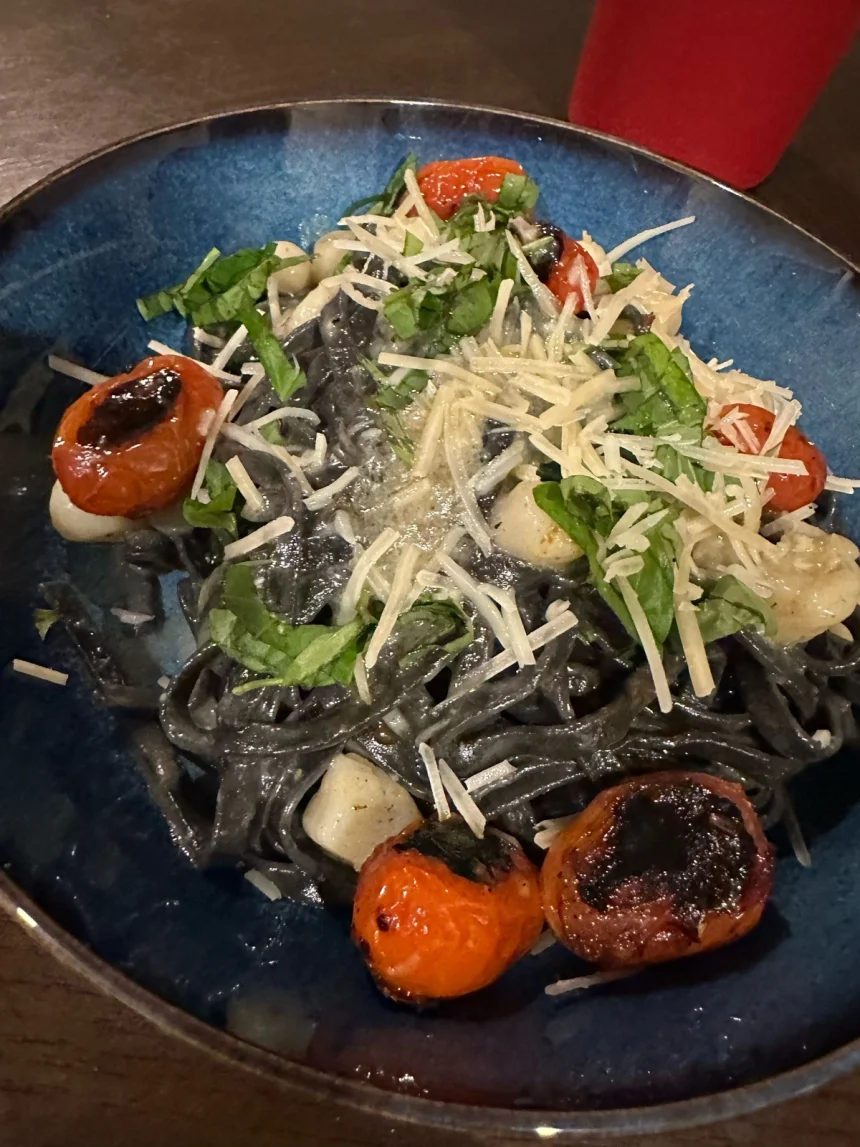
Black Pasta with Seafood Recipe
Hello! We're going to prepare some black spaghetti that are pure elegance on the table but simple to handle in the kitchen. The combination of squid ink with the iodized flavor of clams and the sweetness of shrimp creates a balanced, visually striking dish, perfect for breaking the routine.
Preparation time
Getting organized is key for the pasta to be al dente and the seafood juicy. Here are the estimated times so you can plan your cooking day.
- Preparation: 30 minutes
- Cooking: 30 minutes
- Total: 1 hour
- Servings: 4 people
- Difficulty: Intermediate
Ingredients
For this recipe, we're looking for freshness. The quality of the seafood will define the success of the dish, so try to get the best product your fishmonger has available.
- 320 g of «nero di seppia» spaghetti (dry black pasta)
- 1 clove of garlic
- 250 g of peeled shrimp (can be prawns if you prefer a larger size)
- 250 g of fresh clams
- 2 medium-sized ripe tomatoes
- 1 chili pepper or a small piece of dried peperoncino
- ½!– /wp:list-item –>
- 100 ml extra virgin olive oil
- Fresh parsley (generous amount for chopping)
- Salt (to taste, but with moderation due to the seafood)
If it's difficult to find any of these ingredients in your area, don't worry. If you can't find specific black pasta, you can use regular spaghetti and add two sachets of squid ink to the cooking water or the sauce, although the flavor will be slightly different. If you don't have clams, mussels are a fantastic substitute that maintains that sea flavor profile. If you're a fan of trying different combinations, you might be interested in seeing how I incorporate seafood into other recipes, such as in this shrimp and avocado pasta which is super creamy.
Utensils we will use
We don't need an industrial kitchen for this; your basic equipment will work wonderfully. Make sure to have everything on hand before turning on the heat.
- Large pot for cooking pasta
- Wide frying pan or shallow casserole (where all the pasta will fit later)
- Cutting board
- Chef's knife or well-sharpened knife
- Colander for the pasta
- Medium bowl (for soaking the clams)
- Wooden spoon or silicone spatula
Preparation
We are going to build the flavor step by step. It is vital to respect the cooking times of each ingredient, especially seafood, so that they do not become rubbery.
- Deep cleaning of the clams. Place the clams in a bowl with cold water and a generous handful of salt. Let them rest for at least 2 hours. This will make them expel the sand. After this time, discard any that are broken or open and do not close when touched. Rinse them well under the tap.
- Initial cooking of the shellfish. In a pot with an inch of boiling water (without salt), add the clams. Cover the pot and wait between 2 and 3 minutes, just until they open. Remove them from the heat immediately so they don't dry out. Strain the broth they have released with a fine sieve (or a clean cloth) to remove any sand residue and set it aside; that liquid is pure gold.
- Searing the shrimp. In the wide casserole where we will make the sauce, pour a drizzle of olive oil over medium-high heat. Briefly sauté the peeled shrimp, just a quick turn on each side, only for them to get some color but remain raw inside. Remove them and set them aside on a plate.
- Preparation of the base sofrito. Peel the garlic clove and cut it into thin slices (if you prefer it not to be noticeable, you can chop it very finely or use a press). In the same oil from the shrimp, lower the heat to medium and add the garlic along with the chopped chili. Let the garlic dance and begin to brown, but watch that it doesn't burn or it will become bitter.
- Incorporation of the tomato. While the garlic browns, wash the tomatoes. Peel them and cut them into small cubes (approx. 1 cm). Add them to the casserole with the garlic. Let cook over low heat for about 15 minutes, mashing a little with a spoon until the tomato breaks down and the oil slightly separates from the pulp.
- Deglazing and reduction. Raise the heat and pour the white wine. Let it boil happily for 2 minutes to evaporate the alcohol. Then, add about 100 ml of the clam broth we reserved earlier. Cook everything together for 5 more minutes for the flavors to meld.
- Reincorporation of seafood. Return the prawns and clams to the pot with the sauce. Add a generous sprinkle of finely chopped fresh parsley. Move the pot in circles (back and forth) to emulsify the sauce for 1 minute and turn off the heat. Keep it warm.
- Cooking the black pasta. Put the large pot with plenty of water to boil. When it comes to a rolling boil, add salt (less than usual, remember the sauce has salty clam broth). Add the black spaghetti. Cook them for the time indicated on the package, but I recommend tasting them 1 minute before; they should be «al dente,» offering a slight resistance when bitten.
- Final union. Before draining the pasta, save a cup of the cooking water just in case. Drain the spaghetti and pour them directly into the pot with the seafood sauce. Turn the heat to minimum and stir gently for 30 seconds so the pasta absorbs the juices. If it looks dry, add a splash of the reserved cooking water.
To finish and serve
Remove the chili pieces if you don't want spicy surprises on your plate. Adjust the salt if necessary, although with the potency of the clams, it's usually perfect. Serve immediately in deep plates, making sure to distribute the prawns and clams evenly. Sprinkle a little more finely chopped fresh parsley on top for color and freshness. Accompany with the rest of the well-chilled white wine. If you have leftover parsley or like to experiment with herbs, a arugula pesto pasta with shrimp is another excellent way to use seafood with green touches.
Nutritional Information
These values are estimates per serving to give you a reference of what you are consuming. Black pasta usually has similar values to traditional pasta, except for the minimal caloric contribution of the ink.
- Calories: 480 kcal
- Proteins: 22 g
- Fats: 14 g
- Carbohydrates: 65 g
- Fiber: 4 g
Note: Values may vary depending on the size of the prawns and the exact amount of oil used in the sofrito.
5 keys to make it perfect
Although the recipe is straightforward, there are small details that differentiate a correct dish from a memorable one. Here I share my secrets after years of preparing it.
1. The clam water is the secret.
Never throw away the water that clams release when they open. That liquid is pure essence of the sea. By straining it and adding it to the tomato sauce, you infuse the entire dish with a deep flavor that tap water or canned broth will never give you. It's what connects the pasta with the seafood.
2. Do not wash cooked pasta.
A common mistake is to rinse pasta under cold tap water. Don't do it! If you wash it, you remove the surface starch that helps the sauce adhere to the spaghetti. We want the sauce to «hug» the pasta, not slide off.
3. Respect the garlic's doneness.
Golden garlic smells like glory, burnt garlic tastes like bitter medicine. Keep the heat controlled. If you see it browning too quickly, remove the pan from the heat for a few seconds. The flavor of the garlic is the aromatic base upon which the tomato and wine rest.
4. For the tomato, natural is best.
Although canned fried tomato is convenient, here we need the acidity and freshness of ripe natural tomato. When cooked slowly with oil and garlic, it creates a savory preserve that contrasts with the sweetness of the shrimp. If you use industrial fried tomato, the dish will be too sweet and heavy.
5. The final emulsion (the «creaming»).
That last minute where you mix the pasta with the sauce in the pan is crucial. The movement and residual heat cause the oil, clam broth, and pasta starch to combine into a velvety texture. If you like this technique, you'll love trying it in recipes like the creamy lemon chicken pasta, where the emulsion is the star.
When is it ideal to enjoy it?
This black pasta with seafood dish has an undeniable festive personality. Due to its dark and dramatic color, it is visually striking, making it a fantastic option for celebratory dinners or dates at home where you want to impress without spending hours baking. However, its freshness makes it ideal for summer terrace lunches, accompanied by a very cold white wine.
It is not a dish I recommend for storing in a container for work the next day, as reheated seafood loses its texture and pasta can dry out. It's an «here and now» recipe, to be enjoyed freshly made with family or friends. If you're looking for options more suitable for taking to the office or preparing in advance, I suggest looking at some tuna pasta salad, which holds up much better over time.
Comparison table
So you can see where our recipe stands against other similar sea and land options, I have prepared this comparison. It will help you decide what to cook based on what you have in the fridge.
| Recipe | Key ingredients | Difference/advantage |
|---|---|---|
| Black Pasta with Seafood (This recipe) | Squid ink, clams, shrimp | Deep iodized flavor and elegant aesthetic |
| Spaghetti Frutti di Mare classics | White pasta, mussels, calamari | Uses traditional pasta, visually lighter |
| Pasta with Pesto and Shrimp | Basil, pine nuts, parmesan | Herbaceous flavor instead of tomato sauce |
| Black Fideuá | Short noodle, aioli, cuttlefish | Cooked in paella, drier and toastier texture |
| Black Rice | Bomba rice, ink, calamari | Different cereal base, slower cooking |
| Pasta with Salmon and Cream | Cream, smoked salmon, dill | Much more dairy-rich and heavy than our marinara |
| Pasta Vongole (clams only) | Clams only, wine, garlic | More minimalist, without tomato or shrimp |
If the idea of combining fish appeals to you but you're looking for something with a different sauce, check out this recipe for bonito pasta in creamy salmon sauce, which offers a totally different experience on the palate.
Frequently asked questions (FAQ)
Share your experience
Cooking is for experimenting and sharing. I'd love to know how your black pasta turned out. Did you dare to add mussels or perhaps some chopped squid? Leave your comment and share your own little tricks so we can all keep learning!
Culinary glossary
To help you move like a fish in water in the kitchen, here are some terms we've used today that will be useful for many other recipes.
- Al dente
- It is the ideal cooking point for pasta where it is cooked but still offers a slight resistance when bitten, it is not soft or mushy.
- Deglaze
- To add a liquid (such as wine or broth) to a hot pan to dissolve the caramelized juices that have stuck to the bottom after cooking food.
- Sauté
- To cook food over low heat in oil so that it releases its flavor and softens little by little without browning too quickly.
- Emulsify
- To mix two liquids that normally do not combine well (such as water and oil) with vigorous movement to create a bound and creamy sauce.
- Reduce
- To cook a sauce or liquid over high heat so that part of the water evaporates, thickening the consistency and concentrating the flavors.






Super recipe. I'll make it again this weekend. with avocado it was even better. .
Perfect for sharing . I prepared it yesterday and it was spectacular. with lemon and cilantro it was even better .
Very practical and tasty. I will make it again this weekend. We accompanied it with a touch of chili and it was a hit.