


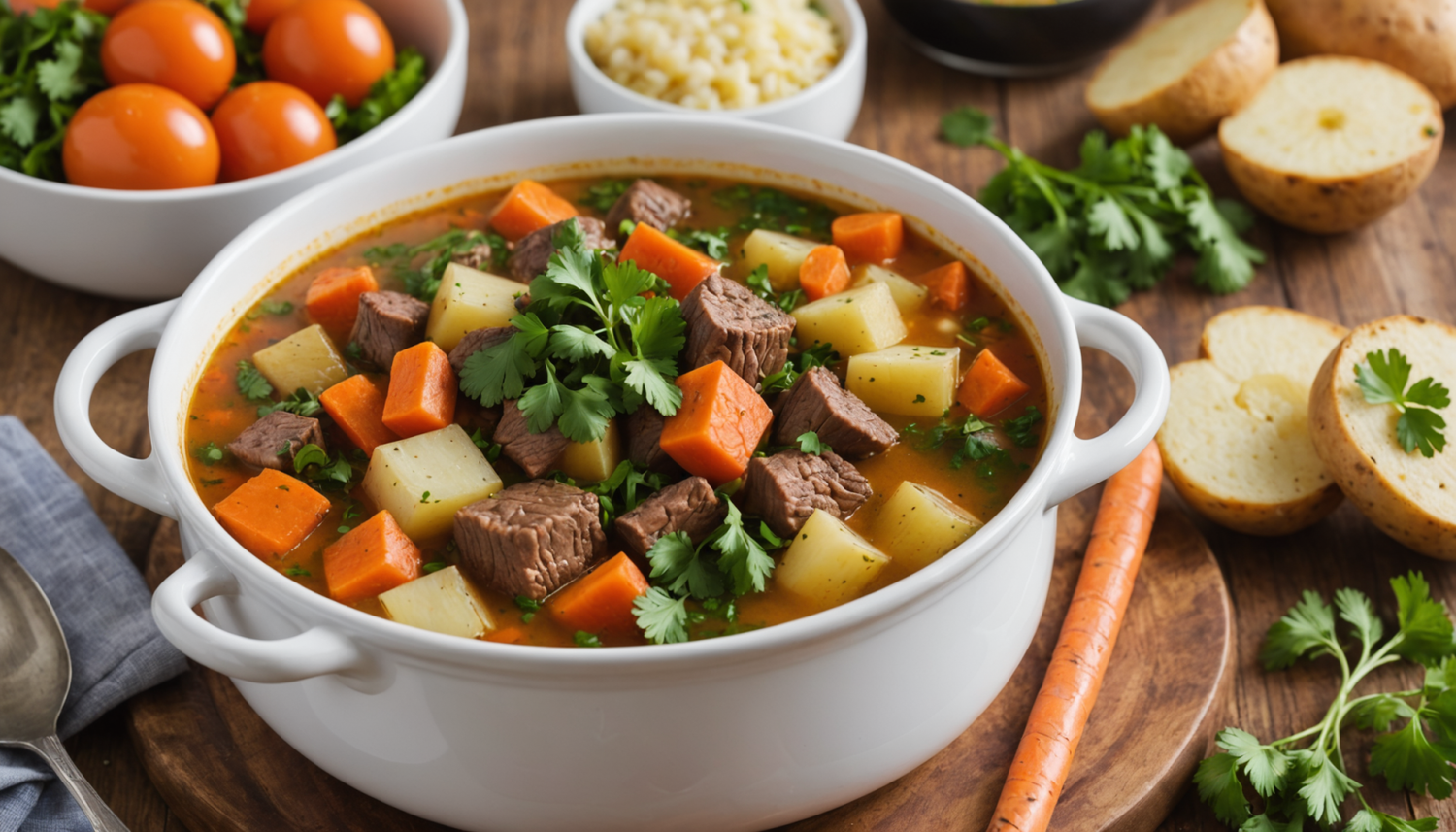
Beef Broth with Vegetables Recipe: A Hug for the Heart
Hello! Let's prepare together this classic that never fails. Beef broth with vegetables is that infallible recipe to pamper the soul, full of homemade flavor, nutrients, and that warmth that brings the family together at the table, perfect for revitalizing you any day.
Preparation time
Organizing our time is vital to enjoy the process without rushing. Here's the breakdown so you know exactly what to expect from this delicious slow cooking.
- Preparation: 15 minutes
- Cooking: 2 hours
- Total: 2 hours and 15 minutes
- Servings: 6 people
- Difficulty: Easy
Ingredients
To achieve that deep and nostalgic flavor, the quality of the meat and the freshness of the vegetables are indisputable. We are not looking for complications, but honest ingredients that shine on their own in the pot.
- Meat: 500 g beef short rib (adds a lot of flavor due to the bone).
- Meat: 250 g beef neck or shank (for tenderness and lean meat).
- Bone: 1 piece of marrow bone (optional, but highly recommended for body).
- Liquid: 5 liters of pure water.
- Aromatics: ½ piece of white onion.
- Aromatics: 3 peeled garlic cloves.
- Herbs: 5 dried bay leaves.
- Fresh herbs: 1 small bunch of cilantro (washed and disinfected).
- Spices: 1 teaspoon of ground cumin.
- Seasoning: 1 tablespoon of sea salt (adjust at the end).
- Seasoning: 1 generous pinch of ground black pepper.
- Base vegetable: 1 tender corn on the cob cut into 3 or 4 pieces.
- Legume: 1 cup of chickpeas (optional, pre-soaked if dry, or canned and washed).
- Firm vegetable: 2 large carrots.
- Firm vegetable: 1 thornless chayote.
- Soft vegetables: 3 tender zucchini (Italian or Creole type).
- Soft vegetables: 1 handful of fresh green beans.
- Soft vegetables: 2 medium white potatoes.
- Final touch: 1 ripe red tomato.
Substitution options:
If you don't find chayote, in your market, don't worry; you can omit it or substitute it with a little more potato or even turnip if you like a more earthy flavor. If you don't have beef shank, short rib or loaded rib is excellent because the bone is the secret to a good broth. If you prefer to avoid chickpeas, simply don't add them, although they add a delicious texture.
Utensils we will use
You don't need a professional kitchen for this, but you do need tools that make it easier to handle large volumes of hot liquid and vegetables.
- Large, deep pot with lid (minimum 6 to 8 liters capacity).
- Stable cutting board (place a damp cloth underneath so it doesn't move).
- Sharp chef's knife.
- Manual vegetable peeler.
- Skimmer (slotted spoon) to clean the broth.
- Large serving ladle.
Beef Broth Preparation step by step
The secret to a good beef broth is patience and the order in which we add the ingredients. Respecting the cooking times of each vegetable ensures that nothing falls apart and everything maintains its ideal texture. Follow these steps carefully.
1. Cleaning and first cooking of the meat
- Initial wash: Place the meat (rib, neck, and bone) under cold running water briefly to rinse off any blood residue or bone splinters. Drain well.
- Pot assembly: In your large pot, add all the meat and marrow bone. Pour in 5 liters of cold water. It's important to start with cold water so that impurities rise to the surface when heated.
- Flavoring the water: Add the ½ whole onion, 3 cloves of garlic, and 5 bay leaves. Also add the tablespoon of sea salt at this time.
- Boiling and skimming: Bring the pot to high heat. As soon as it comes to a boil, you'll notice a grayish foam rising to the surface. With your skimmer, patiently remove all that foam. This is crucial for having a broth clean and light.
- Slow cooking: Once the liquid is clean, cover the pot, reduce the heat to medium-low, and let it cook for approximately 1 hour and 30 minutes. The meat should start to feel tender.
2. Incorporation of firm vegetables
- Cutting hard vegetables: While the meat cooks, wash and peel the chayote and cut it into medium cubes (approx. 3 cm). Do the same with the corn if you haven't already cut it.
- First block of vegetables: After an hour and a half of cooking the meat, check that it no longer releases foam. Add the corn, chickpeas, and chayote. These need more heat to soften.
- Medium cooking: Let everything cook together for about 15 more minutes over medium heat.
3. Medium vegetables and deep seasoning
- Carrot and potato preparation: Wash, peel, and cut the carrots into thick slices or sticks. Peel the potatoes and cut them into large cubes (so they don't fall apart).
- Second block: Add the carrots and potatoes to the pot.
- Seasoning: This is the magic moment. Add the teaspoon of ground cumin and black pepper. Cumin gives it that earthy touch characteristic of homemade cooking. Let it cook for 10 more minutes.
4. Soft vegetables and final touch
We're almost ready. Now let's move on to the most delicate ingredients that only require a touch of heat to be perfectly cooked, similar to the technique we would use to avoid overcooking vegetables in a leek and potato cream.
- Final cut: Wash the green beans and remove the ends; cut them in half. Wash the zucchini, remove the ends, and cut them into thick slices or half-moons. Dice the tomato into small cubes.
- Third block: Add the green beans, zucchini, and chopped tomato to the gently simmering pot.
- Rectification: Carefully taste the liquid. If you feel it lacks salt, add it little by little.
- Fresh aroma: Add the bunch of cilantro (you can put it in whole to remove it later or chopped if you like to find it in the soup).
- Resting: Let everything cook together for only 5 to 7 more minutes. Turn off the heat immediately so that the zucchini remains firm («al dente») and doesn't turn to mush with the residual heat.
To finish and serve
Before serving, I recommend removing the cooked onion, garlic, and bay leaves with a slotted spoon, so no one gets a surprise when eating. Serve this nutritious very hot delicacy in deep bowls, making sure each plate has a little meat, bone, and variety of vegetables. Traditionally accompany it with white rice (you can put a spoonful inside the broth), freshly warmed corn tortillas, avocado slices, fresh chopped onion, extra cilantro, and, of course, a good squeeze of lime.
Nutritional Information
This dish is a complete meal in a single bowl. Here's an estimate of what each generous serving provides to your body.
- Calories: 250 kcal
- Proteins: 25 g
- Fats: 8 g
- Carbohydrates: 20 g
- Fiber: 4 g
Note: Values are approximate and may vary depending on the specific cut of meat and the amount of fat you decide to leave in or remove from the broth.
5 keys to make it perfect
Sometimes we follow the recipe to the letter and the result varies. Here I share my private chef secrets so your soup turns out restaurant-quality.
1. Cold water is key:
Never put the meat in boiling water. By starting with cold water, you allow soluble proteins and blood to slowly release and coagulate as foam. If you use hot water, you «seal» the meat and those impurities remain inside or irreversibly cloud the liquid.
2. The bone gives body:
Even if you want a low-fat dish, do not omit the bone or marrow during cooking. The collagen it releases is what gives that silky texture on the lips. If you are concerned about fat, it is better to cook it, let it cool (even refrigerate), and remove the solid fat layer afterward, but having gained all the flavor, a useful technique also for sauce bases like in pork glazes.
3. Do not overcook the vegetables:
It's the number one mistake. A broth with mushy vegetables feels sad. Respect the cooking times. Zucchini, for example, cooks almost with steam. If you add it along with the corn, it will disappear.
4. Tomato adds color and umami:
Many people make «white» broth. Adding a little chopped or ground tomato at the end doesn't turn it into a «red soup,» but rather gives it a beautiful golden hue and enhances the flavor of the meat.
5. The magic of resting:
Like complex stews, such as wedding stew, the broth tastes better if it rests for about 15 or 20 minutes covered before serving. The flavors settle and the meat relaxes, becoming more tender.
When is it ideal to enjoy it?
This dish is the king of family Sundays in Mexico and much of Latin America. It's that food you look for when you need to feel «at home.» It's perfect for rainy days or intense cold, as its temperature and regulated caloric content instantly restore our body heat.
It is also famous for being an excellent «revitalizer» after a night of partying or celebration, very similar to the function served by tlalpeño broth or a good shrimp broth. Furthermore, being so complete, it works wonderfully as a single dish for a main meal during the week when you want to ensure children eat vegetables without protesting.
Comparative table of Mexican broths
Sometimes we confuse the names or don't know what differentiates one broth from another. Here I help you distinguish them so you can choose your favorite.
| Recipe | Key ingredients | Difference/advantage |
|---|---|---|
| Beef Broth (This recipe) | Rib, corn, zucchini, carrot | Neutral and comforting flavor, focused on meat and light vegetables. |
| Mole de Olla | Shank, pasilla/ancho chili, xoconostle | It has a base of dried chilies and is slightly spicy and thick. |
| Puchero | Beef, pork or chicken, fruits (banana, pear) | Includes fruits and sometimes cold cuts, sweeter and more complex flavor. |
| Tlalpeño Broth | Chicken, chickpea, chipotle, cheese, avocado | Chicken base with the smoky touch of chipotle and panela cheese. |
| Birria (Consommé) | Beef or goat, chilies, strong spices | Very seasoned, marinated meat, intense and festive flavor. |
| Menudo / Pancita | Beef tripe, guajillo chili, oregano | Gelatinous texture specific to tripe, very traditional flavor. |
| Meat Juice | Concentrated beef extract, sherry, Maggi juice | Dark and very concentrated liquid, without chopped vegetables, gourmet appetizer. |
Frequently asked questions
Share your experience
Cooking is for experimenting and sharing. Did you add chickpeas or prefer rice? Did you use any chili to give it spice? Leave your comment and share your own little tricks! I'd love to know how you adapted this recipe at home and how it turned out for you. I'll read you below!
Culinary glossary
To help you move like a fish in water in the kitchen, here I explain some terms we used today.
- Skim: The action of removing with a spoon or skimmer the impurities and foam that rise to the surface of a broth at the beginning of cooking.
- Shank: A cut of beef that comes from the animal's calf; it is rich in connective tissue, making it ideal for broths and long stews.
- Bone marrow: Fatty, whitish substance found inside large bones; adds a lot of flavor and richness to broths.
- Rectify: To taste a food almost at the end of its preparation to adjust the amount of salt, pepper, or spices until the desired flavor is achieved.
- Al dente: Term (usually for pasta, but applies to vegetables) that indicates the food is cooked but retains some firmness when bitten, without being watery.
This ‘Beef broth with vegetables’ recipe is super. I followed the steps and it turned out perfectly on the first try.
I tried it today. Super easy to follow, ideal for beginners.