


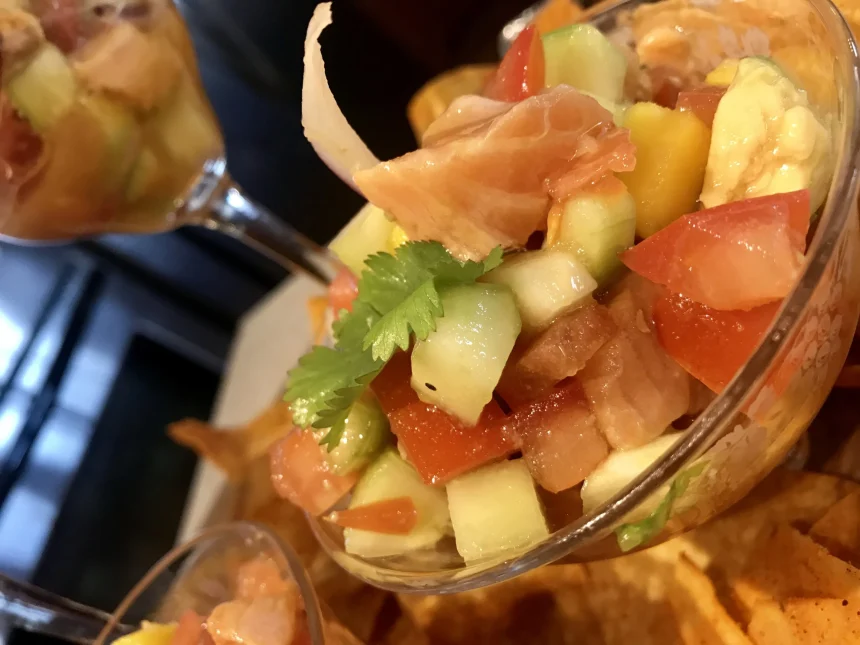
Fresh and Vibrant Salmon Ceviche Recipe
Hello! Let's prepare together a dish that is pure freshness and flavor: a spectacular salmon ceviche. The essence of this recipe is to respect the product and let the citrus fruits work their magic, achieving a smooth texture and a balanced flavor that will make you look great without complicating your life in the kitchen.
Preparation time
Before putting on your apron, it's essential to be clear about the timings to organize yourself well, especially due to the resting time of the fish.
- Preparation: 20 minutes
- Cooking: 0 minutes (cold cured)
- Total: 20 minutes (plus prior freezing and resting time)
- Servings: 4 people
- Difficulty: Easy
Ingredients
- 1 kg fresh salmon (previously frozen)
- 2 medium red onions
- 2 fresh yellow aji peppers
- 6 juicy limes
- 2 yellow lemons
- 1 bunch of fresh cilantro
- Fine salt to taste
- Freshly ground black pepper
- 1 ripe avocado (Optional)
- Lettuce leaves or mixed greens for the base (Optional)
If you can't find fresh yellow aji pepper in your local market, don't worry. You can substitute it with a jalapeño pepper if you like spice, or even with finely sliced sweet yellow bell pepper if you prefer to avoid the heat, although the flavor will change slightly.
Utensils we will use
- Stable cutting board
- Well-sharpened chef's knife
- Large glass or ceramic bowl (avoid metal)
- Manual citrus juicer
- Tablespoon for mixing
- Absorbent kitchen paper
- Kitchen cling film
Preparation
-
Prior fish preparation (Safety).
It is vital that the salmon has undergone a freezing process of at least 48 hours (ideally 5 days) at -20°C to eliminate any risk of anisakis. Thaw the fish slowly in the bottom part of the fridge overnight; never thaw it in the microwave or under hot water, as it would lose its firm texture. -
Cleaning and cutting the salmon.
Remove the salmon skin if it still has it. Run your finger over the flesh to detect any possible bones and remove them with tweezers. Wash the fish quickly under the tap and dry it very well with kitchen paper. Cut the loin into medium cubes, approximately 1.5 to 2 centimeters. We want them to be felt when biting, but not so large that the center remains bland. -
Onion preparation.
Peel the red onions. Cut them in half and then into very thin slices (pluma or julienne). To soften their intense flavor and make them crispier, submerge them in a bowl with ice water and a pinch of salt for 10 minutes. Then, drain and dry them well. -
Cutting the aromatics.
Open the aji amarillo peppers in half, remove the veins and seeds if you don't want it to be too spicy. Cut them into very small cubes (brunoise) or thin strips if you prefer them to be more visible. Wash the cilantro, dry it, and finely chop only the leaves, discarding the thicker stems. -
Mixing dry ingredients.
In the glass bowl, place the salmon cubes, the red onion well-drained, the chopped aji and half of the cilantro. Add a good pinch of salt and black pepper. Mix gently with the spoon to integrate the flavors without damaging the fish. -
The moment for the acid.
Squeeze the limes and lemons immediately. An important tip: do not squeeze them to the last drop to prevent the bitterness of the white pith from passing into the juice. Pour the juices over the salmon mixture. The liquid should almost completely cover the fish. -
Resting and curing.
Cover the bowl with cling film and place it in the fridge. Let it marinate for 10 to 20 minutes. You don't need hours; we just want the outside of the fish to become opaque (denaturation) but for the center to remain juicy and vibrant.
To finish and serve
Just before serving, adjust the salt if necessary. If you decided to use avocado, cut it into cubes and add it carefully at this last moment so that it doesn't fall apart or oxidize. Serve the ceviche very cold in deep plates or wide glasses. You can accompany it with some crackers, slices of cooked sweet potato or toasted corn to give that much-loved texture contrast. Enjoy this other version of salmon ceviche that you're sure to love!
Nutritional Information
- Calories: 180 kcal
- Proteins: 22 g
- Fats: 7 g
- Carbohydrates: 4 g
- Fiber: 1 g
The nutritional values shown are approximate per serving and may vary depending on the size of the ingredients used.
5 keys to make it perfect
Achieving a memorable ceviche is not a matter of luck, but of paying attention to details. Here I share my secrets to ensure success at your table.
1. The quality and temperature of the fish
Salmon is the absolute star. Make sure to buy a fresh, good quality fillet. It is crucial to maintain the cold chain at all times. While chopping vegetables, keep the salmon in the fridge. If the fish gets warm, its fat becomes heavy and the texture softens too quickly upon contact with lemon.
2. The precise cut
Don't underestimate the importance of the knife. A clean cut prevents the fish from falling apart. The cubes should be uniform so that they all «cook» with the lemon at the same time. If you have very large pieces and very small ones, you will have inconsistent textures in each bite.
3. Gentle squeezing
As I mentioned in the steps, when squeezing limes and lemons, do it gently. The essential oils from the peel are very bitter. If you use an electric juicer or squeeze too hard by hand, that bitterness will ruin the delicate balance of the leche de tigre that forms.
4. The balance of salt
Salt should be added to the fish before of the lemon. This helps to open the pores of the fish and firm up its flesh, allowing it to better absorb the citrus flavor and the spiciness of the chili.
5. The right marinating time
One of the most common mistakes is leaving the ceviche in lemon for hours thinking that it's safer that way. This only leaves the fish dry and fibrous. Salmon is a fatty and delicate fish; 15 or 20 minutes is enough to change its external texture while maintaining its internal creaminess. If you like to experiment, you can also try this smoked tuna ceviche with beetroot to compare textures.
When is it ideal to enjoy it?
Salmon ceviche is an incredibly versatile dish, but it shines especially on certain occasions. It is the undisputed star of summer lunches, when the heat is on and the body craves fresh, light, and easy-to-digest foods. By not requiring heat cooking, you keep the kitchen cool, which is always appreciated on sunny days.
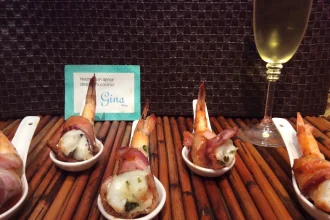
It also works wonderfully as a elegant appetizer at a dinner with friends. You can serve it in small portions, in shot glasses or on tasting spoons for a sophisticated appetizer. Its vibrant orange color contrasting with the green of the cilantro and the purple of the onion decorates the table by itself.
In this 2026, where we seek to optimize time without losing quality, it is a fantastic option for a quick weeknight dinner, provided you remembered to thaw the fish. It is light, low in carbohydrates (ideal if you follow keto-type diets) and leaves you satisfied without that feeling of heaviness, allowing you to continue with your day or rest better at night.
Comparison table
| Recipe | Key ingredients | Difference/advantage |
|---|---|---|
| Salmon Ceviche (This recipe) | Salmon, lime, red onion | Fatty and smooth texture, rich in Omega-3 |
| Ceviche Peruvian Classic | White fish (sea bass), tiger's milk, corn | More intense flavor and firmer texture |
| Shrimp Ceviche | Cooked shrimp, tomato sauce (sometimes), lemon | Seafood is usually pre-cooked, elastic texture |
| Salmon Tiradito | Thin slices of salmon, yellow chili sauce | Sashimi-style cut, no onion on top, more delicate |
| Aguachile | Raw shrimp, lots of chili, cucumber, lime | Much spicier and almost immediate curing time |
| Tuna Ceviche | Fresh red tuna, soy sauce, sesame | Asian touch, deep, iron-rich flavor |
| Vegan Ceviche | Mushrooms, cauliflower or mango, lemon | Light vegetable option, no raw fish risk |
Frequently asked questions (FAQ)
Share your experience
Cooking is for experimenting and sharing. I'd love to know how your ceviche turned out. Did you add your personal touch? Perhaps a little fruit or a different chili? Leave your comment and share your own little tricks so we can all keep learning!
Culinary glossary
Denaturation: A chemical process by which the proteins in fish change their structure due to the acidity of lemon, altering their color and texture without using heat.
Brunoise: A cutting technique where vegetables (in this case, chili pepper) are diced into very small, uniform cubes, about 2 to 3 millimeters.
Julienne: Cut into thin, elongated strips. We use this cut for the onion, allowing it to integrate well with the fish without being coarse pieces.
Tiger's milk: It is the whitish and flavorful juice that results from the mixture of lemon juice, salt, chili, and the juices released by the fish itself when marinated.
Anisakis: Parasite that can be found in raw marine fish. It is effectively eliminated by deep freezing or complete thermal cooking.






Very practical and tasty. I made it with the ingredients I had and it worked perfectly. I loved how it combines with white rice .
I loved the combination of flavors in this ‘Salmon Ceviche’. It saved me time and was delicious. It earned a spot in my recipe book.
What a delight! . It was a total success with my family.