


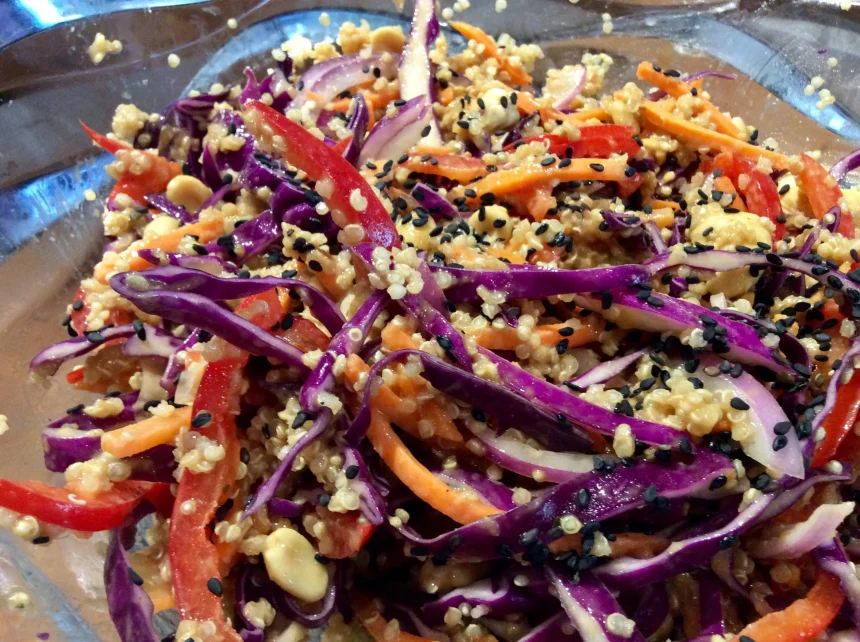
Oriental Cabbage Salad Recipe
Hello! Let's prepare a salad that is pure freshness and texture, ideal for breaking away from boring side dish routines. This oriental cabbage salad stands out for its unparalleled crunch and a dressing full of nuances that balances sour, salty, and sweet, perfect to accompany your meals or enjoy as a light dish.
- Oriental Cabbage Salad Recipe
- Preparation time
- Ingredients
- Utensils we will use
- Step-by-step preparation of the oriental salad
- Cutting and preparation of vegetables (Mise en place)
- Preparation of the dressing
- Mixing and assembly
- To finish and serve
- Nutritional Information
- 5 keys to make it perfect
- When is it ideal to enjoy it?
- Comparison table
- Frequently asked questions (FAQ)
- Share your experience
- Culinary glossary
Preparation time
Organization is key in the kitchen, and the good thing about this recipe is that most of the time is spent cutting vegetables, there is no cooking.
- Preparation: 15 minutes
- Cooking: 0 minutes
- Total: 15 minutes
- Servings: 8 (as a side dish) or 4 (as a main course)
- Difficulty: Easy
Ingredients
To achieve that authentic and vibrant flavor, we need fresh ingredients. Here is the detailed list so you don't miss anything on your workbench.
For the salad base
- 3 cups green cabbage (white cabbage), shredded or very thinly sliced
- 3 cups red cabbage (lombard cabbage), shredded or very thinly sliced
- 2 large carrots, julienned or thinly sliced
- 3 cups bean sprouts (dragon's teeth), fresh and washed
- 3 green onions (scallions or spring onions), finely sliced diagonally
- 1/2 cup fresh cilantro leaves, without thick stems
- 1/2 cup of leaves of fresh mint, lightly chopped
- 1/4 cup crispy fried shallots (Optional, but highly recommended for the finishing touch)
- 3 cups shredded cooked chicken (Optional, if you want to turn it into a main dish)
For the Asian dressing
- 3 tablespoons rice vinegar
- 3 tablespoons soy sauce (preferably low-sodium or light)
- 2 teaspoons fish sauce (provides a deep umami)
- 2 tablespoons fresh lime juice (green lemon)
- 3 tablespoons peanut oil
- 1 1/2 tablespoons sugar (white or brown)
- 2 cloves garlic, very finely minced or pressed
- 1/2 teaspoon chopped red chili or chili pepper (Optional, if you like spice)
If you can't find an ingredient, don't worry. If you don't have peanut oil, you can use any neutral vegetable oil like sunflower or canola. If you don't have fish sauce, simply substitute it with a little more soy sauce, although the flavor will be slightly less complex. Rice vinegar can be replaced with apple cider vinegar if necessary.
Utensils we will use
We don't need sophisticated equipment; with the basics from your kitchen, we can make magic. Here's what you'll need:
- Large and stable cutting board
- Sharp chef's knife (crucial for fine cuts)
- A very large bowl (for comfortable mixing)
- A glass jar with a lid (to emulsify the dressing)
- Kitchen tongs or two large spoons (for stirring)
- Grater or mandoline (optional, if you prefer not to cut with a knife)
Step-by-step preparation of the oriental salad
Follow these steps calmly. The key to this recipe lies in the cutting of the vegetables and the emulsification of the dressing. Enjoy the process.
Cutting and preparation of vegetables (Mise en place)
The first thing is to have all the vegetables ready. The cut greatly influences the final texture in the mouth.
- Wash the cabbages very well and dry them. Cut the green and purple cabbage into very thin strips (chiffonade style). The thinner, the more pleasant it will be to eat and the better it will absorb the dressing.
- Peel the carrots and cut them into julienne (very thin sticks) or grate them with the coarse side of the grater.
- Wash the bean sprouts and drain them well so they don't water down the salad.
- Chop the green onion diagonally and separate the mint and cilantro leaves.
- Wash the cabbages very well and dry them. Cut the green and purple cabbage into very thin strips (chiffonade style). The thinner, the more pleasant it will be to eat and the better it will absorb the dressing.
- Peel the carrots and cut them into julienne (very thin sticks) or grate them with the coarse side of the grater.
- Wash the bean sprouts and drain them well so they don't water down the salad.
- Chop the green onion diagonally and separate the mint and cilantro leaves.
Preparation of the dressing
Let's create the vinaigrette that will unite all the flavors. Using a jar is my favorite method for its simplicity and effectiveness.
- In a glass jar with a lid, add the rice vinegar, soy sauce, fish sauce, lime juice, peanut oil, sugar, minced garlic, and chili (if you decide to use it).
- Close the jar tightly and shake vigorously for about 30 seconds. You should see the sugar dissolve and the mixture become slightly creamy and homogeneous (emulsified).
- In a glass jar with a lid, add the rice vinegar, soy sauce, fish sauce, lime juice, peanut oil, sugar, minced garlic, and chili (if you decide to use it).
- Close the jar tightly and shake vigorously for about 30 seconds. You should see the sugar dissolve and the mixture become slightly creamy and homogeneous (emulsified).
Mixing and assembly
It's time to bring colors and flavors together. You'll need space to move the ingredients.
- In the large bowl, place the green cabbage, purple cabbage, carrot, bean sprouts, green onion, and fresh herbs (cilantro and mint).
- If you are going to add shredded chicken to make it a main dish, add it at this time.
- Pour the dressing over the vegetables. Don't pour it all at once if you're unsure of the amount; you can add 3/4 first.
- With the tongs or spoons, mix everything with enveloping movements. Make sure that each strip of cabbage and each leaf is lightly coated with the dressing.
- In the large bowl, place the green cabbage, purple cabbage, carrot, bean sprouts, green onion, and fresh herbs (cilantro and mint).
- If you are going to add shredded chicken to make it a main dish, add it at this time.
- Pour the dressing over the vegetables. Don't pour it all at once if you're unsure of the amount; you can add 3/4 first.
- With the tongs or spoons, mix everything with enveloping movements. Make sure that each strip of cabbage and each leaf is lightly coated with the dressing.
To finish and serve
Just before serving the salad, generously sprinkle the fried shallots on top. It is vital to do this at the end so they maintain their crispy texture and don't soften with the dressing's moisture. Serve immediately in individual bowls or on a central platter. This salad is fantastic because it pairs very well with grilled meats or fish, and if you like contrasts, I recommend also trying a Asian cucumber salad on another occasion to complete a themed menu.
Nutritional Information
These values are approximate per serving (based on a side portion of about 400g) and may vary depending on the specific products you use at home.
- Calories: 313 kcal
- Proteins: 29.4 g (high if you include chicken)
- Fats: 13.3 g
- Carbohydrates: 21.3 g
- Fiber: 3.6 g
Note: Nutritional values are estimates calculated for a standard diet. If you add chicken, the protein content increases considerably, making it a complete meal.
5 keys to make it perfect
After preparing this recipe many times for my clients, I have noticed that there are small details that make the difference between a good salad and a spectacular one.
1. The cut matters: Don't underestimate the power of a sharp knife. Cutting the cabbage very thinly is not just aesthetics; it changes the chewing experience. If the pieces are too thick, your jaw works too much and the dressing's flavor doesn't penetrate as well.
2. Fresh herbs, not dried: In this recipe, mint and cilantro must be fresh. They provide an aromatic note that cuts through the intensity of the fish sauce and soy. Dried herbs will not work here.
3. The final crunch: Fried shallots are the «secret» of many restaurants. If you can't find them pre-made, you can fry thin slices of shallot at home until golden, or use fried onions sold for hot dogs as an emergency substitute.
4. Shake, don't stir: By making the dressing in a jar and shaking, you achieve a temporary emulsion that coats the vegetables better than if you just mix the liquids in the bowl.
5. Temperature: Serve this salad cold or at cool room temperature. If the ingredients are warm (except for the chicken if you just cooked it), it loses some of its crunchy charm.
When is it ideal to enjoy it?
This salad is a true all-rounder. It's perfect for the summer months when you don't want to turn on the oven, as it's refreshing and light. Plus, since it doesn't have mayonnaise or dairy in the dressing, it's ideal for picnics, outdoor barbecues, or potluck-style meals potluck where food will be out of the fridge for a while; it holds up much better than a traditional potato salad.
It's also excellent for weekly planning (meal prep). Cabbage is a sturdy vegetable that doesn't wilt as quickly as lettuce. In fact, many people like it even more the next day when the flavors have marinated a bit. If you're looking for other colorful and nutritious cabbage options, I suggest checking out the Cumin chicken strips with purple cabbage salad, which follow a similar healthy line.
Comparison table
Sometimes we get confused among so many varieties of coleslaw. Here's how our main recipe compares to other popular ones so you can choose the one that best suits your craving today.
| Recipe | Key ingredients | Difference/advantage |
|---|---|---|
| Oriental Cabbage Salad (This recipe) | Cabbage, soy, mint, peanuts/shallots | Light dressing dairy-free, umami profile, and very crunchy. |
| Classic Coleslaw (American) | Cabbage, carrot, mayonnaise | Creamy, heavier and sweet, ideal for burgers. |
| Thai Salad of Papaya (Som Tum) | Green papaya, green beans, chilies | Much spicier and uses papaya instead of cabbage base. |
| Vietnamese Chicken Salad | Napa cabbage, chicken, lime vinaigrette | Softer texture due to the type of cabbage, protein-focused. |
| Waldorf Salad | Celery, apple, walnuts, mayo | Fruity and sweet profile, different texture due to celery. |
| Chinese Chicken Salad (U.S.) | Lettuce, mandarins, fried noodles | Uses lettuce base (softens quickly), sweeter due to the fruit. |
| Kimchi (Korean) | Fermented Napa cabbage, gochugaru | Fermented, spicy and sour flavor, not a fresh salad. |
Frequently asked questions (FAQ)
Share your experience
Cooking is for experimenting and sharing. I would love to know how this salad turned out for you. Did you add any extra ingredients? Did you dare to try the spicy chili? Leave your comment and share your own tips so we can all learn new ways to enjoy it!
Culinary glossary
So you don't have any doubts while cooking, here I explain some terms we used today:
- Julienne: A cutting technique that consists of chopping vegetables into long, very thin strips, similar to thin matchsticks.
- Emulsify: It is the process of mixing two liquids that normally do not combine well (such as vinegar and oil) by vigorously whisking until a homogeneous and creamy mixture is achieved.
- Chiffonade (Chiffonade): A cut used for leafy vegetables (such as cabbage or basil) that results in long, thin strips.
- Shallots: A bulb from the onion and garlic family, but with a milder, sweeter, and more aromatic flavor. Very common in French and Asian cuisine.
- Umami: Known as the «fifth taste,» it is a savory and deep flavor present in ingredients such as soy sauce, ripe tomato, or fish sauce.



It looks very delicious thanks Gina
I was surprised by the flavor of this ‘Oriental Cabbage Salad’ . super easy to follow, ideal for beginners. I loved it, I'll repeat it soon.
What a delight! this ‘Oriental Cabbage Salad’. it turned out delicious, thanks for the tips. I loved it, I'll repeat it soon.
I tried it today . I made it for dinner and everyone was happy.