

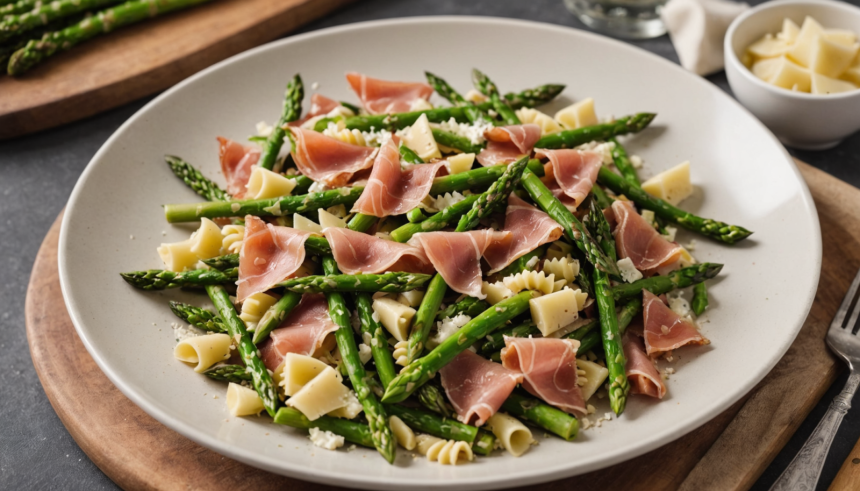
Recipe for Warm Farfalle Salad with Asparagus, Prosciutto, and Parmesan
Hello! Let's prepare together a dish that is pure comfort with a touch of Italian elegance, perfect for when you want something nutritious without complicating your life. This warm salad combines the soft texture of pasta with the crispness of asparagus and the salty touch of prosciutto, creating an incredible balance in every bite.
Preparation time
Getting organized is key to enjoying cooking, so here's the time breakdown for you to plan your meal without rushing.
- Preparation: 15 minutes
- Cooking: 15 minutes
- Total: 30 minutes
- Servings: 4 people
- Difficulty: Easy
Ingredients
For this dish, we need fresh, good quality products, as with few ingredients, each one plays a significant role in the final flavor.
For the base
- 300 g Farfalle pasta (bow ties)
- 1 bunch fresh green asparagus (approx. 15-20 stalks)
- 150 g Prosciutto di Parma (very thinly sliced)
- 80 g Parmesan Reggiano cheese (in block)
For the dressing and cooking
- 4 tablespoons extra virgin olive oil
- 2 cloves of garlic
- 1 lemon (juice and zest)
- Sea salt
- Freshly ground black pepper
- Fresh basil leaves (Optional)
In case you can't find Italian Prosciutto, you can substitute it with serrano ham of good quality, although it will be a bit saltier, so adjust the final salt. If green asparagus are not in season, blanched round green beans are an excellent alternative that maintains that necessary crunchy texture.
Utensils we will use
You don't need sophisticated equipment; your kitchen basics are more than enough to achieve a restaurant-quality result.
- Large pot for pasta
- Large frying pan or wok
- Pasta strainer
- Cutting board
- Well-sharpened chef's knife
- Vegetable peeler (for cheese shavings)
- Fine grater (for the lemon)
- Kitchen tongs or wooden spoon
Preparation
We are going to build this dish step by step. The important thing here is coordination so that everything arrives warm at the moment of mixing.
Cooking the pasta
Boil the water. Place the large pot with plenty of water over high heat. When it comes to a boil, add a generous handful of salt. This is vital because it is the only time we will season the pasta from the inside.
- Cook the pasta. Add the farfalle and cook following package instructions, but subtract 1 minute from the suggested time. We are looking for a firm «al dente» point, as we will then mix it with the heat of the pan and we don't want it to overcook.
- Reserve water. Before draining, scoop out one cup of the pasta cooking water. This starchy liquid will help us thicken the sauce later. Drain the pasta and set aside.
- Prepare the asparagus. Wash the asparagus under the tap. To remove the woody part, hold the asparagus by both ends and gently bend it until it snaps; it will break right where the tender part begins. Discard the tough stalks. Cut the asparagus into pieces about 3 cm long.
- Flavoring the oil. In the large frying pan, heat the olive oil over medium heat. Peel and thinly slice the garlic cloves. Add them to the oil and let them sizzle until they begin to lightly brown, being careful not to burn them to avoid bitterness.
- Sauté the asparagus. Increase the heat to medium-high and add the asparagus pieces. Sauté for 3 or 4 minutes. We want them to be bright and intensely green, cooked but still with a bite (crisp).
- Unify the mixture. Lower the heat to minimum. Add the drained pasta to the pan with the asparagus. Pour a splash of the reserved cooking water (about 2 or 3 tablespoons) and stir vigorously to emulsify the oil with the starch.
- Add freshness. Grate the lemon zest directly over the pan and squeeze half of its juice. Add freshly ground black pepper to taste. Mix everything well to infuse flavors.
- Integrate the Prosciutto. Remove the pan from the heat. Break the Prosciutto slices with your hands into irregular pieces and scatter them over the pasta. The residual heat from the pasta will cause the ham fat to melt slightly, releasing its aroma, without cooking the meat.
To finish and serve
Just before serving, use a vegetable peeler to shave thin flakes of Parmesan from the block and let them fall generously over the warm salad. If you decided to use basil, this is the moment to add the fresh leaves whole or torn by hand. Serve immediately in deep plates to maintain the temperature. Accompany it with a glass of dry white wine or even with a piece of rosemary and garlic focaccia to make the most of the little oil left at the bottom of the plate.
Nutritional Information
Here are the estimated values so you know the energy contribution of this balanced dish.
- Calories: 420 kcal
- Proteins: 18 g
- Fats: 16 g
- Carbohydrates: 52 g
- Fiber: 4 g
Note: Daily percentage values are based on a 2000-calorie diet. Values may vary depending on the specific brands of ingredients used.
5 keys to make it perfect
Sometimes the small details are what make the difference between a normal pasta salad and a memorable one. Here are my personal tips.
1. The pasta's doneness is sacred.
Being a warm salad, the pasta will continue to cook slightly with the residual heat from the other ingredients. If you overcook it in the water, you'll end up with a mushy and soft texture that breaks when mixed. The center of the farfalle (the knot) should offer resistance when bitten before removing it from the water.
2. The thermal shock of the prosciutto.
Never cook the prosciutto in the pan over heat for this recipe. If you fry it, it becomes too salty and tough. The magic happens when the very thin fat of the cured meat touches the hot pasta off the heat; it becomes translucent and envelops the pasta with a silky flavor. It's a technique similar to what you would use in a caprese salad where we respect the temperature of the ingredients.
3. Take advantage of the cooking's «liquid gold».
The water where you boiled the pasta is rich in starch. Don't throw it all away. That little splash we add at the end helps the olive oil and lemon turn into a light sauce that clings to the pasta, instead of sinking to the bottom of the plate. It's the secret of Italian restaurants.
4. Quality over quantity in cheese.
Avoid pre-grated powdered Parmesan cheese in bags. It usually contains anti-caking agents that affect flavor and texture. Buy a small wedge and shave it fresh. The difference in flavor is immense and visually makes the dish look much more appetizing.
5. Asparagus with «bite».
The most common mistake is overcooking asparagus until it turns grayish and limp. We want them to maintain a vibrant green color and have a slight crunch when bitten. If in doubt, it's better to err on the side of leaving them a little firm than overcooking, as they will provide the necessary texture to contrast with the soft pasta.
When is it ideal to enjoy it?
This warm salad is extraordinarily versatile because it acts as a bridge between seasons. It's ideal for those spring lunches where it's not yet warm enough for a cold salad, but you also don't want a heavy stew. It's also a fantastic weeknight dinner because it's light and digestive. If you have guests, it's an elegant first course that allows you to be with them instead of cooped up in the kitchen, as it comes together in minutes. Plus, if you like to explore similar flavors in vegetarian format, it will remind you of the comforting feeling of a warm lentil salad, perfect for nourishing the body.
Comparison table
Sometimes we look for options and get lost among so many pasta recipes. Here I help you differentiate this recipe from other popular ones so you can choose the one that best suits your craving today.
| Recipe | Key ingredients | Difference/advantage |
|---|---|---|
| Warm Farfalle Salad (This recipe) | Asparagus, Prosciutto, Parmesan | Perfect balance between warm temperature and crispy freshness. |
| Pasta Salad with Pesto | Basil, pine nuts, oil | Intense herbaceous flavor and generally served cold. |
| Pasta Primavera | Variety of seasonal vegetables | More vegetable load and usually has a light cream sauce. |
| Caesar Salad with Pasta | Chicken, lettuce, creamy dressing | Creamier and heavier texture due to the egg/anchovy-based dressing. |
| Pasta Salad with Burrata | Tomatoes, Burrata, Pesto | Stands out for the extreme creaminess of the fresh cheese, ideal for summer. See example in pasta salad with burrata and pesto. |
| Carbonara (Traditional) | Guanciale, egg, pecorino | It is a hot and heavy pasta dish, not a salad. |
| Tuna Pasta Salad | Canned tuna, mayonnaise, corn | Pantry option, more informal and cold, less elegant. |
Frequently asked questions (FAQ)
Share your experience
Cooking is for experimenting and sharing. I would love to know how this warm salad turned out for you. Did you add your personal touch? Perhaps a little spice or did you change the cheese? Leave your comment and share your own findings!
Culinary glossary
To help you navigate the kitchen like a pro, here are some terms we've used today.
Al dente: Italian expression meaning «to the tooth.» It refers to the cooking point of pasta where it is cooked but still firm to the bite, without being raw or mushy.
Blanch: A brief cooking technique in boiling water (usually vegetables) followed by thermal shock in ice water to set the color and stop the cooking.
Emulsify: To mix two liquids that normally don't combine well (like water and oil) by beating vigorously until a homogeneous and creamy mixture is achieved.
Shavings: Thin, flat pieces cut from a hard ingredient, such as Parmesan cheese, usually using a peeler or a specific knife, instead of grating it.
Sauté: Cooking food quickly in a pan with little fat and over high heat, moving it constantly so that it browns on the outside and retains its juices on the inside.



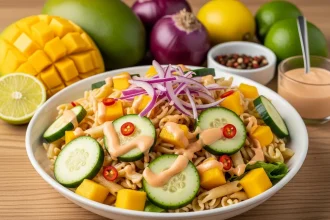
Impeccable texture and flavor in this ‘Warm Farfalle Salad with Asparagus, Prosciutto and Parmesan’.
This ‘Warm Farfalle Salad with Asparagus, Prosciutto and Parmesan’ turned out better than I expected. It reminded me of a version I tried on a trip. What a great guide.
This ‘Warm Farfalle Salad with Asparagus, Prosciutto, and Parmesan’ turned out better than I expected ❤️. It reminded me of a version I tried on a trip.