


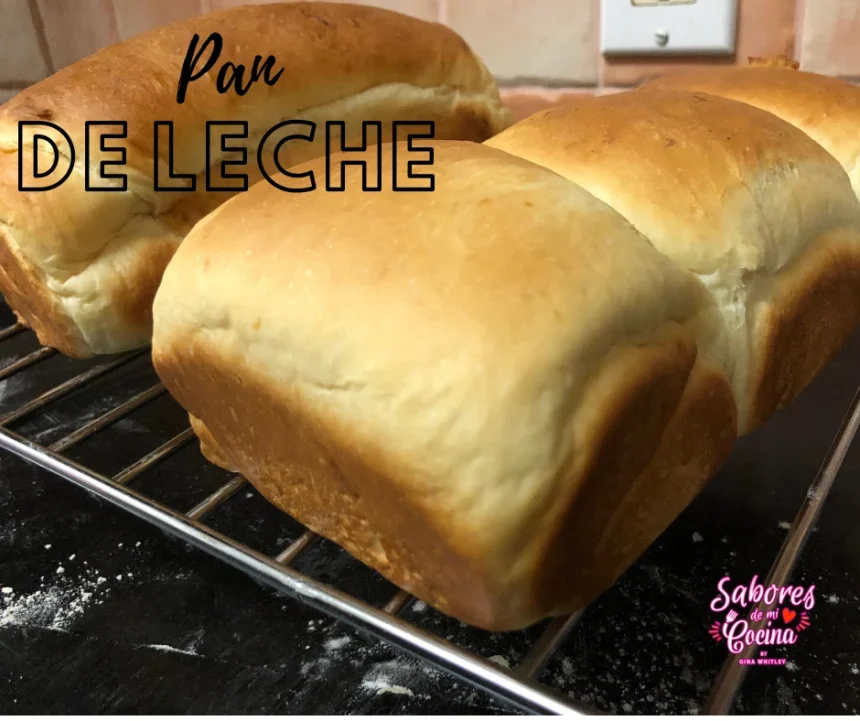
Recipe for Fluffy and Homemade Milk Bread
Hello! Today we are going to prepare a delicious Milk Bread, a classic of homemade bakery that will transport you to the most tender breakfasts. This recipe will guide you to obtain rolls with a soft dough and an sweet unmistakable flavor. It's perfect to enjoy alone, with butter, or to prepare small sandwiches. Let's turn on that oven and create something wonderful!
- Recipe for Fluffy and Homemade Milk Bread
- Preparation time
- Ingredients
- Utensils we will use
- How to make Milk Bread
- Nutritional Information
- 5 keys for your Milk Bread to be perfect
- When is it ideal to enjoy it?
- Comparative table of sweet breads
- Frequently asked questions (FAQ)
- Share your experience
- Culinary glossary
Preparation time
Here is an estimate of the time it will take you to prepare these rolls. Patience with proofing times is key for a perfect texture.
- Preparation: 25 minutes
- Proofing: 1 hour and 30 minutes approximately
- Cooking: 15 minutes
- Total: 2 hours and 10 minutes
- Servings: 24-28 rolls
- Difficulty: Intermediate
Ingredients
For this recipe of baking traditional, you will need simple ingredients that you probably already have in your pantry. The quality of the milk and butter will make a difference in the final flavor.
- 1/2 cup (120 ml) of pineapple juice
- 1 tablespoon of granulated white sugar
- 1 packet (7 g) of dry yeast active (or 2 1/4 teaspoons)
- 1/2 cup (120 ml) of whole or semi-skimmed milk
- 1/4 cup (57 g) of unsalted butter
- 1/3 cup (67 g) of granulated white sugar
- 1/2 teaspoon vanilla extract
- 1 large egg
- 3 to 3 1/2 cups (360-420 g) of all-purpose wheat flour
- 1 teaspoon salt
- 1 tablespoon of vital wheat gluten (Optional)
- 1/2 stick (57 g) of melted butter for brushing
Note on substitutions: The vital wheat gluten helps make the dough more elastic and the bread fluffier, but if you can't find it, you can omit it; the result will still be delicious. Pineapple juice provides an acidity that helps the yeast, but you can substitute it with the same amount of lukewarm water or milk lukewarm if you prefer.
Utensils we will use
You don't need professional equipment. Most of these utensils are basic in any kitchen. If you don't have a stand mixer, you can knead by hand without a problem.
- Large mixing bowl
- Stand mixer with a dough hook (or your hands and a clean surface)
- Microwave-safe cup or small bowl
- Kitchen scale (or measuring cups and spoons)
- Baker's scraper (or a knife)
- 9×13 inch (22×33 cm) rectangular pan
- Plastic wrap or a clean kitchen towel
- Kitchen brush
How to make Milk Bread
We're going to divide the process into clear steps so you don't get lost. The key to a good Milk Bread is a soft dough and well-worked. Follow the instructions and you'll see what an incredible result.
- Activate the yeast. This is the first and most important step to ensure our bread rises correctly. Heat the pineapple juice in the microwave for about 30 seconds. Let it cool until it reaches about 40°C (lukewarm to the touch, not hot). Add 1 tablespoon of sugar and the yeast. Stir gently and let it rest for about 10 minutes. You'll know it's ready because a layer of foam will form on the surface.
- Prepare the liquid mixture. In another microwave-safe container, heat the milk with the 57 g of butter for approximately one minute, until the butter melts. Stir in the 1/3 cup of sugar and vanilla extract, mixing well. Let the mixture cool to room temperature and then add the beaten egg. If you add the egg to the hot mixture, it could cook.
- Mix the dry ingredients. In the bowl of the stand mixer (or in a large bowl if kneading by hand), combine 3 cups of flour, salt, and vital wheat gluten (if using). The gluten, as I mentioned, improves the structure of the bread, giving it that characteristic fluffy texture of good traditional bread.
- Form the dough. Pour both the frothy yeast mixture and the milk and egg mixture over the dry ingredients. With the dough hook, mix at low speed until all ingredients are integrated and a dough forms. It's normal for the dough to be somewhat sticky at first. Do not add more flour all at once, it's better to work it this way.
- Knead to perfection. Increase the speed to medium-low and knead for about 8 minutes. If doing it by hand, transfer the dough to a lightly floured surface and knead vigorously for about 10-12 minutes. The dough should become elastic, smooth, and slightly sticky to the touch, but manageable. This is the key for a soft dough.
- First rise. Grease a large bowl with a little oil or butter. Form a ball with the dough and place it inside, turning it so it's coated with grease on all sides. Cover the bowl with plastic wrap or a damp cloth. Let the dough rise in a warm, draft-free place until it doubles in size, which can take between 1 and 1.5 hours. A good trick is to preheat the oven to the lowest temperature, turn it off, and place the bowl inside.
- Degas and portion the dough. Once the dough has doubled in volume, place it on a clean surface and gently press to remove the air. Now, divide it into 28 equal portions. To ensure all rolls are the same size, it's ideal to use a kitchen scale, weighing portions of about 30-35 grams each.
- Form the rolls. Take each portion of dough and flatten it slightly. To form a perfect ball, bring the edges towards the center and pinch to seal. Then, flip it over and roll it on the surface with the palm of your hand cupped. Place the balls in the previously greased rectangular pan, forming 4 rows of 7 balls each.
- Second rise. Cover the pan with plastic wrap and let the rolls rise again in a warm place until they almost double in size, about 30-45 minutes. You'll see how they come together, creating that typical honeycomb appearance.
- Bake the bread. Preheat the oven to 180°C (350°F). Just before placing the mold in, gently brush the surface of the rolls with a little of the melted butter. Bake for 15 minutes or until golden brown on top. The aroma that will fill your kitchen will be the best sign.
To finish and serve
Once you take the Milk Bread from the oven, immediately brush the surface with the rest of the melted butter. This will give them a beautiful shine and keep them incredibly tender. Let them cool a bit in the mold before separating them. They are delicious for breakfast or snack, served warm, plain or with your favorite jam. You can also use them to make small savory sandwiches.
Nutritional Information
Below is an estimate of the nutritional values per roll, assuming the dough is divided into 28 portions.
- Calories: 120 kcal
- Proteins: 3 g
- Fats: 4 g
- Carbohydrates: 18 g
- Fiber: 1 g
Note: Nutritional values are approximate and may vary depending on the specific ingredients used and the final size of each portion.
5 keys for your Milk Bread to be perfect
Making homemade bread is an art, but with these tips, you'll ensure that your Milk Bread turns out perfect every time you prepare it.
1. The temperature of liquids is crucial: Yeast is a living organism and very sensitive to temperature. If the liquid (juice or milk) is too hot (above 45°C), you will kill it and the bread will not rise. If it is too cold, it will take much longer to activate. Ideally, it should be lukewarm, like baby bottle water. Using a thermometer is ideal, but if you don't have one, the finger trick works: it should feel pleasantly warm, not hot.
2. Don't overdo it with the flour: The recipe indicates between 3 and 3.5 cups of flour for a reason. The exact amount may vary depending on the humidity of the environment or the brand of flour. The temptation is to add more flour if the dough is sticky, but a dough for Milk Bread should be slightly sticky for a tender and moist final result. Knead patiently and only add a little more if it's truly unmanageable. A dough that is too dry will result in hard bread.
3. Give it its proofing time: Don't rush the proofing times. The flavor and texture of good bread develop during fermentation. Look for a visual cue instead of blindly following the clock: the dough should double in volume. A warm, draft-free place is essential. If your house is cold, the trick of the oven off with the light on works wonders.
4. Shaping the rolls matters: The way you portion and shape the dough affects the final crumb. When forming the balls, make sure to create tension on the surface. This is achieved by stretching the top while folding the dough underneath. A well-tensioned ball will rise evenly in the oven and will have a finer and more homogeneous crumb, very similar to that of other breads like quick buns filled with cream cheese.
5. The double butter glaze: Don't skip this step. Brushing the rolls with melted butter before baking helps the surface brown evenly and prevents a hard crust from forming. The second glaze, right out of the oven, is the magic touch: the butter is absorbed into the hot crust, adding extra flavor and keeping the bread tender for longer. It's a secret of good baking.
When is it ideal to enjoy it?
The Milk Bread is incredibly versatile. It's the perfect star for a breakfast weekend, accompanied by a latte and homemade jam. It's also a fantastic option for children's snacks, as its flavor sweet and its texture of soft dough they love. In celebrations or family gatherings, you can use them as a base for small savory sandwiches with ham and cheese, or even with more elaborate fillings. Its tenderness makes it an ideal accompaniment for creamy dishes or for dipping in hot chocolate. If you like homemade flavors, you could also try some light pineapple empanadas for another special occasion.
Comparative table of sweet breads
Sometimes, names can be confusing. Here's a table to differentiate our Milk Bread from other popular sweet breads and help you choose your next homemade bakery.
| Recipe | Key ingredients | Difference/advantage |
|---|---|---|
| Milk Bread | Milk, butter, sugar | Extra soft and fluffy texture, delicate milky flavor. |
| Bread of the Dead | Orange blossom water, orange zest | Aniseed and very distinctive citrusy flavor, associated with a festivity. |
| Brioche | Eggs, a lot of butter | More yellow crumb and much more intense butter flavor. |
| Corn Bread | Corn (maize), condensed milk | Moist cake texture, it is not a yeast bread. |
| Mexican Conchas | Flour, lard, sugar topping | It has a sweet and crunchy crust on top. |
| Pan Sobao | Lard, milk, sugar | Denser and more compact crumb, very popular in the Caribbean. |
| Ensaimada | Pork lard, powdered sugar | Puff pastry and characteristic spiral shape. |
Frequently asked questions (FAQ)
Share your experience
Now it's your turn. Have you prepared the recipe? Have you given it your personal touch? I would love to know how your Milk Bread. Cooking is for experimenting and sharing. Leave your comment and share your own little tricks! Your experience can help other lovers of homemade bakery homemade.
Culinary glossary
- Activate the yeast: Process of «waking up» dry yeast by mixing it with a warm liquid and a little sugar. The appearance of foam indicates that the yeast is alive and ready to use.
- Knead: Working a dough with your hands or a machine to develop the gluten, which gives elasticity and structure to the bread.
- To proof (Leudar): It is the fermentation process in which yeast consumes sugars and releases carbon dioxide, causing the dough to increase in volume. It is also known as «proofing» or «rising».
- Glaze (or brush): Apply a thin layer of liquid (egg, milk, butter) on the surface of a dough before or after baking to give it color, shine, and flavor.
- Vital wheat gluten: It is a powdered protein extracted from wheat. It is added to doughs to improve their elasticity, strength, and ability to retain fermentation gas, resulting in a fluffier bread.








Perfect for sharing this ‘Milk Bread’ ✨. it saved me time and was delicious. it's really worth it.
Very practical and tasty this ‘Milk Bread’ . it reminded me of a version I tried on a trip. what a good guide.
I prepared it exactly as I did for dinner and everyone was happy.