
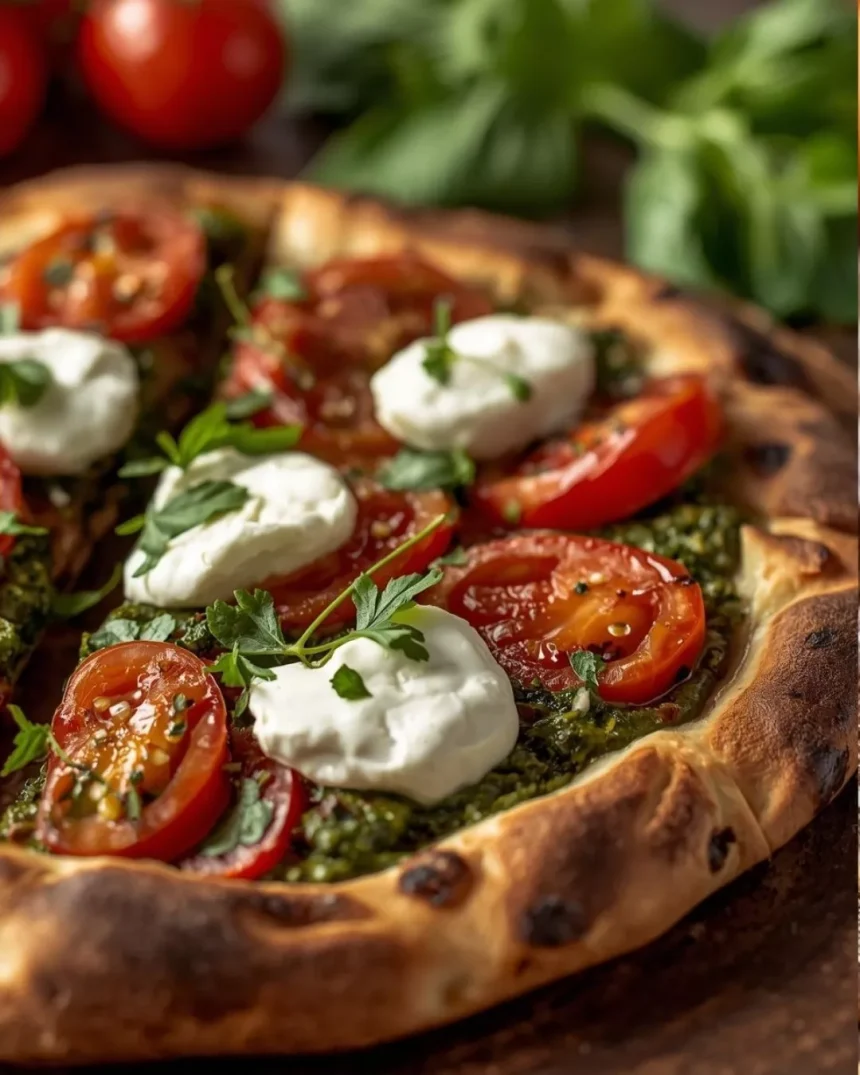
Recipe for Rustic tomato, burrata, and pesto tart
Hello! Today we are going to prepare a rustic tomato, burrata, and pesto tart, a simple dish that combines the freshness of tomatoes with the creaminess of burrata cheese and the aroma of pesto. Ideal for those who enjoy homemade and flavorful cuisine, this recipe stands out for its balance between fresh ingredients and a delicious shortcrust pastry that holds the ensemble without losing firmness.
- Recipe for Rustic tomato, burrata, and pesto tart
- Preparation time
- Ingredients
- Utensils we will use
- Preparation
- 1. Prepare the shortcrust pastry
- 2. Bake the tart base
- 3. Assemble the tart and bake
- To finish and serve
- Nutritional Information
- 5 keys to make the rustic tomato, burrata, and pesto tart perfect
- When is it ideal to enjoy it?
- Comparison with similar recipes
- Share your experience
- Culinary glossary
Preparation time
To plan your day in the kitchen, here are the essential times:
- Preparation: 20 minutes
- Cooking: 30 minutes
- Total: 50 minutes
- Servings: 8
- Difficulty: Easy
Ingredients
For the shortcrust pastry
- 3 ¾ cups flour
- ¾ teaspoon salt
- 1 ½ cups cold butter
- ⅔ cup cold water
For the tart
- 3 tablespoons basil pesto (you can use store-bought pesto)
- 3 large tomatoes or 6-8 cherry tomatoes, washed and thinly sliced (¼ inch)
- 1 ball of burrata (approximately 500 ml)
- Fresh basil leaves for garnish
- Olive oil for a touch when serving
Note: If you can't find burrata, you can replace it with fresh cheese like mozzarella or ricotta to maintain the creamy texture. If butter is not available, cold margarine can be used for the dough, although the flavor and texture will vary slightly.
Utensils we will use
- Round tart pan or a 12-inch springform pan (you can use a baking dish if you don't have a specific pan)
- Rolling pin for stretching the dough (or a clean bottle if you don't have a rolling pin)
- Knife and cutting board for slicing tomatoes
- Fork for pricking the dough
- Bowl for mixing the dough
- Spoon for spreading the pesto and placing the burrata
- Oven preheated to 180 degrees
Preparation
1. Prepare the shortcrust pastry
- Mix dry ingredients. Combine flour with salt in a large bowl. This is the base for the shortcrust pastry, which should be firm but flexible.
- Incorporate cold butter. With a pastry blender, cut and mix the cold butter cut into small cubes until the mixture resembles small peas. Working cold prevents the butter from melting and ensures a flaky dough.
- Add cold water. Add the cold water little by little and mix with your hands until a soft, non-sticky ball forms. If it sticks, add a little more flour, but carefully so as not to harden the dough.
- Rest the dough. Wrap the ball in plastic and refrigerate for at least an hour; this will make it easier to handle and prevent the dough from shrinking when baked.
2. Bake the tart base
- Roll out the dough. On a lightly floured surface, roll out the dough with a rolling pin to a thickness of 3 mm (1/8 inch) and form a circle that covers the mold with a small edge.
- Place in mold and prick. Place the dough in the mold, trim the excess, and use a fork to prick the bottom, preventing it from rising during baking.
- Bake the dough. Preheat the oven to 180°C (350°F) and bake the base for 10 minutes, just until it begins to brown and becomes firm enough to hold the filling.
3. Assemble the tart and bake
- Spread the pesto. Remove the base from the oven and spread the 3 tablespoons of pesto evenly over the surface.
- Place the tomato slices. Distribute the tomato slices in a single layer, ensuring they are slightly overlapping. If the tomatoes are very juicy, you can salt the slices and let them rest for 10 minutes to release liquid; then pat them dry with paper before placing them.
- Add spoonfuls of burrata. With a spoon, place portions of burrata over the tomatoes in small mounds. The burrata will partially melt when baked, giving a spectacular creamy texture.
- Bake the tart. Return the tart to the oven for 20-30 minutes or until the crust is golden and the cheese is slightly melted.
To finish and serve
When removing the tart, let it rest for a few minutes so you don't burn yourself when cutting. Sprinkle fresh basil leaves over the surface and add a drizzle of extra virgin olive oil to enhance the Italian recipe you are enjoying. This rustic tart is perfect as an appetizer to share or accompanying grilled meat dishes.
Nutritional Information
- Calories: 320 kcal
- Proteins: 9 g
- Fats: 20 g
- Carbohydrates: 25 g
- Fiber: 3 g
These values are approximate per serving and may vary depending on the specific ingredients used.
5 keys to make the rustic tomato, burrata, and pesto tart perfect
To enjoy this recipe to its fullest, pay attention to these details that will make a difference in flavor and texture:
- Use very cold butter and water in the dough to prevent the fat from melting and achieve an unmistakable flaky texture.
- The thickness of the dough is key: a thickness close to 3 mm ensures that the base is neither too thick nor brittle.
- Salt and rest the juicy tomatoes to eliminate excess liquid and prevent the dough from becoming soggy.
- Spread the pesto evenly so that it provides flavor in every bite and not just in certain spots.
- Do not overload with burrata. Distribute the cheese in mounds, so it melts well without losing the tart's structure.
When is it ideal to enjoy it?
This rustic tomato, burrata, and pesto tart is a fantastic option for a light lunch, an informal dinner, or as an appetizer for gatherings with friends and family. Summer, when tomatoes are at their peak, is the ideal time to take advantage of their freshness and juiciness. Furthermore, its simple and quick preparation makes it an adaptable dish to share at celebrations where natural flavors shine.
Comparison with similar recipes
| Recipe | Key ingredients | Difference/advantage |
|---|---|---|
| Rustic tomato, burrata and pesto tart | Tomato, burrata, pesto, shortcrust pastry | Use of burrata for creamy texture and store-bought pesto for speed |
| Confit cherry tomato tart with burrata | Confit cherry tomatoes, burrata, dough | Caramelized tomatoes add sweetness |
| Vegetable quiche | Eggs, vegetables, cheese | More compact egg base, less focus on tomato |
| Pumpkin and goat cheese tart | Pumpkin, goat cheese, shortcrust pastry | Sweeter and earthier flavor than fresh tomato |
| Savory pear tatin tart and blue cheese | Pear, blue cheese, dough | Contrast between sweet and strong, without tomato or pesto |
| Brie en croûte | Brie cheese, dough, honey or nuts | Different cheese, more intense and sweet flavor |
| Apple pie with caramel | Apple, caramel, dough | Sweet dessert, not savory |
Share your experience
The kitchen is a place to experiment and enjoy flavors together. We invite you to prepare this rustic tomato, burrata, and pesto tart, and then share your results and any variations you've tried. Did you use homemade pesto? Do you prefer fresh burrata or an alternative cheese? Your comments will help others explore this recipe with confidence.
Culinary glossary
- Shortcrust pastry: firm and flaky dough used for tarts; it is the base of this recipe.
- Docking (pricking the dough): making small holes with a fork in the dough to prevent it from rising in the oven.
- Burrata: creamy fresh cheese with a firm exterior and an almost liquid interior, typical Italian.
- Pesto: Italian sauce based on basil, garlic, pine nuts, cheese, and olive oil.
- Rest: letting ingredients or doughs rest in the cold to facilitate handling.