


Hummus Recipe
Hello! We are going to prepare the classic hummus recipe from scratch. It is an essential chickpea puree and a appetizer that cannot be missing from your table, ideal to always have ready at home. The key to this preparation lies in the order in which we incorporate each element, which ensures an impeccable texture and a mezcla homogeneous one without complications.
Preparation time
The time we invest in the kitchen to achieve this dish is minimal, especially if we use ingredients already ready to process. The key to optimizing minutes is to have everything measured and prepared before turning on the food processor.
- Preparation: 10 minutes
- Cooking: 0 minutes
- Total: 10 minutes
- Servings: 6
- Difficulty: Easy
Although the active time is very short, the secret to obtaining optimal results lies in consistent processing. Many times, wanting to finish quickly, we don't let the machine work long enough. Dedicating those ten minutes exclusively to emulsifying and blending makes the difference between a dense puree and an airy paste. Furthermore, by not requiring fire or additional cooking if you start with already cooked legumes, this dish becomes a quick solution for any time of day. In mid-2026, where the pace of life demands practical but nutritious solutions, mastering these ten minutes of preparation will save you a lot of time and guarantee a result superior to any commercial version.
If you decide to cook the chickpeas from their dry state, the total time will increase considerably. You will need to soak them overnight, at least eight hours, and then cook them over medium heat for about fifty minutes or use a pressure cooker to speed up the process. However, for daily routine, the quick version with canned legumes is what will get you out of trouble without sacrificing the final quality of the dish.
Ingredients
- 1 can (400 grams) of chickpeas
- 60 milliliters of fresh lemon juice
- 60 milliliters of tahini
- 1 small garlic clove
- 30 milliliters of olive oil
- Half a teaspoon of ground cumin
- Salt to taste
- 45 milliliters of cold water or aquafaba
For garnish (Optional)
- Pinch of ground paprika
- Extra virgin olive oil
- Whole chickpeas
(If you don't have tahini, you can replace it with toasted sesame butter or, as a last resort, natural unsweetened peanut butter. When changing this ingredient, the preparation will require adjusting the amount of water, as alternative butters are usually denser. Add the liquid little by little until the desired consistency is achieved).
The selection of ingredients is the basis of everything. When using canned legumes, it is essential to drain them well, but I always recommend saving a little of their liquid. The juice of lemon must be freshly squeezed; bottled juices contain preservatives that alter the flavor balance, contributing bitter or metallic notes that ruin the freshness of the dish. For its part, garlic should be used in moderation. A single small clove is enough to add character without overpowering the rest of the elements. If you prefer a less intense flavor, you can remove the central germ from the garlic before chopping it.
The tahini is the soul of this recipe. It is important to stir it well inside its jar before measuring it, as the natural oil from the seeds tends to separate and float, leaving a hard paste at the bottom. Mixing it ensures that you incorporate both the natural fat and the solid of the seed. As for the oil, look for one that has a fruity and light profile; oils that are too intense or spicy can take center stage and unbalance the harmony of the puree.
Utensils we will use
- Food processor
- Silicone spatula
- Strainer
- Measuring cup
- Knife and cutting board
- Exprimidor manual
To achieve the ideal texture, the food processor is your best ally. Its wide blade covers a large surface and allows all elements to integrate without overheating the mixture. If you don't have a food processor, you can use a high-power blender. When using a blender, you will need to stop the motor more often and use a spatula to push the ingredients towards the blades, making sure not to leave air pockets at the bottom of the glass.
The silicone spatula is indispensable in this process. As the machine works, the paste tends to splash and stick to the walls of the container. Stopping the machine and scraping the edges with the spatula ensures that no whole pieces of legume or garlic are left untracked. We will use the colander in the first step to separate the preserving liquid from the legumes. It is vital to drain well to have complete control over the amount of liquid we add later.
Measuring cups and the manual juicer help us maintain exact proportions. Baking requires precision, but in savory dishes like this, correctly measuring liquids at the beginning gives us a solid base. Once you master the recipe, you can adjust the quantities to your liking, but for the first few times, trust the measurements. The knife and cutting board will only be necessary to prepare the garlic and cut the citrus before squeezing it.
Preparation
1. Whisk the tahini and citrus base
- Add the tahini and the freshly squeezed juice in the food processor bowl.
- Turn on the equipment and process for a full minute.
- Stop the machine, use the spatula to scrape the sides and bottom of the bowl, and process for 30 more seconds.
This step is the best-kept secret. By processing these two liquids alone first, you create an emulsion. You will notice that the color changes from a dark shade to a much paler one and the texture becomes thick and creamy, almost like a glaze. This creates a structured base to trap the rest of the ingredients.
- Add the tahini and the freshly squeezed juice in the food processor bowl.
- Turn on the equipment and process for a full minute.
- Stop the machine, use the spatula to scrape the sides and bottom of the bowl, and process for 30 more seconds.
2. Incorporate flavor and oil
- Add the oil, the clove of garlic chopped, ground cumin, and salt.
- Process for 30 continuous seconds.
- Scrape the walls again with the spatula and process for another 30 seconds until everything is perfectly integrated.
By adding the fats and spices to the already emulsified base, we prevent the flavors from being isolated. The garlic is finely crushed and distributes its essential oils throughout the paste. Make sure there are no large pieces of garlic left on the walls of the processor.
- Add the oil, the clove of garlic chopped, ground cumin, and salt.
- Process for 30 continuous seconds.
- Scrape the walls again with the spatula and process for another 30 seconds until everything is perfectly integrated.
3. Add the legume in batches
- Drain the chickpeas in the colander.
- Add half of the can to the processor and blend for 1 minute.
- Scrape the walls and add the rest of the can, processing for 1 to 2 more minutes.
Working in two batches prevents the motor from overloading and ensures that the blades crush each grain uniformly. At this point, the mixture will look very thick and with small lumps. This is a normal texture at this stage of the process.
- Drain the chickpeas in the colander.
- Add half of the can to the processor and blend for 1 minute.
- Scrape the walls and add the rest of the can, processing for 1 to 2 more minutes.
4. Adjust the final texture
- With the processor running, slowly pour in the cold water (or aquafaba) spoonful by spoonful.
- Observe how the texture changes; continue processing until it reaches a point creamy and light.
Cold water is essential. The low temperature interacts with starches and fats, creating a fluffy and airy texture. You should add it slowly to avoid overdoing it and making the mixture too liquid. The final consistency should be similar to that of a thick cream that holds its shape when dropped.
- With the processor running, slowly pour in the cold water (or aquafaba) spoonful by spoonful.
- Observe how the texture changes; continue processing until it reaches a point creamy and light.
To finish and serve
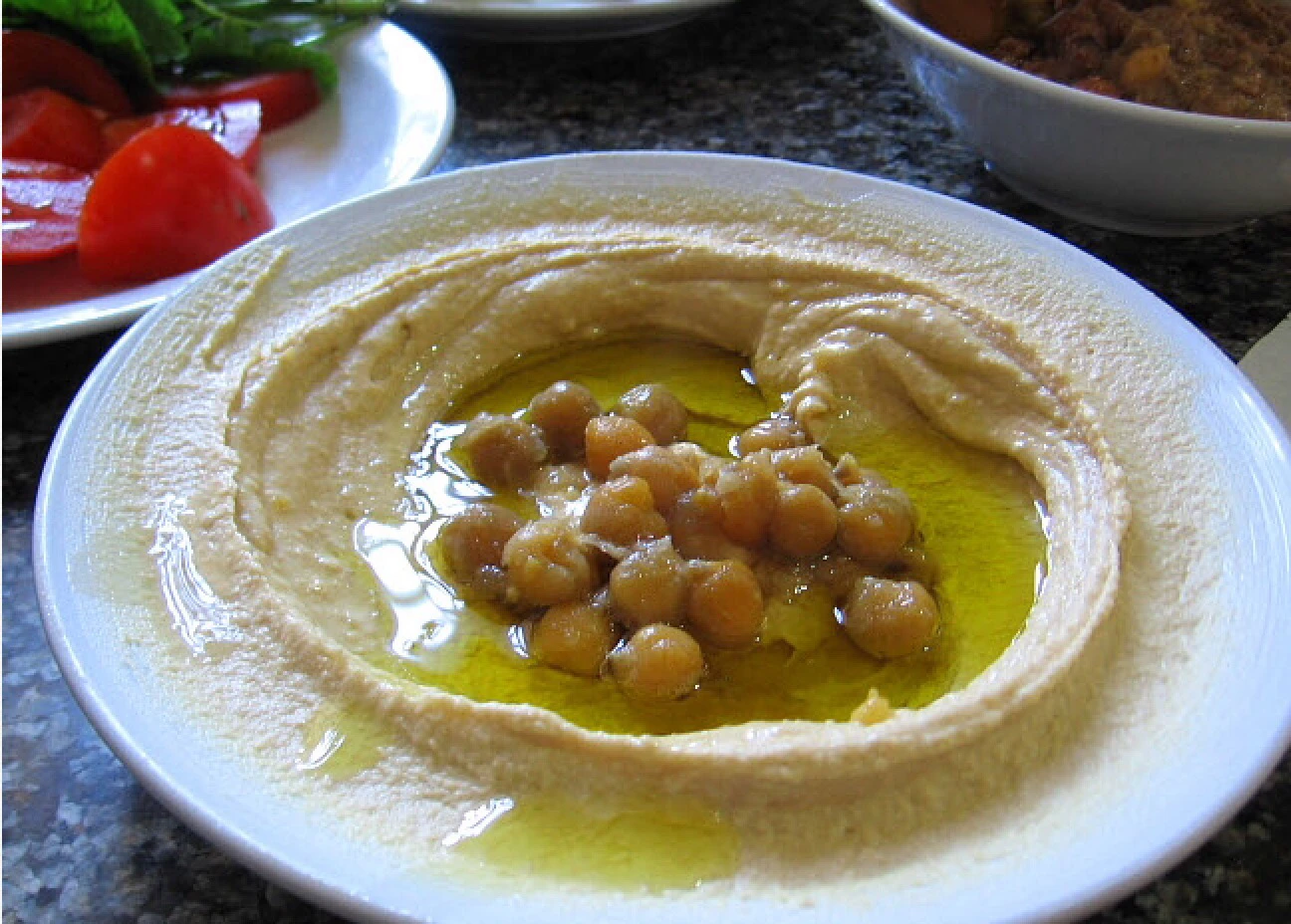
Once the processor stops and you verify that the texture is smooth and without large lumps, taste for seasoning. If it tastes too bland, add another pinch of salt; if it lacks acidity, a few extra drops of citrus. To serve, transfer the entire mixture to a shallow plate or bowl. With the back of a spoon, create grooves or spirals on the surface. Pour a generous drizzle of additional oil over the grooves, sprinkle with paprika, and place the whole pieces you reserved in the center. Serve at room temperature accompanied by flatbread or fresh vegetable sticks.
Nutritional Information
- Calories: 155 kcal
- Proteins: 4.5 g
- Grasas: 11 g
- Carbohidratos: 11.8 g
- Fibra: 2.9 g
Nota: Los valores nutricionales presentados son estimaciones aproximadas por porción (basado en un cuarto de taza) y pueden variar según las marcas exactas de los productos utilizados o el tamaño de las legumbres.
Comprender los nutrientes de este plato nos ayuda a integrarlo inteligentemente en nuestra alimentación diaria. Es una preparación equilibrada que aporta energía sostenida. Al prepararlo en casa, tienes el control absoluto sobre la cantidad de sodio y el tipo de grasas que utilizas. Las versiones que encontramos en el mercado a menudo contienen conservantes y aceites de menor calidad para prolongar su vida útil en los estantes. Al hacerlo con tus propias manos, garantizas la frescura y la pureza de cada componente.
Este plato vegetarian se adapta maravillosamente a diferentes estilos de vida. Si te gustan este tipo de preparaciones, también puedes probar hacer un baba ganoush eggplant dip que comparte muchos ingredientes y técnicas similares. Ambos platos son excelentes opciones para aportar variedad a tus comidas sin complicarte en la cocina.
5 keys to make it perfect
Lograr un resultado superior al de cualquier tienda requiere atención a los pequeños detalles. Aquí te explico cinco factores que transforman una receta básica en un plato excepcional, basándome en los errores y aciertos más comunes al preparar esta pasta en casa.
El orden de los ingredientes: Como vimos en la preparación, batir primero la pasta de sésamo con el líquido ácido cambia la estructura química de la receta. Este paso introduce aire y aclara el color, formando una crema base muy estable. Si pones todos los ingredientes a la vez en la máquina, el resultado será un puré denso y pesado, con el aceite separado de los sólidos. Respetar las fases de triturado es el consejo más valioso para esta receta.
El uso de líquidos fríos: El agua fría o el líquido de la lata enfriado ayudan a crear la textura esponjosa. Cuando el procesador trabaja durante varios minutos, la fricción de las aspas genera calor. Este calor puede hacer que las grasas se separen y el puré se vuelva aceitoso. Al incorporar agua fría justo al final, bajamos la temperatura de la mezcla, reafirmamos las grasas y atrapamos pequeñas burbujas de aire.
La temperatura de servicio: El frío de la nevera adormece los sabores y endurece la textura debido a la solidificación de los aceites. Siempre que vayas a consumirlo, retíralo del refrigerador unos veinte o treinta minutos antes. Servirlo a temperatura ambiente permite que todos los aromas, especialmente el del comino y el ajo, se expresen plenamente en el paladar. La cremosidad también se recupera al perder el frío intenso.
Pelar o no pelar: Muchas personas invierten tiempo quitando la piel transparente de cada grano antes de procesarlos. Hacerlo da como resultado una textura microscópicamente más fina. Sin embargo, si cuentas con un buen procesador de alimentos y respetas los tiempos de triturado que te he dado, no es un paso obligatorio. La diferencia es sutil y, para el consumo diario en casa, saltarse este paso ahorra mucho tiempo sin comprometer el sabor ni la calidad general.
La calidad de la pasta de sésamo: Dado que es el segundo ingrediente con mayor presencia, su sabor dictará el perfil de la receta. Asegúrate de usar una versión elaborada con semillas peladas. Las semillas con cáscara producen una pasta muy oscura y con un retrogusto amargo que puede resultar desagradable. Busca siempre que indique «semillas peladas» en la etiqueta para garantizar un perfil de sabor suave y tostado.
When is it ideal to enjoy it?
Esta preparación brilla en múltiples escenarios gracias a su versatilidad. Es la opción healthy perfecta para las reuniones familiares de fin de semana, sirviendo como un centro de mesa donde todos pueden compartir. En las tardes de verano, cuando no apetece encender el horno ni cocinar platos pesados, se convierte en un tentempié refrescante si lo acompañas con bastones de zanahoria, pepino y apio. Además, es un salvavidas para esas visitas inesperadas; al tener ingredientes de despensa, puedes prepararlo en diez minutos y ofrecer algo casero y presentable sin estrés.
Más allá de ser un simple untable, funciona maravillosamente como base para otros platos. Puedes servirlo como parte de unas completas tostadas con aguacate y garbanzos for a quick breakfast or lunch. It is also ideal for spreading on sandwiches or flatbread before placing meats or roasted vegetables, providing continuous moisture and flavor in every bite.
Share your experience
La cocina es para experimentar y compartir. Una vez que domines esta base, podrás ajustarla a tu propio paladar, jugando con la cantidad de ajo, el nivel de acidez o los ingredientes decorativos. ¡Deja tu comentario abajo y cuéntanos cómo te quedó la preparación! Comparte tus propios trucos para el emplatado, con qué acompañaste este plato en tu mesa o si probaste alguna de las variantes mencionadas. Leer tus experiencias ayuda a toda la comunidad a seguir aprendiendo.
Culinary glossary
Para que te manejes en la cocina con total seguridad, aquí tienes la explicación de algunos términos que usamos durante la receta.
Aquafaba: Es el líquido viscoso en el que vienen conservadas las legumbres en lata o el caldo resultante tras cocerlas en casa. Por su alto contenido en proteínas y almidones, funciona muy bien para dar ligereza a las pastas o incluso como sustituto del huevo en otras recetas.
Emulsify: Es la técnica de unir dos líquidos que por naturaleza no se mezclan fácilmente, como el agua (o el jugo del cítrico) y el aceite. Al batirlos enérgicamente, creamos una mezcla estable, opaca y de textura densa.
Process: Se refiere a triturar y mezclar alimentos sólidos utilizando una máquina con aspas, convirtiéndolos en purés o pastas finas y homogéneas, ahorrando el trabajo manual del mortero.
Tahini: Es una pasta o mantequilla elaborada exclusivamente a base de semillas de sésamo molidas. Aporta un sabor profundo, tostado y ligeramente terroso que es fundamental en la gastronomía de Medio Oriente.
Decantar: Consiste en separar suavemente un líquido de un sólido, como cuando volcamos la lata sobre el colador para que el agua caiga y las legumbres queden retenidas.



Everything you cook is delicious, dear Gina!!
What a great idea. I prepared it yesterday and it was spectacular.
I tried it today.
Perfect for sharing this ‘Hummus’. It made a lot and was perfect for sharing.