
Fresh Citrus Salmon Canapés Recipe
Hello! Let's prepare together the appetizer that never fails on my table. These bites are the definition of effortless elegance: a tender base, a cream with just the right touch of acidity thanks to the lime, and the silkiness of the fish. It's ideal for whetting your guests' appetite without filling them up too much.
Preparation time
Organization is key in the kitchen, especially when you have guests waiting. Here are the real times so you don't get caught off guard.
- Preparation: 15 minutes
- Cooking: 0 minutes
- Total: 15 minutes
- Servings: 15-20 units
- Difficulty: Easy
Ingredients
- 15-20 units of mini blinis or round toasts
- 150 g of smoked salmon good quality
- 150 g of cream cheese (Philadelphia-style)
- 1 tablespoon fresh chopped dill
- Zest of 1/2 lime
- Capers (as needed)
- 1 teaspoon lumpfish roe or caviar substitute (Optional)
For substitutions and adjustments
I know sometimes we go to the supermarket and exactly what we need is missing. If you can't find blinis, you can use bases of Avocado and cucumber mini toasts as inspiration for vegetable bases, or simply rye bread cut into circles. If you don't have smoked salmon, smoked trout is a fantastic substitute; it has a more intense color and a very similar flavor, sometimes even with more character. If fresh dill is impossible to find, use dried, but reduce the amount by half because it's more potent.
Utensils we will use
- A medium bowl for mixing the cream
- A spoon or silicone spatula (scraper)
- Cutting board
- Sharp knife
- Fine grater (for the lime)
- Small spoons for plating
Preparation
- Bring cream cheese to room temperature. Take the cheese out of the fridge about 10 or 15 minutes before starting. Put it in the bowl and stir it a little with the spatula so that it loses its cold stiffness and becomes an easy-to-work pomade. This will prevent you from breaking the blinis when spreading.
- Create Nati's Cream. To the bowl with the cheese, add the tablespoon of finely chopped fresh dill and the zest of half a lime. Mix with enveloping movements until you see that the herbs and zest are evenly distributed. If you like it stronger, you can add a pinch of freshly ground black pepper, but be careful with the salt, the salmon already provides enough.
- Prepare the base. Arrange the mini blinis or toasts on the work surface or a large tray. Place a generous teaspoon of the cheese mixture on each one. It doesn't have to be perfect, rustic also has its charm.
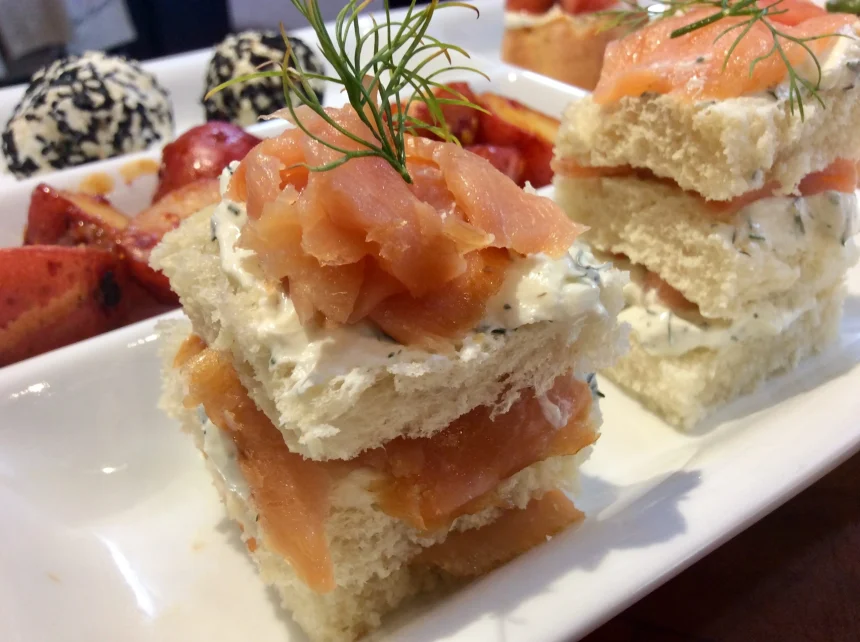
- Cut and assemble the salmon. Cut the smoked salmon slices into strips or small pieces, calculating one for each canapé. Here's the visual trick: don't lay it flat like a sandwich. Place the portion of salmon on the cream, giving it a «wrinkled» or small flower shape, creating volume. We want the canapé to have height and presence.
- Final decoration. Crown each canapé with one or two capers in any gap left by the salmon. To finish, if you want that touch of luxury, carefully place (using the tip of a knife or a coffee spoon) a small ball of lumpfish roe on top or on the side.
To finish and serve
Once assembled, check that none have fallen apart. If you have used blinis, you can serve them as is at room temperature or with the blini slightly warm if you heated them before assembling (only a few seconds in the microwave). The ideal is to serve them immediately so that the base remains firm and does not absorb moisture from the cream. Accompany it with a glass of white wine very cold or a sparkling wine, as the bubbles cleanse the palate of the fat from the salmon and cheese. Ready to enjoy!
Nutritional Information
- Calories: 65 kcal
- Proteins: 4 g
- Fats: 3.5 g
- Carbohydrates: 4 g
- Fiber: 0.2 g
The values shown are approximate estimates for each canapé unit, calculated based on standard ingredients. They may vary depending on the brand of blinis or the type of cheese used.
5 keys to make it perfect
Preparing canapés seems like a simple task, and it is, but the difference between an «average» one and a memorable one lies in the details. I have been serving these little jewels at private events for years and have learned that technique, however minimal, is fundamental. Here I share my secrets for you to succeed.
The first critical point is the quality of the salmon. Being a no-cook recipe, the product is laid bare to the palate. Look for a smoked salmon that is not excessively salty or oily. If you can, ask the fishmonger for thin but firm slices. A mushy salmon will ruin the experience, no matter how good the cream is. Pay attention to the color: it should be a vibrant and uniform orange, without dark spots on the edges. If you have leftover salmon and want to try another way to present it, I recommend taking a look at these smoked salmon rolls which also look spectacular.
The second key is the citrus balance. Nati's original recipe incorporates lime zest, and this is not a whim. Cream cheese and salmon are fatty ingredients. In the mouth, that fat needs a counterpoint that «cleanses» and refreshes. Lime provides aroma without the aggressive acidity of lemon juice, which could curdle the cream if we overdo it. Grate only the green part of the skin; if you reach the white part (the albedo), it will make the mixture bitter. It is that subtle aroma that will make your guests wonder «what is that delicious flavor?» without identifying it at first.
The third secret is the play of textures. We have the creaminess of the cheese and the softness of the fish. We need something to break that monotony. Here comes the blini or the small toast, but also lumpfish roe or capers. The roe explodes in the mouth providing a saline burst, and the caper gives a vegetal bite. If you decide to use sliced bread instead of blinis, toast it lightly. A soft canapé is a sad canapé. The initial crunch is vital for sensory satisfaction.
Fourth: the assembly with volume. As I mentioned in the preparation, laying the salmon flat is an aesthetic and textural mistake. By «wrinkling» or folding it over itself, we create air pockets that make the bite lighter. In addition, visually it seems like there is more quantity and it looks much more appetizing, reminiscent of flower petals. Food enters through the eyes first, and on a party platter, we want our canapés to stand out from the rest.
Finally, the serving temperature. Although the cheese should be brought to room temperature for handling, the final canapé is best enjoyed fresh, but not frozen. If you prepare them too far in advance and put them in the fridge, the bread or blini will get damp and become chewy. My advice: have the cream ready in a piping bag or bowl in the fridge, and the salmon sliced. Assemble the canapés just 10 or 15 minutes before guests arrive. That immediate freshness makes the difference between industrial catering and homemade care.
When is it ideal to enjoy it?
These bites of salmon and cream are the undisputed kings of celebrations. They are often immediately associated with Christmas or New Year's Eve, and rightly so. These are times when we seek to put a little more special ingredients on the table, considered delicatessen o gourmet, without having to spend hours in front of the oven. The vibrant orange color of the fish and the green of the dill look beautiful on a festive table.
However, limiting them only to December is a mistake. They are fantastic for a summer dinner on the terrace. Being a cold dish, it doesn't overwhelm and pairs wonderfully with refreshing drinks. Imagine a tray of these canapés alongside some tapas varied options and a good fruity white wine as the sun sets. They are also the perfect solution for when you have surprise guests; by having a pack of smoked goods and a tub of cheese in the fridge, you can solve the appetizer in five minutes, looking like a queen.
Comparison table
Sometimes we hesitate about which appetizer to prepare. Here I compare this recipe with other popular options so you can choose the one that best suits your menu.
| Recipe | Key ingredients | Difference/advantage |
|---|---|---|
| Salmon Canapés (This recipe) | Salmon, cream cheese, lime | Fresh and creamy balance, quick assembly. |
| Salmon Tartare | Raw salmon, avocado, soy | Softer texture, requires fresh fish (not smoked). |
| Cucumber rolls | Cucumber, feta cheese, olives | Lighter, low-carb option (no bread). |
| Seafood Vol-au-vents | Puff pastry, shrimp, béchamel | Served hot and are heavier. |
| Classic Gildas | Olive, anchovy, chili pepper | Potent vinegar flavor, dairy-free. |
| Avocado toasts | Rustic bread, avocado, tomato | More informal, brunch style, less «party-like». |
| Caprese skewers | Mozzarella, cherry, basil | Fresh and very quick vegetarian option. |
Frequently asked questions (FAQ)
Share your experience
Cooking is for experimenting and sharing. I'd love to know how these canapés turned out for you. Did you dare to add a touch of lime or did you use your own secret ingredient? Sometimes, the best versions are born from improvisation at home. Leave your comment and share your own little tricks so we can all learn!
Culinary glossary
- Blinis
- Small, fluffy pancakes of Russian origin, traditionally made with flour, milk, egg, and yeast. They are the classic base for smoked fish and caviar.
- Zester
- A specific kitchen utensil for grating the zest of citrus fruits (lemons, limes, oranges) into very thin strips without reaching the bitter white pith.
- Dill
- Aromatic herb with fine, feathery leaves, widely used in Northern Europe. It has a fresh, slightly aniseed, and sweet flavor that pairs perfectly with fish.
- Plate
- The art of arranging food on a plate or tray aesthetically and neatly before serving it to diners.
- Smoked
- A preservation and flavoring technique where food is exposed to smoke from burning wood, giving it that characteristic flavor and extending its shelf life.




I tried it today. it reminded me of a version I tried on a trip. perfect for Sunday.
Simple and delicious, this ‘Salmon Canapés’. I added a touch of lemon and it was luxurious.
This ‘Salmon Canapés’ turned out better than I expected. I'll make it again this weekend. keep sharing more like this.