

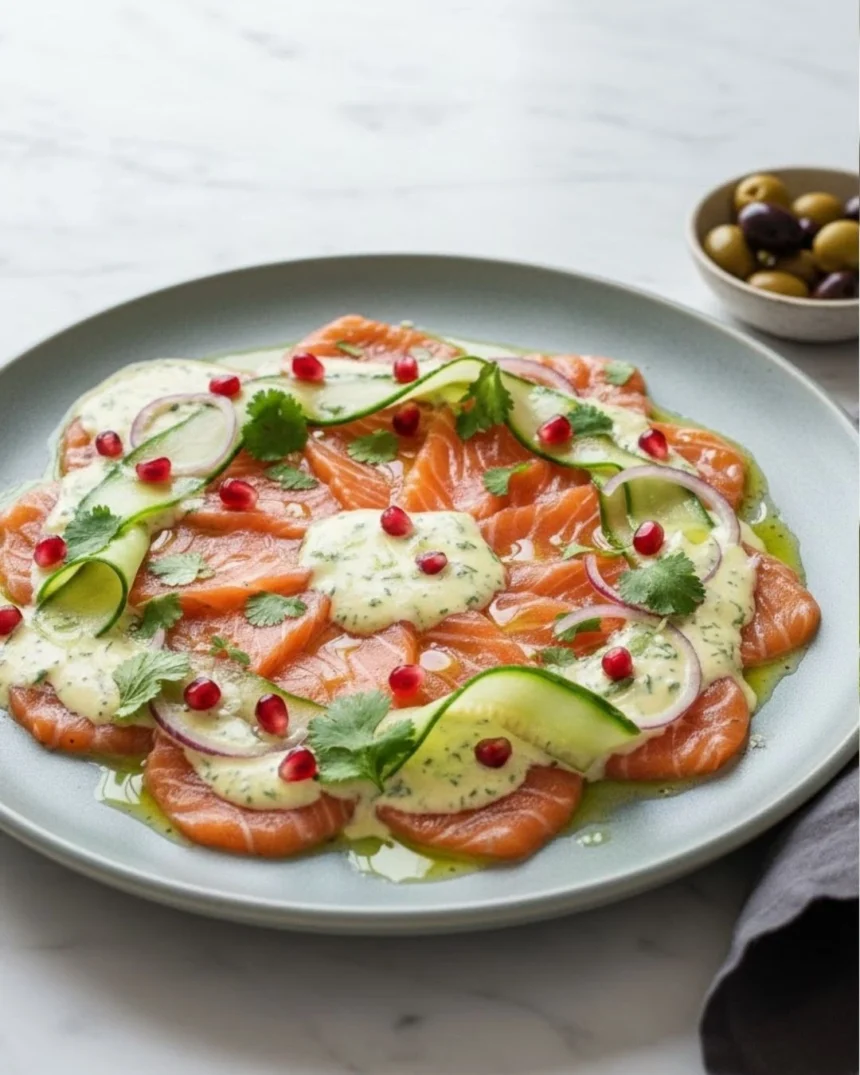
Salmon Tiradito with Yellow Pepper and Lemon Recipe
This Peruvian dish is a fresh and light appetizer that stands out for its delicate salmon cut and a citrus sauce that combines yellow pepper with lemon, providing a perfect balance between spice and acidity. Ideal for those who enjoy raw fish with a tropical and vibrant touch. Perfect for experimenting with Latin American cuisine flavors at home.
- Salmon Tiradito with Yellow Pepper and Lemon Recipe
- Preparation time
- Ingredients
- Utensils we will use
- Preparation
- 1. Prepare the yellow pepper and lemon sauce
- 2. Prepare the marinade and cut the salmon
- 3. Prepare the accompaniments and textures
- 4. Assembly and presentation of the tiradito
- To finish and serve
- Average nutritional information per serving
- 5 keys to make your salmon tiradito perfect
- When is it ideal to enjoy salmon tiradito with yellow pepper and lemon?
- Salmon tiradito vs similar dishes in Latin American cuisine
- Exploring more flavors: recommended recipes to complement
Preparation time
Here is a summary of the time needed to prepare this tiradito:
- Preparation: 20 minutes
- Cooking: No cooking required
- Total: 20 minutes
- Servings: 4
- Difficulty: Easy
Ingredients
For the tiradito
- 400 g fresh salmon, skinless and boneless, previously frozen
- 2 units of lemon, freshly squeezed juice
- 3 tablespoons mango puree (approximately 45 g)
- 2 tablespoons coconut milk (approximately 30 g)
- 1 splash of fish or seafood fumet
- 2 tablespoons tomato concassé
- 1/2 unit red onion
- 1/2 unit cucumber, thinly sliced
- 1 unit avocado, sliced or diced
- 1 tablespoon extra virgin olive oil
- 1 tablespoon of sunflower oil
- 1 tablespoon of spice mix (celery salt, paprika, peppers, seedless red chili)
- 1 tablespoon of fresh cilantro and basil
- 4 units of prawn crackers (1 per person)
- 100 g sushi rice (optional, for serving)
- 1 unit of toasted and crushed nori seaweed
- 1 tablespoon of crunchy kikos
If you don't have mango puree, you can use fresh ripe mango, crushed and strained to avoid fibers. If you can't find fumet, you can substitute it with homemade fish broth or even a little salted water to maintain the flavor. Aji amarillo can be replaced with sweet yellow pepper if you don't want spicy, supplementing with a little chili powder to give it a touch of heat.
Utensils we will use
- Sharp knife and cutting board
- Mixing bowl
- Blender or food processor to emulsify the sauce
- Small frying pan for frying prawn crackers
- Spoon and spatula
- Large plate for assembling the tiradito
- Fine strainer (optional, for the sauce)
Preparation
1. Prepare the yellow pepper and lemon sauce
- Squeeze the citrus fruits. Squeeze the lemons and reserve the freshly squeezed juice so it doesn't lose its freshness or aroma.
- Mix the liquid ingredients and aji paste. In the blender, combine the mango puree, coconut milk, fish stock, lemon juice, along with the concassé tomato, garlic (optional if desired), deseeded chili, and spice mix. This creates a creamy sauce, balancing the citrus acidity with the sweetness and spiciness of the yellow pepper.
- Incorporate the fresh herbs. Add the chopped fresh cilantro and basil to provide freshness and aroma. Blend everything until you get a smooth and fine sauce. If desired, pass the sauce through a fine sieve to remove fibers or debris.
- Refrigerate the sauce. Chill the sauce for at least 20-30 minutes; this step is key for the flavors to integrate and settle.
2. Prepare the marinade and cut the salmon
- Clean and dry the salmon. Gently wash the salmon fillet under the tap and pat dry with absorbent paper to avoid excess moisture.
- Refrigerate to firm up the texture. Place the salmon on a tray and refrigerate for 15-20 minutes to firm it up and facilitate slicing into thin sheets.
- Slice the salmon. With a very sharp knife, slice the salmon into very thin sheets, sashimi-style, aiming for a thickness similar to one millimeter or less. This cut is essential for the sauce to marinate it correctly and for the typical soft texture of tiradito to be perceived.
3. Prepare the accompaniments and textures
- Prepare the fresh relish. Finely chop the red onion, thinly slice the cucumber, and mix with concassé tomato and chopped cilantro. This fresh mixture adds crunch and freshness to the dish.
- Mash the avocado with lemon and salt. To form a creamy guacamole, mash the avocado with a few drops of lemon and a little salt, preventing it from oxidizing or losing its color.
- Fry the prawn crackers. Heat oil in a pan and fry the prawn crackers until they puff up and are crispy. Drain on absorbent paper to remove excess oil.
- Sauté and crush the sushi rice. If using rice as a side, lightly sauté it with crushed nori seaweed to give it a toasted touch. Then let it cool and crush it into irregular pieces to provide a crunchy texture.
- Crush the kikos. Without pulverizing, crush the kikos to retain coarse fragments that add a crunchy touch to the dish.
4. Assembly and presentation of the tiradito
- Place the salmon base. On a wide, flat plate, distribute the salmon slices forming a uniform and slightly overlapping base.
- Sprinkle salt with the spice mix. Add a pinch of salt and the spice mix to enhance the salmon's flavor without masking it.
- Bathe the salmon with the cold sauce. Pour the prepared sauce over the slices evenly, but without saturating to maintain the texture of the piece.
- Distribute the fresh mince. Place the onion, cucumber, and tomato mixture at strategic points on the salmon to offer a fresh and colorful contrast.
- Add dots of guacamole and basil mayonnaise. You can mix mayonnaise with crushed basil leaves to make a smooth cream that contrasts with the acidity and spiciness.
- Incorporate the crispy elements. Distribute the prawn crackers, pieces of toasted rice with nori, and kikos to complete the dish with diverse textures.
- Decorate with microgreens or fresh leaves. Finally, add microgreens or fresh cilantro to provide visual and aromatic freshness.
To finish and serve
Once the tiradito is assembled, let it rest in the refrigerator for approximately 30-40 minutes so that the citric acid gently marinates the fish and the flavors meld. When serving, check the seasoning and adjust salt or lemon if necessary. This dish is best enjoyed cold and accompanied with sushi rice or as a light appetizer to open the appetite.
Average nutritional information per serving
- Calories: 350 kcal
- Proteins: 30 g
- Fats: 20 g
- Carbohydrates: 18 g
- Fiber: 3 g
These values are approximate estimates and may vary depending on the exact quality and quantity of ingredients used.
5 keys to make your salmon tiradito perfect
Preparing a successful tiradito depends on small details that make the difference between a fresh dish and one with a flat flavor or incorrect texture.
1. Very fresh and well-handled salmon: The star ingredient of tiradito is raw salmon. It must be sushi-grade or well-handled and properly frozen to eliminate risks. Additionally, it is vital to dry it well so that no water mixes with the sauce.
2. Very thin slicing: The cut is essential for a pleasant texture on the palate. Use a sharp knife and make slow, firm cuts for thin slices that «cook» with the lemon's acid.
3. Balance in the acidic and spicy sauce: The sauce should combine the citric acid of the lemon with a good spicy and sweet touch from the yellow pepper and mango. Adjust the yellow chili according to your tolerance and remember that the sauce is what enhances the dish.
4. Chilling: Let the tiradito rest for at least 30 minutes in refrigeration so that the salmon marinates slightly and absorbs flavor, preventing it from losing its fresh and firm texture.
5. Complementary textures: The inclusion of crunchy elements like prawn crackers and kikos (corn nuts), in addition to fresh vegetables, provides contrast and makes each bite interesting.
When is it ideal to enjoy salmon tiradito with yellow pepper and lemon?
This Peruvian dish it is perfect for occasions where something light, refreshing, and elegant is sought. It works very well as appetizer at family gatherings or with friends, especially on warm days or in spring and summer, when freshness is key. Additionally, it can be offered as a first course at special dinners or festivities that seek authentic and healthy flavors.
Its acidic and spicy flavor stimulates the palate and opens the appetite, which is why it is also excellent for starting a meal with more elaborate dishes.
Salmon tiradito vs similar dishes in Latin American cuisine
| Recipe | Key ingredients | Difference/advantage |
|---|---|---|
| Salmon Tiradito with yellow pepper and lemon | Salmon, yellow pepper, lemon | Very fine sashimi-like texture, creamy citrus sauce |
| Peruvian Ceviche traditional | Fish, lemon, red onion | More acidic marinade and with more onion |
| Tuna carpaccio | Tuna, olive oil, lemon | Less spicy, milder flavor |
| Salmon ceviche | Salmon, lemon, red onion | Simpler marinade, less fine texture |
| Fish Tiradito with yellow chili | White fish, yellow chili, lemon | Uses white fish, spicier flavor |
| Grilled salmon with chia and lemon crust | Salmon, chia, lemon | Cooked, with a crispy and toasted texture |
| Beet carpaccio | Beetroot, Parmesan cheese, lemon | Vegetarian option with sweet and sour flavor |
Exploring more flavors: recommended recipes to complement
To broaden your experiences in Peruvian or Latin American cuisine, you can accompany this tiradito with other preparations that combine very well in any menu or celebration.
For example, a traditional ceviche can complement the tiradito in a fresh and varied lunch. We also suggest trying grilled salmon with chia and lemon crust for a cooked option, an excellent contrast to raw fish.
If you are interested in a different snack or appetizer, the smoked salmon appetizer with sesame provides intense flavors and interesting textures. Finally, for a vegetable alternative, try the zucchini carpaccio with parmesan.