

Shrimp Cocktail Recipe
Hello. We are going to prepare a classic dish that never fails at home. The shrimp cocktail is a fresh, straightforward preparation with a lot of flavor. Its essence lies in combining perfectly cooked seafood with a cold, acidic, and slightly spicy liquid base. It is a dish that originated in the coastal areas of Mexico and today, in 2026, it continues to be the most reliable option when you are looking for a good, uncomplicated appetizer. The great advantage of this recipe is that you don't need complex techniques or hours in the kitchen. You get an excellent result by controlling only two things: temperature and cooking time.
This preparation works perfectly as a starter for a family meal or as a light main course on hot days. By preparing it at home, you have total control over the ingredients. You avoid the excess sugar that commercial versions sometimes have and adjust the spice level to your liking. In addition, it allows you to make the most of the natural flavor of fresh ingredients. Let's look at every detail so you feel completely confident when you enter the kitchen. I will explain the why of each step, because understanding what you are doing is the basis for consistently cooking well.
The key to a good shrimp cocktail is in the balance. We don't want the salsa de tomate to overshadow the flavor of the seafood, nor for the lemon to overcook the ingredients. Each element has a specific function. The onion provides texture, the cilantro gives freshness, the avocado adds natural fat, and the shrimp are the protagonists. If you've ever wondered why the one you eat in restaurants has a different texture, the answer is usually in rapid cooling. Here you will learn to replicate that method with tools you already have at home, without the need for special equipment.
Over the years, seafood recipes have evolved, but the technical fundamentals remain the same. This version respects tradition and adapts to modern home cooking. I will guide you step by step, from selecting the ingredients to serving. Pay attention to the signals the food will give you, such as the color change during cooking. These visual signals are much more reliable than any clock. If you follow these instructions, I guarantee a consistent result every time you decide to prepare it.
Preparation time
To organize yourself well, you should know that this recipe is quite fast. The active preparation time will take you about fifteen minutes. This time includes washing, peeling, and cutting all the vegetables, as well as preparing the liquid base. Cooking is the fastest step of all. You will only need about fifteen additional minutes to bring the water to a boil, cook the seafood in batches, and cool them immediately. In total, we are talking about thirty minutes of work in the kitchen. It is a very reasonable time for a dish that offers so much flavor and presence on the table.
However, you must take into account the resting time. I recommend leaving the mixture in the refrigerator for at least thirty minutes before serving. This cold rest is not optional if you want the best result. The cold causes the flavors of the salsa de tomate, lemon, and spices to integrate and enhance each other. A lukewarm cocktail loses freshness and feels heavy on the palate. Therefore, the total time from when you start until you sit down to eat is around a full hour. Organize your time considering this vital rest.
This recipe is designed to yield eight servings, assuming you serve it as a appetizer or a light starter. If you decide it will be the sole main course, it will serve four people with a good appetite. The difficulty of this preparation is absolutely simple. You don't need advanced cutting skills or to perfectly master the heat. It only requires you to be attentive when boiling and to have your cold water bath ready. It is an ideal recipe for those who are starting to experiment with fish and seafood at home.
If you are in a hurry and need to shorten this time, the only real shortcut is to buy pre-cooked seafood. However, I do not recommend it unless it is an emergency. Doing the cooking yourself allows you to obtain a light broth that we will use to give body to the sauce. That liquid concentrates all the flavor and makes the difference between an average homemade dish and an exceptional one. Take that half hour of active work; the final result on your table will justify every minute invested in front of the stove.
Utensils we will use
To prepare this dish, we will use basic tools that you surely already have. No professional equipment is needed. You will need a medium pot to boil the water. It is important that the pot is not too small; if the water loses its boil when you add the food, the cooking will be uneven. You also need a colander or a slotted spoon to quickly and safely remove the pieces from the hot water. If you don't have a slotted spoon, long kitchen tongs or a hand colander will work perfectly as a homemade alternative.
The next indispensable utensil is a large bowl, preferably glass or stainless steel. Avoid uncoated aluminum or copper bowls, as the acids from the tomato and lemon can react with these metals and give the food a metallic taste. In this bowl, we will make the main mixture. Additionally, you will need another bowl of similar size to prepare the ice water bath. This bath is essential for stopping the cooking process. Just fill the bowl with cold water and add a good amount of ice cubes just before you start cooking.
For vegetable preparation, a good chef's knife and a stable cutting board are sufficient. Make sure your knife is well-sharpened. Cutting tomatoes with a dull knife causes them to lose their juice on the board instead of retaining it inside the vegetable. We will also use a large spoon or a silicone spatula to integrate all the elements without damaging the meat. We want to mix, not mash.
Finally, for serving, you can use wide-mouthed glasses if you want a traditional restaurant presentation. If you don't have glasses, don't complicate things. Ceramic bowls, small deep plates, or even short clear glass tumblers are excellent alternatives. The important thing is that the container can hold enough liquid along with the solid pieces. If you ever see recipes mention plating rings for seafood dishes, ignore it for this preparation. Here we serve directly and generously, without pretensions.
Ingredients
The ingredient list may seem long at first glance, but most are everyday products or spices you already have in your pantry. For the liquid base or main sauce, we will use two cups of tomato juice or vegetable juice. Vegetable juice adds more depth, but pure tomato juice works just as well. We will add a Roma tomato, which has less water and more pulp, cut into cubes. We also need one chopped celery stalk, a quarter of onion chopped white and two tablespoons of leaves of cilantro fresh finely chopped.
To give flavor and character to the sauce, we will use the juice of one sweet orange and the juice of a lemon. The orange balances the acidity of the tomato and lemon without the need to add sugar. We will add a quarter teaspoon of garlic powder, one teaspoon of sweet paprika, and one teaspoon of cayenne pepper if you tolerate heat, or half a teaspoon if you prefer something milder. Salt and freshly ground black pepper to taste. For the acidic and spicy, we will use a quarter teaspoon of yellow mustard, two to four drops of Tabasco sauce, and one or two tablespoons of Mexican-style hot sauce.
The main ingredient is four hundred fifty grams of shrimp raw, medium or large size. It is vital to buy them with the shell on. The shell protects the meat during cooking and adds a lot of flavor to the water, creating a light broth that we will use later. If you buy them frozen, make sure to thaw them completely before cooking. To cook them, we will use water, half a teaspoon of salt, and one tablespoon of lemon juice.
To finish and accompany, we will use a peeled and deseeded cucumber cut into cubes, and a avocado firm but ripe, also cubed. Add a very finely chopped fresh jalapeño. If you can't find tomato or vegetable juice, you can blend very ripe fresh tomatoes with a little water and strain them. If you lack yellow mustard, the Dijon mustard is an excellent substitute. If you prefer to explore other textures with similar ingredients, you can try making a shrimp and mango ceviche on another occasion, which uses a different acidity technique.
Preparation
We start with thawing and cleaning. If using frozen product, place it in a large colander under cold running water for a few minutes until they lose their stiffness. Never use hot water for this step, as they would start to cook on the outside and end up with a mushy texture. Once thawed, set them aside in a container. If they already come deveined, you save a step. If not, make a shallow cut along the back and remove the dark vein with the tip of the knife. Leave the shells on; we need them for cooking.
The second step is to assemble the liquid base. In the large glass bowl, pour the tomato juice. Add the chopped fresh tomato, celery, white onion, cilantro, jalapeño, and all the dry spices: garlic powder, paprika, cayenne, salt, and pepper. Incorporate the orange juice, lemon juice, and mustard. Mix everything with your spoon until the powders dissolve. Add Tabasco sauce and Mexican hot sauce. Taste the mixture. Cover the bowl and put it in the refrigerator. We want this to be very cold when it receives the rest of the ingredients.
Now we move to the stove. Fill the pot halfway with water and place it over high heat. When it reaches a strong, steady boil, add half a teaspoon of salt and a tablespoon of lemon juice. While the water boils, prepare your bowl with water and plenty of ice right next to the stove. This is what we call in cooking a thermal shock or reverse bath. Introduce the seafood into the boiling water in batches of six or eight pieces at a time. Do not put them all in at once because you would cool the water and they would boil slowly, becoming rubbery.
Keep the pieces in the water for only three or four minutes. The exact doneness signal is when the shell turns an intense pink hue and the inner flesh looks opaque and white, without translucent gray areas. As soon as you see this, remove them with a slotted spoon and immediately immerse them in the bowl with ice. The extreme cold instantly stops the cooking and preserves a firm and pleasant texture. Repeat this process with all batches. When you finish, take a cup of the hot water where you boiled them (that's our quick broth) and put it in the refrigerator to cool. Discard the rest of the water.
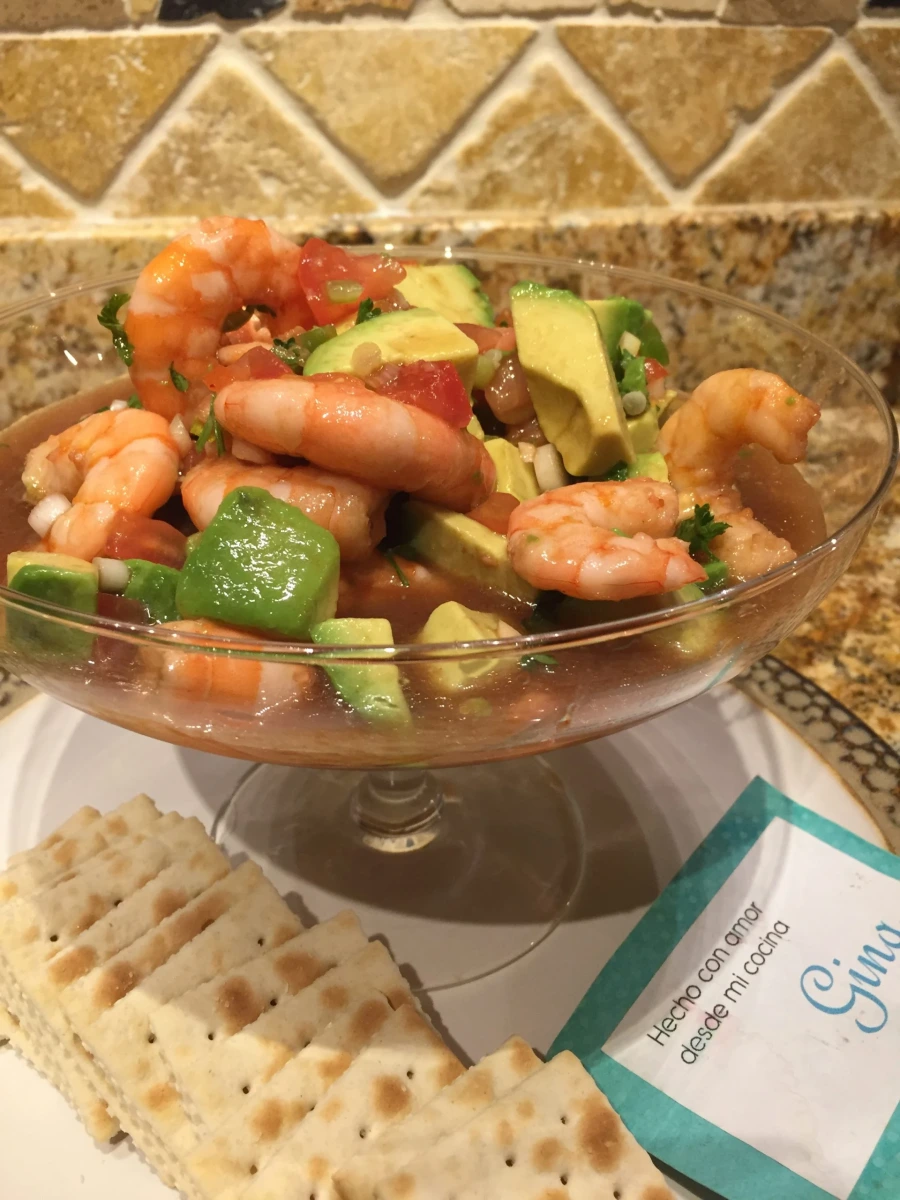
To finish and serve, take the already cold pieces and peel them completely. If you used very large pieces, cut them in half so they are easy to eat with a spoon. Take the liquid base out of the refrigerator, which will already have the flavors integrated. Pour half a cup of the cold broth you reserved into the base and mix. Add the peeled meat. Just before serving, incorporate the cucumber and avocado cubes. Serve in cold bowls or glasses. Accompany it with crackers or baked toasts, and place more lemon and hot sauce on the table for everyone to adjust to their taste.
Nutritional Information
It is important to know what we contribute to our body with each meal. This preparation stands out for being extremely light and nutritious, fitting very well into diets that seek high protein and low fat. For each portion served, the energy value is around seventy-nine kilocalories. It is a very low number, which explains why this dish is so popular in warm climates and during the summer, as it satisfies you without leaving you feeling heavy or lethargic after eating.
Regarding macronutrients, each dish provides approximately thirteen grams of high-quality protein from seafood. Carbohydrates remain low, at about six grams, almost entirely from fresh vegetables and citrus juices. Total fats barely reach one gram per serving, although this value rises slightly if you are generous with the amount of avocado you add at the end. Avocado is excellent, so don't hesitate to use it. Fiber is almost one gram, contributed by celery, onion, and fresh tomato.
Remember that all these values are approximate estimates based on a standard portion. If you modify the quantities, use vegetable juices with added sugars, or accompany the dish with many crackers or fried toasts, the nutritional profile will change drastically. My recommendation is to look for pure tomato juices and control the amount of extra salt on the table, as seafood naturally contains sodium.
To keep the recipe within light parameters, respect the list of raw ingredients. If someone in your family requires specific diets, this option is naturally gluten-free (if you omit the crackers) and dairy-free. It is a perfect example of how traditional homemade food can be functional and adapt to modern dietary needs without losing any of its original flavor.
5 keys to make it perfect
The first key is absolute control over cooking. Many people are afraid to cook seafood at home because they end up with a rubbery texture. This happens due to overcooking. The proteins of these animals are very delicate; when exposed to prolonged heat, they contract strongly and expel all their internal moisture. Therefore, the time in boiling water must be brief, and the use of an ice bath is non-negotiable. That thermal shock is the secret of restaurant kitchens to achieve a firm and juicy texture at the same time.
The second key is temperature management during assembly. A cold dish must be served genuinely cold. If you mix the ingredients at room temperature and serve them immediately, the palate experience is flat. Vegetables lose their crisp character and the liquid base feels heavy. Respecting the refrigeration time for the sauce before assembling the dish, and even chilling the glasses or bowls where you will serve, will drastically elevate the quality of your preparation. Cold enhances the perception of acidity and freshness.
The third key is patience when mixing and resting time. When you combine acidic liquids, such as lemon and tomato, with dry spices, the flavor molecules take a while to hydrate and distribute evenly. That rest in the refrigerator is not just for cooling; it's for the garlic powder, paprika, and onion to release their essential oils into the liquid. If you taste it freshly mixed, it will taste unbalanced. If you taste it half an hour later, you will see how the flavors have unified into a single robust profile.
The fourth key is the exact moment to add fatty and crunchy elements. Avocado oxidizes quickly upon contact with air and breaks down if left submerged in acidic liquids for too long. Cucumber, for its part, is mostly composed of water; if you leave it for hours in the sauce, it will release that water and dilute the flavor of your base. For this reason, avocado and cucumber are always cut and incorporated just at the moment you are going to bring the dishes to the table. This way you maintain contrasts of textures: liquid, soft, firm, and crunchy.
The fifth and final key is the intelligent use of the shell. Buying already peeled product saves you two minutes, but robs you of a lot of flavor. Boiling the pieces with their shell not only protects the direct meat from the violent heat of the water, but also allows the extraction of flavor compounds present in the shell. That remaining liquid we reserve is an express broth. Using it to lighten the tomato juice gives the recipe a deep sea flavor that commercial juices can never imitate on their own.
When is it ideal to enjoy it?
This dish shines brightly during the spring and summer months. When the heat is on and turning on the oven seems like a bad idea, preparing cold recipes is the smartest solution. By requiring only a couple of minutes on the stove, you keep your kitchen cool. It's the ideal option for weekend meals, whether you're hosting a family gathering in the garden, a pool day, or simply want a relaxed Sunday meal without spending hours cleaning pots and pans.
Besides being a summer classic, it works wonderfully as an appetizer for festive celebrations. If you have a hearty meal planned for the afternoon, starting with small portions of this recipe whets the appetite thanks to its acidity and lightness, preparing the stomach for heavier dishes to come. The colorful presentation with the reds of the tomato, the greens of the avocado and cilantro, makes it visually very attractive for any guest table. If you are looking for more ideas for these occasions, you could alternate by serving a red shrimp aguachile for those who enjoy higher levels of acidity and direct spiciness.
In the rhythm of life of 2026, where we seek to optimize our time without sacrificing food quality, this preparation is a strategic ally. You can leave the liquid base prepared the night before in the refrigerator. The next day, it will only take you a few minutes to cook the protein, chop the fresh vegetable garnish, and serve. This makes it a quick and exceptional lunch for work-from-home days. You have a nutritious meal, that feels like it's from a restaurant, made in your own kitchen at a fraction of the cost.
Cooking is about sharing and creating moments. You don't need to wait for a special date or a beach vacation to enjoy coastal flavors. Any day you need a break from the routine of meats and chicken, this recipe immediately transports you to a relaxed atmosphere. Prepare it, adjust the lemon, place the sauces in the center of the table, and let everyone finish adding their personal touch. That interaction at the table is what makes homemade food irreplaceable.
Culinary glossary
To always feel confident reading recipes, it's good to clarify some terms. First, let's talk about Devein. This term refers to removing the digestive tract from seafood, which is that dark line running along the back. It is not a real vein. It is removed for two reasons: it can contain sand that is unpleasant to chew, and it can impart a slight bitter taste. Doing so with a small knife before cooking significantly improves the presentation and texture of the food.
The second important term is the Reverse Bain-Marie or simply Thermal Shock. While a traditional bain-marie uses hot water to melt or gently cook, the reverse uses a container with water and a lot of ice to rapidly lower the temperature of a food. It is used when boiling green vegetables to help them maintain their bright color, and in our case, to stop the residual cooking of the meat and prevent it from becoming tough after removing it from the heat.
A third concept is Macerate. Although often confused with marinating, macerating involves submerging foods (generally fruits or vegetables) in a liquid so that they soften and absorb or release flavors. In our recipe, when we leave the chopped onion and spices resting in the cold tomato juice mixture inside the refrigerator, we are allowing the vegetables to macerate and soften their raw and intense flavor, integrating harmoniously into the broth.
The fourth term is the point Opaque in cooking. When recipes indicate cooking until the meat is opaque, they refer to the loss of transparency. Raw marine proteins are usually translucent and grayish. With heat, the protein structure changes and becomes solid and matte white. This is your main visual cue to know that the inside of the piece is no longer raw, without the need to use a thermometer.
Finally, let's talk about Citrus as balancing agents. In cooking, we don't use lemon or orange juices just to make something taste like that fruit. The acids in citrus have the technical function of cutting through the sensation of fat on the palate and lifting flat flavors. That's why we add a few drops of lemon to boiling water and orange to the sauce; they act as natural enhancers that brighten and add depth to the entire mixture without adding heaviness.





Delicious recipe for these hot times, either as a starter, or a rich Sunday snack, thanks for your mention, an honor, success in everything
Perfect for sharing . I made it with the ingredients I had and it worked perfectly.
It turned out better than I expected . I followed the steps and it worked on the first try.
Simple and delicious . it saved me time and was delicious. We accompanied it with avocado and it was a hit .