
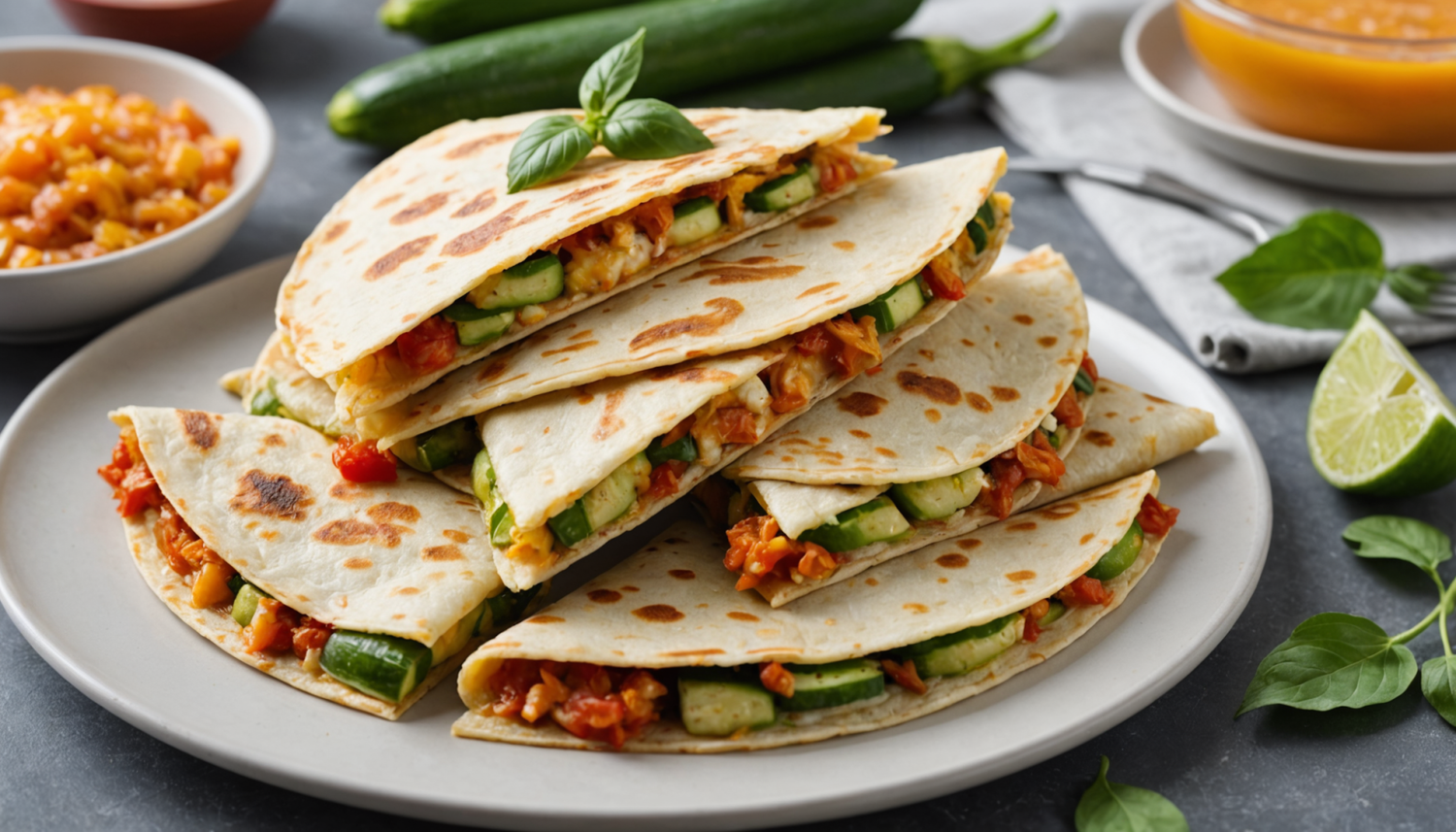
Irresistible Squash Blossom Quesadillas Recipe
Hello! We are going to prepare some squash blossom quesadillas that are pure tradition and delicacy. The essence of this dish lies in respecting the subtle flavor of the flowers, combining them with good melted cheese and the unmistakable aroma of epazote, creating a perfect snack to share with family. It's a wonderful way to bring the countryside to your table in a simple way.
Preparation time
Organizing yourself before turning on the stove is vital for everything to flow stress-free in the kitchen.
- Preparation: 15 minutes
- Cooking: 10 minutes
- Total: 25 minutes
- Servings: 6 units
- Difficulty: Easy
Ingredients
For this dish, freshness is non-negotiable; look for the brightest and firmest flowers you can find at the market.
- 18 fresh squash blossoms
- 6 corn tortillas (preferably fresh)
- 300 grams of Oaxaca cheese (or quesillo)
- 1/4 white onion
- 1 small garlic clove
- 1 sprig of fresh epazote
- 2 tablespoons of vegetable or neutral oil
- A pinch of salt
If you can't find Oaxaca cheese, you can substitute it with asadero, Chihuahua, or any Manchego-type cheese that melts well, although the flavor will change slightly. If you can't get fresh epazote, you can omit it or use a pinch of dried oregano, but I recommend looking for it because epazote is the soul of the traditional food in the center of the country. If it's not rainy season and there are no fresh flowers, some stores sell preserved flowers, although you'll need to drain them very well.
Utensils we will use
We don't need sophisticated equipment, just basic tools that you surely already have in your drawers.
- Large frying pan or griddle
- Cutting board
- Sharp knife
- Medium bowl
- Kitchen paper towels
- Wooden spoon or spatula
Preparation
Cleaning the flowers
Wash under the tap the squash blossoms with a very gentle stream of water to remove any remaining dirt. Do it delicately because they are extremely fragile.
Dry with paper towel or a clean cloth with gentle pats. Do not rub them.
Remove the stems and pistils. Carefully open the flower and pull out the yellow pistil from the center and the sepals (the small green leaves attached to the base of the flower). We only want the orange petals. If you leave the pistil, it can make the preparation bitter.
Cut the flowers into medium pieces or thick strips. It doesn't need to be a perfect cut.
Filling preparation
Chop the onion and garlic finely. We want them to add flavor without large pieces being felt when biting.
Shred the cheese into fine strands if using Oaxaca, or grate it if using another type. Set aside.
Wash and chop the epazote. Use only the leaves, discard the thick stems.
Sautéing the flowers
Heat the oil in the pan over medium heat. When hot, add the onion.
Sauté the onion stirring constantly until transparent, about 2 or 3 minutes.
Add the garlic and cook for 30 more seconds until fragrant, being careful not to burn it.
Add the flowers and epazote. Slightly increase the heat and sauté everything together. You will see that the flowers quickly reduce in size.
Season with a pinch of salt. Cook for only 2 or 3 minutes until the flowers are tender but not mushy. Remove from heat and set aside.
Assembling the quesadillas
Heat the griddle or clean pan over medium heat.
Heat the tortillas lightly on both sides so they regain flexibility and don't break when folded.
Place the cheese on one half of each corn tortilla. Be generous but leave a free edge.
Add the filling of sautéed flowers over the cheese.
Fold the tortilla in half, covering the filling, forming a half-moon.
Final Cooking
Cook on both sides keeping the heat medium-low. Let them brown slightly and the cheese melt completely.
Remove from heat when the tortilla is crispy to the touch and the cheese starts to peek out from the edges.
To finish and serve
Once the cheese is perfectly melted and the tortilla has that irresistible golden touch, remove the quesadillas from the griddle. Serve them immediately, as this snack is best enjoyed piping hot. I suggest accompanying them with a good homemade salsa to elevate the experience. For example, a molcajete sauce goes wonderfully with its rustic texture, or if you prefer something with more character, a guajillo chile sauce will provide a spectacular contrast of color and flavor. Place the quesadillas on a plate in the center of the table and enjoy!
Nutritional Information
- Calories: 180 kcal
- Proteins: 9 g
- Fats: 10 g
- Carbohydrates: 14 g
- Fiber: 1.5 g
Nutritional values are approximate estimates per quesadilla, depending on the amount of cheese used.
5 keys to make it perfect
Making a quesadilla seems like the simplest task in the world, but achieving that perfection where the tortilla doesn't break and the filling is juicy has its science. Here are my secrets.
- Drying is vital: If you wash the flowers and don't dry them well, when you put them in the pan they will release water instead of sautéing. This will make the filling watery and moisten the tortilla, breaking it. Take the time to dry them carefully.
- Don't overcook the flower: The squash blossom it is 90% water and very delicate. If you cook it too long in the pan before filling, it will turn into an unrecognizable paste. We only need to «scare» it with heat to maintain its texture.
- The temperature of the tortilla: Never try to fold a cold tortilla fresh out of the package or refrigerator; it will break. Always pass it over heat for a few seconds to reactivate the elasticity of the corn before filling.
- The balance of the cheese: Use a cheese that melts well but is not excessively greasy. Oaxaca cheese is king here for its stringiness, but make sure it is of good quality. Excess fat in the cheese can make the quesadilla feel heavy.
- The touch of epazote: Don't underestimate this herb. Although some find it strong, it is the necessary aromatic counterpoint to the sweetness of the pumpkin. If it's your first time, use only a couple of chopped leaves, but don't omit it.
When is it ideal to enjoy it?
Squash blossom quesadillas are incredibly versatile. They are ideal for a weekend breakfast, when you have a little more time to calmly clean the flowers and treat the family. They also shine as a light dinner, as they are not heavy on the stomach if you control the amount of fat. In Mexico, their consumption is closely linked to the rainy season (summer and early autumn), which is when the gastronomy local is flooded with quelites and fresh flowers. It is a dish that connects with the earth and natural cycles.
Additionally, if you have guests, you can serve them cut into small triangles as an appetizer before the main course. Accompany them with a refreshing drink like a horchata water with almond to balance the temperature of the hot dish with something sweet and fresh.
Comparison table
| Recipe | Key ingredients | Difference/advantage |
|---|---|---|
| Squash Blossom Quesadillas (Main) | Fresh flowers, epazote, Oaxaca cheese | Delicate, earthy flavor and soft texture. |
| Huitlacoche Quesadillas | Corn fungus (huitlacoche), onion, corn | Much more intense, smoky flavor and black color. |
| Pressed Pork Rind Quesadillas | Marinated pork rinds | Heavier, meaty, greasy and spicy flavor. |
| Chicken Quesadillas | Shredded chicken, sometimes tomato sauce | More protein-rich and neutral option, ideal for children. |
| Sincronizadas | Ham, yellow and Manchego cheese, flour tortilla | Tex-Mex or northern style, uses flour instead of corn. |
| Potato and Chorizo Quesadillas | Cooked potato, fried chorizo | More substantial and caloric filling, pasty texture. |
| Mushroom Quesadillas | Mushrooms, epazote, garlic | The closest substitute if you can't find flowers. |
Frequently asked questions (FAQ)
Share your experience
Cooking is for experimenting and sharing. I'd love to know how your quesadillas turned out, if you got fresh flowers, or if you tried a different cheese. Did you add your personal touch? Leave your comment and share your own findings!
Also, if you like homemade Mexican antojitos, I invite you to try making some black mole empanadas for the next gathering, they are the perfect complement to a table full of flavor Mexican.
Culinary glossary
- Sauté until translucent: Cook the onion or garlic in fat over medium heat until they become transparent and soft, without browning or darkening.
- Epazote: Mexican aromatic herb with a strong and distinctive flavor, widely used in stews, beans, and quesadillas. Aids digestion.
- Comal: Flat utensil, traditionally made of clay or metal, used in Mexico to cook tortillas, toast seeds, or roast chilies.
- Pistil: Central organ of the flower that contains pollen. It is removed in this recipe because it can contribute a bitter taste.
- Quesillo: Original and correct name by which «Oaxaca Cheese» is known in its state of origin. It is a string cheese.
Super recipe this one for ‘Squash Blossom Quesadillas’ ✨.
I loved the combination of flavors in these ‘Squash Blossom Quesadillas’. I made them with the ingredients I had and it worked perfectly. Next time I'll make them with a light salad. .