

Avocado and Shrimp Tartare with Mango Recipe
Hello! What a joy to have you here. We are going to prepare a dish that is pure freshness and elegance: a tartare tropical. The mix of the creaminess of the avocado, the sweetness of the mango, and the firm texture of the shrimp is a sure hit. It's perfect for those days when you want to eat well without complicating your life in the kitchen.
Preparation time
Getting organized is key to enjoying cooking. Here are the estimated times so you can plan your kitchen session without stress.
- Preparation: 20 minutes
- Cooking: 1 minute (only if using raw shrimp)
- Total: 21 minutes
- Servings: 4 people
- Difficulty: Easy
Ingredients
For this dish to shine, the quality of the raw ingredients is essential. We need fresh ingredients, especially seafood and fruits.
For the base and body
- 250 grams of cocktail shrimp (or fresh shrimp medium)
- 2 ripe but firm avocados
- 1 Manila or Ataulfo mango (that is sweet)
- 3 tablespoons finely chopped white onion
For the dressing and assembly
- 1 lemon (we will need all its juice)
- 1/4 cup extra virgin olive oil
- Salt to taste
- Freshly ground black pepper to taste
- Fresh chopped parsley (amount needed to add flavor and color)
- Crackers (for serving)
Possible substitutions
If you can't find Manila mango, any sweet and not too fibrous mango works. If you don't have shrimp, you can opt for a different version inspired by the tuna tartare with avocado, using fresh fish cubes. If you prefer to avoid white onion due to its intensity, the red onion is an excellent alternative that adds color.
Utensils we will use
You don't need sophisticated equipment to achieve a restaurant-quality result. What you have at home is enough to work with this fresh dish.
- Small pot (only if cooking shrimp from scratch)
- Medium bowl or mixing bowl for ingredients
- Well-sharpened chef's knife
- Stable cutting board
- Strainer (to drain the shrimp)
- Serving spoons for mixing
- Circular mold or plating ring (Optional: you can use a small cup or a wide glass if you don't have a mold)
- Manual lemon juicer
Preparation
We are going to build this dish step by step. The important thing here is to treat each ingredient with care to keep its texture and flavor intact.
Preparation of the base dressing
The first step is to create the liquid that will unify all the flavors. Wash the parsley very well under the tap, dry it with kitchen paper, and chop it finely.
- In a small bowl, pour 1/4 cup of olive oil.
- Squeeze the juice of the entire lemon, making sure no seeds fall in.
- Add the chopped parsley, salt, and pepper to taste.
- Mix vigorously with a fork or hand whisk until it looks emulsified (slightly thick). Reserve this dressing, as we will use it in several stages.
- In a small bowl, pour 1/4 cup of olive oil.
- Squeeze the juice of the entire lemon, making sure no seeds fall in.
- Add the chopped parsley, salt, and pepper to taste.
- Mix vigorously with a fork or hand whisk until it looks emulsified (slightly thick). Reserve this dressing, as we will use it in several stages.
Preparing the shrimp
The treatment of the shrimp is vital. You can use pre-cooked cocktail shrimp (those small, pink ones), which saves time. If you prefer to use fresh shrimp for a more gourmet flavor, follow these steps:
- Bring water to a boil in the pot with a pinch of salt.
- When the water is boiling vigorously, add the fresh shrimp.
- Leave them for only 30 seconds (yes, it's very quick).
- Remove them immediately and run them under cold water or put them in a bowl with ice for 5 seconds to stop the cooking. This is called «blanching» and ensures they remain firm and not chewy.
- Drain the water well. Peel and clean the shrimp if they have shells.
- Chop most of the shrimp into small pieces, but be careful!, set aside a few whole, nice ones for garnish at the end.
- In a bowl, mix the chopped shrimp with a couple of tablespoons of your reserved dressing so they can absorb the flavor.
- Bring water to a boil in the pot with a pinch of salt.
- When the water is boiling vigorously, add the fresh shrimp.
- Leave them for only 30 seconds (yes, it's very quick).
- Remove them immediately and run them under cold water or put them in a bowl with ice for 5 seconds to stop the cooking. This is called «blanching» and ensures they remain firm and not chewy.
- Drain the water well. Peel and clean the shrimp if they have shells.
- Chop most of the shrimp into small pieces, but be careful!, set aside a few whole, nice ones for garnish at the end.
- In a bowl, mix the chopped shrimp with a couple of tablespoons of your reserved dressing so they can absorb the flavor.
Cutting and seasoning of fruits and vegetables
Now we will work on the vegetable part that provides the characteristic freshness of the Latin cuisine.
- Peel the mango and cut it into small, uniform cubes (approximately 1 cm cubes). Set aside on a separate plate.
- Cut the avocados in half, remove the pit, and scoop out the flesh. Also cut it into cubes the same size as the mango.
- In a bowl, place the avocado cubes and mix them with the tablespoon of chopped onion.
- Add a couple of tablespoons of the dressing over the avocado and mix gently so as not to mash it. The lemon in the dressing will help prevent it from oxidizing (turning black).
- Peel the mango and cut it into small, uniform cubes (approximately 1 cm cubes). Set aside on a separate plate.
- Cut the avocados in half, remove the pit, and scoop out the flesh. Also cut it into cubes the same size as the mango.
- In a bowl, place the avocado cubes and mix them with the tablespoon of chopped onion.
- Add a couple of tablespoons of the dressing over the avocado and mix gently so as not to mash it. The lemon in the dressing will help prevent it from oxidizing (turning black).
Assembly of the Tartare
The creative moment has arrived. We are going to assemble the dish to make it look spectacular.
- Place your plating ring (or homemade mold) in the center of the plate where you are going to serve.
- Layer 1: Place a base of chopped mango at the bottom and press lightly with a spoon to compact it.
- Layer 2: Add the chopped shrimp mixture that you already had marinating in the middle. Press gently again.
- Layer 3: Finish by placing the prepared avocado on top, smoothing the surface.
- Carefully remove the mold upwards so that the tower remains firm.
- Place your plating ring (or homemade mold) in the center of the plate where you are going to serve.
- Layer 1: Place a base of chopped mango at the bottom and press lightly with a spoon to compact it.
- Layer 2: Add the chopped shrimp mixture that you already had marinating in the middle. Press gently again.
- Layer 3: Finish by placing the prepared avocado on top, smoothing the surface.
- Carefully remove the mold upwards so that the tower remains firm.
To finish and serve
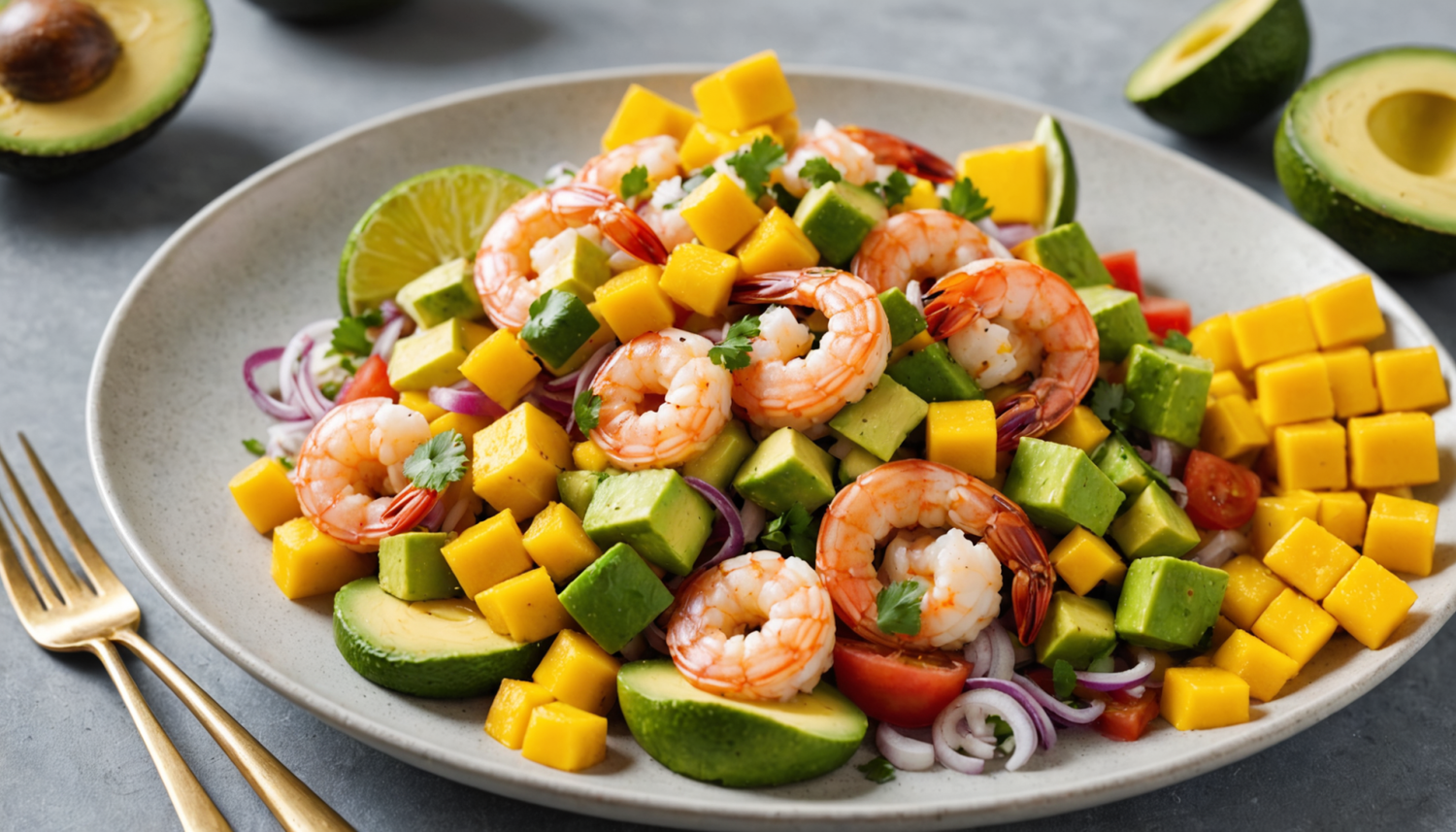
To give it the final chef's touch, place those whole shrimp we reserved at the beginning on top of the tower. Drizzle a little more of the leftover dressing around the plate and over the tartare to add shine. Serve it immediately to enjoy it well chilled. Accompany it with some crackers or baked toasts, which will give it that necessary crunchy touch. If you like seafood flavors with a fruity touch, you could also enjoy a shrimp ceviche with mango on another occasion, but today this tartare will be the star.
Nutritional Information
This dish is a fantastic option if you are looking for something balanced. Here is an estimate of what each serving provides.
- Calories: 320 kcal
- Proteins: 18 g
- Fats: 22 g
- Carbohydrates: 14 g
- Fiber: 6 g
Note: Values are approximate and may vary depending on the size of the avocados or the amount of oil used in the dressing.
5 keys to make it perfect
Sometimes, the small details make a big difference between a good dish and a memorable one. Here I share my secrets for this tartare.
- Temperature is vital: Keep the seafood and fruits in the refrigerator until the last moment before chopping. A lukewarm tartare loses all its charm; it should feel cold on the palate.
- The uniform cut: Try to make the mango and avocado cubes and shrimp pieces similar in size. This ensures that in each bite you have the perfect proportion of all the flavors.
- Be careful with the avocado: If the avocado is too ripe, it will turn into guacamole when mixed. Look for one that yields slightly to finger pressure but maintains its shape.
- Don't forget the dressing: Marinating each layer separately (as we did in the recipe) ensures that each ingredient has its own flavor, instead of just pouring the sauce at the end.
- Serve immediately: The acid from the lemon «cooks» and softens the avocado over time, and the mango releases juices. Assemble the dish just before serving it to the table to maintain the perfect structure.
When is it ideal to enjoy it?
This avocado and shrimp tartare is incredibly versatile. It's the star appetizer for a summer dinner on the terrace, as it doesn't require turning on the oven and is very refreshing. It also works wonderfully as a light lunch if you're watching your diet but don't want to sacrifice flavor. Being a visually attractive dish, it's ideal for special celebrations like anniversaries or when you have guests you want to impress with a appetizer that looks like it came from a luxury restaurant.
If you have leftover shrimp or are looking for more ideas to use this ingredient in gatherings, an excellent option to complement the table is a shrimp dip creamy.
Comparison table
It's normal to confuse tartare with other fresh seafood dishes. Here's how our recipe differs from other popular options so you can choose the best one for your occasion.
| Recipe | Key ingredients | Difference/advantage |
|---|---|---|
| Shrimp and Mango Tartare | Cooked shrimp, mango, avocado | Layered texture and mild sweet-savory flavor |
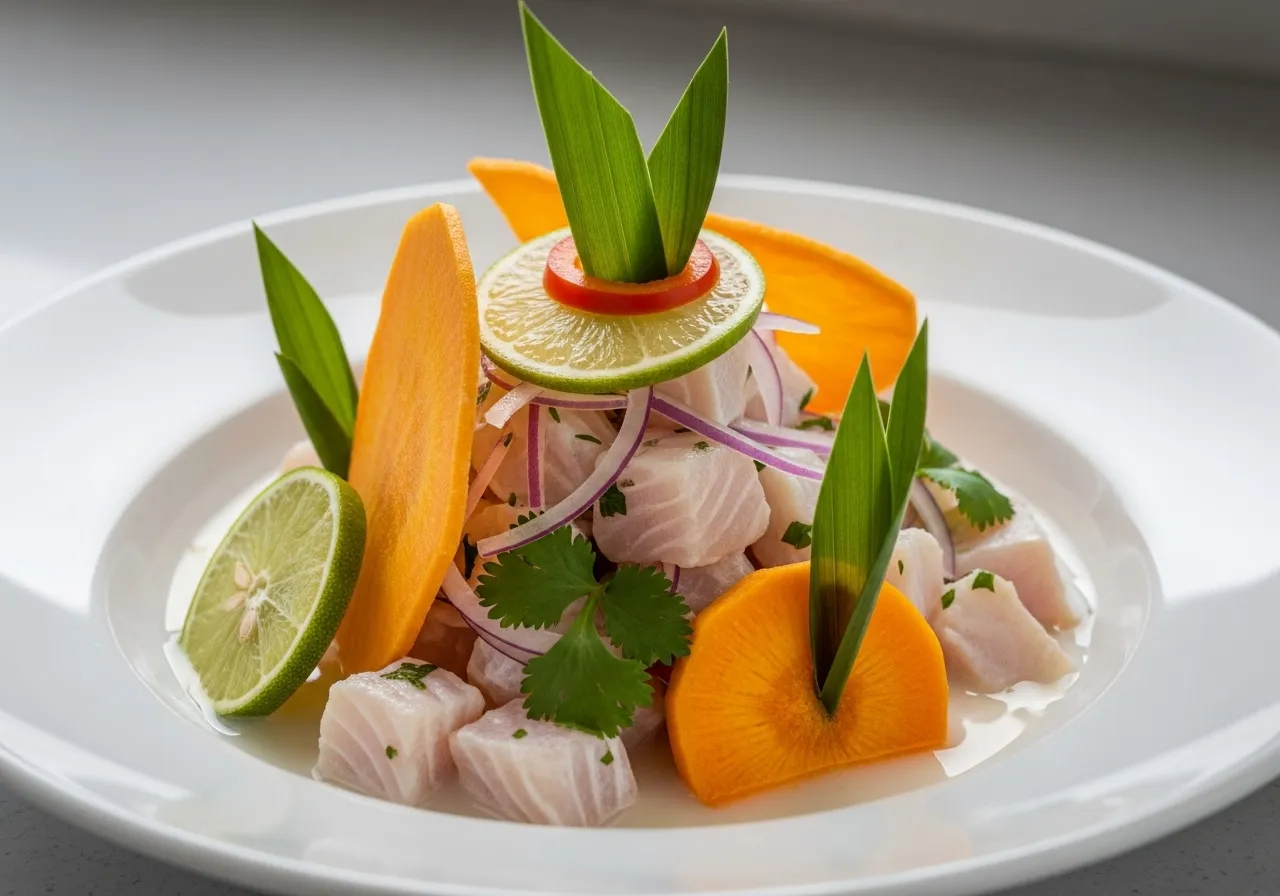
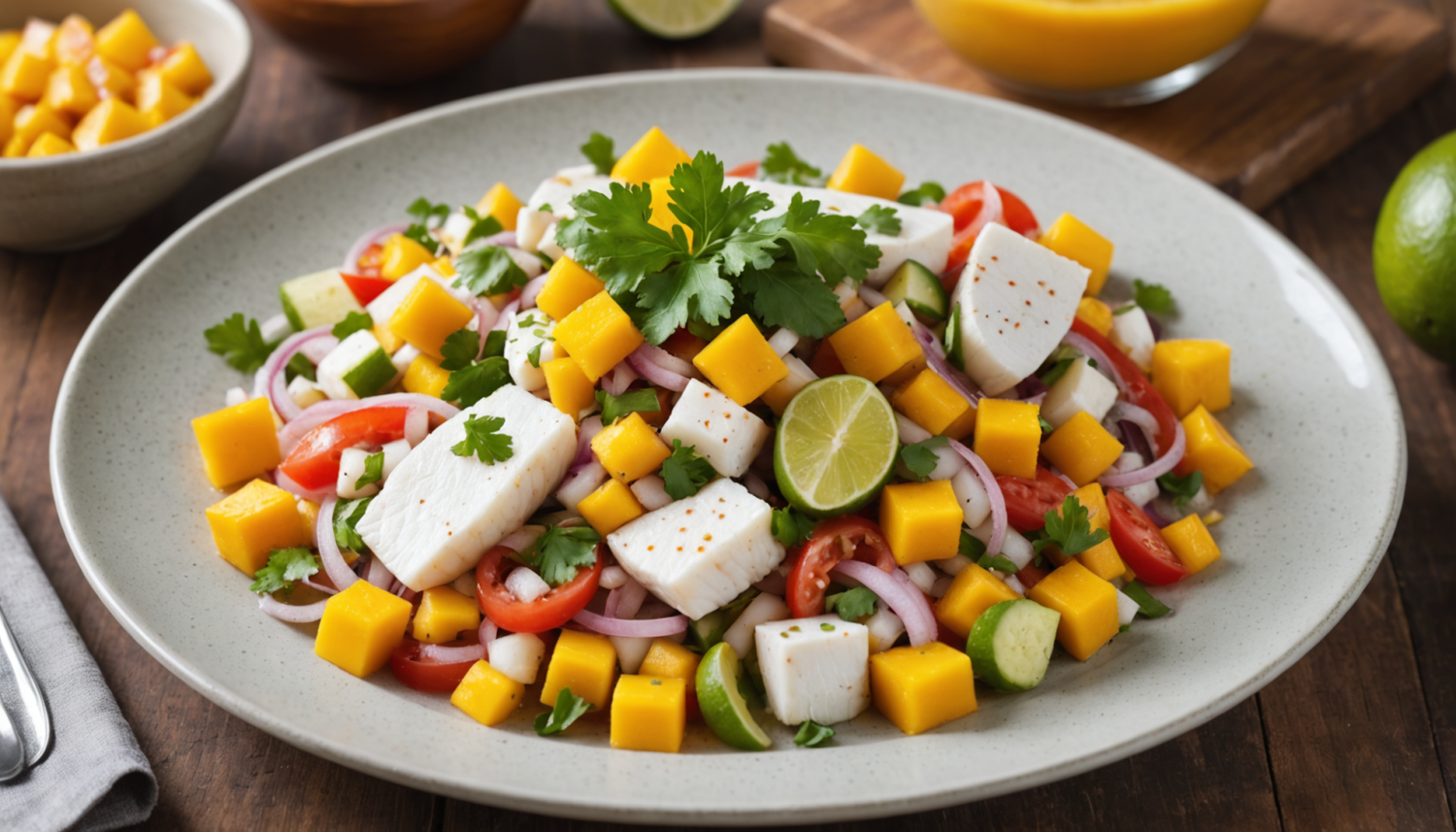
| Fish Ceviche | Raw white fish, lemon, cilantro | The fish is «cooked» in a lot of acid, it's more soupy |
| Shrimp Cocktail | Shrimp, ketchup sauce, radish | It has a lot of red sauce and is served in a glass |
| Green Aguachile | Raw shrimp, serrano chili, cucumber | Much spicier and more liquid than the tartare |
| Tuna and Mango Tostadas | Fresh tuna, jicama, corn tostada | It is served on a crispy base, it is more informal |
| Shrimp and Orange Salad | Lettuces, orange segments, vinaigrette | Dish with more green leaves, less structured |
| Salmon Sashimi | Slices of raw salmon, soy | Thin cut without mixing, pure fish flavor |
Frequently asked questions
Share your experience
Cooking is for experimenting and sharing. I'd love to know how this tartare turned out for you. Did you dare to add a spicy touch or use another type of fruit? If you're looking for more inspiration for fresh dishes, you might be interested in checking out this arugula and shrimp salad. Leave your comment and share your own little tricks so we can all keep learning!
Culinary glossary
Sometimes we use terms that might sound strange, but they are very simple. Here I explain the ones we used today:
- Blanch: It's a very quick cooking technique. It consists of submerging food in boiling water for a few seconds and then transferring it to ice water. It serves to set the color and leave the food at its exact point.
- Emulsify: It's the process of mixing two liquids that normally don't combine well, like oil and lemon, beating them until a unified and creamy sauce is achieved.
- Tartare: Originally it referred to minced raw meat, but in modern cuisine it is used for dishes where ingredients (raw or cooked) are cut into very small cubes and served in a compact, generally cylindrical shape.
- Pacotilla: It's a term used to refer to shrimp that come pre-cooked, peeled, and are generally small in size. They are very practical for salads and fillings.
- Oxidation: It's what happens when air touches the pulp of fruits like avocado or apple, turning them dark brown. We use lemon to prevent it.

Perfect for sharing this ‘Avocado and Shrimp Tartare with Mango’. The recipe is very well explained. Many thanks for the recipe.
It was delicious at home. Super easy to follow, ideal for beginners. What a great guide.
Perfect for sharing this ‘Avocado and Shrimp Tartare with Mango’. It yielded a lot and was perfect for sharing. I added olives and it elevated the flavor.