


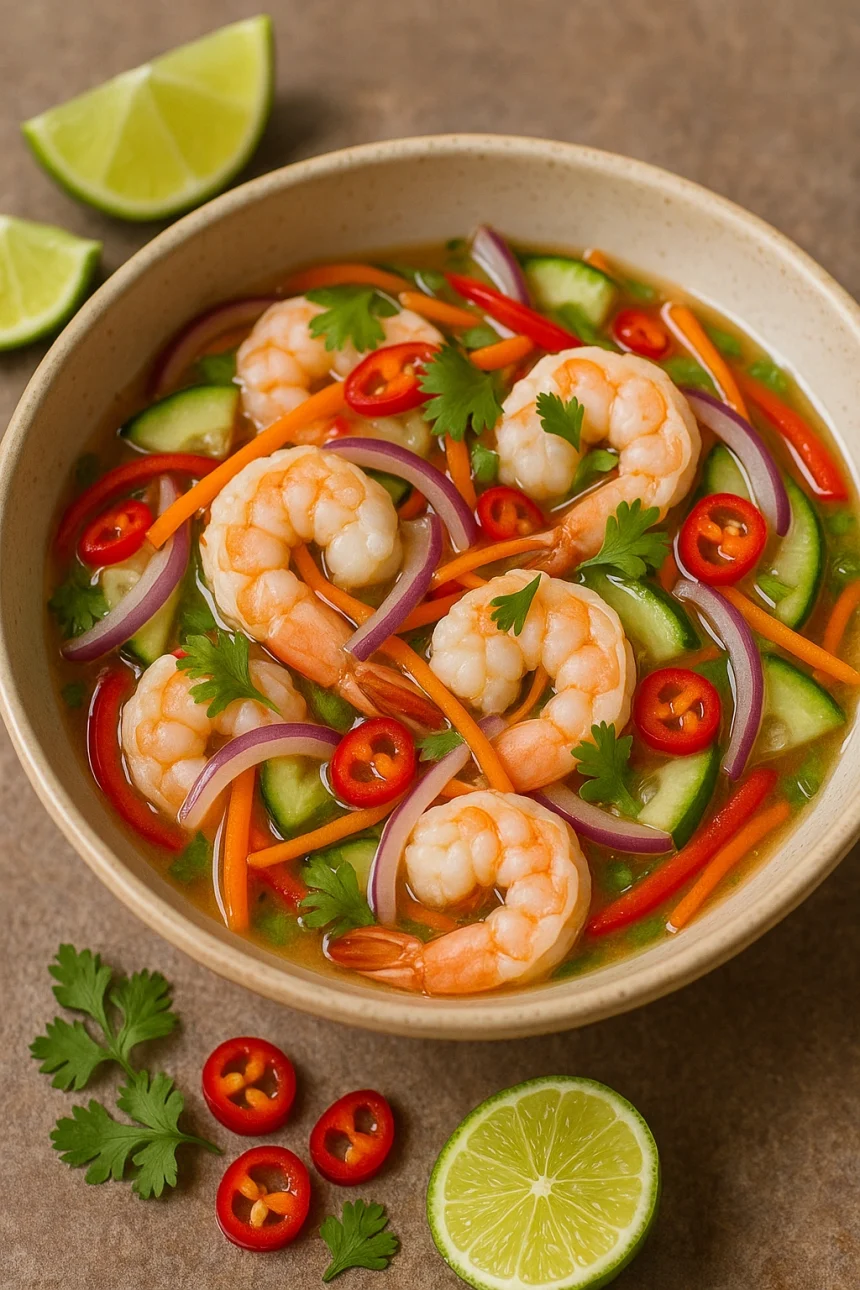
Fresh Shrimp Thai Ceviche Recipe
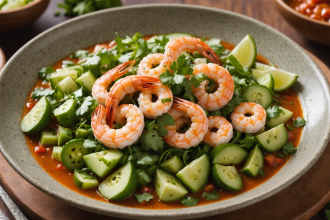
Hello! Let's prepare together a dish that combines the best of two worlds: the freshness of our Latin seafood with that exotic and creamy touch from Southeast Asia. This fresh shrimp Thai ceviche is vibrant, slightly sweet from the coconut milk, and with the exact point of acidity that we love; ideal for surprising without complicating life in the kitchen.
- Fresh Shrimp Thai Ceviche Recipe
- Preparation time
- Ingredients
- Utensils we will use
- Preparation
- Cleaning and cutting the shrimp
- The curing process
- Vegetable preparation (Mise en place)
- Drain and mix
- Thai sauce creation
- To finish and serve
- Nutritional Information
- 5 keys to make it perfect
- When is it ideal to enjoy it?
- Comparison table
- Frequently asked questions (FAQ)
- Share your experience
- Culinary glossary
Preparation time
Getting organized is key to enjoying the process. Here are the estimated times for you to plan your kitchen day:
- Preparation: 20 minutes
- Marinade: 60 minutes
- Total: 1 hour and 20 minutes
- Servings: 4 people
- Difficulty: Easy
Ingredients
To achieve that authentic and balanced flavor, we need to respect the quality of each element. Here is the detailed list:
- 500 g fresh shrimp (prawns), peeled and deveined
- 1 cup fresh lime juice (approximately 8-10 limes)
- 1/2 cup Persian or regular cucumber, deseeded and diced
- 1/2 cup firm red tomato, deseeded and chopped
- 1/4 cup of red onion, finely chopped
- 1 radish, thinly sliced or chopped
- 2 serrano chilies, deseeded and finely chopped (adjust to your taste)
- 1/4 cup fresh cilantro, washed and chopped
- 1/2 cup coconut milk (preferably canned for extra creaminess)
- 2 teaspoons natural orange juice
- 1/2 teaspoon sea salt (or to taste)
- 1 firm but ripe avocado, cut into cubes
- Orange zest (optional, for garnish)
Possible substitutions
If you can't find good quality fresh shrimp or prefer not to consume it «raw», you can opt for pre-cooked shrimp, although the texture will change a bit. If you don't have coconut milk, you could use a little coconut water mixed with a pinch of cream to simulate the texture, but the flavor of the coconut fat is vital here. For those looking for options other than seafood, this dressing works wonderfully in a salmon ceviche, where the fat from the fish complements the coconut milk.
Utensils we will use
You don't need sophisticated equipment, just basic tools you surely have in your drawers:
- Well-sharpened chef's knife
- Stable cutting board
- Glass or ceramic bowl (avoid metal so it doesn't react with the lemon)
- Citrus juicer
- Large mixing spoon
- Vegetable peeler (optional, for the cucumber)
- Plastic kitchen film or airtight lid
Preparation
Follow these steps carefully and with care, respecting the resting times so that the lemon's chemistry works its magic on the shrimp.
Cleaning and cutting the shrimp
Wash the shrimp well under the tap with cold water. If they have shells, remove them completely, including the tail. With a small knife, make a shallow cut along the back to remove the dark vein (the intestine) and rinse again. Cut the shrimp into bite-sized pieces (approx. 1-2 cm). If using very small shrimp, you can leave them whole.
The curing process
Place the clean shrimp in the glass bowl. Pour 3/4 cup of lemon juice over them, making sure they are completely submerged. Cover the bowl with plastic film and refrigerate. Let marinate for approximately 60 minutes or until the shrimp change from translucent gray to opaque pink and white. Stir the mixture halfway through to ensure even curing.
Vegetable preparation (Mise en place)
While the shrimp are resting, take the opportunity to chop the rest of the ingredients. Dice the cucumber, tomato, and onion into small, uniform cubes (brunoise cut) so that each bite has a bit of everything. Slice the radish very thinly to add a crunchy texture. Finely chop the serrano chili; if you want less spice, be sure to remove all white veins and seeds.
Drain and mix
Once the shrimp are ready (firm and opaque), remove them from the refrigerator. Drain and discard the lemon juice from the marinade, as it will have released liquids from the shrimp and we want to control the acidity and final flavor with the coconut milk. In the bowl with the drained shrimp, add the cucumber, tomato, onion, radish, serrano chili, and cilantro.
Thai sauce creation
In a separate small bowl, mix the 1/2 cup coconut milk, the remaining 1/4 cup fresh lemon juice, and the 2 teaspoons orange juice. Whisk lightly with a fork or hand whisk until combined. Pour this creamy mixture over the bowl of shrimp and vegetables. Season with sea salt and mix gently with a spoon to coat everything.
To finish and serve
Just before serving, gently fold in the avocado cubes so they don't break apart and cloud the sauce. If desired, grate a little orange zest on top to enhance the citrus aroma. Serve immediately, well chilled. This dish goes great with crispy corn tostadas or crackers. If you have leftover fresh ingredients, you could prepare some jicama tostadas as a light alternative to accompany it.
Nutritional Information
- Calories: 204 kcal
- Proteins: 10 g
- Fats: 14 g
- Carbohydrates: 13 g
- Fiber: 4 g
Estimated values per serving. May vary depending on the type of coconut milk used.
5 keys to make it perfect
Ceviche seems simple, but the details make the difference between a good one and a spectacular one. Here are my secrets:
1. Temperature is vital: Keep the shrimp very cold at all times. If you break the cold chain, the texture becomes mushy. If it's very hot in your kitchen, you can place the bowl over another container with ice while you prepare everything. This also applies if you decide to make variations such as sierra ceviche, where the firmness of the fish depends on the temperature.
2. Uniform cut: Try to make sure all vegetables are similar in size to the shrimp pieces or smaller. This ensures that each spoonful has a balance of flavors and you don't encounter a giant piece of onion that overshadows the rest.
3. Shake the coconut milk: Sometimes, the fat in coconut milk separates from the water inside the can and solidifies. Before opening or measuring it, shake it very well or mix it vigorously so that the emulsion is smooth and silky when integrated into the ceviche.
4. Do not reuse the initial marinade juice: Although it is left in some traditional recipes, in this Thai style we seek a clean and creamy flavor. The juice from the first curing can be very acidic and have too strong a raw seafood flavor that would clash with the delicacy of the coconut.
5. Avocado at the end: Never mix the avocado from the beginning or let it rest for too long in the acid, as it will oxidize and lose its firm texture. Add it literally seconds before serving. If you really like this ingredient, you will also love the avocado toasts as a side dish.
When is it ideal to enjoy it?
This Thai ceviche is the king of sunny days. Imagine a summer afternoon in the garden or a gathering by the pool; that's where it shines for its refreshing capacity. It's also an elegant appetizer for a dinner with friends, as you can serve it in individual cocktail-style glasses. Being light yet satisfying, it works perfectly as a quick lunch if you're watching your diet but don't want to sacrifice flavor. If you're looking for options to share at national holidays or more traditional events, you might prefer to alternate with some shrimp meatballs, but for absolute freshness, stick with this ceviche.
Comparison table
It's common to confuse ceviche styles. Here I show you how our Thai version differs from other popular recipes you might have in mind.
| Recipe | Key ingredients | Difference/advantage |
|---|---|---|
| Thai Shrimp Ceviche (This one) | Coconut milk, shrimp, serrano | Creamy texture and unique sweet-tropical touch. |
| Traditional Mexican Ceviche | Tomato, onion, cilantro, lime | More acidic and dry, without dairy or sweet elements. |
| Red Aguachile | Dried chili, lime, cucumber | Much spicier and with minimal marinating time. |
| Peruvian Ceviche | Yellow chili, tiger's milk, sweet potato | Includes corn and sweet potato garnishes, tiger's milk technique. |
| Ceviche with Mango | Mango, habanero, lime | Provides direct fruity sweetness, without the creaminess of coconut. |
| Fish Ceviche | White fish (tilapia/sierra) | Softer texture than shrimp, requires care when mixing. |
| Shrimp Cocktail | Ketchup, orange soda | Sweet red sauce base, not marinated in acid. |
Frequently asked questions (FAQ)
Share your experience
Cooking is for experimenting and sharing. I'd love to know how your Thai ceviche turned out. Did you make it spicier? Did you use tostadas or crackers? Leave your comment and share your own little tricks so we can all keep learning!
Culinary glossary
- Devein: Process of removing the shrimp's intestine (the black line on its back) with a light cut, to ensure hygiene and better flavor.
- Brunoise: Technique of cutting vegetables into very small and uniform cubes (approximately 2-3 mm), ideal for them to integrate well into sauces and ceviches.
- Mise en place: French term meaning «put in its place»; refers to having all ingredients weighed, washed, and chopped before starting to cook.
- Coconut milk: Creamy liquid obtained by crushing the pulp of mature coconut with water; distinct from «coconut water» which is the natural clear liquid from the inside.
- Cure: In the context of ceviche, it refers to the action of citric acid on the proteins of raw seafood, changing its texture and color without using heat (fire).






Super recipe this ‘Fresh Shrimp Thai Ceviche’. I prepared it yesterday and it was spectacular.
Simple and delicious this ‘Fresh Shrimp Thai Ceviche’. It reminded me of a version I tried on a trip.
We loved the result of this ‘Fresh Shrimp Thai Ceviche’. I made it with the ingredients I had and it worked perfectly.