



Cochinita Pibil Recipe: The taste of Yucatán at your table
Hello! How wonderful that you're encouraged to prepare this dish. The cochinita pibil is, without a doubt, the heart of Yucatecan cuisine. Although the original version is cooked underground (hence the Mayan name «pibil»), today we are going to achieve that tender, juicy, and colorful meat in your home oven. It's perfect for those family Sundays when you want to serve something comforting and full of tradition. If you want to know more about the authentic origin, you can read about the cochinita pibil yucatán, but here we will focus on making it delicious in your own kitchen.
- Cochinita Pibil Recipe: The taste of Yucatán at your table
- Preparation time
- Ingredients
- Utensils we will use
- Preparation
- 3.1. Preparation of the red marinade
- 3.2. Marinating the meat
- 3.3. Slow baking
- 3.4. Final shredding
- To finish and serve
- Nutritional Information
- 5 keys to make it perfect
- When is it ideal to enjoy it?
- Comparison table
- Frequently asked questions (FAQ)
- Share your experience
- Culinary glossary
Preparation time
To organize ourselves well, here is the breakdown of the times. Remember that marinating is key for the flavor.
- Preparation: 15 minutes
- Cooking: 2 hours and 30 minutes
- Total: 2 hours and 45 minutes (plus marinating time)
- Servings: 4 people
- Difficulty: Easy
Ingredients
The magic of this dish lies in the red seasoning paste and the acidity of citrus fruits. Here is the exact list so you don't miss anything.
For the marinade and the meat
- 1 pound (approx. 450g) pork leg or shoulder (cut into small pieces)
- 3 tablespoons achiote paste
- Juice of 1 bitter orange (or a mix of ½ sweet orange + 1 lime)
- 2 tablespoons white vinegar or lemon juice
- 1 small white onion grated (or ½ if large)
- 2 cloves garlic, finely chopped
- Salt to taste
- Black pepper to taste
- A pinch of dried oregano
- 1 cup water (add more if necessary)
To accompany (Optional but recommended)
- Onion pickled red
- Habanero chili sauce
- Hot corn tortillas
If it's difficult to find it in your area sour orange, don't worry, the sweet orange and lemon mixture I mentioned above is a very effective substitute that I often use. Also, if you prefer to avoid pork, you can substitute it with chicken (thighs and legs work best) following the same marinade; this is called «Pollo Pibil».
Utensils we will use
You don't need sophisticated equipment, with the basics you have at home it will be perfect.
- Blender or food processor
- A large bowl for marinating
- Oven-safe pot with lid (Dutch oven type) or a deep dish
- Aluminum foil (if your pot doesn't have an airtight lid)
- Forks for shredding
Preparation
Let's cook calmly. Follow these steps and you'll see how your kitchen fills with an incredible aroma. The secret is patience and care in the process.
3.1. Preparation of the red marinade
The first thing is to create the flavor base that will penetrate the meat. Achiote is fundamental here, it is one of the jewels of spices in Mexico.
- Place the achiote paste in the blender.
- Add the sour orange juice (or your orange and lemon mixture).
- Add the dried oregano.
- Blend everything until you get a smooth, liquid, and deep red mixture.
- Place the achiote paste in the blender.
- Add the sour orange juice (or your orange and lemon mixture).
- Add the dried oregano.
- Blend everything until you get a smooth, liquid, and deep red mixture.
3.2. Marinating the meat
Now we are going to coat the pork with this mixture. Grated onion is a great trick because it dissolves and adds a lot of juiciness.
- Put the pieces of pork meat in the large bowl.
- Add the minced garlic and grated white onion directly over the meat.
- Season with salt and pepper to taste (remember that achiote sometimes contains salt, taste it first if you can).
- Pour the achiote mixture you blended over the meat.
- Mix very well with your hands (use gloves if you don't want to get stained red) so that each piece is covered.
- Cover the bowl and refrigerate. Ideally overnight, but if you're in a hurry, at least 2 hours are necessary.
- Put the pieces of pork meat in the large bowl.
- Add the minced garlic and grated white onion directly over the meat.
- Season with salt and pepper to taste (remember that achiote sometimes contains salt, taste it first if you can).
- Pour the achiote mixture you blended over the meat.
- Mix very well with your hands (use gloves if you don't want to get stained red) so that each piece is covered.
- Cover the bowl and refrigerate. Ideally overnight, but if you're in a hurry, at least 2 hours are necessary.
3.3. Slow baking
This is where the transformation happens. The slow cooking or slow cooking will tenderize the meat fibers.
- Preheat your oven to 400°F (200°C).
- Transfer all the meat and marinade liquid to your oven-safe pot or dish.
- Add the cup of water to ensure there is enough steam and it doesn't dry out.
- Cover tightly with the lid or with a double layer of aluminum foil. It is vital that no steam escapes.
- Bake for 2 hours and 30 minutes.
- After this time, check the meat: it should be so tender that it falls apart just by touching it.
- Preheat your oven to 400°F (200°C).
- Transfer all the meat and marinade liquid to your oven-safe pot or dish.
- Add the cup of water to ensure there is enough steam and it doesn't dry out.
- Cover tightly with the lid or with a double layer of aluminum foil. It is vital that no steam escapes.
- Bake for 2 hours and 30 minutes.
- After this time, check the meat: it should be so tender that it falls apart just by touching it.
3.4. Final shredding
The final step before serving. You'll see that the color is vibrant and the aroma irresistible.
- Remove the meat from the oven, being careful not to burn yourself with the steam.
- With the help of two forks, shred the meat inside the same pot.
- Mix the shredded meat with the juices left at the bottom so it absorbs all the remaining flavor.
- Remove the meat from the oven, being careful not to burn yourself with the steam.
- With the help of two forks, shred the meat inside the same pot.
- Mix the shredded meat with the juices left at the bottom so it absorbs all the remaining flavor.
To finish and serve
Once you have your cochinita pibil ready and juicy, it's time to adjust the seasoning if you feel it needs a touch more salt. To serve, heat the corn tortillas until they are flexible. Serve a generous portion of meat on each tortilla, top with pickled red onions and, if you like spicy food, a few drops of habanero sauce. In my house, we sometimes break the rule and add a little avocado for creaminess, although purists would say no. Enjoy it hot!
Nutritional Information
- Calories: 350 kcal
- Proteins: 28 g
- Fats: 22 g
- Carbohydrates: 5 g
- Fiber: 1 g
Note: Values are approximate estimates per serving and may vary depending on the specific ingredients used.
5 keys to make it perfect
Throughout my career, I've noticed that small details make a big difference. If you've read anything about Gina Whitley, you know I'm obsessed with you understanding the «why» of things so they turn out well the first time.
1. Marinating time is sacred.
Do not try to rush this step. The acid from the sour orange and vinegar needs time to break down the meat fibers and allow the annatto flavor to penetrate. If you can leave it overnight, the difference in flavor and texture is abysmal compared to just a couple of hours.
2. The steam seal.
Traditionally, this is cooked underground, hermetically sealed. In the oven, your «earth» is aluminum foil or a heavy lid. If the steam escapes, the meat will dry out instead of cooking in its own juices. Make sure to seal the edges of your dish very well.
3. The choice of meat.
Using leg or shoulder is crucial because they have a good balance of fat and lean meat. Intramuscular fat melts during slow cooking, keeping the meat moist. If you use loin, for example, it will be too dry.
4. Don't skimp on the achiote.
Achiote paste is not spicy, it's flavor and color. If you put in too little, the dish will be pale and lack that characteristic earthy taste. Make sure the blender mixture has a very intense red color.
5. The acidic balance at the end.
When tasting the cooked meat, it should have a slight acidic touch that cuts through the pork fat. If you feel it's too «flat,» you can add an extra splash of fresh sour orange juice over the shredded meat before serving it.
When is it ideal to enjoy it?
The cochinita pibil it has a very nice tradition of being consumed on Sunday mornings or at midday in Yucatán, often after church or as a family gathering. It's the perfect dish for when you have guests because the oven does the hard work and you can be chatting with them. It's also excellent for parties or taquizas, as it yields a lot and is quite filling. And even if you have leftovers, the next day you can make some incredible tortas, very much in the style of the tortas de la barda Tamaulipas, but with cochinita.
Comparison table
Sometimes we get confused with so many delicious pork dishes in Mexican cuisine. Here I help you differentiate cochinita from other classics.
| Recipe | Key ingredients | Difference/advantage |
|---|---|---|
| Cochinita Pibil | Achiote, Sour orange, Pork | Earthy and acidic flavor, steamed/baked. |
| Carnitas de Puerco | Lard, Orange, Pork | They are fried in their own lard (confit), crispy texture. |
| Chilorio | Ancho chili, Pork, Spices | Originally from Sinaloa, more pasty and spiced texture. |
| Baked Cochito | Pork, Ancho chili, Vinegar | Typical of Chiapas, more toasted and less acidic flavor. |
| Pastor | Achiote, Dried chilies, Pineapple | Cooked on a vertical spit, sweeter flavor due to the pineapple. |
| Pork Tinga | Tomato, Chipotle, Onion | Tomato sauce base with smoky spice, does not use achiote. |
| Poc Chuc | Sour orange, Grilled pork | Charcoal-grilled pork fillets, not shredded. |
Frequently asked questions (FAQ)
Share your experience
Cooking is for experimenting and sharing. I'd love to know how your cochinita turned out, if you added your personal touch, or if you dared to use banana leaves. Leave your comment and share your own little tricks with the community! I'm very excited to read them.
Culinary glossary
Here I explain some terms we used today so you can become an expert:
- Pibil: Word of Mayan origin meaning «buried» or cooked underground. It refers to the original cooking technique in an earth oven called «pib».
- Achiote: Seed of a shrub native to tropical America used as a natural dye and spice. It has an intense red color and earthy flavor.
- Marinate: Technique of soaking a food (usually meat) in an aromatic liquid (with acid, oil, and spices) before cooking it to give it flavor and tenderize it.
- Shred: Action of separating cooked meat into fine strands or fibers, generally using hands or forks.
- Recado: In Yucatecan cuisine, it refers to the paste or spice mixture that serves as a base for seasoning stews. The «red recado» is the achiote one.




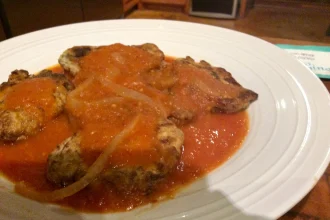
Impeccable texture and flavor of this ‘Cochinita Pibil’. super easy to follow, ideal for beginners.
It looks amazing .
Perfect for sharing this ‘Cochinita Pibil’ . I took it to a gathering and it flew off the table.