



Homemade Crispy Oatmeal Cookie Recipe
Hello! We're going to prepare some cookies that will become a staple in your kitchen because of how simple and delicious they are. They have that perfect balance: crispy edges and a tender center that you'll fall in love with at the first bite, ideal for those looking for something homemade and comforting without complications.
Preparation time
Organizing our time is key to enjoying the process without rushing. Here's the breakdown so you can plan your baking:
- Preparation: 10 minutes
- Cooking: 12 minutes
- Total: 25 minutes
- Servings: Approximately 15 units
- Difficulty: Easy
Ingredients
The magic of this recipe lies in the quality of what we use. We don't need anything extravagant, just well-selected pantry staples.
Dry ingredients
- 230 g of rolled oats
- 100 g of all-purpose wheat flour
- 120 g brown sugar
- ½ teaspoon of baking powder
- 1 pinch of salt
Wet ingredients
- 2 medium eggs
- 150 ml of extra virgin olive oil
- 1 teaspoon of vanilla or hazelnut extract
If you're missing any ingredient in your pantry, don't worry. Brown sugar is ideal because it adds moisture and that caramel color, but if you only have white sugar, use it without fear; they will be a little crispier. If you don't have hazelnut extract, orange or lemon zest works wonderfully for flavoring.
Utensils we will use
You don't need industrial machinery for this. We're going to use what you probably already have in your drawers:
- Two large bowls (one for dry, one for wet)
- A silicone spatula or wooden spoon
- A hand whisk or a fork
- Baking tray
- Parchment paper or baking sheet
- Cooling rack
Preparation of the Oatmeal Cookies
Follow this step-by-step calmly. Baking is chemistry, but it's also care and observation.
- Oven preheating. Preheat the oven to 180 ºC with top and bottom heat. It is vital that it reaches the temperature before putting in the tray.
- Dry mix. In the first bowl, combine the 230 g of oat flakes, the 100 g of flour, half a teaspoon of baking powder, and the pinch of salt. Stir so that the baking powder is well distributed and no clumps remain.
- Wet emulsion. In the second bowl, beat the 2 eggs with the 120 g of brown sugar, the 150 ml of olive oil, and the chosen essence. Beat vigorously until the sugar begins to dissolve and the mixture looks integrated.
- Combining mixtures. Pour the liquid mixture over the bowl of dry ingredients. Here we swap the whisk for the spatula.
- Final integration. Stir with enveloping movements until a homogeneous dough is obtained. You'll see it's dense and sticky, that's a good sign. We don't need an electric mixer.
- Forming the cookies. Take portions of dough and form small balls with your hands. Place them on the paper-lined tray and flatten them slightly with your palm.
- Arrangement on the tray. Remember to leave space between them (about 3 or 4 cm), as they will grow a little with the heat.
- Precise baking. Place the tray at a medium height and bake for about 12 minutes. The visual indicator is key: when the edges are golden, they are ready, even if the center seems soft.
- Initial rest. We remove the tray and wait 2-3 minutes without touching the cookies, as they will be fragile.
- Complete cooling. We transfer the cookies to a wire rack so that air circulates underneath and they finish hardening as they cool.
To finish and serve
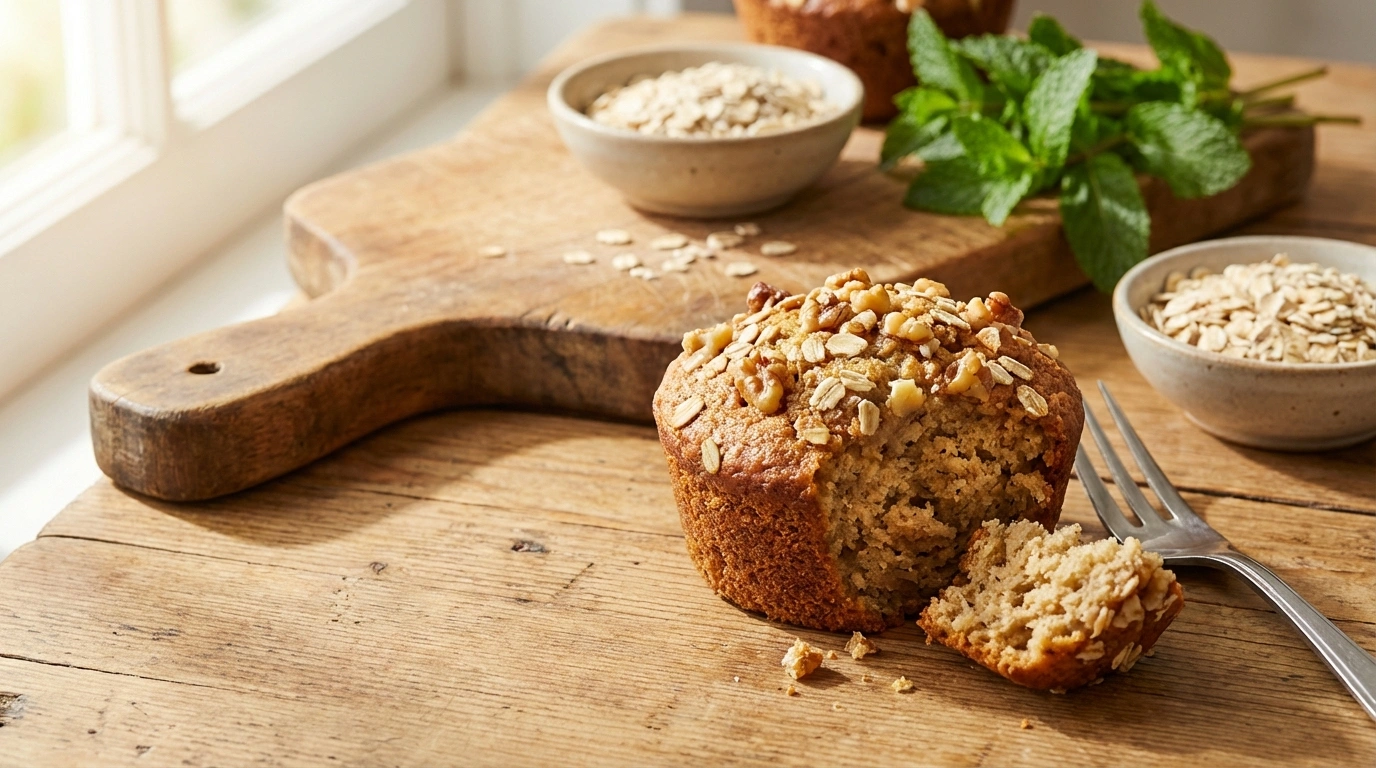
Once the cookies are completely cold, they will have acquired their final texture: crispy on the outside and slightly tender on the inside. It's time to remove any excess crumbs from the tray and present them. You can serve them stacked on a nice platter or store them directly. Accompany them with a glass of cold milk, a freshly brewed coffee, or an infusion; oats have that comforting flavor that goes with everything.
Nutritional Information
Although they are a sweet treat, oats provide us with interesting nutrients. Here is an estimate per cookie:
- Calories: 145 kcal
- Proteins: 2.5 g
- Fats: 8 g
- Carbohydrates: 18 g
- Fiber: 1.5 g
Note: Values are approximate and may vary depending on the size of the cookie and the brands of ingredients used.
5 keys to make it perfect
Sometimes we follow the recipe to the letter and the result varies. Here I share my chef's secrets to ensure success:
1. The exact baking point
The most common mistake is waiting for the cookie to be hard inside the oven. Don't do it! If you take it out when it's hard, it will be a rock when it cools. You should take them out when the edges are golden but the center yields a little to the touch. The residual heat will finish the cooking outside.
2. The temperature of the ingredients
Try to have the eggs at room temperature. This helps them emulsify better with the oil and sugar, creating a more stable structure that retains air and moisture better.
3. Do not overmix the final dough
Once you add the dry ingredients to the wet, mix only until just combined. If you beat too much, you develop the gluten in the flour and the cookies will be hard and chewy instead of tender.
4. Uniformity in size
Try to make all the balls the same size. If some are large and others small, the small ones will burn before the large ones cook. A small ice cream scoop is a great ally here.
5. The type of oats matters
We use whole rolled oats for a rustic texture. If you prefer a finer, more delicate cookie, you can grind half of the oats in a blender before mixing them. This completely changes the bite.
When is it ideal to enjoy it?
These cookies are incredibly versatile. I love preparing them on Sunday afternoons to have breakfast for the week sorted, as they provide that slow-release energy ideal for starting the day. They are also the perfect snack to put in kids' backpacks or to take to work. Being dry and sturdy, they withstand transport very well, which makes them ideal companions for hikes, a beach day, or simply to have in the kitchen jar when a sweet craving hits in the mid-afternoon.
Comparison table
Sometimes we look for something specific and get lost among so many options. I have prepared this table so you can see how our cookies compare to other popular variants.
| Recipe | Key ingredients | Difference/advantage |
|---|---|---|
| Oatmeal Cookies (This recipe) | Oats, Olive Oil, Brown Sugar | Rustic texture, healthy fats, and lasting energy. |
| Pumpkin and Oat Cookies | Pumpkin puree, spices, oats | Moister and with an autumnal spiced flavor. |
| Chocolate Chip Cookies | Butter, chocolate chips, flour | Sweeter, classic American cookie texture. |
| Soft Apple Oatmeal Cookies | Fresh apple, cinnamon, oats | Cake-like and fruity texture, less crunchy. |
| Industrial Digestive Biscuits | Whole wheat flour, syrups, leavening agents | They usually have more processed ingredients and less real fiber. |
| Butter Cookies | Lots of butter, powdered sugar | Sandy texture that melts in your mouth, more caloric. |
| Fit Banana Cookies | Mashed banana, oats (sugar-free) | No added sugar option, chewy texture. |
Frequently asked questions (FAQ)
Share your experience
Cooking is for experimenting and sharing. I'd love to know if you've been encouraged to prepare them and what personal touch you've given them. Did you use chocolate? Maybe a little cinnamon? Leave your comment and share your own tips so we can all keep learning!
Culinary glossary
- Preheat: Preheating the oven in advance so it reaches the indicated temperature before introducing the food, vital for even cooking.
- Homogeneous: Refers to a mixture where all ingredients are equally integrated, without separate parts of flour or liquid being distinguishable.
- Pinch: A very small amount of a solid ingredient (like salt or spices) that can be taken between the index finger and thumb.
- Cooling Rack: A metal utensil with an open mesh that allows air to circulate underneath hot preparations to prevent them from becoming damp when cooling.
- Brown: To cook a food until its surface acquires a toasted or golden color, generally indicating the cooking point or caramelization.




I was surprised by the taste of these ‘Oatmeal Cookies’. I took them to a meeting and they flew off the table. keep sharing more like this.
These ‘Oatmeal Cookies’ were delicious at home. they saved me time and were delicious.
Very practical and tasty ❤️. it reminded me of a version I tried on a trip. it's really worth it.