
Creamy and Tropical Mango Pannacotta Recipe
Hello! Let's prepare together a dessert that is the absolute definition of smoothness and freshness. This pannacotta combines the silky texture of the cream cooked with the vibrant acidity of the fruit fresh, creating a perfect balance. It's an recipe ideal to prepare in advance and enjoy something creamy y cold without complications.
- Creamy and Tropical Mango Pannacotta Recipe
- Preparation time
- Ingredients
- Utensils we will use
- Step-by-step preparation of the Pannacotta
- Hydrate the gelatin
- Heat the creamy base
- Control the heat point
- Incorporate the gelatin and vanilla
- Distribute and temper
- Cold setting
- Prepare the mango coulis
- To finish and serve
- Nutritional Information
- 5 keys to make it perfect
- When is it ideal to enjoy it?
- Comparative table of creamy desserts
- Frequently asked questions (FAQ)
- Share your experience
- Culinary glossary
Preparation time
Organizing yourself in the kitchen is half the battle. Here's the time breakdown so you can plan your day stress-free, keeping in mind that resting is key for the gelatin to work its magic.
- Preparation: 20 minutes
- Cooking: 10 minutes
- Cold rest: 4 hours (minimum)
- Total: 4 hours and 30 minutes
- Servings: 4 glasses or ramekins
- Difficulty: Easy
Ingredients
To achieve that melt-in-your-mouth texture, we need to respect the exact quantities. The quality of the cream will directly influence what creamy of the final result.
For the Panna Cotta
- 1/4 cup milk (cold)
- 2 teaspoons powdered gelatin (unflavored)
- 2 cups heavy cream (whipping cream, minimum 35% fat)
- 3 tablespoons granulated white sugar
- 1 teaspoon vanilla paste (or vanilla extract)
For the mango sauce
- 1 and 1/2 cups fresh mango, diced
- 2 tablespoons lime juice (or green lemon)
- 2 tablespoons white sugar (Optional, only if the mango is not very sweet)
Note on substitutions: If you have difficulty finding powdered gelatin or prefer a vegetable option, you can substitute it with agar-agar. Keep in mind that agar-agar must boil to activate (unlike gelatin which should not boil) and the texture will be a bit firmer and less «wobbly». If you like to try variations of dairy textures, such as in a vanilla panna cotta with red berries, the principle is the same.
Utensils we will use
You don't need sophisticated equipment; what you have at home is enough. The important thing is to have everything at hand before turning on the heat.
- Medium pot or saucepan
- Small bowl (for hydrating the gelatin)
- Manual whisk
- Small blender or food processor
- 4 glasses, cups, or ramekins for serving
- Silicone spatula (scraper)
Step-by-step preparation of the Pannacotta
Follow these steps calmly. The secret to this sweet Italian dessert lies in treating the cream and gelatin delicately, controlling the temperature to prevent the mixture from curdling or the gelatin from losing its gelling power.
Hydrate the gelatin
Pour 1/4 cup of cold milk into a small bowl. Sprinkle 2 teaspoons of powdered gelatin over the surface of the milk as if it were fine rain. Do not pour it all at once to avoid lumps. Let it rest for 10 minutes. You will see it «swell» and the surface wrinkle; this means it is absorbing the liquid correctly.
Heat the creamy base
In a medium pot, pour 2 cups of cream (heavy cream) and 3 tablespoons of sugar. Bring the pot to medium heat. Stir constantly with a whisk so that the sugar dissolves well and the cream does not stick to the bottom.
Control the heat point
Here's the key: heat the mixture until it is very hot and you see steam starting to rise, but never let it boil. If it boils, the structure of the cream changes and the gelatin could fail afterwards. We want it to be hot to the touch (about 80°C if you had a thermometer, but by eye it's when it steams without bubbling).
Incorporate the gelatin and vanilla
Remove the pot from the heat immediately. Add the teaspoon of vanilla paste and the milk and gelatin mixture (which will now be a solid mass). Whisk vigorously until the gelatin dissolves completely in the hot liquid. Make sure no grains remain at the bottom.
Distribute and temper
Divide the liquid mixture evenly among the 4 glasses or ramekins. Let them cool to room temperature on the countertop before placing them in the refrigerator. This prevents condensation (water) from forming on the surface.
Cold setting
Once at room temperature, place the glasses in the refrigerator. They should rest there for at least 4 hours. Patience is vital to achieve that consistency that «dances» when you move the glass.
Prepare the mango coulis
While it pannacotta sets, prepare the sauce. Place 1 and 1/2 cups of mango pieces, 2 tablespoons of lime juice, and sugar (if using) in the blender. Process until you get a fine and smooth puree. If you prefer it very smooth, you can pass it through a sieve, but leaving the mango fiber gives it a delicious rustic touch.
To finish and serve
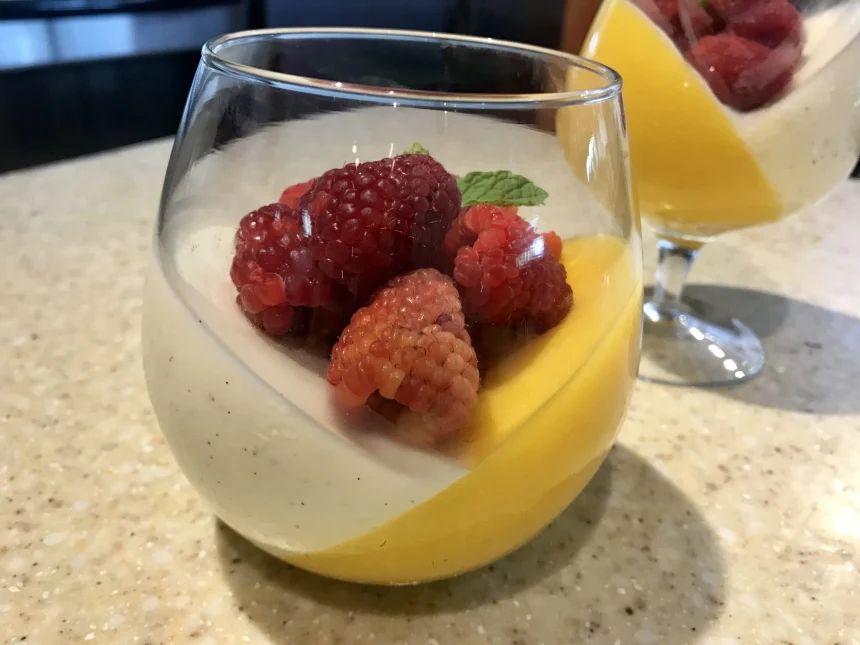
Just before serving, take the glasses out of the refrigerator. Pour a generous layer of mango puree over each set pannacotta. If you want to add an extra touch of color, you can decorate with a small leaf of fresh mint or a small piece of whole mango. Serve immediately to keep it well cold. This contrast between the dairy base and the acidic fruit is what makes this dessert unforgettable. It's perfect for finishing a hearty meal because, although rich, it feels light on the palate.
Nutritional Information
These values are approximate estimates per individual serving, calculated to give you a reference of what you are consuming.
- Calories: 501 kcal
- Carbohydrates: 24 g
- Proteins: 5 g
- Fats: 44 g
- Fiber: 1 g
- Sugar: 19 g
Note: Daily value percentages may vary depending on the specific brand of cream or gelatin you use.
5 keys to make it perfect
Sometimes, small technical details make the difference between a good dessert and a spectacular one. Here are my secrets to ensure success.
- Do not boil the cream: I insist on this because it is the most common mistake. If the mixture boils, the gelatin loses its setting power and your dessert will remain liquid or separate into strange layers.
- Correct hydration: Give the gelatin time in cold milk (the «blooming»). If you add it directly to hot liquid without hydrating, unpleasant gummy lumps will form on the palate.
- Vanilla quality: Being such a subtly flavored dessert, use a good vanilla paste or pure extract. The difference will be noticeable compared to artificial essences. It's a detail that elevates the dish, similar to when we use good ingredients in a chocolate and Baileys mousse.
- Chilling time: Do not try to speed up the process in the freezer; this will crystallize the water in the milk and ruin the creamy texture. Refrigerator cold (4-5°C) is what is needed for a stable gelatin network.
- Ripe mango: For the coulis, use very ripe, almost overripe mangoes. They will provide a natural sweetness and a less fibrous texture, meaning you won't need to add extra sugar.
When is it ideal to enjoy it?
The pannacotta with mango is the perfect wildcard for hot weather. Being a dessert that is served very cold and requires no oven, it is the king of summer. I love preparing it for dinners with friends because you can have it ready in the fridge from the day before, eliminating the stress of dessert time. It also works wonderfully as a finish to a spicy or very seasoned meal, as the dairy and mango help cleanse and refresh the palate. It's an elegant option that looks great on the table without requiring hours of technical work, unlike other more elaborate desserts like some biscuits homemade ones that require baking.
Comparative table of creamy desserts
Sometimes we confuse pannacotta with other spoon desserts. Here I show you how they differ so you know exactly what to expect.
| Recipe | Key ingredients | Difference/advantage |
|---|---|---|
| Panna Cotta with Mango | Cream, gelatin, mango | Sets with cold, gelatinous and silky texture, no egg. |
| Classic flan | Eggs, milk, caramel | Requires oven (bain-marie) and contains egg. |
| Crème Brûlée | Yolks, cream, burnt sugar | It's denser, contains egg and requires a blowtorch. |
| Mango Mousse | Whipped egg whites or cream, puree | Airy texture with bubbles, not smooth like pannacotta. |
| No-bake cheesecake | Cream cheese, biscuit | Marked cheese flavor and heavier, denser texture. |
| Custard | Milk, yolks, cornstarch | They are semi-liquid and thickened with egg/starch, not gelatin. |
| Bavaroise | Crème anglaise, gelatin, cream | More complex technique that includes a crème anglaise base. |
Frequently asked questions (FAQ)
Share your experience
Cooking is for experimenting and sharing, and I'd love to know how this recipe turned out for you. Did you dare to swap the mango for another fruit or did you follow the recipe to the letter? Leave your comment and share your own little tricks or photos of your creation! It makes me very excited to see your versions, almost as much as when I see a red fruit pavlova well-set one.
Culinary glossary
To help you move like a fish in water in the kitchen, here are some terms we used today.
- Hydrate (or Bloom): It is the process of soaking gelatin in a cold liquid so that the granules absorb water and swell before dissolving in hot liquid.
- Coulis: A thick sauce made from fruit (or vegetable) puree and sugar, which is often strained to remove seeds and skins.
- Set: The process by which a liquid solidifies or takes on a semi-solid consistency thanks to the action of a gelling agent (such as gelatin) or heat (such as egg).
- Whipping cream: Cream with a fat content greater than 35%, which allows it to trap air or provide a very rich and dense texture to preparations.
- Reverse Bain-Marie: Technique (not used today, but useful to know) for cooling a mixture by placing the bowl over another bowl with ice and water to quickly lower the temperature.




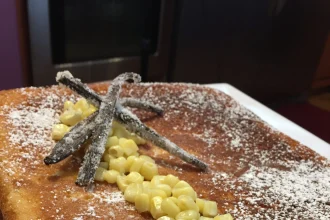
We loved the result of this ‘Pannacotta with Mango’.