


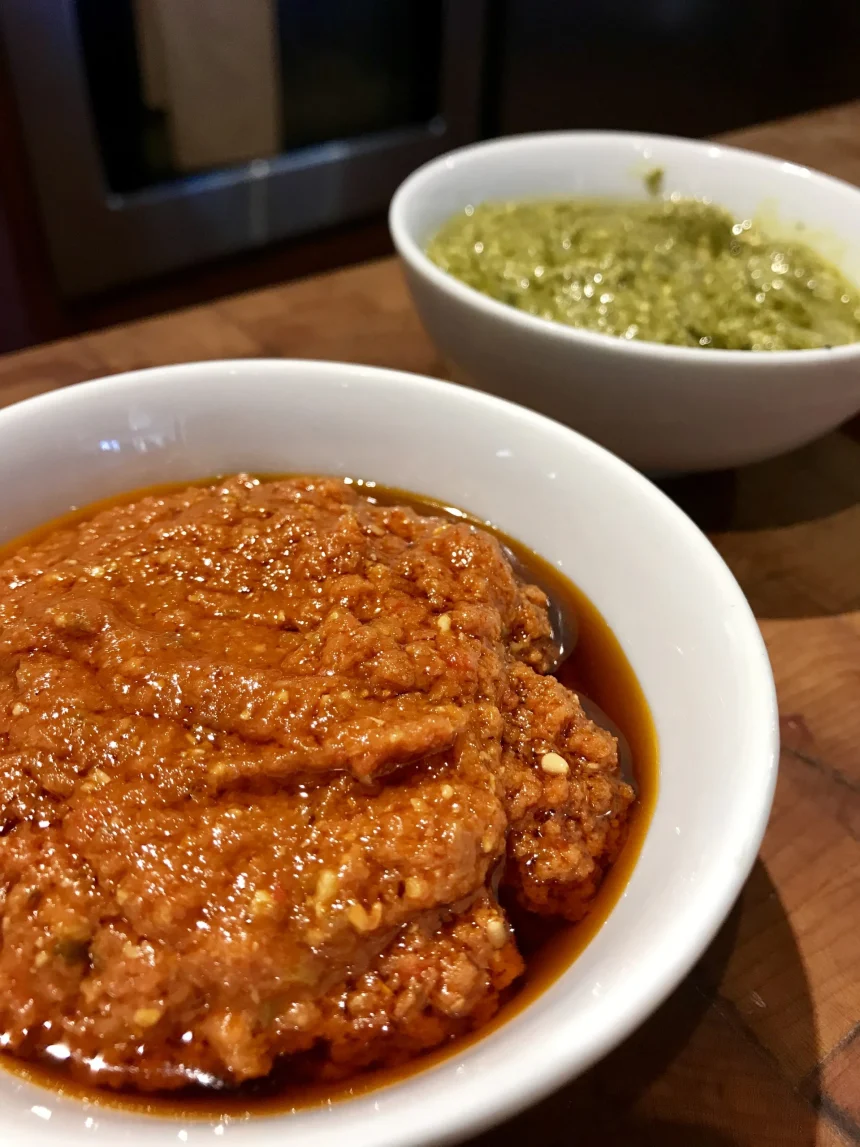
Homemade Pesto Recipe: The Secret to an Italian Classic
Hello! We are going to prepare a homemade pesto recipe, a traditional Italian sauce that concentrates the fresh and vibrant taste of summer in every bite. This condiment is versatile and can be used in pastas, meats, fish, or as an accompaniment for vegetables. Learning to make it at home guarantees an authentic flavor, avoiding preservatives and enhancing its freshness.
- Homemade Pesto Recipe: The Secret to an Italian Classic
- Preparation time
- Ingredients
- Utensils we will use
- Preparation
- 1. Prepare the ingredients
- 2. Toast the pine nuts
- 3. Process the ingredients
- 4. Add the cheese
- To finish and serve
- I want to share these tips with you
- Nutritional Information
- 5 keys to perfect pesto
- When is it ideal to enjoy pesto?
- Comparative table of Pesto with other similar sauces
- Videos to learn how to prepare traditional pesto
- Share your experience
- Pesto culinary glossary
Preparation time
Pesto is quick to prepare and perfect to have ready in minutes.
- Preparation: 10 minutes
- Cooking: Not required
- Total: 10 minutes
- Servings: 2 cups (approximately 8 servings)
- Difficulty: Easy
Ingredients
- 2 cups fresh basil leaves (stems removed)
- 2 tablespoons pine nuts (you can use walnuts if you prefer)
- 2 large garlic cloves
- ½ cup extra virgin olive oil
- ½ cup freshly grated Parmesan cheese
Note: If you can't find pine nuts, walnuts or pistachios can be good substitutes. For a cheese-free pesto, use nutritional yeast for a similar flavor.
Utensils we will use
- Food processor (or mortar for a traditional method)
- Knife and cutting board
- Mixing spoon
- Bowl to store the pesto
- Cheese grater
Preparation
1. Prepare the ingredients
- Wash the basil: Rinse the leaves under the tap with cold water to remove dirt or impurities.
- Dry the leaves: Use a clean cloth or paper towel to remove moisture.
- Prepare the garlic: Peel the cloves and have them ready for processing.
2. Toast the pine nuts
- Heat a pan over medium-low heat: Place the pine nuts and toast them lightly until they turn a very light golden color.
- Watch constantly: Burnt pine nuts give a bitter taste; the key is to heat them until you smell their aroma, without letting them get too dark.
3. Process the ingredients
- First the garlic and pine nuts: Include them in the processor and pulse to chop them finely.
- Add the basil: Incorporate the leaves and process at medium speed.
- Add the olive oil in a stream: Without turning off the processor, gradually pour in the oil to emulsify the mixture and make it creamy.
4. Add the cheese
- Incorporate the grated Parmesan: Pulse just until integrated, avoiding over-processing to maintain texture and freshness.
To finish and serve
Taste the sauce and adjust salt if necessary. Store the pesto in a jar and cover the surface with a little olive oil to prevent it from oxidizing and changing color. Serve with Barilla or Gallo pasta for a traditional dish. You can also use it as a dressing in pasta salads with pesto or spread on sandwiches with mozzarella, such as the chicken pesto and mozzarella sandwich.
I want to share these tips with you
- Always use fresh basil: It is key for an authentic flavor and an intense green color.
- Do not overprocess: Mix just until integrated to preserve texture and fresh aroma.
- Toast the pine nuts: This step enhances its flavor and adds a sweet and crunchy touch.
- Adjust the oil: Add according to the desired consistency; you may need a little less or more depending on the basil.
- Add the cheese at the end: This way you prevent it from cooking and losing flavor.
- Preserve with oil: Covering the pesto with a thin layer of oil protects and maintains its freshness.
Nutritional Information
- Calories: 87 kcal per serving
- Proteins: 2 g
- Fats: 9 g
- Carbohydrates: 1 g
- Fiber: 0 g
These values are approximate per serving and may vary depending on the specific ingredients and quantities used.
5 keys to perfect pesto
- Use fresh and quality ingredients: The basil should be vibrant and free of moisture spots.
- Do not add too much garlic: Two cloves are enough for a balanced flavor without overpowering the basil.
- Toast the nuts: Lightly browned pine nuts create a very special depth of flavor.
- Control the amount of oil: Add it little by little to achieve the desired texture without it becoming excessively liquid.
- Incorporate the cheese at the end: Only to bind, we prevent the heat from the processor from altering its flavor.
When is it ideal to enjoy pesto?
Pesto is a perfect sauce for summer meals due to its freshness and herbal flavor. Furthermore, it is ideal for quick family dinners or gatherings with friends, as it easily combines with pasta, salads, and grilled meats. It also serves as an excellent accompaniment for light dishes and celebrations where an elegant and natural touch is desired.
Comparative table of Pesto with other similar sauces
| Recipe | Key ingredients | Difference/advantage |
|---|---|---|
| Classic pesto | Basil, pine nuts, Parmesan cheese | Fresh and versatile flavor based on fresh basil |
| Pesto alla Trapanese | Fresh tomato, almonds, herbs | Includes tomato for a sweeter and fruitier flavor |
| Arugula pesto | Arugula, walnuts, parmesan | Spicier and more bitter flavor due to the arugula |
| Gremolata | Lemon, parsley, garlic | Use as a fresh condiment without nuts |
| Marinara sauce | Tomato, garlic, onion | Cooked tomato base, sweeter and used in stews |
| Aioli | Garlic, olive oil, egg | Creamy texture, without herbs or nuts |
Videos to learn how to prepare traditional pesto
These videos show simple methods for preparing pesto at home and offer tips for achieving the perfect texture and flavor.
In this second one, you will observe how the chef makes an authentic pesto and how it pairs with different dishes.
Share your experience
The kitchen is for experimenting and sharing. Leave your comment and share your own tips! Did you try this recipe with different nuts? How did it turn out? Did you use it to accompany a pasta dish with marinara sauce or in some special salad? Your opinion helps others discover new ways to enjoy pesto.
Pesto culinary glossary
- Basil: Aromatic plant with green leaves, the base of pesto.
- Pine nuts: Edible pine seeds, sweet flavor and smooth texture.
- Food processor: Electric appliance for chopping, mixing, and grinding ingredients.
- Emulsify: To mix two liquids that normally do not combine, such as oil and the water present in herbs.
- Grate: To shred a solid food, such as cheese, into small fine particles.






This ‘Pesto’ turned out better than I expected. I took it to a meeting and it flew off the table. It earned a place in my recipe book.
Super recipe, this ‘Pesto’. I made it with the ingredients I had and it worked perfectly.
It turned out better than I expected. I'll make it again this weekend.