
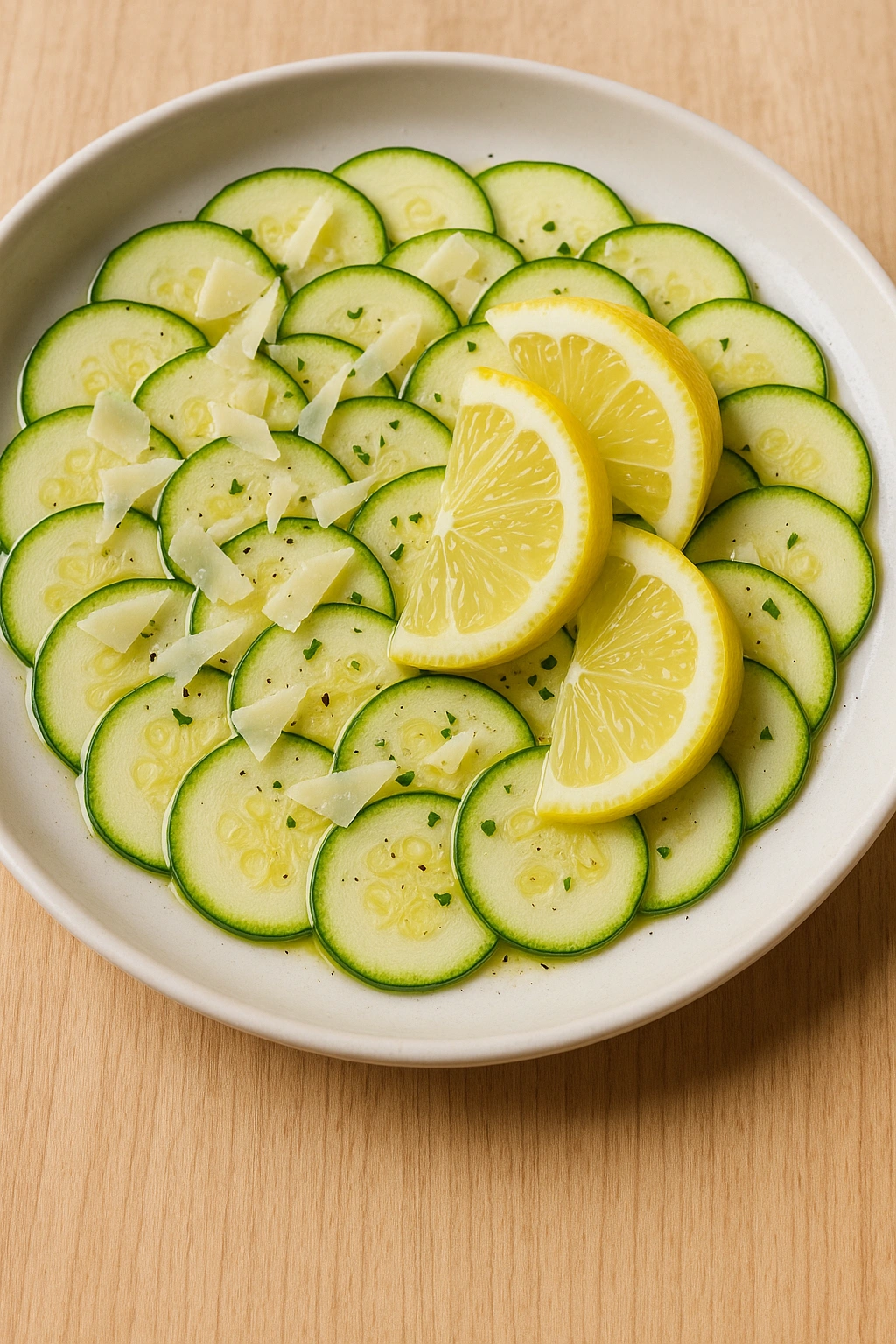
Zucchini Carpaccio Recipe with Parmesan and Lemon
Hello! Let's prepare together a dish that is pure freshness and elegance: a vegetable carpaccio that surprises with its simplicity. It's the perfect option to start a meal without feeling heavy, highlighting the natural texture of the vegetable with a vibrant citrus touch. I will guide you step by step so you can achieve that restaurant-quality result in your own home.
Preparation time
Organization is key in the kitchen, and although this dish is quick, it requires a brief rest to settle the flavors.
- Preparation: 15 minutes
- Cooking: 0 minutes
- Total: 25 minutes (includes resting time)
- Servings: 4 people
- Difficulty: Easy
Ingredients
The quality of the raw ingredients is vital in raw preparations; look for the freshest possible products.
- 2 medium zucchinis (firm and unblemished)
- 50 g Parmesan cheese (in block for shaving)
- 2 tablespoons freshly squeezed lime juice
- 3 tablespoons extra virgin olive oil
- Salt (preferably flake salt) and black pepper to taste
- Fresh basil leaves (Optional)
- Toasted pine nuts (Optional)
If you can't find Parmesan cheese in a block, you can substitute it with Pecorino cheese for a saltier touch or even feta cheese grated if you prefer a softer, creamier texture. If you don't have pine nuts, sliced almonds or chopped walnuts work very well, just make sure to lightly toast them in a dry pan to awaken their essential oils before using them.
Utensils we will use
You don't need sophisticated equipment, but a good cut is the difference between a common salad and a delicate carpaccio.
- Mandoline (ideal) or very sharp knife
- Cutting board
- Small bowl for the emulsion
- Spoon or small hand whisk
- Wide and flat plate for presentation
- Vegetable peeler (for cheese shavings)
Preparation
Follow this process calmly; the delicacy in handling the main ingredient is what defines the success of this dish vegetarian.
- Washing and cutting the zucchini. Wash the zucchini very well under the tap and dry them completely with kitchen paper or a clean cloth. With the help of a mandoline, cut very thin, almost translucent slices (approximately 1-2 mm thick). If using a knife, take your time to make them as uniform as possible.
- Preparation of the base dressing. In a small bowl, pour the juice of lemon, the extra virgin olive oil, a generous pinch of freshly ground black pepper, and a little salt. Beat vigorously with a spoon or fork until the mixture emulsifies slightly and looks a little thicker.
- Plating. Place the slices of zucchini on the large plate. Start from the outer edge towards the center, slightly overlapping each slice over the previous one, creating a circular or scale pattern that covers the entire surface without leaving large gaps.
- Application of the dressing. With a spoon, spread the dressing you prepared in step 2 over all the zucchini slices. Make sure each piece receives a little of this mixture citrusy and bright.
- Addition of textures and finishing. With the vegetable peeler, shave thin flakes from the block of Parmesan and distribute them randomly but evenly over the carpaccio. If you are going to use pine nuts or basil, sprinkle them over now to add color and crunch.
- Strategic rest. Take the dish to the fridge for about 10 minutes. This step is crucial for the lemon acid to lightly «cook» the vegetable fiber and for the flavors to integrate.
To finish and serve
Just before serving, taste a small corner to check the salt level; if needed, add a few flakes of sea salt on top to enhance the flavor. This dish should be served very cold to maintain its character as a starter refreshing dish. Accompany it with some crispy bread toasts or breadsticks. If you are putting together a complete snack table, this dish combines wonderfully with a homemade hummus creamy dish, creating a delicious contrast of textures.
Nutritional Information
These values are estimates per serving, ideal for those looking for something light and nutritious.
- Calories: 120 kcal
- Proteins: 5 g
- Fats: 9 g
- Carbohydrates: 6 g
- Fiber: 2 g
Note: Daily percentage values are based on a 2000-calorie diet. Sodium content will depend on the amount of salt and cheese added.
5 keys to make it perfect
As an expert, I've noticed that small details transform this simple dish into a gourmet experience. Here are my secrets:
1. The thickness of the cut is everything.
Un carpaccio should melt in your mouth. If the slices are too thick, it will feel like a coarse salad. The mandoline is your best friend here, but use it with a guard to avoid accidents. If you like this thin-slice technique, you'll also love trying the beet carpaccio, which has a fascinating earthy texture.
2. Temperature matters.
This dish suffers if served at room temperature on a hot day. Cold keeps the zucchini crisp. Keep the plates in the refrigerator a few minutes before assembling if your kitchen is very hot.
3. Olive oil quality.
Being a raw preparation, we cannot hide a poor-quality oil. Use your best extra virgin; that fruity or spicy flavor will elevate the dish. It's the same principle we apply when making a good salmon tiradito, where the ingredient shines on its own.
4. Don't drown the product.
Lemon is delicious, but in excess it kills the subtle flavor of the zucchini. We seek balance, not a lemonade. Add the acid little by little.
5. The crunchy touch.
Although optional, the nuts (pine nuts, walnuts, or almonds) provide that necessary contrast against the softness of the vegetable and cheese. It's a trick that also works wonders in beet salad.
When is it ideal to enjoy it?
This dish screams «summer» and outdoor gatherings. It's the appetizer par excellence when you want to impress without spending hours in front of the fire. Its freshness cleanses the palate, making it ideal to serve before heavier dishes or roasted meats.
It's also a fantastic option for festive celebrations like Christmas, where we tend to overeat. Serving something light and Italian at the start helps balance the menu. Imagine a table with this carpaccio and elegant salmon roses; you'll have a display of sophisticated colors and flavors that will delight everyone.
Comparison table
Sometimes we look for alternatives or get confused with similar dishes. Here's how our recipe compares to other popular thin-slice options.
| Recipe | Key ingredients | Difference/advantage |
|---|---|---|
| Zucchini Carpaccio (This recipe) | Zucchini, parmesan, lemon | Vegetarian option, light and very economical. |
| Tuna Carpaccio | Fresh tuna, soy, sesame | Provides more protein and an intense marine flavor profile. |
| Classic Beef Carpaccio | Beef sirloin, capers, mustard | Traditional meaty flavor, requires very high-quality meat. |
| Tuna Tataki | Seared tuna, ginger, ponzu | The edge is cooked (seared), it is not totally raw. |
| Zucchini Ceviche | Diced zucchini, tomato, cilantro | Chunky texture and a more acidic/Mexican flavor than Italian. |
| Caprese Salad | Tomato, mozzarella, basil | Much thicker slices and a focus on soft cheese. |
| Fish Tiradito | White fish, chili, lime | Similar cut but with spicy and Peruvian sauces. |
Frequently asked questions (FAQ)
Share your experience
Cooking is about experimenting and sharing. I'd love to know if you dared to try this version or if you gave it your own personal twist with some other ingredient. Leave your comment and share your own little tricks so we can all learn!
Culinary glossary
To help you move like a fish in water in the kitchen, here are some terms we used today:
- Mandoline: Kitchen utensil with an integrated sharp blade used for slicing fruits and vegetables into uniform, adjustable-thickness slices.
- Emulsion: Mixture of two liquids that normally do not easily combine, such as oil and lemon, achieving a creamier texture when beaten.
- Shavings: Thin and flat pieces of a food, in this case cheese, which are generally cut by scraping the surface with a peeler or knife.
- Carpaccio: Preparation of raw ingredients (meat, fish or vegetables) cut very thin and seasoned, generally with oil and lemon.
- Fresh: In cooking, it refers to ingredients that have not been previously processed, frozen or cooked, maintaining their natural texture.

Very practical and tasty. I took it to a meeting and it flew off the table. what a great guide ✨.
Perfect for sharing. super easy to follow, ideal for beginners.