


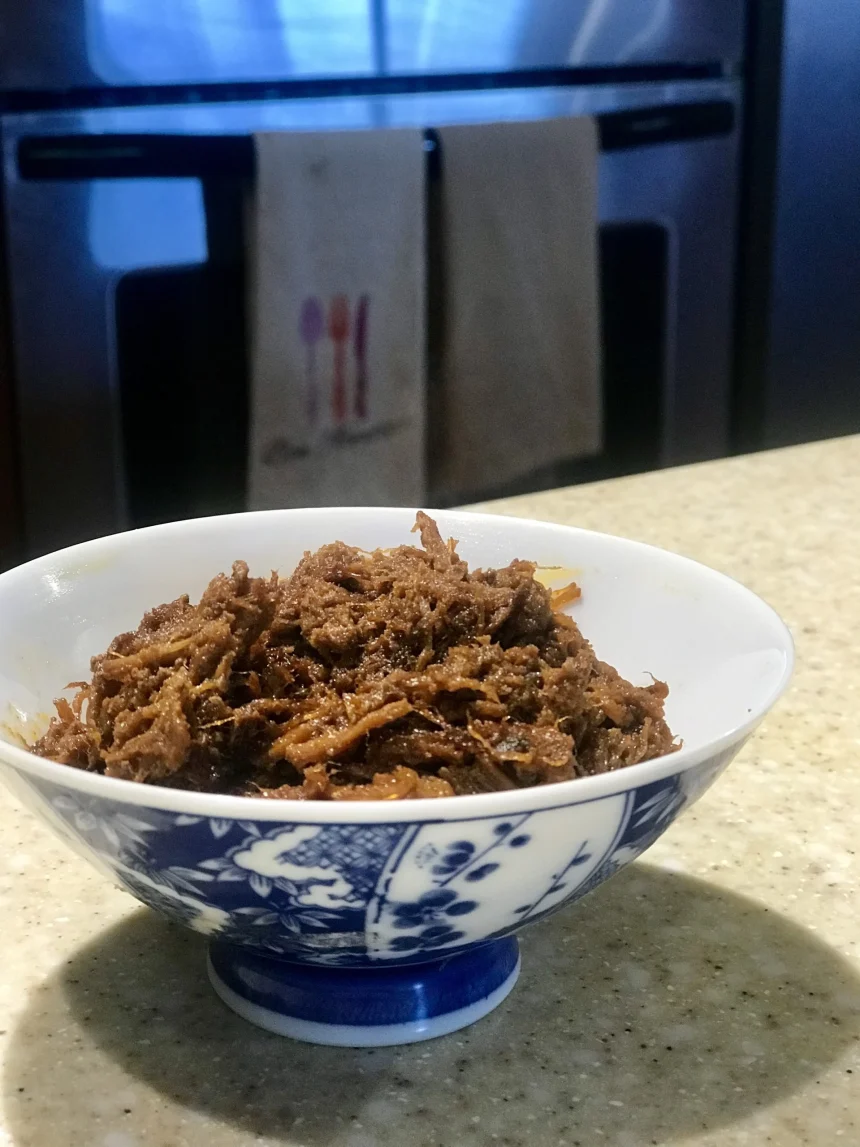
Authentic Sinaloa Chilorio Recipe: Intense Flavor and Tradition
Hello! Let's prepare together one of the most iconic stews from northern Mexico. The chilorio is a culinary marvel from Sinaloa that transforms pork pork into a melt-in-your-mouth delicacy, bathed in a sauce of dried chilies and spices that is pure magic. It's perfect to keep in the refrigerator and save your week's meals with some incredible tacos.
- Authentic Sinaloa Chilorio Recipe: Intense Flavor and Tradition
- Preparation time
- Ingredients
- Utensils we will use
- Chilorio Preparation
- Initial cooking of the meat
- Chili Preparation
- Adobo Preparation
- Shredding the meat
- Frying and seasoning
- Flavor Integration
- Final reduction
- To finish and serve
- Nutritional Information
- 5 keys to make it perfect
- When is it ideal to enjoy it?
- Comparative table of Mexican stews
- Frequently asked questions (FAQ)
- Share your experience
- Culinary glossary
Preparation time
To organize ourselves well in the kitchen, here is the time breakdown. Remember that patience is the secret ingredient for tender meat.
- Preparation: 20 minutes
- Cooking: 1 hour 40 minutes
- Total: 2 hours
- Servings: 6 to 8 people
- Difficulty: Intermediate
Ingredients
The key to a good stew lies in the quality of its components. We are going to use ingredients that are easy to find in the market.
For the meat
- 1 kg pork leg or loin (with a little fat for flavor)
- 3 cups natural orange juice (freshly squeezed is better)
- 1 small white onion (cut into quarters)
- Enough water to cover the meat
- 2 tablespoons lard (or vegetable oil if you prefer)
- Salt to taste
- Freshly ground black pepper to taste
For the adobo sauce
- 3 dried ancho chilies
- 3 dried pasilla chilies
- 3 dried guajillo chilies
- 3 medium garlic cloves
- 1/2 teaspoon dried oregano
- 1/2 teaspoon ground cumin
- 2 bay leaves
- 1 teaspoon sugar (helps balance acidity)
- 2 tablespoons white vinegar
If you can't find any of the specific dried chilies, you can substitute pasilla for more ancho chili or even mulato. The important thing is to maintain the balance between flavor and color. If you don't have lard, vegetable oil works, although lard provides that characteristic rustic flavor found in good pork carnitas traditional.
Utensils we will use
You don't need sophisticated equipment; what you have at home is enough to achieve a restaurant-quality result.
- Large pot with lid (for cooking the meat)
- Large frying pan or casserole dish (for frying and stewing)
- Blender
- Fine mesh strainer
- Two forks (for shredding)
- Sharp knife and cutting board
- Ladle and wooden spatula
- Small bowl (for soaking the chilies)
Chilorio Preparation
Follow these steps carefully. We're going to cook slowly so that the flavors of the spices penetrate well into the meat.
Initial cooking of the meat
Place the pork cut into large pieces (about 5 or 6 cm) in the large pot. Add the quartered onion, bay leaves, salt, and pepper. Cover everything with water and bring to high heat until it boils. Once it comes to a boil, reduce the heat to low, cover the pot, and let it cook for approximately 60 minutes or until you feel the meat is very tender when pricked with a fork. If the water evaporates, add a little more.
Chili Preparation
While the meat cooks, clean the chilies. Carefully open them (you can use kitchen shears) and remove the seeds and veins to control the spicy. In a hot pan, lightly roast them for a few seconds on each side without burning them, as they would make the sauce bitter. Then, place them in the bowl with very hot water and let them soak for 15 minutes until soft.
Adobo Preparation
Drain the chilies (reserve a little of the soaking water if you like an intense flavor, or use clean water). Put them in the blender along with the garlic cloves, oregano, cumin, vinegar, orange juice, and sugar. Process everything until you get a smooth and homogeneous paste. This base mixture is similar to what we would use for a guajillo chile sauce, but enriched with orange.
Shredding the meat
When the meat is ready, remove it from the broth (don't discard the broth yet!). Let it cool down a bit so you don't burn yourself. With the help of two forks, shred the meat. It doesn't have to be very finely shredded like for tinga; we are looking for medium-sized pieces that you can feel when biting.
Frying and seasoning
In the large skillet or casserole, heat the lard over medium-high heat. Add the shredded meat and fry it, stirring constantly. We are looking for it to brown slightly, gaining texture and flavor, similar to the searing process. This step is crucial for the final texture.
Flavor Integration
Pour the blender sauce over the browned meat. If your blender doesn't grind very finely, pass the sauce through a strainer directly into the casserole. Add approximately half a cup of the reserved meat cooking broth. Mix well so that every fiber of meat is impregnated with the marinade.
Final reduction
Lower the heat and cook everything together uncovered. Let the liquid evaporate little by little and the fat begin to separate slightly from the sauce; this indicates that the stew is ready. It should take about 20 to 25 minutes. The consistency should not be soupy, but moist and thick.
To finish and serve
Just before turning off the heat, taste the stew and adjust salt if necessary. Remove any bay leaves if there are any left. Serve the chilorio very hot. Traditionally, it is accompanied with freshly made flour tortillas, but it is also spectacular with corn tortillas. You can place a little pickled red onion or refried beans in the center of the table so that everyone can assemble their own taco to their liking.
Nutritional Information
Here is an estimate of the nutritional values for a generous portion of this dish.
- Calories: 258 kcal
- Proteins: 17 g
- Fats: 14 g
- Carbohydrates: 12 g
- Fiber: 3 g
Note: Values are approximate and may vary depending on the type of meat and the amount of fat used in the preparation.
5 keys to make it perfect
Sometimes the small details make the big difference between a good dish and a memorable one. Here are my secrets.
1. The doneness of the meat: Don't rush when cooking the meat. It should be so tender that it almost falls apart on its own before shredding it. If you take it out sooner, it will be fibrous and dry.
2. The magic of lard: Although you can use oil, pork lard provides a creaminess and deep flavor that defines the traditional food of the north. If you decide to use oil, look for a neutral one.
3. Toast, don't burn: When roasting the chilies, it's only a few seconds. If they turn black, the flavor becomes bitter and will ruin the whole stew. If in doubt, it's better to just soak them.
4. The orange juice: Use natural juice. Boxed juice is usually very sweet and artificially acidic. The natural acidity of the orange helps to tenderize the meat fibers and gives a special shine to the sauce.
5. Reduction is vital: Don't serve watery chilorio. You must be patient in the last step so that the liquid reduces and the flavors concentrate, creating that delicious layer around the meat.
When is it ideal to enjoy it?
Chilorio is incredibly versatile. In Sinaloa, it's very common for breakfast, mixed with egg (machaca with chilorio), but due to its potency of flavor, it's stellar as a main meal. It's ideal for weekend family gatherings because it yields a lot and you can have it ready a day before; in fact, it tastes even better the next day because the flavors settle! It's also perfect to take as «itacate» or lunch to work, as it reheats very well without losing texture. If you have leftovers, you can use it to fill some burritos delicious for dinner.
Comparative table of Mexican stews
To better locate where chilorio stands in the vast universe of Mexican cuisine, here we compare it with other great favorites.
| Recipe | Key ingredients | Difference/advantage |
|---|---|---|
| Chilorio (Main) | Pork, dried chilies, orange juice | Shredded meat, fried and stewed, intense and spicy flavor. |
| Cochinita Pibil | Achiote, sour orange, pork | More acidic and earthy flavor, steamed or oven-cooked (pib). |
| Carnitas | Pork, lard, orange | The meat is confited in its own fat, crispy texture on the outside. |
| Wedding Roast | Pork, chocolate, dried chilies | Sweeter and thicker sauce, whole pieces of meat, not shredded. |
| Tinga Poblana | Chicken or pork, tomato, chipotle | Red tomato base, smoky flavor from the chipotle, more soupy. |
| Machaca | Dried beef, egg, vegetables | Uses salted and dehydrated beef, more fibrous texture. |
| Pork Adobo | Loin or leg, chilies, vinegar | Generally whole pieces or large chunks like in this adobo loin. |
Frequently asked questions (FAQ)
Share your experience
Cooking is for experimenting and sharing. I would love to know how this recipe turned out for you, if you gave it your personal touch or if you dared to try it with freshly made flour tortillas. Leave your comment and share your own findings!
Culinary glossary
- Shred: The action of separating cooked meat into fine strands or fibers using hands or forks.
- Sauté until translucent: Fry the onion or garlic over low heat until they become transparent and soft, without browning completely.
- Reduction: Process of cooking a sauce or liquid over low heat so that the water evaporates, thickening the mixture and concentrating the flavors.
- Sear: Cook the meat quickly over high heat to create a golden exterior crust that retains the internal juices.
- Marinade: Sauce or mixture of chilies, spices, vinegar, and other condiments used to marinate, preserve, or stew meats, giving them a characteristic reddish color.




Thanks for sharing your family's recipe, I'm going to prepare it! Have a good day!
It turned out better than I expected. It saved me time and was delicious. I added toasted bread and it elevated the flavor.
Super recipe, this ‘Chilorio’. I added a touch of lemon and it was luxurious.
This ‘Chilorio’ turned out better than I expected. .