
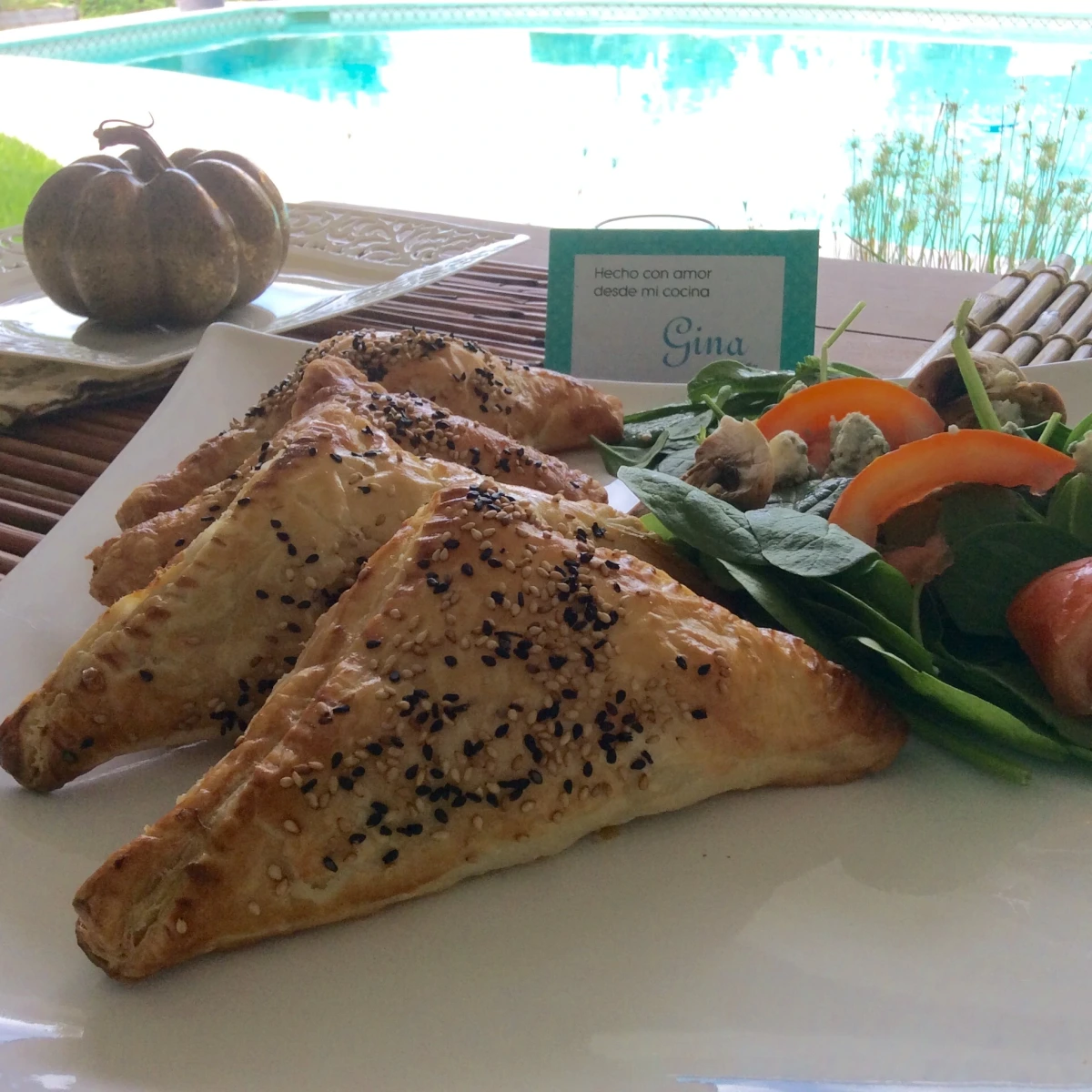
Recipe for Golden and Crispy Tuna Empanadas
Hello! We are going to prepare some classic and tasty empanadas, ideal for sharing or making a meal with basic pantry ingredients. This technique of wrapping food in dough has roots in Spanish culinary tradition since the 16th century. Today in 2026, it remains a practical, economical, and extremely comforting option for any home.
The success of this preparation lies in the moisture of the filling and in achieving a firm yet tender outer crust. When we combine fresh vegetables with canned fish, we create a very pleasant contrast of textures on the palate. The main key is to control the liquids so that the base does not get too wet during cooking.
Working with homemade doughs requires patience and observation. Flour needs time to absorb water, and gluten must relax to be able to stretch without shrinking. Therefore, respecting resting times is as important as choosing good ingredients. Furthermore, preparing the filling in advance allows the flavors to settle and fully integrate.
The sofrito is the heart of this recipe. Cooking the onion slowly until it is transparent releases its natural sugars, balancing the acidity of the tomato and the intensity of the fish. This fundamental step ensures a balanced final result, avoiding raw flavors or overly firm textures inside the empanada.
These small portions of flavor are excellent as appetizer, main course or even to take on a trip. If you are interested in other similar preparations, you can explore different versions of tuna empanadas that vary by region. Now, we will focus on mastering the basic technique so you can replicate it without complications in your own kitchen.
Preparation time
Below, we break down the times needed to organize your workspace and cook without rushing.
- Preparation: 30 minutes
- Cooking: 20 minutes
- Total: 50 minutes
- Servings: 8 empanadas
- Difficulty: Intermediate
Understanding how time is distributed helps you maintain order in the kitchen. The 30 minutes of preparation include chopping vegetables, assembling the dough, and resting time. Resting is not a step you can omit. During those minutes, the flour proteins hydrate and form an elastic network. If you try to stretch the dough immediately after mixing it, you will notice that it offers resistance and returns to its original shape.
While the dough rests, it is the ideal time to cook the sofrito. This overlapping of tasks optimizes the total time. The filling should be cooked over medium heat so that the water from the vegetables evaporates correctly. A filling that is too liquid is the main enemy of a crispy crust. By reducing the juices in the pan, you concentrate the flavor and protect the integrity of the covering.
The 20 minutes of baking in the oven require your visual attention. Each oven distributes heat differently. The sign of the correct point is a uniform golden color on the surface. The beaten egg that we will apply before baking acts as a natural varnish, promoting that external caramelization that makes the preparation look appetizing and offers a slight resistance when biting.
If you decide to make the empanadas in format fried, the cooking time will be much shorter, just a few minutes per side in hot oil. However, the version oven that we will detail here is excellent for keeping the kitchen clean and achieving a lighter texture. The time invested in sealing the edges well will save you the frustration of seeing the filling spilled on the tray.
Organization, known as mise en place, makes the difference between a stressful and a smooth experience. Measuring all ingredients before turning on the heat allows you to concentrate on textures and aromas. This recipe is designed so that, with practice, time management becomes completely intuitive.
Ingredients
For the dough
- All-purpose wheat flour: 500 g
- Warm water: 250 ml
- Olive oil: 60 ml
- Sal: 1 cucharadita
- Egg: 1 (for brushing)
For the filling
- Good quality tuna in olive oil (drained): 2 cans of 160 g each
- Medium onions: 2
- Ripe tomatoes: 2
- Red bell pepper: 1
- Hard-boiled eggs: 2
- Aceite de oliva: 2 cucharadas
- Ajo: 2 dientes
- Capers: 1 tablespoon (Optional)
- Salt and black pepper: To taste
In case you don't have all-purpose wheat flour, you can replace it with bread flour, although the dough will require a few extra minutes of kneading and resting to relax the developed gluten. If you don't have olive oil for the dough, sunflower or corn oil are valid substitutes that will provide a similar texture, albeit with a more neutral flavor profile. For the filling, if you prefer to avoid canned tuna, you can use leftover cooked and shredded white fish, making sure to remove any small bones.
All-purpose flour is ideal because it has the perfect balance of proteins to form a firm but not excessively hard structure. Warm water accelerates the hydration of starches and facilitates the integration of oil. It is important to measure liquids precisely. A dough that is too wet will be sticky and difficult to handle, while a very dry one will crack when folded.
For the filling, using fresh vegetables provides natural moisture and sweetness. Onion and garlic are the non-negotiable aromatic base. Red bell pepper adds a slight sweet touch and vibrant color. Ripe tomatoes are preferable because they have a higher pulp content and less astringent acidity than green tomatoes. If you notice that the tomatoes have too much water, you can remove the seeds before cutting them.
Tuna in olive oil usually has a juicier texture than water-packed versions. However, it is vital to drain it very well before adding it to the pan. Excess oil from the can could separate the mixture and soften the dough from the inside. Hard-boiled eggs add creaminess and structure to the filling, helping to absorb any residual moisture from the vegetables.
Capers, although optional, add a peak of saline acidity that cuts through the richness of the fish and oil. If you don't like them, you can omit them or substitute them with some finely chopped green olives. The raw egg reserved for the end has a purely aesthetic and protective function; it creates a barrier on the surface of the dough that browns beautifully under direct heat.
Utensils we will use
- Large bowl (for mixing the dough)
- Sartén amplia de fondo grueso
- Sharp knife and cutting board
- Wooden spoon or heat-resistant spatula
- Fine strainer (for draining the fish)
- Rolling pin (or a clean, smooth glass bottle)
- Circular mold or cookie cutter about 15 cm (or an inverted small bowl or plate)
- Baking sheet
- Kitchen brush (or a clean, folded piece of kitchen paper)
- Fork (to seal the edges)
Having the right utensils greatly facilitates the process, but in home cooking there is always room for adaptation. A large bowl is necessary to mix the flour and liquids without spills. If the bowl is made of glass or ceramic, it will better maintain the dough's temperature during resting. Avoid overly narrow containers that hinder the movement of your hands when integrating the ingredients.
A thick-bottomed pan is your best ally for the filling. This type of pan distributes heat evenly, preventing hot spots that could burn the garlic or onion unevenly. A spatula or wooden spoon will allow you to gently scrape the bottom of the pan, integrating the caramelized flavors of the vegetables back into the main mixture.
The fine strainer is crucial. Draining cans only with the lid often leaves too much liquid trapped between the pieces of fish. Gently pressing the meat against the strainer mesh ensures you extract all excess oil or water. To roll out the dough, if you don't have a wooden or silicone rolling pin, an empty, clean, label-free wine bottle works perfectly due to its weight and smooth surface.
The cookie cutter makes it easy to obtain uniform circles, which helps all portions cook at the same time. If you don't have one of the indicated size, look in your pantry for a cereal bowl or a dessert plate. Place it face down on the rolled-out dough and follow the outline with the tip of a knife. It's a foolproof homemade method. Similarly, if you don't have a silicone brush for the beaten egg, you can improvise one by rolling up a bit of clean absorbent paper and dipping the tip.
The fork is the classic tool for sealing the edges if you don't feel comfortable making a manual crimp. The tines of the fork not only join the two layers of dough by pressure but also create a traditional aesthetic pattern. Make sure to press firmly but without piercing the dough all the way to the tray.
How to Make Tuna Empanadas
1. Filling preparation
- Wash and dry: Clean the tomato and red bell pepper under the tap. Dry them well with kitchen paper to avoid introducing extra water to the cutting board.
- Cut vegetables: Dice the onions into small cubes (approx. 5 mm). Remove the seeds from the bell pepper and cut it to the same size. Finely chop the tomatoes. Peel the garlic and chop it as small as you can.
- Sweat the base: In your large skillet, heat the 2 tablespoons of oil over medium heat. Add the onion and garlic. Cook, stirring occasionally, until the onion is transparent and tender, which will take about 5 minutes. If you notice it browning too quickly, lower the heat.
- Integrate the bell pepper: Add the red bell pepper cubes to the skillet. Continue cooking for 3 more minutes so they begin to soften.
- Reduce the tomato: Incorporate the chopped tomato. Continue cooking until the tomato breaks down and the liquids in the skillet have reduced considerably, forming a thick base.
- Add the proteins: Flake the previously drained tuna and add it to the skillet along with the chopped hard-boiled eggs and capers if using them. Mix everything gently.
- Season and cool: Taste the mixture and adjust with salt and black pepper. Remove the skillet from the heat. Transfer the filling to a wide, shallow container to cool completely at room temperature.
2. Batter preparation
- Mix dry ingredients: In the large bowl, place the 500 g of flour and the teaspoon of salt. Stir a little to distribute the salt.
- Add liquids: Form a well in the center of the flour. Pour in the warm water and the 60 ml of oil.
- Integrate: With a spoon or by hand, begin to mix from the center outwards, incorporating the flour little by little until an irregular dough forms.
- Knead: Transfer the dough to a clean surface. Knead with the heel of your hand for about 5 minutes. The goal is to obtain a smooth, soft texture that doesn't stick to your fingers. If it's too sticky, sprinkle a minimal pinch of flour.
- Resting: Form a ball with the dough, return it to the bowl, and cover it with a clean cloth or an inverted plate. Let it rest for 30 minutes.
3. Assembly
- Roll out the dough: Once rested, cut the dough into two halves to make it easier to work with. Sprinkle a minimal amount of flour on the table. Use a rolling pin to stretch it until it reaches a thickness of about 3 millimeters.
- Cut discs: With your cookie cutter or inverted bowl, cut circles approximately 15 centimeters in diameter. Remove the trimmings, gather them, knead them briefly, and let them rest for a few minutes before rolling them out again.
- Filling: Take a disk of dough in the palm of your hand or leave it on the table. Place a generous spoonful of the cold filling in the center. Do not overdo the amount to be able to close the empanada comfortably; leave at least 1 centimeter of free edge.
- Crimp edges: Fold the dough in half covering the filling, forming a half-moon. Press the edges firmly with your fingers to remove trapped air. Then, use the tines of a fork to mark and definitively seal the outline.
4. Baking
- Preheat and prepare: Turn on your oven to 200°C. Place parchment paper or lightly grease a baking sheet.
- Brush: Arrange the empanadas on the tray with some separation between them. Beat the remaining egg and, with the brush, gently paint the surface of each piece.
- Bake: Place the tray in the middle part of the oven. Cook for about 20 minutes. The sign of perfect doneness is when the surface is uniformly golden and the dough feels firm and dry to the touch.
To finish and serve
Once you remove them from the heat, let them rest on the tray for a couple of minutes before moving them, as freshly baked dough is fragile. Serve them hot or at room temperature. Accompany them with a fresh green leaf salad, a little homemade aioli, or a light tomato sauce to add freshness and contrast with the crispy texture of the crust.
Nutritional Information
- Calories: 320 kcal
- Protein: 14 g
- Fats: 16 g
- Carbohydrates: 30 g
- Fiber: 2.5 g
The values presented are approximate estimates per individual serving and may vary depending on the specific brand of ingredients used or the final size when rolling and cutting the dough.
5 keys to make them perfect
Absolute control of the filling temperature
The most common mistake when making stuffed preparations is using a hot mixture. If you place vegetables fresh from the pan onto raw dough, the heat will melt the fat in the dough and start to cook it prematurely. This results in a soft, sticky base prone to breaking. Spreading the mixture on a flat dish accelerates the cooling process safely and efficiently.
The correct thickness of the outer crust
Rolling the dough to 3 millimeters is the ideal balance. If you leave it too thick, the proportion between bread and filling will be uneven, resulting in a dry and heavy bite. Conversely, if you make it too thin, the natural moisture from the vegetables will perforate the base during the 20 minutes of baking. Take the time to roll the dough with constant pressure to achieve a uniform thickness throughout the circle.
Moisture management in the pan
Tomatoes and onions release a lot of water when heated. You must be patient and allow that water to evaporate almost completely. A good visual sign is when you pass the spatula through the center of the pan and the groove takes a few seconds to refill with liquid. A compact interior is much easier to portion and ensures that the crust remains firm.
Avoid air pockets inside
When folding the disc to form the half-moon, do it from the center outwards. Gently push with your fingers to expel any air trapped around the mixture before sealing the edges. Hot air expands violently in the oven; if trapped, the empanada can puff up like a balloon and burst at the seam, spilling juices onto the baking sheet.
The secret to a shiny and even golden brown
Beaten egg is fundamental for aesthetics and texture. To achieve a professional and very crispy finish, you can apply a double brushing technique. Paint the surface once, let it dry for five minutes while the oven finishes heating, and paint again just before baking. This method creates a thicker protective crust that resists moisture and provides spectacular color.
When is it ideal to enjoy it?
This is one of those versatile preparations that adapt to multiple contexts. Due to their individual format, they are exceptionally convenient for informal family gatherings, where each person can serve themselves without the need for cutlery. They are a lifesaver for summer days when picnics or outdoor excursions are planned, as their closed structure protects the food and facilitates its transport in any airtight container.
Traditionally, they are the undisputed protagonists during periods of vigil or Holy Week, a time when red meat consumption decreases and fish takes the main place at the table. However, limiting them to just one time of year would be a mistake. They serve perfectly as a quick lunch during the workday if you prepare them in advance and refrigerate them; even cold, they maintain an excellent flavor and pleasant texture.
As an appetizer for a more elaborate dinner, they fulfill the function of whetting the appetite without being heavy, especially if made in a slightly smaller format. When comparing them with other recipes from the region, such as the famous Argentine empanadas which usually contain beef and cumin, these offer a much milder and more Mediterranean profile, relying on the freshness of the bell pepper and the subtlety of olive oil.
Finally, cooking these types of dishes is an excellent activity to involve other household members. The process of stretching, cutting discs, and sealing edges is repetitive and relaxing, turning kitchen time into a moment of connection and conversation. Their versatility makes them a fundamental culinary tool for any enthusiast of good homemade food.
Share your experience
Cooking is for experimenting and sharing. We would love to know how you fared in preparing this classic recipe. Did you achieve that perfect golden brown in the oven? Did you try adding any extra ingredients to the filling to give it your personal touch? Leave your comment and share your own tips with the community, every home has a secret that enriches everyone's experience!
Culinary glossary
Knead: It is the action of working a mixture of flour and liquid with the hands on a flat surface. This repetitive movement of stretching and folding helps develop gluten, which gives elasticity and structure to the preparation.
Sudar: A technique that consists of cooking vegetables, such as onion or garlic, over medium or low heat with a little fat. The goal is for them to release their natural water and soften without turning dark brown or burnt.
Repulgue: It is the name given to the decorative fold or seal made on the edge of filled doughs to prevent the interior from escaping during cooking. It can be done by pinching the dough with your fingers or pressing with a fork.
Translucent point: A visual cue indicating that the onion is well sweated. The vegetable loses its raw opaque white color and becomes slightly glassy and soft to the touch of the spatula.
Brown: To expose a food to direct or indirect heat until its surface acquires a toasted tone. This not only improves the visual appearance but also develops more complex and profound flavors thanks to caramelization.

What a delight! . the recipe is very well explained. thanks for sharing.
We loved the result. I took it to a meeting and it flew off the table.
Impeccable texture and flavor this ‘Tuna Empanadas’. it saved me time and was delicious. it's really worth it.
I prepared it exactly as is. the recipe is very well explained. we accompanied it with chipotle sauce and it was a hit ❤️.