

Roasted Eggplant Recipe with Labneh and Za’atar
Hello! We are going to prepare a dish that combines the smoky softness of the vegetable with the tangy creaminess of concentrated yogurt. It's a Mediterranean cuisine recipe ideal for those looking for fresh, healthy, and flavorful dishes without complicating life in the kitchen.
Preparation time
Getting organized is key for this recipe to shine. Keep in mind that labneh requires patience, as the magic happens while it rests in the refrigerator.
- Preparation: 15 minutes
- Cooking: 30 minutes
- Resting (Draining): 12 to 24 hours
- Total: 12 hours and 45 minutes (approximately)
- Servings: 4 people
- Difficulty: Easy
Ingredients
To achieve that authentic flavor that transports us to the Mediterranean, the quality of the ingredients is fundamental. Here's what you need, without complications.
For the Homemade Labneh
- 900g (approx. 4 cups) of whole plain yogurt or Greek yogurt
- 1/2 teaspoon of fine salt
- 1 clove of garlic (Optional)
For the Eggplants and assembly
- 2 firm medium eggplants
- 4 tablespoons extra virgin olive oil
- 2 tablespoons of Za’atar spice blend
- Salt to taste
- Leaves of fresh mint or parsley (for garnish)
- Pita bread or crackers (for serving)
If you don't have Greek yogurt, you can use regular natural yogurt, but keep in mind that it will release more whey and you will get a little less final quantity. If you can't find the Za'atar mix already prepared, you can substitute it by mixing dried thyme, toasted sesame, sumac, and dried oregano.
Utensils we will use
You don't need professional equipment, but you do need some basic tools to facilitate the draining and roasting process.
- Large bowl or deep bowl
- Large colander or sieve
- Cheesecloth, clean cotton cloth, or large coffee filters
- Sharp knife and cutting board
- Baking sheet
- Baking paper or non-stick sheet
- Mixing spoon
- Kitchen brush (optional, for the oil)
Preparation
We are going to divide the process into two main stages: the creation of the yogurt cheese and the roasting of the vegetables. Follow the step-by-step for a spectacular result.
Preparing the Labneh base
Initial mix. In the large bowl, pour all the yogurt. Add half a teaspoon of salt. If you decide to use garlic to give it a spicy and aromatic touch, peel it, crush it or mash it very finely (you can use a garlic press) and add it to the yogurt. Stir well with the spoon until the salt and garlic are completely integrated.
- Prepare the drainage system. Place the large colander over a deep bowl, making sure there is enough space underneath for the liquid (whey) to drain without touching the colander. Line the inside of the colander with cheesecloth, a clean cotton cloth, or several layers of coffee filters.
- Start filtering. Pour the seasoned yogurt mixture onto the cloth in the colander. If using a large cloth, fold the edges over the yogurt to cover and protect it.
- Resting time. Place the setup in the refrigerator. Let the whey separate from the solids for a minimum of 12 hours. If you prefer a very dense texture, similar to cream cheese, leave it for up to 24 hours. The longer it sits, the firmer it will be.
Roasting the eggplants
Preheat and prepare. Turn on the oven to 200°C (medium-high heat). While it heats up, wash the eggplants thoroughly under the tap and dry them with kitchen paper.
- Cutting the vegetables. Cut the eggplants. You can make slices about 1 cm thick or cut them in half lengthwise and make diamond-shaped cuts in the pulp (without breaking the skin).
- Seasoning. Place the eggplants on the previously lined baking tray. Brush or generously spray each piece with extra virgin olive oil on both sides. Sprinkle salt to taste.
- Baking. Place the tray in the oven. Cook for about 25-30 minutes, or until the eggplants are tender when pricked with a fork and have an appetizing golden color. If they brown too quickly, lower the temperature a little.
To finish and serve
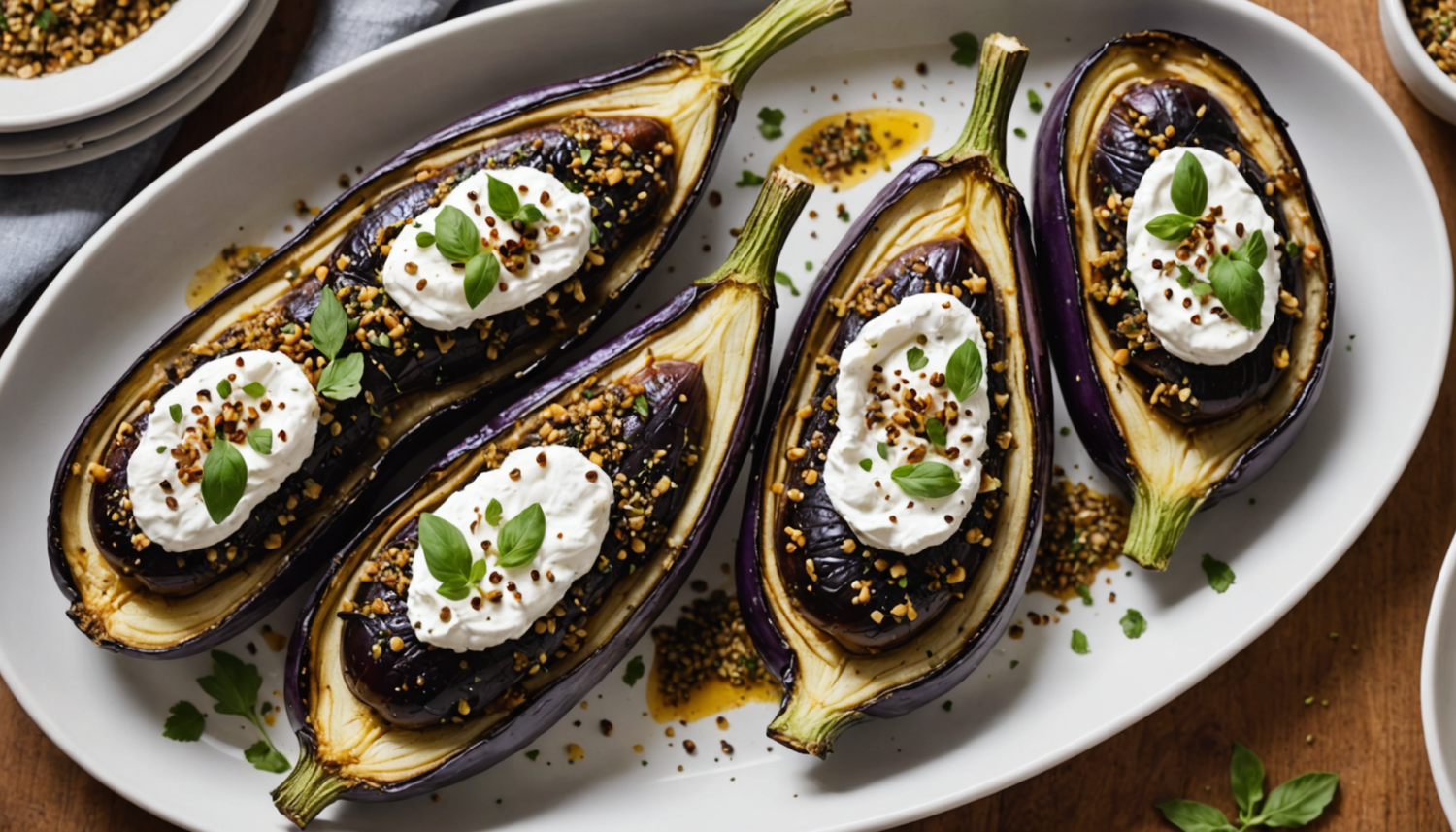
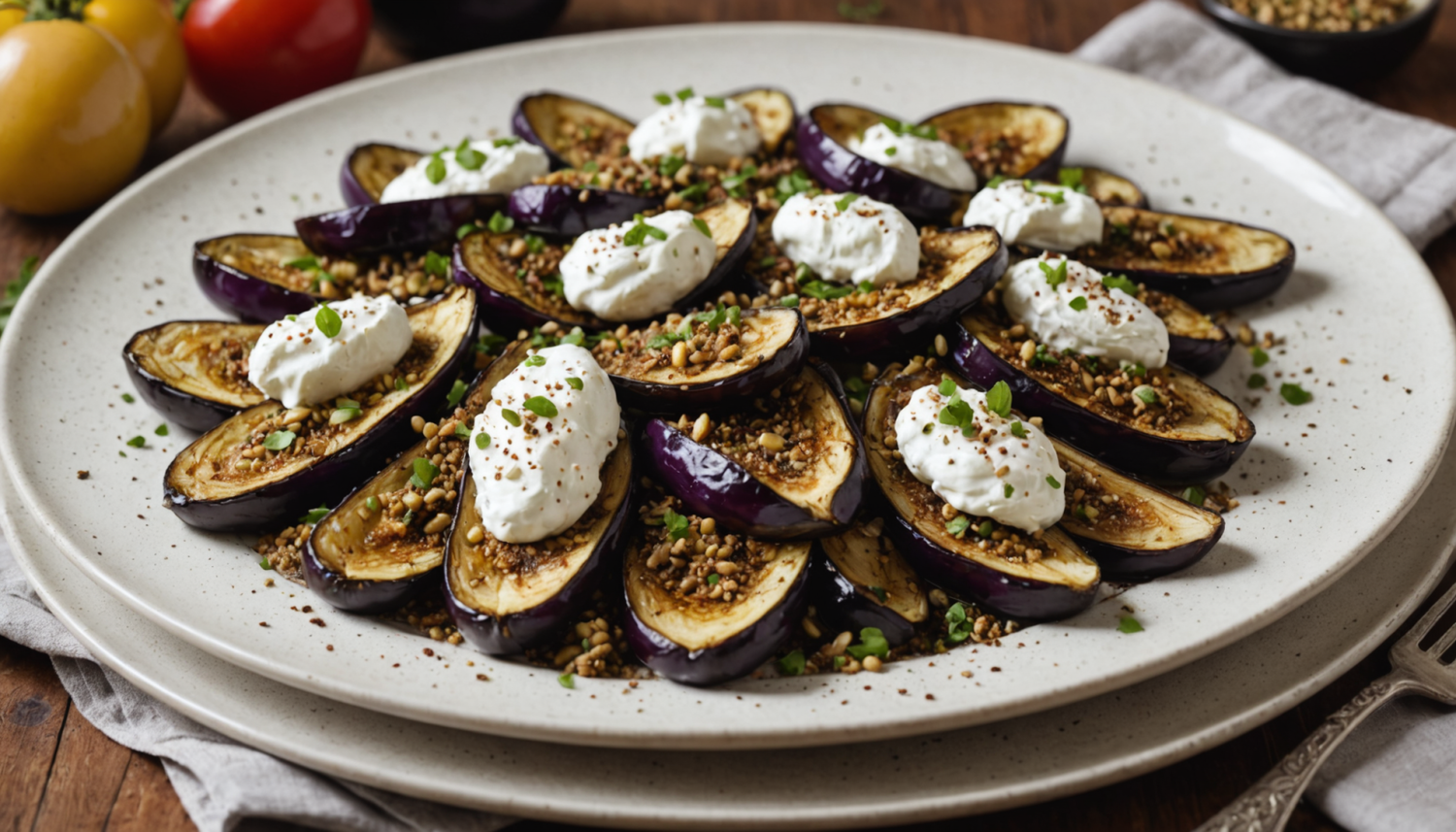
Once the eggplants are roasted and warm, remove the Labneh from the refrigerator; you will notice that it has lost a lot of volume and liquid. Spread a generous bed of Labneh on a wide platter or shallow dish. With the back of a spoon, create swirls or a hollow in the center. Place the roasted eggplants on the creamy base. Finish by sprinkling a generous amount of Za'atar on top and a final drizzle of good olive oil. If you wish to complete your menu with more ideas of this style, you can visit Flavors of my Kitchen for inspiration. Serve immediately accompanied by warm bread.
Nutritional Information
This preparation is rich in probiotics thanks to the yogurt and contains healthy fats from olive oil. Here is an estimate per serving:
- Calories: 280 kcal
- Proteins: 12 g
- Fats: 18 g
- Carbohydrates: 15 g
- Fiber: 6 g
Note: Values are approximate and may vary depending on the type of yogurt used (whole or skimmed) and the amount of oil added at the end.
5 keys to make it perfect
The success of this vegetarian dish lies in the details. Here I share my secrets for making it taste like a restaurant dish.
- The quality of the yogurt: Do not use sweetened or flavored yogurts. Look for one that only has milk and lactic ferments on the label. The more fat the yogurt has, the silkier the result will be.
- The draining point: If you're in a hurry, 12 hours are enough for a spreadable dip-like texture. But if you want to make balls or for it to properly support the weight of the eggplant, 24 hours of patience is irreplaceable.
- Fresh spices: Za'atar loses its aroma over time. Try to use a freshly bought or homemade mix so that the smell of oregano and thyme floods the kitchen.
- Don't burn the eggplant: We want it to caramelize, not carbonize. If your oven is very strong, place the tray in the middle or lower part.
- Serving temperature: The contrast is delicious. Try serving the Labneh cold or fresh from the fridge and the eggplants warm, freshly made. That thermal shock elevates the experience.
When is it ideal to enjoy it?
Roasted eggplants with labneh are incredibly versatile. I usually prepare them as part of a mezze (appetizer) table when I have guests, as the labneh can be prepared the day before, which frees up a lot of stress for me. It's perfect for a light summer dinner, accompanied by a fresh salad, or as an elegant starter at a family celebration.
Additionally, if you like to plan your weekly menus or prepare special meals, this dish fits wonderfully. For example, if you are looking for options for festivities, I recommend looking at ideas for Mediterranean vegetables for special occasions, where this dish would be an absolute star. It is light, digestive, and visually beautiful as a centerpiece.
Comparison table
Sometimes we confuse Middle Eastern dips because they share base ingredients. Here I help you differentiate this dish from other similar delights so you know exactly what you are cooking.
| Recipe | Key ingredients | Difference/advantage |
|---|---|---|
| Eggplants with Labneh (This recipe) | Drained yogurt, roasted eggplant, Za'atar | Creamy-acidic contrast and whole vegetable |
| Baba Ganoush | Roasted eggplant, tahini, garlic | It's a smoky purée, all mixed, without a yogurt base |
| Classic Hummus | Chickpeas, tahini, lemon | Legume base, denser and more protein-rich |
| Tzatziki | Yogurt, cucumber, dill | It's a more liquid and refreshing sauce, not a cheese |
| Mutabal | Eggplant, tahini, yogurt | Eggplant puree mixed with yogurt (not layered) |
| Muhammara | Roasted peppers, walnuts | Sweet and spicy flavor, red color, dairy-free |
| Eggplant Dip | Eggplant, oil, spices | More rustic texture, focused only on the vegetable |
Frequently asked questions (FAQ)
Share your experience
Cooking is for experimenting and sharing. I'd love to know how this dish turned out for you. Did you give it your own personal touch with a different spice or perhaps change the way you cut the eggplants? Leave your comment and share your own little tricks! If you liked this combination of flavors, you might also be interested in exploring how to make your own version of this recipe by visiting our article on roasted eggplants with labneh and za'atar to see variations.
Culinary glossary
To help you navigate international cuisine like a pro, here I explain some terms we've used today:
- Labneh: It's basically a «yogurt cheese.» It's obtained by removing the whey from yogurt through filtering, achieving a thick and spreadable texture, very popular in the Middle East.
- Za'atar: A very aromatic spice blend typical of Arab cuisine. It usually contains hyssop (or thyme/oregano), toasted sesame seeds, sumac, and salt.
- Drain: The action of letting a liquid drain from a solid food. In this case, separating the whey from the solid part of the yogurt using a cloth or filter.
- Shock: Although we don't use it here, it's good to know: it consists of adding cold water to a boiling liquid to momentarily stop it.
- Plating: It is the art of arranging food on the plate aesthetically before serving it. In our recipe, we make a bed of labneh and place the vegetables on top.
- EVOO: Acronym for Extra Virgin Olive Oil, the highest quality category of olive oil, pure olive juice without defects.
I hope you enjoy cooking as much as I do. If you're still craving more healthy cooking, be sure to try this delicious chickpea hummus which is the ideal companion for your table.
I tried this today: ‘Roasted Eggplant with Labneh and Za’atar’. It was a total hit with my family.
Very practical and tasty, this ‘Roasted Eggplant with Labneh and Za’atar’. .
This ‘Roasted Eggplant with Labneh and Za’atar’ looks incredible. It reminded me of a version I tried on a trip.