


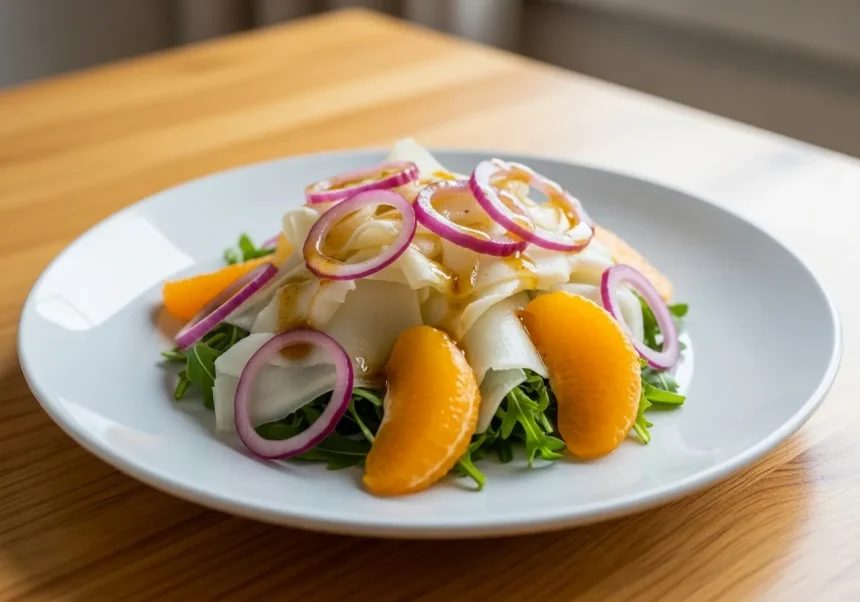
Recipe for Fennel, Orange, and Radish Salad with Ginger Vinaigrette
Hello! Let's prepare a salad that is pure vitality on a plate. This combination is my favorite when I'm looking for something to awaken the palate: the anise crunch of fennel, the juicy sweetness of orange, and the slight spiciness of radishes, all brought together by a vibrant ginger dressing. It's an ideal recipe for those seeking lightness without sacrificing flavor, perfect for cleansing the palate or starting a meal with fresh energy.
Preparation time
Getting organized in the kitchen is half the battle, and with this salad, you'll see that in a matter of minutes you'll have a restaurant-quality result if you follow the timings.
- Preparation: 10 minutes
- Cooking: 0 minutes (or 5 minutes if you toast optional almonds)
- Total: 15 minutes
- Servings: 4 people
- Difficulty: Easy
Ingredients
To achieve that perfect balance between sweet, sour, and crunchy, we need to select products that are at their peak ripeness and freshness.
For the salad base
- 1 large, fresh fennel bulb (firm to the touch)
- 2 table oranges (Navel type are excellent for their sweetness)
- 4 medium red radishes
- 2 cups fresh arugula (optional green base for volume)
- 1/4 cup sliced almonds (optional, for a toasted touch)
- A few leaves of fresh mint for garnish
For the ginger vinaigrette
- 4 tablespoons extra virgin olive oil
- 1 tablespoon freshly squeezed lemon juice
- 1 teaspoon honey (or agave syrup)
- 1/2 teaspoon fresh grated ginger (the root, not powdered)
- Sea salt to taste
- Freshly ground black pepper to taste
Note on substitutions: If you can't find fresh fennel, it's difficult to substitute because it's the soul of the dish, but you could try with a mix of endive to maintain the crisp bitterness. If the radish is too spicy for you, you can omit it or use tender turnip. If you don't have almonds, toasted sunflower or pumpkin seeds work wonderfully. For the vinaigrette, if you don't have fresh ginger, avoid dried; it's better to use a little more lemon zest.
Utensils we will use
You don't need sophisticated equipment, but you do need a couple of tools that will make the cuts thin and elegant, something key in this preparation.
- Kitchen mandoline (highly recommended for fennel and radishes)
- Sharp chef's knife (for supremeing oranges)
- Stable cutting board
- Large mixing bowl
- A small jar with a lid or a hand whisk (to emulsify the vinaigrette)
- Colander (to drain the fennel after the ice bath)
- Small frying pan (if you decide to toast the almonds)
Preparation
The secret to this salad is not just mixing ingredients, but treating them with care to highlight their natural textures. Follow these steps to get the maximum flavor.
-
Fennel preparation and thermal bath
Wash the fennel bulb well. Remove the upper green stalks (save some feathery leaves for decoration at the end) and remove the first outer layer if it looks bruised or tough. Cut the bulb in half lengthwise and remove the hard core at the base. Using a mandoline or a very sharp knife, slice the fennel as thinly as possible, almost transparent.- Immediately place the slices in a bowl with ice water and ice cubes. Let it rest for 5-10 minutes. This will make the fennel curl slightly and become super crispy.
- Immediately place the slices in a bowl with ice water and ice cubes. Let it rest for 5-10 minutes. This will make the fennel curl slightly and become super crispy.
-
Radish Slicing
Wash the radishes and remove the ends. As with the fennel, use a mandoline to get very thin slices, like paper-thin coins. If you prefer, you can also put them in ice water to enhance their texture. -
Preparation of Oranges (Supremes or Slices)
You have two options here. For a rustic presentation, peel the orange and cut it into thin crosswise slices. For a more refined presentation, make «supremes»: cut off both ends of the orange until you see the pulp. Stand the orange upright and cut the peel from top to bottom following the curve of the fruit, removing all the white pith. Then, with the knife, cut between the membranes to remove the clean segments. Do this over a bowl to collect any juice that falls. -
Toasting of nuts (Optional step)
If using almonds, place them in a dry skillet over medium heat. Move them constantly until they begin to brown and release their aroma. Remove them from the heat immediately and transfer them to a cold plate so they don't burn from residual heat. -
Preparation of the Ginger Vinaigrette
In a small jar, combine the lemon juice, the juice released by the oranges when cutting them, honey, grated ginger, salt, and pepper. Close the jar and shake vigorously until the honey dissolves. Then, add the olive oil and shake vigorously again until you get a well-combined and shiny emulsion. -
Mixing and brief marinating
Drain the fennel and radishes very well (dry them with paper towels or a lettuce spinner if necessary; water ruins the vinaigrette). Place them in the large bowl along with the oranges. Pour half of the vinaigrette over them and mix gently with clean hands. Let it rest for 5 minutes for the flavors to integrate.
To finish and serve
For the final assembly, if using arugula, make a green bed at the base of your platter or individual plates. Place the marinated mixture of fennel, orange, and radishes on top, giving it volume and height, do not flatten it. Sprinkle the toasted almonds over it and decorate with fresh mint leaves and the feathery parts of the fennel you reserved. Drizzle with the rest of the vinaigrette just before serving. Serve immediately to enjoy the contrast of temperatures and textures. Accompany it with good crusty bread or use it as a side dish for white fish.
Nutritional Information
This salad is a gift for your body, packed with antioxidants and fiber, ideal for keeping us light and nourished.
- Calories: 165 kcal
- Proteins: 4 g
- Fats: 8 g
- Carbohydrates: 22 g
- Fiber: 6 g
Note: Values are approximate estimates per serving based on standard ingredients and may vary depending on the size of the fruits or the exact amount of oil used.
5 keys to make it perfect
After preparing this recipe hundreds of times, I've noticed that there are small details that make the difference between a good salad and a memorable one.
1. Cold is your friend: Don't skip the ice water step for the fennel. Fennel at room temperature can feel fibrous or leathery. The thermal shock breaks that resistance and makes it incredibly crunchy and pleasant to bite into. It's the technique chefs use to revive vegetables.
2. The cut defines the experience: If you cut the fennel into thick pieces, its anise flavor will be too dominant and the texture will be difficult to chew. A mandoline is essential here to achieve that «paper-thin» thickness that allows the dressing to penetrate and soften the fiber.
3. Balance in the vinaigrette: Fresh ginger has a very particular pungency that can vary from one root to another. Always taste your vinaigrette before adding it. It should have a distinct acidic note to counteract the sweetness of the orange, but without burning your throat. If you added too much ginger, add a little more oil or honey.
4. Thorough drying: A very common mistake at home is taking the fennel out of the water and putting it directly into the salad bowl. Residual water dilutes the oil and acid, leaving a watery and flavorless salad. Take the time to thoroughly dry the vegetables with paper towels or a salad spinner. We want the vinaigrette to adhere, not slide off.
5. The quality of the orange: Being a dish with few ingredients, there's nowhere to hide. Use oranges that are heavy for their size (a sign they have a lot of juice) and have firm skin. A dry or mealy orange will ruin the freshness of the dish. If you like more complex flavors, try mixing blood orange with regular orange for a striking visual effect, similar to what we would do in a citrus and strawberry salad.
When is it ideal to enjoy it?
This salad has a very versatile personality. It's absolutely perfect for warm months or as a starter for a hearty winter meal, as fennel and citrus have wonderful digestive properties. Imagine it on a garden table, accompanying grilled fish or a roasted chicken; its acidity cuts through the fat of heavier dishes very well.
It also works wonderfully at a Sunday brunch. As it doesn't have delicate lettuce leaves (if you omit the arugula or put it aside), the fennel holds up well for a couple of hours without wilting, which makes it a good candidate to take to a picnic or a potluck. It's that elegant and different option that always sparks conversation at the table, a sophisticated alternative to the classic pasta salad that we usually see at gatherings.
Comparison table
Sometimes we look for fresh salads but hesitate about which one best fits our menu. Here I compare this recipe with other popular options so you can choose the ideal one.
| Recipe | Key ingredients | Difference/advantage |
|---|---|---|
| Fennel and Orange Salad (This recipe) | Fennel, Orange, Ginger | Digestive, very crunchy and aromatic (anise flavor) |
| Mediterranean Quinoa Salad | Quinoa, Tomato, Cucumber | More filling due to the grain, ideal as a vegan main course |
| Shrimp and Mango Salad | Shrimp, Mango, Lime | Tropical profile with animal protein, sweeter |
| Warm Lentil Salad | Lentils, Carrot, Vinaigrette | More wintry and comforting, soft texture |
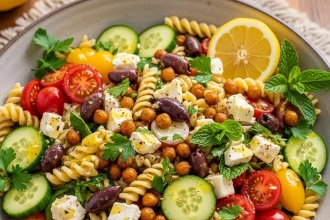
| Pasta and Chickpea Salad | Short pasta, Chickpeas, Bell pepper | Energetic and family-friendly, kids like it more |
| Spinach and Pear Salad | Spinach, Pear, Walnuts | Sweeter and softer, without the aniseed touch of fennel |
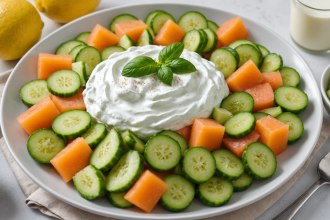
| Cucumber and Melon Salad | Cucumber, Melon, Yogurt | Extremely hydrating and creamy, less acidic |
Frequently asked questions (FAQ)
Share your experience
Cooking is for experimenting and sharing. I'd love to know how this salad turned out for you. Did you dare to add toasted almonds or did you try another nut? How did you like the combination of ginger with orange? Leave your comment and share your own little tricks to enrich our community!
Culinary glossary
To help you move like a fish in water in the kitchen, here I clarify some terms we've used today:
- Mandoline: A kitchen utensil with a sharp blade that allows you to cut vegetables into uniform and very thin slices, difficult to achieve with just a knife.
- Supremes: Citrus segments from which all the peel and white membrane have been removed, leaving only the clean and juicy pulp.
- Emulsion: A mixture of two liquids that normally do not combine (like oil and lemon/vinegar) achieved by beating vigorously until they are integrated and creamy.
- Julienne: Cutting technique that consists of cutting vegetables into long and very thin strips.
- Shock (or thermal shock): Transfer a hot or freshly cut food to ice water to stop cooking or, in this case, harden the fiber and set the color and crispy texture.



What a great idea. I loved how clear the explanation is. highly recommended.
I prepared it exactly as described. super easy to follow, ideal for beginners. I loved it, I'll repeat it soon.
What a delight! . I prepared it yesterday and it was spectacular.