


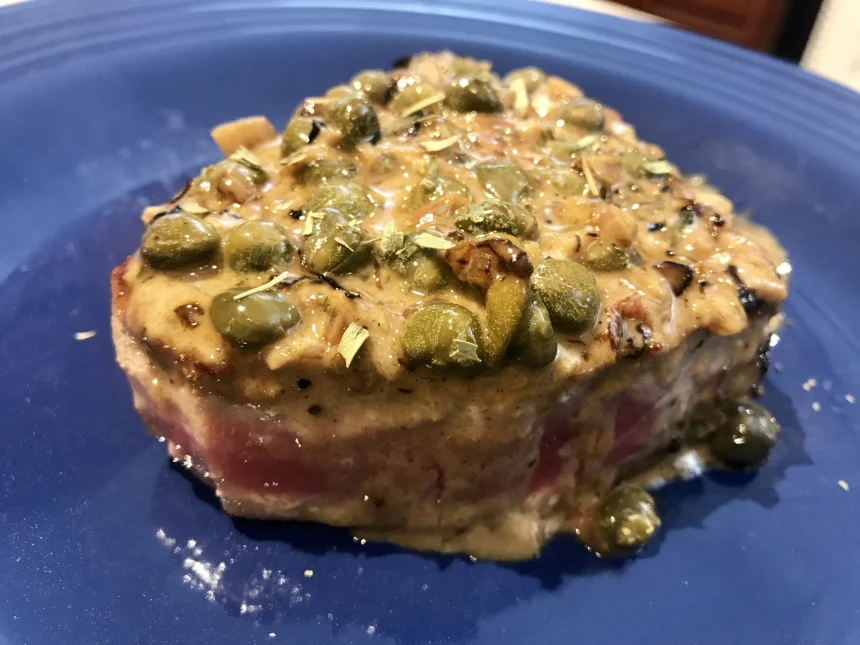
Tuna in Lemon Sauce Recipe
Hello! We are going to prepare a dish full of freshness and flavor that will transform your dinner into a special moment. This tuna is incredibly juicy inside and the citrus sauce enhances its natural flavor without overpowering it, also providing all the benefits of omega-3 in a delicious way.
Preparation time
Getting organized is key in the kitchen, so here's the time breakdown to make sure everything turns out perfect:
- Preparation: 10 minutes
- Cooking: 6 minutes
- Total: 16 minutes
- Servings: 2 people
- Difficulty: Easy
Ingredients
- 2 fresh tuna medallions (preferably loin, about 2 cm thick)
- 2 yellow lemons (we will need the juice and zest)
- 2 cloves of garlic
- 4 tablespoons extra virgin olive oil
- 1 small bunch of fresh parsley
- 1 pinch of sea salt
- 1 pinch of freshly ground black pepper
- 1 small spoon of unsalted butter (Optional)
In case you can't find fresh tuna loin at your fishmonger, you can substitute it with good quality frozen tuna; just make sure to thaw it slowly in the fridge overnight and dry it very well. If you don't have fresh parsley, cilantro or dill also work wonderfully with lemon.
Utensils we will use
- Large non-stick pan
- Cutting board
- Sharp knife
- Citrus zester (or the fine part of a common grater)
- Manual juicer (or a fork to help you)
- Kitchen spatula
- Kitchen paper towels
Preparation
Ingredient Preparation (Mise en place)
Drying the fish. Take the tuna out of the fridge about 10 minutes before. Dry it very well with paper towels on both sides. This is vital for it to brown and not steam. Season the medallions with salt and pepper on both sides just before cooking.
- Preparation of aromatics. Wash and dry the parsley, then chop it finely. Peel the garlic cloves and chop them into thin slices or very small cubes, according to your preference. Grate the zest of one of the lemons (only the yellow part to avoid bitterness) and squeeze the juice from both lemons, reserving it in a glass.
Cooking the tuna
Searing over high heat. Place the pan over medium-high heat and add a tablespoon of olive oil. When it is very hot (smoking slightly), place the tuna medallions.
- Quick sear. Cook the tuna for 1 to 2 minutes per side, depending on the thickness and how well-done you like it. Ideally, it should remain pink in the center to maintain its juiciness. If you overcook it, it will dry out. Remove the tuna from the pan and set it aside on a warm plate.
Sauce Preparation
Sauté the garlic. In the same pan, lower the heat to medium-low. Add the rest of the olive oil and butter (if you decided to use it). Add the chopped garlic and let it brown gently without burning, just until it releases its aroma.
- Deglaze and integrate. Pour the lemon juice carefully into the pan. Scrape the bottom with the spatula to lift the juices released by the fish (this adds a lot of flavor). Let the sauce reduce for 1 minute until it thickens slightly.
- Final touch. Turn off the heat. Add the chopped parsley and lemon zest to the pan. Stir well to integrate the fresh flavors with the residual heat.
To finish and serve
Return the tuna medallions to the pan for just a few seconds so they soak up the hot sauce or, if you prefer, serve them directly on the plate and generously bathe them with the lemon and garlic sauce on top. This dish should be served immediately to enjoy the contrast of temperatures. Accompany it with a light side dish; for example, a Mediterranean salad simple salad or some steamed potatoes are perfect so as not to steal the spotlight from the citrus.
Nutritional Information
- Calories: 280 kcal
- Proteins: 35 g
- Fats: 14 g
- Carbohydrates: 4 g
- Fiber: 0.5 g
Values are approximate estimates per serving and may vary depending on the cut size and specific ingredients used.
5 keys to make it perfect
Achieving the perfect doneness for a lean fish like tuna has its secrets. Here I share my essential tips for a restaurant-quality result.
1. Temperature matters: Never cook tuna straight from the fridge. The thermal shock will cause the fibers to contract and the center to remain cold. Let it come to room temperature for a few minutes; this helps with more even cooking, something we also apply when preparing a tuna carpaccio where temperature defines the texture.
2. Don't overcook: The number one mistake is leaving it on the heat for too long. Tuna continues to cook with its own heat once out of the pan. Remove it when you still see a pink strip in the lateral center. If you have leftovers and it dries out a bit, you can always reuse it for some tuna empanadas the next day.
3. Thorough drying: I insist on this because it is fundamental. If the tuna is wet, it will cook instead of browning. Don't be afraid to use kitchen paper. We want that golden, flavorful crust, similar to the technique we would use for a marinated tuna before searing it.
4. Lemon at the end: Do not marinate the tuna in lemon before cooking it for this specific recipe, as the acid will begin to «cook» the meat cold (like in a ceviche) and will change the texture when heated. The sauce is made separately and added at the end.
5. Oil quality: Being a sauce with few ingredients, the quality of the extra virgin olive oil makes all the difference. Use a mild one if you don't want a very intense flavor, or a picual one if you like character.
When is it ideal to enjoy it?
This tuna in lemon sauce is incredibly versatile. It's the perfect dinner for a summer night when you don't want to get hot in the kitchen, but are looking for something sophisticated. Its lightness also makes it ideal as a post-workout meal, thanks to its high protein content.
Also, if you have guests and little time, it's a dish that visually impresses without requiring hours of preparation. It works wonderfully for a romantic dinner accompanied by a white wine fresh. If you're looking for an even lighter option for lunch, you can take inspiration from a salad with fresh tuna, but this warm version is more comforting on cool nights.
Comparison table
| Recipe | Key ingredients | Difference/advantage |
|---|---|---|
| Tuna in Lemon Sauce | Fresh tuna, lemon, garlic | Quick cooking, intense and warm citrus flavor |
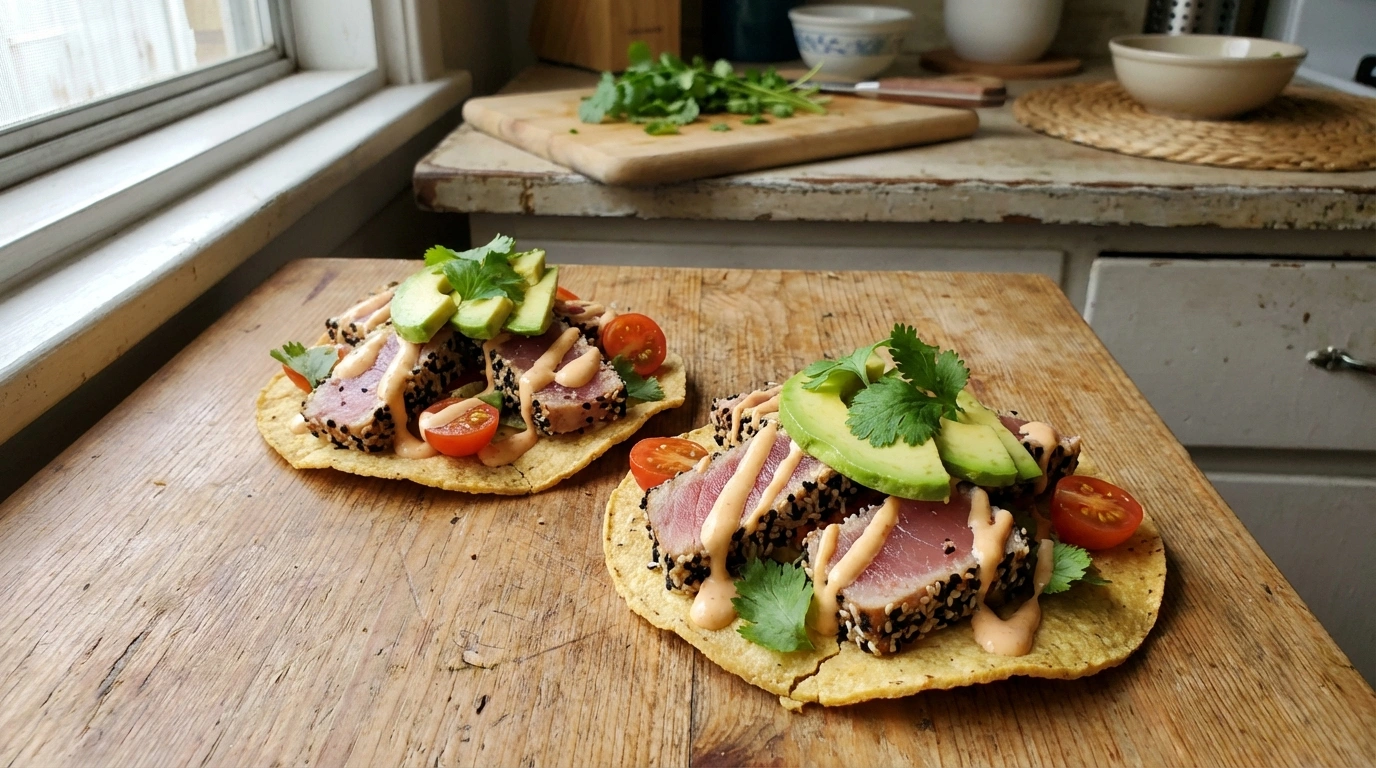
| Tuna tataki | Sesame, soy, ginger | Sealed only on the outside, raw interior and Asian touch |
| Tuna with onions | Onion, vinegar, bay leaf | Traditional stew, longer cooking and sweet flavor |
| Tuna ceviche | Lemon, cilantro, chili | No heat, chemical cooking by acid, very refreshing |
| Marmitako | Potatoes, pepper, tomato | Hot spoon dish, ideal for winter |
| Tuna carpaccio | Oil, capers, lemon | Totally raw, very thin cut, elegant appetizer |
| Tuna burger | Minced tuna, egg, bread | Different texture, ideal for children or casual food |
Frequently asked questions (FAQ)
Share your experience
Cooking is for experimenting and sharing. I would love to know how this tuna turned out for you, if you gave it your personal touch with a different herb, or what side dish you decided to accompany it with. Leave your comment and share your own little tricks so we can all keep learning!
Culinary glossary
- Sear: A cooking technique that consists of quickly cooking food over high heat to create a golden crust on the outside, while keeping the juices inside.
- Deglaze: Add a liquid (in this case, lemon juice) to the hot pan where something has been cooked to dissolve and recover the caramelized bits from the bottom.
- Emulsion: Mixture of two liquids that normally do not combine well, such as oil and lemon, achieving a creamier sauce by whisking or stirring them vigorously.
- Temper: Allow food that was in the refrigerator to reach room temperature before cooking to ensure even cooking.
- Zest: The colored outer part of citrus peel, which contains essential oils and much aroma, avoiding the white part which is bitter.





Thank you very much. How can I log in?
It was delicious at home. I prepared it yesterday and it was spectacular. A thousand thanks for the recipe.
I tried it today ❤️.
What a great idea this ‘Tuna in lemon sauce’. The recipe is very well explained. It earned a place in my recipe book.