
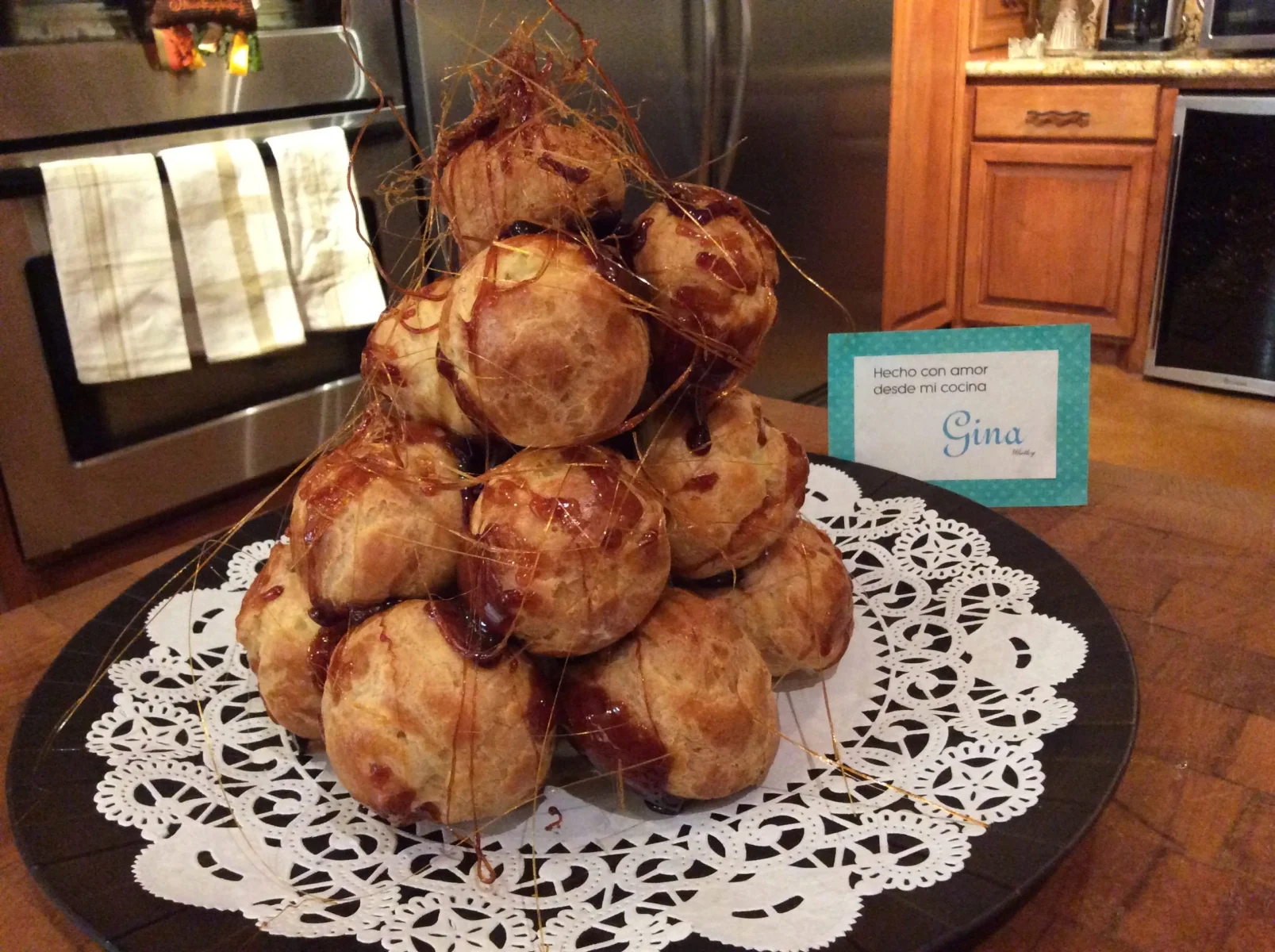
Majestic Croquembouche Recipe
Hello! We are going to prepare an impressive croquembouche, the classic dessert of France structured as a tower of crispy pastry filled with cream and joined with threads of caramel. This step-by-step preparation demystifies the technique so that any home cook can achieve a spectacular centerpiece. The balance between the sweet exterior and the soft interior justifies every minute of dedication in the kitchen.
Preparation time
Understanding time management is the first step to mastering classic pastry. When tackling a complex structure, the clock becomes another ingredient. In the midst of 2026, where the daily pace demands optimization, dividing this recipe into stages ensures success without generating stress in the kitchen. The total time is distributed between the preparation of the doughs, the indispensable cooling periods, and the final assembly, which requires exclusive attention.
Rest times are not optional or mere suggestions; they fulfill fundamental chemical functions. When the dough rests, the flour proteins fully hydrate and the gluten relaxes, which ensures that the pieces expand uniformly in the oven without cracking irregularly. For its part, the cream requires prolonged chilling for the gelatinized starches to set, providing a firm texture that will not moisten the dough prematurely.
Final assembly demands speed. Melted sugar changes from a liquid to a solid state in a matter of minutes. Therefore, having all elements ready and organized before starting to build the tower reduces pressure and allows for working with the necessary precision. Organizing these time blocks transforms a seemingly monumental project into a series of simple and methodical tasks.
Below, the estimated time scheme for this preparation is detailed, assuming a continuous workflow. However, remember that you can advance steps in the previous days, such as baking the pieces or preparing the filling, adapting the process to your own pace and availability.
- Preparation: 120 minutes
- Cooking: 45 minutes
- Total: 165 minutes (not including passive cooling times)
- Servings: 12
- Difficulty: Intermediate
Ingredients
The careful selection of ingredients determines the integrity of the structure and the quality of the result. In pastry based on precise techniques, each component plays an irreplaceable physical or chemical role. The dough, technically known as choux pastry, depends on the expansive force of water vapor and the structure of egg proteins. It does not contain yeast, so the exact proportions of liquid, fat, and flour are the sole driver of its volume.
The combined use of water and milk in the dough brings out the best of both elements: water allows higher temperatures to be reached quickly, generating a sudden burst of steam that inflates the piece, while the natural proteins and sugars in milk promote an attractive browning on the surface. If only water were used, the result would be paler and more rustic; if only milk were used, the dough could darken too quickly before drying out inside.
For the filling, the cream requires ingredients that provide richness and stability. Yolks provide natural emulsifiers that bind fats with liquids, creating a silky texture. Starch acts as a safeguard against curdling, allowing the mixture to boil to thicken without the egg proteins coagulating abruptly. Finally, the topping and assembly depend on refined sugars that, when melted and caramelized, act as a high-strength glue.
Below, the necessary elements are detailed, separated by preparation blocks, which facilitates organization on the workbench (mise en place) before turning on the stoves.
For the dough
- 120 milliliters of whole milk
- 120 milliliters of water
- 115 gramos de mantequilla sin sal
- 15 grams of white sugar
- 3 grams of fine salt
- 130 grams of common wheat flour
- 5 large eggs
Para la crema pastelera
- 480 milliliters of whole milk
- 30 grams of unsalted butter
- 2 gramos de sal fina
- 1 vanilla bean (or 10 milliliters of natural extract)
- 6 egg yolks
- 100 grams of white sugar
- 40 grams of cornstarch (corn starch)
For the assembly caramel
- 300 grams of white sugar
- 60 milliliters of light corn syrup
- 120 milliliters of water
(If you don't have corn syrup to prevent crystallization, you can replace it with a teaspoon of strained lemon juice. The acid will invert part of the sugar, serving a similar function, although it will require closer attention to the color, as it will brown a little faster).
Utensils we will use
The right equipment in the kitchen not only makes work easier but also prevents accidents and ensures consistent results, especially when handling sugars at high temperatures. It is not necessary to have a professional laboratory, but rather household tools that fulfill specific physical functions. Heat retention, the ability to scrape bottoms without scratching, and shape control are essential in this recipe.
The saucepan or pot where the dough and syrup are made must have a thick bottom. Pots with thin walls and bases distribute heat unevenly, creating hot spots that can instantly burn the flour or crystallize the sugar in one corner before the rest begins to boil. Stainless steel is ideal because its light color allows for accurate observation of the syrup's shade; in dark or black non-stick pots, it is almost impossible to distinguish when the perfect amber point is reached.
For handling doughs and creams, piping bags are fundamental for controlling size and pressure. Forming identical portions ensures that all take the same time to bake. A piece larger than the others will remain raw inside, while a smaller one will dry out excessively. If you don't have experience with metal nozzles, simple constant pressure is enough to shape.
Safety when handling boiling topping is paramount. Temperatures exceeding 160 degrees Celsius are reached, so having containers with ice water on hand not only serves to stop the cooking of the saucepan but also as a precautionary measure to quickly cool fingers in case of accidental contact. Organizing a clear workspace prevents sudden movements.
- Medium pot with a thick, light-colored bottom
- Sturdy wooden spoon or rigid silicone spatula
- Large glass or metal bowl
- Piping bag (you can use a thick plastic freezer bag by cutting a bottom corner)
- Plain round nozzle and fine star nozzle
- Flat baking sheets
- Parchment or baking paper
- Fine mesh strainer
- Manual whisk
- Large bowl for reverse bain-marie (with water and ice)
Preparation
The construction process is divided into clear stages. Each step has specific visual and tactile cues that indicate when to proceed. Respecting these cues is safer than blindly following the clock, as stove power and ambient humidity vary in each home.
Profiterole dough and baking
- Heating liquids and fat: In the medium pot, place the milk, water, butter, sugar, and salt. Bring the mixture to medium heat. The goal is for the butter to melt completely just as the liquid begins to gently boil. If the liquid boils for too long before the fat melts, too much water will evaporate, and the final proportion of the dough will be altered.
- Incorporating flour and drying: As soon as it boils and the butter is melted, add all the flour at once. Lower the heat slightly and stir vigorously using the wooden spoon. The mixture will clump together, forming a thick dough. Continue moving and pressing the dough against the sides of the pot for about 3 minutes. You will know it's ready when the dough cleanly detaches from the edges and leaves a thin, whitish film on the bottom of the pot. This step removes excess moisture, which will allow it to absorb the eggs well later.
- Cooling and egg integration: Transfer the hot dough to the large bowl and let it rest for about 3 to 5 minutes to lose its extreme heat (if you add the eggs immediately, they will cook and form lumps). Add the first egg and mix vigorously. At first, the dough will look curdled and slippery; this is normal. Keep mixing until fully integrated. Repeat the process one by one with the next 4 eggs. The final texture should be smooth, shiny, and fall from the spoon forming a «V» shaped peak.
- Shaping the pieces: Turn on the oven to 220 degrees Celsius. Place parchment paper on the baking sheets. Put the dough into the piping bag with the plain nozzle. Keeping the piping bag vertical one centimeter from the paper, press gently without moving the tip to form circles about 3 to 4 centimeters in diameter. Leave about 5 centimeters of separation between each piece for air to circulate and for them to expand.
- Two-phase baking: Beat the remaining egg and gently brush the surface of each piece to smooth out any peaks that may have formed (peaks burn quickly). Place the tray in the oven at 220 degrees for 15 minutes without opening the door at any time. The strong heat will generate rapid steam, puffing up the pieces. After this time, lower the temperature to 175 degrees and bake for 10 to 15 more minutes. They will be ready when they have a dark golden color all over the surface and, when you lift one and tap it gently underneath, it sounds hollow. Remove and let cool completely.
The pastry cream
- Milk infusion: In a clean pot, pour the milk, salt, butter, and scraped vanilla seeds (along with the empty pod). Heat over medium heat until it begins to steam and shows small bubbles around the edges, but without coming to a strong boil. Remove from heat.
- Whisking egg yolks until pale: While the milk is heating, in a separate bowl, vigorously whisk the egg yolks with the sugar using a hand whisk. Do this for about 3 minutes until the mixture changes to a very pale yellow color and becomes frothy. Add the cornstarch and whisk until no dry spots or visible powder remain.
- Tempering: Remove the pod from the hot milk. Very slowly pour the milk over the egg yolk mixture, continuously whisking rapidly. This gradually equalizes the temperatures and prevents the yolks from curdling suddenly.
- Cooking and thickening: Return the entire mixture to the pot and place it over medium heat. From this moment, whisk constantly, paying special attention to scraping the bottom and edges. In a couple of minutes, the mixture will thicken drastically. Continue cooking and whisking for one more minute after it thickens to eliminate the raw starch flavor. The cream should hold the shape of the whisk when moved.
- Protected cooling: Immediately pass the cream through a fine-mesh sieve into a clean bowl to ensure a perfectly silky texture. Cover the cream with plastic wrap, making sure the plastic directly touches the entire surface of the cream; this prevents a hard skin from forming upon contact with air. Refrigerate for at least 2 hours.
- Filling: Once the baked pieces and cream are completely cold, put the cream into the piping bag with a fine star nozzle. With a small knife, make a tiny hole in the base of each piece. Insert the nozzle and press gently until you feel the piece gain weight and the cream slightly emerges. Repeat with all. (Fill only on the same day you are going to serve, otherwise the humidity will soften the crispy dough).
For assembly and caramel
- Base preparation: On a sheet of parchment paper, draw a circle about 20 centimeters with a pencil using a plate as a guide. Flip the paper over so that the ink or graphite does not touch the food (the circle will be visible through it). Place this paper on a flat tray. Prepare the bowl with ice water to one side.
- Making the sweet glue: In the heavy-bottomed pot, mix the sugar, water, and corn syrup. Bring it to medium-high heat. Once it begins to boil, under no circumstances introduce spoons or stir, as this would cause massive crystallization. You can only gently swirl the pot by the handle to equalize the heat. Boil until it acquires a light amber color.
- Stopping the cooking: Immediately, immerse only the base of the pot in the bowl of ice water for a couple of seconds to stop the temperature increase. Remove from the water and dry the bottom of the pot. The liquid will thicken slightly, acquiring an ideal consistency for coating.
- Coating the domes: Taking each filled piece by the base, very carefully dip the top part into the hot syrup. Place them on another tray so that the sweet dome cools and hardens, creating an additional crispy layer.
- Building the tower: Select the 12 largest and most regular pieces. Lightly dip one side of the first piece in the hot syrup and stick it onto the circle drawn on the paper. Repeat by coating the sides of the subsequent pieces to stick them together, forming a solid ring that will be the foundation. From there, build upwards, creating progressively narrower rings, using the melted sugar as cement. Rest the upper pieces in the gaps left by those in the lower layer for greater stability. Finish the tip with a single piece.
To finish and serve
With the tower completely built and stable, the distinctive touch is achieved by creating golden threads around it. Wait for the syrup in the pot to cool a little more, to the point where, when a submerged fork is lifted, a continuous and very fine thread forms that almost solidifies in the air. Dip the fork, lift it, and make quick, wide circular movements around the entire structure, letting the threads fall chaotically and elegantly, enveloping the whole like a brilliant spiderweb. Let everything solidify at room temperature in a dry place. When serving, the entire structure is brought to the table to impress, and then, with the help of tongs or two forks, portions are detached from top to bottom. This dessert requires no additional accompaniments, as the contrast of textures speaks for itself.
Nutritional Information
Understanding the profile of what we cook allows for the integration of these types of preparations into a conscious and balanced consumption pattern. This recipe is energetically dense, an intrinsic characteristic of classic pastry that seeks extraordinary textures through the combination of simple carbohydrates and dairy fats. During the baking and cooking of the creams, water evaporates significantly, concentrating macronutrients in small-volume but high-caloric-weight pieces.
Fats come almost exclusively from butter and egg yolks, providing palatability and that melting sensation on the palate. Proteins, although present thanks to the egg and dairy content, are not the central focus of the contribution. The largest nutritional percentage falls on carbohydrates, structured from the starches of flour and cornstarch, added to the contribution of refined sugars used both in the silky interior and in the crystallized exterior coating.
Due to the intensity and richness of the components, the suggested serving per person is usually three to four filled pieces. Below is an estimation of the macronutrient profile calculated per individual portion (considering that the tower yields approximately for 12 people with several units per diner). It is a technical guide based on the standard weights of raw ingredients.
- Calories: 420 kcal
- Proteins: 8 g
- Fats: 22 g
- Carbohydrates: 48 g
- Fiber: 0.5 g
Note: The values indicated are approximate estimates per serving, calculated based on the generic ingredients described, and may vary depending on the final size of each piece and the exact amount of coating that adheres to each unit during assembly.
5 keys to make it perfect
Crafting this sweet architecture requires understanding how elements interact under different physical conditions. Many of the most common kitchen mishaps occur because small details that seem insignificant are ignored, but which drastically alter the outcome. Here we break down the critical points to ensure the structure remains firm, the dough crisps properly, and the cream flows smoothly.
The first determining factor is the consistency of the choux pastry before baking. The amount of egg needed is rarely exact; it depends on the flour's absorption level and how much liquid evaporated in the pot. Therefore, the last egg should be beaten and added little by little. If the dough is too liquid, the pieces will expand sideways, forming flat disks instead of tall spheres. The correct texture is one that falls slowly from the spatula forming a thick V-shape. If you notice it already has that consistency, do not add the rest of the egg, even if the recipe indicates it.
The second key is oven humidity. Initial expansion depends on the creation of internal steam in the first minutes of intense heat. Opening the oven door to check the color during the first 20 minutes allows that steam to escape suddenly, causing the fragile structure, which has not yet hardened, to collapse irremediably. Visual patience through the oven glass is mandatory.
The third critical point is absolute control during the melted sugar process. Avoiding crystallization is the biggest challenge. In addition to the strict rule of not stirring with utensils, it is vital to use a pastry brush dipped in clean water to wash the inner walls of the saucepan while it boils. This dissolves any splashes that might dry on the edges and trigger a chain reaction that would ruin the entire batch, turning it into an opaque and sandy mass.
The fourth guideline directly affects chewing texture: the timing of the filling. One of the greatest virtues of this dish is the stark contrast between the crunchy, bursting exterior and the cold silkiness of the cream. If the creams are introduced into the pastries hours before the event, the internal moisture will migrate to the crust, softening it completely. The filling should be injected as close as possible to serving time and subsequent assembly.
Finally, the physics of assembly requires solid foundations and careful handling of the residual heat from the sweet glue. If too much hot liquid is used between pieces, it will take a long time to solidify and the tower will slip. Barely a point of contact is needed. If the liquid in the saucepan cools too much and becomes very dense during the process, simply return it to very low heat for a few seconds to regain operational fluidity without darkening further.
When is it ideal to enjoy it?
The visual spectacularity of this vertical construction makes it a protagonist element that transcends the concept of an everyday dessert. Throughout the years, its presence has been intrinsically linked to the celebration of vital milestones, standing out as the quintessential option at a wedding classic, baptisms, or anniversaries of great importance. Bringing this tower to the table generates a moment of anticipation and theatricality that captures the attention of all present, marking the culmination of a festive banquet.
However, its enjoyment is not exclusively limited to formal events; bringing this project to a large party New Year's Eve or a large family gathering adds a level of sophistication that demonstrates dedication to the guests. As a dessert that is shared and broken apart in the center of the table, it encourages interaction. Diners actively participate by detaching the units joined by the crystallized sweet, which breaks the ice and adds a playful dynamic to the end of the meal.
From a practical point of view, it is crucial to consider the climatic environment where it will be served. The crystallized sugar that supports the structure is extremely hygroscopic, meaning it rapidly absorbs moisture from the air. In a full coastal summer environment or on very humid stormy days, the golden threads can begin to melt and weep within hours, weakening the tower. Therefore, the ideal time to show off with this recipe is during autumn, winter, or in dry, air-conditioned environments, where the crunchy integrity and vertical majesty will remain intact from the first glance to the last bite.
Comparison table
Within the vast world of classic European pastry, choux pastry is the cornerstone of numerous preparations that share a base but differ drastically in their format, assembly, or main flavor. For the cook beginning to master these techniques, it is fundamental to understand how small variations in baking, filling, or the use of complements such as meringue, the cream whipped or pastries of nuts, give rise to completely different recipes. Below, we analyze how our majestic tower stands against other classics that often cause confusion in pastry shop display cases.
Understanding these differences expands the home's culinary repertoire. For example, while the tower we are discussing seeks height and visual impact with its crispy exterior, other options prioritize extreme creaminess or more convenient formats for individual consumption. This technical comparison breaks down the anatomy of our recipe's close relatives to clarify their structural identity.
| Recipe | Key ingredients | Difference/advantage |
|---|---|---|
| Croquembouche | Choux pastry, pastry cream, hard caramel | It stands out for its impressive cone-shaped vertical structure and the crunch of the spun sugar exterior. |
| Traditional Profiteroles | Masa choux, helado o nata, salsa de chocolate | They are served loose in a deep dish, bathed in hot sauce just before eating. Less assembly technique. |
| Éclair (Lightning) | Choux pastry, pastry cream, fondant glaze | It is baked in an elongated and cylindrical shape. It is easy to eat with hands as an individual portion. |
| Paris-Brest | Choux pastry, praline mousseline cream, almonds | It is baked in the shape of a large ring that is cut in half horizontally. Intense toasted nut flavor. |
| Saint-Honoré | Puff pastry, choux pastry, chiboust cream (with meringue) | Usa una base plana y combina dos masas distintas. Relleno extremadamente ligero y aireado. |
| Lionesas | Masa choux, nata montada dulce | Piezas redondas cortadas por la mitad como un sándwich. Relleno más rápido y ligero que la pastelera. |
| Gougères | Masa choux, queso gruyer o comté, pimienta | La única variante salada común. Se sirve caliente como aperitivo. No lleva ningún tipo de relleno. |
Frequently asked questions (FAQ)
Al enfrentarse a preparaciones que requieren precisión química y control de temperaturas, es natural que surjan dudas en medio del proceso. A lo largo de los años de enseñanza y resolución de problemas en las cocinas, he recopilado los obstáculos más comunes que enfrentan quienes abordan estas técnicas. Abordar estas interrogantes desde la comprensión del «porqué» físico evita frustraciones y empodera para reaccionar ante imprevistos, adaptando o salvando la receta antes de darla por perdida.
Desde la textura de las masas hasta los accidentes con las coberturas dulces, estas respuestas detalladas proporcionan las herramientas de corrección necesarias para asegurar el éxito, abordando sustituciones, almacenajes y trucos de rescate.
Share your experience
La repostería y la cocina en general crecen, se refinan y adquieren sentido cuando se comparten. Ejecutar recetas de alto nivel en casa es un proceso continuo de aprendizaje donde los pequeños obstáculos son las mejores lecciones. Después de poner en práctica las indicaciones y armar esta monumental pieza, el conocimiento que has adquirido manipulando el azúcar y comprendiendo la masa es valiosísimo para quienes vienen detrás.
Cada horno es distinto y cada clima impone sus propias reglas, por lo que tu vivencia adaptando los pasos es enriquecedora. Te invito a comentar cómo te fue durante el proceso de armado de los anillos o cómo reaccionó tu mezcla en los minutos finales de secado. La cocina es para experimentar y compartir. ¡Deja tu comentario y comparte los métodos que te funcionaron al domar esta receta clásica en tu propio hogar!
Culinary glossary
Dominar el lenguaje de los fogones facilita la lectura de recetas avanzadas y permite ejecutar las instrucciones con una claridad mental absoluta. La técnica pastelera tiene una nomenclatura muy precisa porque requiere acciones exactas. A continuación, se detallan y explican en lenguaje cotidiano cinco términos empleados a lo largo de este texto para que se integren de forma natural a tu vocabulario práctico.
Pasta Choux (Pâte à choux): Es el nombre técnico de la masa ligera que se utiliza en esta elaboración. A diferencia de otras preparaciones que se baten o se amasan, esta requiere una precocción al fuego antes del horneado para gelatinizar los almidones y secarla. Su principal característica es que se infla gracias al vapor de agua interior, dejando un hueco perfecto para rellenos sin necesidad de usar levaduras o polvos químicos.
Blanquear (yemas): Es la acción de batir yemas de huevo junto con el azúcar enérgicamente y durante varios minutos. La fricción constante introduce microburbujas de aire en la mezcla y disuelve los cristales dulces, cambiando el color naranja intenso original por un amarillo muy pálido, casi blanco. Este paso garantiza que el azúcar no queme las proteínas de las yemas al contacto y aumenta el volumen de la preparación.
Tempering: Consiste en igualar gradualmente la temperatura de dos mezclas para evitar choques térmicos que arruinen los ingredientes sensibles. En nuestro caso, significa verter líquidos calientes poco a poco sobre las yemas crudas mientras se bate sin parar. Si volcáramos el lácteo hirviendo de golpe sobre el bol de huevos, estos se cocinarían al instante, formando una tortilla dulce inservible para cremas finas.
Reverse bain-marie: Es un método de enfriamiento rápido y controlado. Consiste en preparar un bol amplio con agua y cubos de hielo, dentro del cual se asienta rápidamente la base de una olla caliente para detener en seco la cocción de su contenido interno. Es una técnica de emergencia y de precisión, indispensable al trabajar con almíbares que cambian de color y estado en fracciones de segundo.
Thread stage: Es una de las etapas de cocción del azúcar, reconocible visualmente. Se alcanza cuando, al introducir un tenedor en el almíbar denso y levantarlo, el líquido no cae en forma de gotas separadas, sino que se estira formando una hebra continua, elástica y resistente que se enfría y endurece en el aire al contacto con la temperatura ambiente, ideal para decorar.




Lo probé hoy esta de ‘Croquenbouche’ .
Lo probé hoy esta de ‘Croquenbouche’.
Me sorprendió el sabor esta de ‘Croquenbouche’. le agregué un toque de limón y quedó de lujo. nos encantó a todos.