
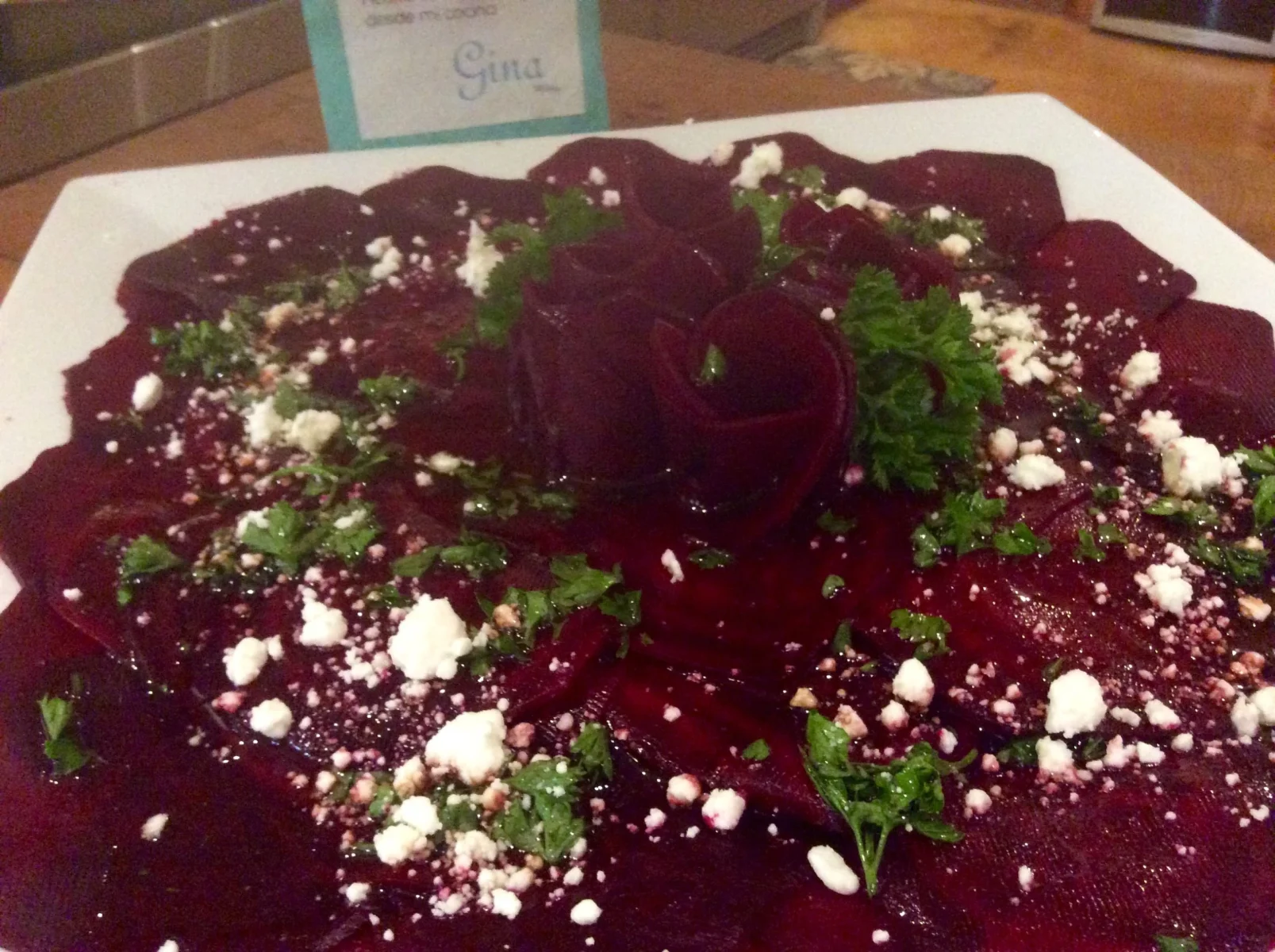
Beet Carpaccio Recipe
Hello! We are going to prepare a fresh dish, full of color and textures. This preparation highlights the natural sweetness of the earth combined with citrus and crunchy touches. It is ideal for whetting the appetite with an impeccable presentation, yet homemade without complications. Enjoy a light meal that will make you look great to your guests.
The original concept of this dish was born in the middle of the last century, using thin slices of raw meat. Over the years, culinary techniques evolved. Nowadays, home cooking adopts the term to refer to any food cut into almost transparent slices. Transforming a root vegetable into a Carpaccio is a brilliant way to give vegetables prominence on our table. The Beet, with its intense red color and earthy flavor, is the perfect candidate for this technique. By cooking it to its exact point, we achieve a firm yet pleasant texture on the palate.
This recipe falls into the category of Cold dish. It is a highly valued option today, especially in this year 2026, where we seek practical meals that do not require spending hours in front of the stove just before eating. A Appetizer of this type allows most of the ingredients to be prepared in advance. This reduces stress in the kitchen. Furthermore, being a Vegetarian, dish, it easily adapts to different eating styles, allowing almost anyone to enjoy it without worries.
The key to success in this preparation lies in the balance of flavors. The Beet provides a sweet and earthy base. To balance that sweetness, we use the acidity of orange and vinegar. Arugula adds a slightly bitter and spicy touch, which cleanses the palate. Goat cheese introduces creaminess and a much-needed touch of salt. Finally, walnuts provide the crunchy factor, essential in any well-thought-out recipe. All of this comes together thanks to a good Olive oil, which acts as a common thread for all the aromas.
The Thin cut is what truly transforms the perception of the ingredient. A thick piece of this vegetable can be monotonous or heavy. In contrast, a thin slice becomes delicate. It quickly absorbs the dressing and melts softly in the mouth. Achieving this cut at home is possible with patience and the right tools. You don't need industrial machinery to get a restaurant-worthy result. You just need to understand the food's texture and treat it with care.
Presenting this dish as an Appetizer in a multi-course meal ensures that diners start the experience on a fresh note. It doesn't saturate the stomach. It prepares the digestive system for the main courses. Furthermore, visually it's a spectacle. The crimson red contrasts with the bright green of the leaves and the white of the cheese. It's a natural design that requires no artificial embellishments. Mastering this preparation will give you a fantastic tool for creating appetizers with accessible and seasonal ingredients.
Preparation time
Organizing your time in the kitchen is essential for the process to flow smoothly. This recipe requires prolonged cooking, but most of that time is passive. That is, the stove does the work for you.
- Preparation: 20 minutes
- Cooking: 45 minutes
- Total: 65 minutes
- Servings: 4
- Difficulty: Easy
The 45 minutes of cooking time are calculated for a medium size at sea level. If you live in a high-altitude city, water boils at a lower temperature. This means the process can take up to an hour. It's important not to blindly follow the clock. The physical signs of the food are the best guide. During this boiling time, you have a perfect window to get ahead on other steps. You can wash the leaves, prepare the dressing, and clean the citrus fruits. That way, when the root is ready, all that will be left is to assemble the dish.
Active preparation time includes slicing and plating. Cutting thin slices takes a few minutes if you do it carefully. It's a job of precision, not speed. Take the necessary time to ensure the slices are uniform. If you rush, you risk getting uneven pieces that will affect presentation and texture. Patience in this step makes the difference between an ordinary dish and an outstanding one.
You should also consider cooling time. Never try to peel or slice this vegetable straight out of boiling water. First, because you can burn yourself. Second, because the food's structure needs to stabilize as the temperature drops. A rest of about 15 to 20 minutes at room temperature is ideal. If you're in a hurry, you can briefly submerge them in ice water. However, natural cooling better preserves the internal texture and prevents them from absorbing extra water.
This dish is a great ally for weekly planning. You can boil the roots a day before and store them in the refrigerator with their skin on. The next day, they will be firm, very cold, and much easier to slice. In fact, the cut is cleaner when the vegetable is refrigerated. This way, the active time just before serving is reduced to only five minutes of assembly. This strategy is very useful when you have guests and don't want to disappear into the kitchen.
The dressing also improves if made in advance. Mixing the oil, vinegar, and oregano allows the flavors to settle. A half-hour rest makes the oil intensely perfumed with the herbs. Therefore, although the total time is 65 minutes, intelligent organization allows you to break down these minutes at your convenience. Home cooking should be adaptable to your schedule, and this preparation perfectly fulfills that purpose.
Ingredients
The ingredient list is divided into two parts to facilitate organization. Gather everything on the table before starting. This avoids interruptions and ensures nothing important is missing. This recipe is very similar to the structure of a beet salad, but with a different approach to cuts and presentation.
For the beets and garnish
- Water, enough for cooking
- 1 pinch of sugar
- 2 pieces of beetroot
- 1 orange
- 1/2 cup natural goat cheese
- 1/2 cup chopped cashew nuts
- 4 cups arugula
- Juice of one lemon
- 2 tablespoons of olive oil
- Salt to taste
- Pepper to taste
For the oregano vinaigrette
- 3 tablespoons champagne vinegar or white wine
- 1 1/2 tablespoons fresh oregano (leaves only)
- 5 tablespoons olive oil
- Salt to taste
- Pepper to taste
(Optional) You can add a few drops of honey to the vinaigrette if the orange is not very sweet. If you don't have champagne vinegar, you can replace it with apple cider vinegar or common white wine vinegar; the flavor will be slightly more rustic but equally functional. If goat cheese is too strong for you, you can substitute it with feta cheese crumbled or firm ricotta cheese. For cashew nuts, toasted almonds or pistachios are excellent substitutes without needing to alter the recipe steps.
The sugar in the cooking water is a subtle but effective step. It does not artificially sweeten the food. It simply enhances its natural profile and helps set the color during prolonged boiling. Select pieces that are firm to the touch, heavy for their size, and with smooth skin. If they have green leaves attached, it's a sign of extreme freshness. Do not cut the thin root (the tail) before boiling them; keeping them intact prevents the red juice from escaping into the water and losing intensity.
Fresh oregano has a completely different aroma than dried. It is more floral and less astringent. If you must use dried oregano, reduce the amount by half, as its flavor is concentrated. Rub dried oregano between your fingers before adding it to awaken its essential oils. The quality of the olive oil is crucial. Since we are not going to cook it, all its flavor notes will be present in the final dish. Use an extra virgin one with a mild fruity profile.
Utensils we will use
Having the right tools greatly simplifies the work. You don't need professional equipment. Everything we will use can be found in a standard home kitchen.
- Medium pot with lid
- Chef's knife and cutting board
- Small bowl for the vinaigrette
- Medium bowl for dressing the arugula
- Whisk or fork
- Clean cloth or clean green scouring pad (exclusive for vegetables)
- Flat serving plate
The pot should be deep enough for the water to completely cover the vegetables. If the water evaporates and they are exposed, cooking will be uneven. Using a lid helps maintain a constant temperature and saves energy. For the cutting board, be aware of the intense red pigment. If you use a porous wooden or white plastic board, it will stain temporarily. A good home remedy is to rub half a lemon with salt on the stained board after washing it.
The chef's knife must be well sharpened. This is the most important tool in the recipe. Cutting thin slices with a dull knife is frustrating and dangerous, as it requires applying a lot of force and the blade can slip. If you have a home mandoline, you can use it, but a knife in good condition and firm movements perfectly achieve the goal. Keep the fingers of the hand holding the food curved inwards, like a claw, to protect them from the blade.
Using the clean green scouring pad or cloth is the best method for peeling them. The skin, once cooked, becomes so soft that it comes off with friction. Using a potato peeler at this point would only remove too much usable pulp. Make sure the scouring pad is new or exclusively for washing vegetables, never the one you use for dishes with soap.
Bowls should preferably be made of glass, ceramic, or stainless steel. When preparing dressings with vinegar or lemon, plastic containers can react with the acid and retain odors. A fork is sufficient for mixing, but a small whisk incorporates air and creates a more stable mixture between the oil and vinegar. Finally, flat plates allow the slices to be placed without overlapping too much, showing the natural pattern and colors of the preparation.
Preparation
Follow these steps carefully. Organization will allow you to enjoy the process and obtain an excellent result. The beet carpaccio is a dish that rewards attention to detail.
1. Cooking the root
- Prepare the water: In a medium pot, put plenty of water over high heat. Add the pinch of sugar and wait for it to come to a boil.
- Boil: Introduce the whole and previously washed pieces. Lower the heat to medium, cover the pot, and let it boil. If the water reduces too much, add a little more hot water.
- Check for tenderness: After 40 minutes, insert a wooden skewer or the tip of a thin knife into the center of the largest piece. It should enter with some resistance, but the center should not feel hard or crunchy. If it is still firm, give it 5 or 10 more minutes.
- Cool: Turn off the heat. Remove the pieces from the hot water using tongs and place them on a plate. Let them rest at room temperature until you can handle them without burning your hands.
2. Preparation of the vinaigrette
- Prepare the base: In a small bowl, pour the champagne vinegar (or the chosen substitute). Add the salt and pepper, and stir a little so that the salt begins to dissolve in the liquid.
- Añadir las hierbas: Incorporate the fresh oregano leaves. Lightly crush them against the sides of the bowl with a fork to release their aroma.
- Emulsify: Pour the 5 tablespoons of olive oil in a thin stream while constantly whisking with a fork or whisk. Continue whisking until the mixture looks cloudy and slightly thick. Set aside.
3. Pelado y corte
- Remove the skin: Take the piece, already warm or cold. Use a clean cloth or green scouring pad and gently rub the surface. You will see how the skin slides off and falls easily. Do this over the sink or a cutting board.
- Trim the ends: With the knife, cut off the top stem and the thin bottom root to create flat bases.
- Slice: Cut into thin slices. Aim for a thickness of about 3 to 5 millimeters. Try to maintain the same thickness in all of them so that the texture is uniform. You will get between 8 and 10 clean slices per piece.
4. Preparation of garnishes
- Clean the orange: With the knife, cut off the top and bottom of the orange so it stands flat. Cut the peel from top to bottom, following the curve of the fruit, making sure to remove all the white part (albedo), which is bitter.
- Segment supremes: Observe the lines of the membranes that separate the segments. Make a «V» cut just inside these membranes to release the clean, skinless segment. Repeat until all supremes are removed.
- Prepare the leaves: In the medium bowl, place the clean and dry arugula. Add the lemon juice, the 2 tablespoons of olive oil, salt, and pepper. Gently toss with your hands so that all the leaves are coated without crushing them.
To finish and serve
It's time to assemble the dish. Remove any remaining water or juice from the slices. Arrange four to five slices per extended plate, slightly overlapping them, forming a circle or a line, depending on the shape of your tableware. Distribute the orange supremes on top, spreading the color. Sprinkle the crumbled goat cheese with your fingers and the chopped cashew nut. Finally, divide the dressed arugula and place it in the center or to one side of the slices. Drizzle the entire assembly evenly with the oregano vinaigrette just before serving. Serve immediately while the leaves are crispy.
Nutritional Information
Knowing the contribution of our foods helps us plan our day better. This preparation is light, but very complete thanks to the combination of vegetables, fats, and seeds.
- Calories: 180 kcal
- Proteins: 5 g
- Fats: 12 g
- Carbohydrates: 15 g
- Fiber: 4 g
Note: Values are approximate estimates per serving. They may vary depending on the exact amount of oil remaining on the plate or the specific size of the pieces used.
This combination of macronutrients is ideal for starting a meal. Calories mostly come from high-quality sources. Olive oil and nuts provide fats that are fundamental in cooking. These fats fulfill a very specific function here: they help the body better assimilate the vitamins present in green leaves and in the root. Without a fatty medium, some nutrients simply pass through the system without being fully utilized. Therefore, dressings are not just a matter of taste, but of culinary functionality.
Carbohydrates come entirely from vegetable sources. The natural sugar of the main vegetable is processed gradually thanks to the fiber it contains. This fiber is a key element. It provides satiety, which means that the diner will arrive at the main course without that urgent feeling of hunger, allowing them to eat with greater calm and enjoyment. Cheese and nuts provide a modest amount of protein, enough to give structure to the appetizer without making it heavy or difficult to digest.
Understanding this information also allows you to adjust the recipe to your needs. If you are looking to reduce the caloric intake, you can halve the amount of nuts or cheese. If, on the contrary, you want this dish to work as a light and unique dinner, you can double the portions of arugula and cheese, increasing the volume and protein. Home cooking gives you total control over what you bring to your table, adapting great recipes to your daily lifestyle.
5 keys to make it perfect
Even simple recipes have secrets that elevate the result. Pay attention to these details during preparation. These are small adjustments in technique that guarantee a visually appealing dish with balanced textures in every bite.
1. Controlling the root's moisture
After boiling and peeling the pieces, it's normal for them to release a lot of red juice. If you cut them and place them directly on the serving plate, that juice will form a puddle that will water down the vinaigrette and stain the cheese. The advice is to slice them on a cutting board and lightly dry the slices with kitchen paper before plating. This step ensures that the vinaigrette adheres to the food's surface instead of being diluted.
2. The correct temperature
This is a dish served cold, but not frozen. If you assemble the dish with warm ingredients, the heat will melt the goat cheese, turning it into a paste, and instantly wilt the arugula. Make sure the slices are at room temperature or cold from the refrigerator. The contrast between the cold vegetable and the crunchy nuts is fundamental for the mouthfeel experience.
3. The dressing at the last second
Vinegar and lemon are very potent acids. If you mix the green leaves with lemon too long before serving, the acid will break down the cell walls of the leaf. The result will be dark, limp, and volumeless arugula. Dress the leaves and pour the vinaigrette over the dish exactly when you are about to bring it to the table. Visual freshness depends entirely on this sense of timing.
4. Toasting the nuts
Although the recipe calls for chopped cashew nuts, a step that changes everything is giving them a quick toast. Put the nuts in a dry pan over low heat for three minutes, stirring constantly. This awakens the essential oils of the seed, intensifies its flavor, and improves its crunchy quality. Let them cool before sprinkling them over the cheese.
5. Consistency in cutting
The thickness of the slices is not just a matter of aesthetics. If you have a very thick slice next to a very thin one, the chewing perception will be uneven. The thick one will taste too earthy, while the thin one will disappear. Take time to use the knife evenly. If a slice turns out badly, set it aside for a salad the next day. Use only the best for the final assembly.
When is it ideal to enjoy it?
The versatility of this recipe makes it a fantastic option for various situations throughout the year. Its flavor profile fits perfectly in both informal contexts and dinners that require a bit more sophistication. Knowing how to choose the right moment to serve it ensures that the dish shines and fulfills its function within the menu.
Summer meals and outdoor lunches are ideal scenarios. When the heat is on, the body instinctively rejects heavy and hot stews. Offering a fresh, acidic, and vibrant start revitalizes the palate. Being able to be served cold, you can have the dishes assembled in the refrigerator (undressed) and take them out just as guests sit down at the table. This saves you stress on hot days and allows you to enjoy the gathering without being trapped in a kitchen with the stove on.
It is also a spectacular choice for formal celebrations, such as year-end dinners. The deep red color provides a festive and elegant tone that decorates the table on its own. When the main course will be a robust roast, a baked pasta, or a cut of meat, you need an appetizer that does not compete in heaviness. This dish cleanses the palate. The acidity of the orange and vinegar cuts through the fat of subsequent dishes, achieving a balanced and well-structured menu from the start.
In the daily family setting, it works wonderfully as a different side dish. If you prepared grilled chicken or a simple fish, accompanying it with these dressed slices breaks the weekly monotony. Accustoming the family to different textures and presentations fosters a better relationship with vegetables. Furthermore, by lasting several days in refrigeration before being cut, it allows you to prepare the vegetable portion of the meal in a matter of minutes.
Comparison table
To better understand how this recipe fits into the wide world of cold starters, it is useful to compare it with other popular options. This way you can choose the one that best suits what you have in your pantry or the profile of your guests. Each dish has its own identity and purpose on a menu.
| Recipe | Key ingredients | Difference / Advantage |
|---|---|---|
| Beet Carpaccio | Beetroot, goat cheese, orange | Dish 100% vegetarian, sweet and earthy, low cost and high visual impact. |
| Traditional beef carpaccio | Beef tenderloin, parmesan, capers | Uses raw animal protein, more intense and salty flavor, requires very high-quality meat. |
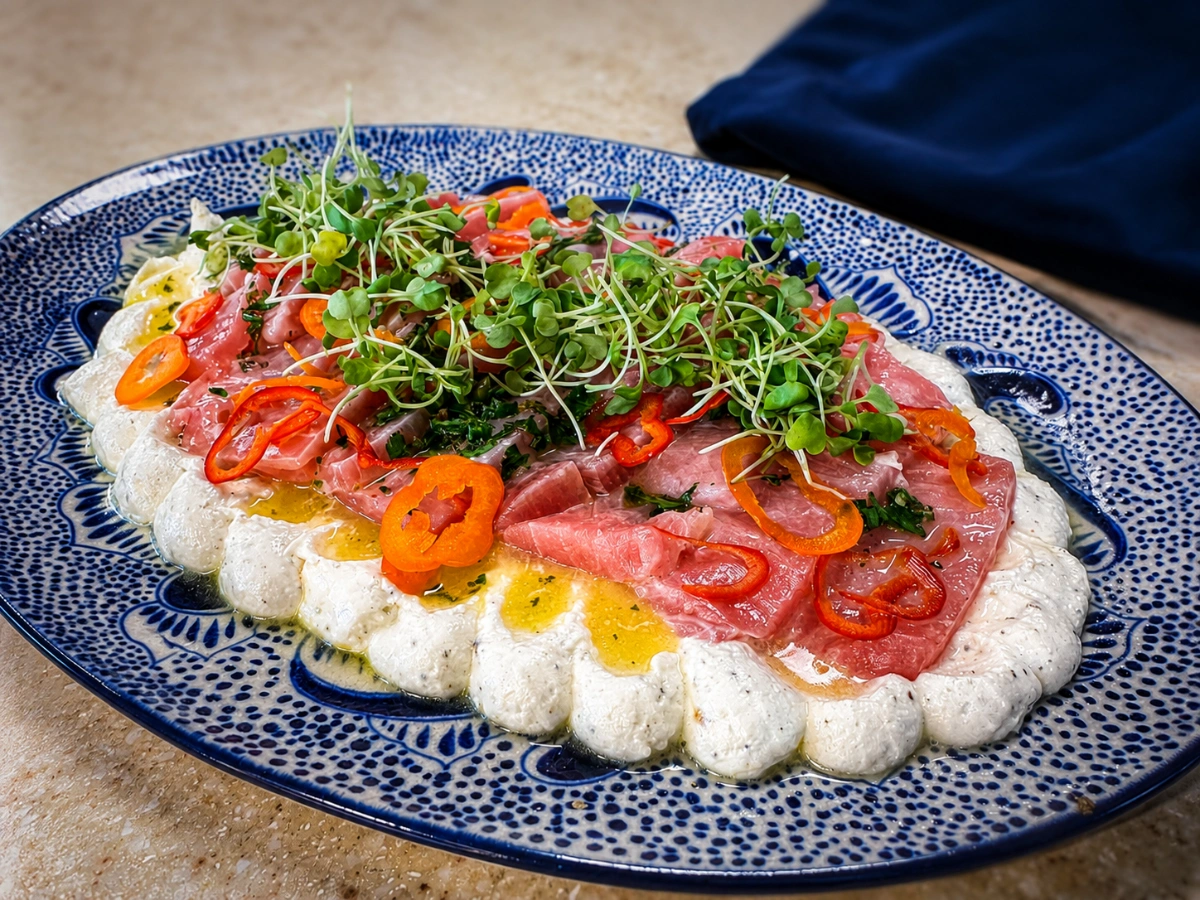
| Salmon tiradito | Fresh salmon, lemon, chili | Peruvian inspiration, much more acidic and spicy, soft fish texture. |
| Caprese Salad | Tomato, mozzarella, basil | Thicker cuts, Italian flavor profile, less pre-cooking work. |
| Zucchini carpaccio | Raw zucchini, lemon, pine nuts | Does not require boiling the vegetable, more neutral flavor and much crispier texture. |
| Mushroom ceviche | Mushroom, red onion, cilantro | Marinated in lemon to soften, spongy texture, very citrusy flavor profile. |
When observing the table, it is clear that the great advantage of our central preparation is food safety and accessibility. Working with raw meats or fish requires strict control of the cold chain and very trustworthy suppliers, which usually increases the cost of the meal. By using a boiled root, we eliminate any bacteriological risk associated with raw proteins, maintaining the elegance of the sliced presentation. It is a smart way to offer a refined experience on a tight budget.
Frequently asked questions (FAQ)
Share your experience
Cooking is for experimenting and sharing. A recipe isn't truly finished until you make it your own at home. I'd love to know how you fared with the cooking process and if you achieved that thin cut we were looking for. Did you try using a different type of nut or perhaps added a touch of honey to the dressing? Small changes are what make dishes evolve. Leave your comment and share your own adjustments with the community to keep learning together!
Culinary glossary
Knowing these terms will help you navigate with greater confidence when reading and preparing any recipe in the future. The language of cooking is practical and direct.
Emulsify: It is the process of combining two liquids that normally do not mix, such as oil and vinegar. It is achieved by vigorously beating to break the droplets into tiny particles, creating a thick and uniform sauce. In this recipe, it applies to the vinaigrette.
Tender point: It is the exact cooking point at which a food offers a soft resistance when bitten or pricked, without falling apart. For root vegetables, it means they have lost their raw hardness but maintain their structure intact.
Supremes: It is a specific cutting technique for citrus fruits. It consists of peeling the fruit, removing all the white pith, and then cutting the clean segments from inside the membranes that separate them. The result is a bite of pure pulp, without bitterness or rubbery textures.
Dress: It is the final action of adding a vinaigrette, salt, oil, or any seasoning to a preparation just before serving. The goal is to enhance the flavors without modifying the original texture of the main ingredients, as happens when dressing arugula leaves.
Vinaigrette: It is a basic cold sauce in cooking, composed mainly of an acid (such as lemon juice or vinegar) and a fat (generally oil). It serves to add moisture, acidity, and flavor to green leaves and cooked vegetables.





This ‘Beetroot Carpaccio’ was delicious at home. It was a total success with my family. What a great guide.
What a great idea this ‘Beetroot Carpaccio’ is. .
It was delicious at home. I loved how clear the explanation is.