Ingredients
For the chiles
* 6 large, firm, and beautifully shaped poblano chiles
* 1 tablespoon of vegetable oil, only if you roast them in a pan
For the picadillo
* 500 g of ground or finely chopped pork
* 250 g of ground or finely chopped beef
* 2 tablespoons of vegetable oil
* ½ white onion, finely chopped
* 3 cloves of garlic, finely chopped
* 3 ripe Roma tomatoes
* 1 panochera apple or firm apple, peeled and cut into small cubes
* 1 milk pear or firm pear, peeled and cut into small cubes
* 2 peaches, peeled and cut into small cubes
* ½ ripe plantain, cut into small cubes
* ⅓ cup of
* ⅓ cup peeled and chopped almonds
* 2 tablespoons pine nuts, optional
* ½ teaspoon ground cinnamon
* ¼ teaspoon ground cloves
* ¼ teaspoon black pepper
* 1½ teaspoons salt
* 1 teaspoon sugar, only if the fruits are not very sweet
For the nogada
* 250 g fresh, peeled Castilian walnuts
* 150 g fresh goat cheese
* 100 g cream cheese
* 250 ml whole milk, approximately
* 80 ml heavy cream
* 2 tablespoons sugar
* 2 tablespoons dry or semi-dry sherry
* ¼ teaspoon cinnamon
* 1 pinch salt
Para terminar
* 1½ cups red pomegranate seeds
* ½ cup fresh parsley leaves, finely chopped
* Chopped Castilian walnuts, optional
Preparation
Let's start with the walnuts
If you can get fresh Castilian walnuts, take advantage of them. It makes a huge difference.
Remove the shell and then carefully remove the brown skin covering each walnut.
Yes, it's laborious.
But that skin can add bitterness and also darkens the nogada.
As you peel the walnuts, place them in a bowl with cold milk to prevent them from oxidizing.
Let them rest in the refrigerator while you prepare the rest.
Do not leave the walnuts soaking from the day before. A few hours are enough, and we will better preserve their flavor.
Roasting the poblanos
Place the chilies directly over the stove flame, a very hot griddle, or under the oven broiler.
Keep turning them.
We want all the skin to be blistered and practically black, but without overcooking the flesh.
As soon as they are ready, place them in a bowl and cover them.
Let them sweat for 10 to 15 minutes.
Now comes an important part.
Carefully remove the skin with your fingers.
I do not recommend putting them under running water. The water washes away some of that delicious roasted flavor.
You can use a slightly damp napkin to remove the difficult bits.
Clean the chilies without breaking them
Make a vertical opening on one side of each chili.
That it is only large enough to insert the filling.
Very carefully remove the seeds and veins.
Here we need patience because we want the poblanos to remain whole and beautiful.
Reserva.
Prepare the tomato
Roast the tomatoes on a griddle until they have slightly burnt areas.
Blend them without adding water.
Reserva.
This small step concentrates the flavor much more than using raw tomato directly in the picadillo.
Start the picadillo
Heat a large pot.
Agrega el aceite.
Add the onion and cook for approximately 4 minutes, until it is transparent.
Add the garlic and cook for about 30 seconds.
Add the pork and the beef.
Now, pay attention:
we don't want gray, boiled meat.
Spread it over the pot and let it make contact with the hot bottom before starting to stir.
Then separate it with a spoon.
Cook until it completely loses its pink color and begins to brown.
Incorporate the tomato
Add the blended roasted tomato.
Add the cinnamon, cloves, pepper, and salt.
Cook over medium heat for approximately 10 minutes, until the tomato loses a good part of its moisture.
Here it should already start to smell spectacular.
Add the fruits correctly
We are not going to add all the fruits together because they don't take the same amount of time to cook.
First add the apple.
Cocina 3 minutos.
Add the pear.
Cook for another 2 minutes.
Add the peach, raisins, almonds, and pine nuts.
Meanwhile, in a small pan, lightly brown the plantain cubes.
Add them at the end.
Mix carefully.
Taste.
There should be a balance between salty, sweet, fruity, and spicy, but it should not taste like dessert.
If the fruits were not very sweet, now you can add that teaspoon of sugar.
Continue cooking until practically no liquid remains at the bottom.
Turn off.
Very important
Let the picadillo cool before filling the chilies.
One of the most common mistakes is to make a picadillo that is too wet. It should be juicy, yes, but never watery. We want it to stay inside when cutting the chili and for us to be able to distinguish the small pieces of fruit.
Prepare the nogada
Drain the walnuts.
Place them in the blender along with the goat cheese, cream cheese, whipping cream, sugar, sherry, cinnamon, salt, and approximately 150 ml of the milk.
Blend.
Now observe the consistency before adding more milk.
The nogada should not look like water nor a paste.
We are looking for a creamy sauce that slowly falls from a spoon and covers the chili, forming a white mantle.
Gradually add the rest of the milk little by little until you achieve that texture.
Taste.
The nut should be felt first; then a slight acidity from the cheese and finally a very subtle sweetness.
Don't blend for five minutes looking for a perfectly smooth nogada. I like it to retain a minimum of nut texture. It feels much more artisanal and elegant.
Refrigerate it until serving time.
Filling
Take each chili separately.
Open it carefully.
Introduce a generous amount of picadillo.
Don't fill it so much that it ends up exploding out the sides.
Arrange the chili again, trying to slightly close the opening.
Battered or without batter?
Both versions exist and there is a long discussion around the topic.
For our September presentation, I serve them without batter, because it allows the poblano to be appreciated, it turns out a bit lighter, and visually it looks beautiful under the nogada.
But I wouldn't present the version without batter as if it were the only legitimate way to prepare it. Because this is a matter of tastes and regions.
Restaurant Plating 🇲🇽
Here we can do something spectacular without betraying the dish.
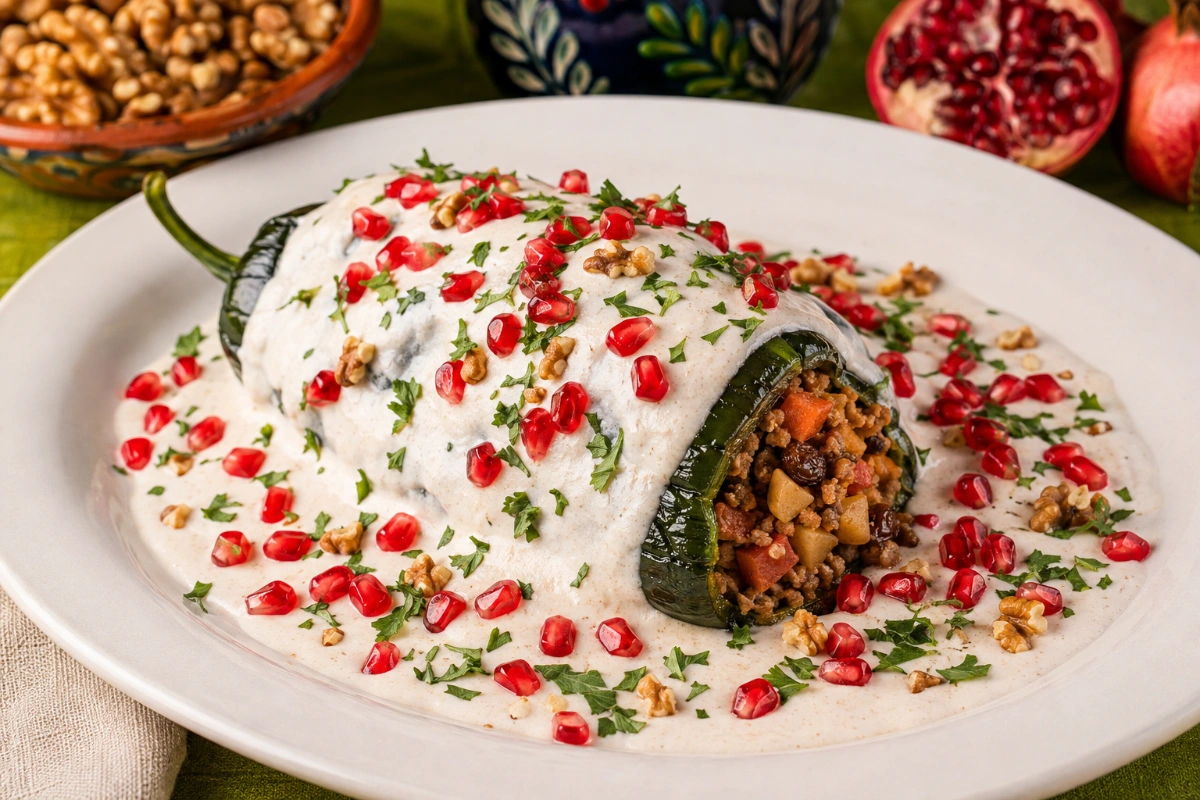
Place a slightly warm stuffed chili in the center of a large white plate.
Bathe it generously with the cold nogada, letting it fall naturally to the sides.
Don't completely bury the chili; I want us to still be able to distinguish its silhouette.
Distribute abundant pomegranate seeds.
Then add fresh parsley.
And there appears our flag:
💚 poblano and parsley
🤍 walnut sauce
❤️ pomegranate
You can finish with some small pieces of Castilla walnut.
Nothing else.
This dish is already beautiful enough.
The great secret to serving it
For me, temperature is fundamental:
warm picadillo + chili at room temperature or slightly warm + fresh nogada.
That contrast makes the dish much more pleasant than serving everything cold.
And prepare the nogada a few hours in advance. After resting, the nut, the cheese, and the sherry integrate wonderfully.