
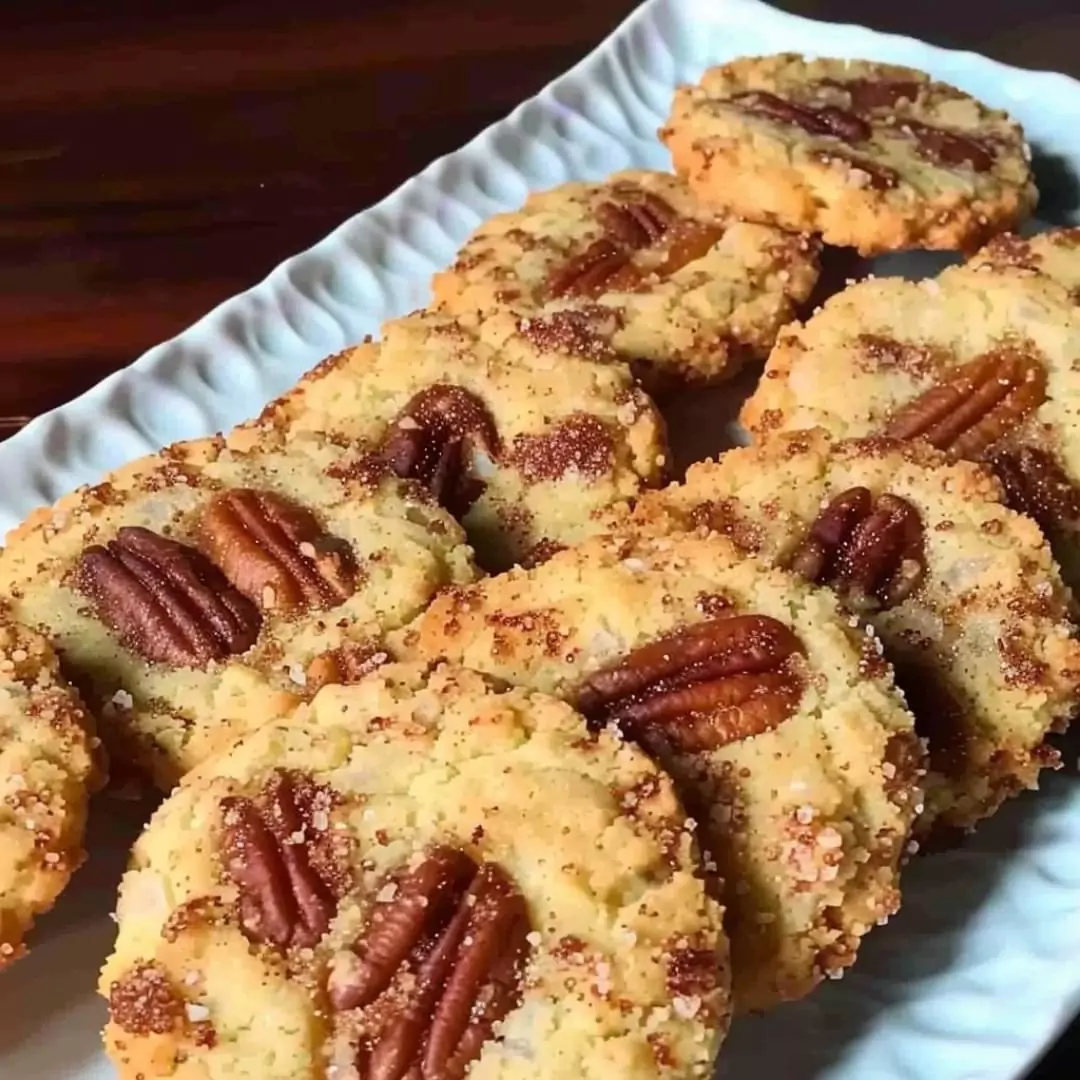
Orange and Walnut Cookie Recipe
Hello! We are going to prepare some wonderful orange and walnut cookies that will fill your entire home with an incredible citrus aroma. This preparation combines the vibrant freshness of the fruit with the crunchy, toasted texture of the nuts, achieving the perfect balance. It's an ideal option to accompany your afternoons or simply to treat yourself to a homemade delight without complications.
To understand the magic behind this combination, it is essential to delve into the science of flavors interacting in the oven. The combination of citrus elements with nuts earthy is not a coincidence, but a basic principle of classic pastry that remains relevant in our kitchens this 2026. When bake, the essential oils present in the fruit peel are slowly released, impregnating the dough with a fragrance that no artificial essence can match. This thermal process transforms a simple sweet into a memorable preparation that awakens the senses from the first moment the heat acts on the tray.
When you decide to make a dessert at home, you have absolute control over the quality and origin of each component. Nowadays, valuing manual processes connects us differently with our food. Kneading, mixing, and observing how textures change fosters a patience that we often lose in our daily lives. Homemade cookies homemade offer that immediate reward, a tangible result of your dedication in the kitchen that you can also share with those you love most.
The structure of this dough is based on the creaming technique, an indispensable method for achieving golden edges and tender centers. By beating the fat with the sugar, we are not only integrating two elements, but we are creating small air pockets. These microscopic bubbles are what will expand with the oven's heat, giving the dough its characteristic lightness. Without this step, the result would be a dense and heavy paste, moving away from the ideal texture we seek in a good snack afternoon treat.
On the other hand, the incorporation of nuts provides much more than a simple crunch. Walnuts, rich in natural oils, react to heat through the Maillard reaction, developing toasted notes that perfectly complement the acidity and sweetness. It's a play of contrasts where each bite offers a different surprise. Mastering this recipe will open the doors for you to experiment with other combinations, always understanding that the secret lies in respecting the correct times and temperatures for each ingredient.
Finally, do not underestimate the therapeutic power of preparing your own food. The act of grating the fruit peel, chopping the nuts by hand, and carefully measuring the ingredients carefully requires a mindfulness that is extremely relaxing. I invite you to read the complete preparation before starting, organize your workspace, and enjoy each stage of the process. Baking does not have to be intimidating if you understand the purpose of each step and allow yourself to learn from the reactions that occur in your own oven.
Preparation time
Knowing the exact times will help you organize your space and enjoy the process without rushing.
- Preparation: 20 minutes
- Cooking: 15 minutes
- Total: 35 minutes
- Servings: 18 units
- Difficulty: Easy
Organizing your time in baking is a step that makes the difference between a chaotic process and a truly pleasant one. The active preparation time we mentioned includes all those essential micro-tasks, such as measuring, sifting, grating, and mixing. We call this the «mise en place», a term that simply means having everything in its place before turning on the stove or oven. When you have every element weighed and ready in your workspace, you avoid last-minute setbacks that could compromise the texture of your dough.
The baking period is perhaps the most critical and yet the most passive moment. During these fifteen minutes, the oven does the heavy lifting, but your job is one of constant observation. Every oven is a different world; some heat more in the back, others on the sides. Therefore, the suggested time is always a guide and not an unbreakable rule. Learning to read visual cues, such as the browning of the edges or the opacity of the center, is a skill you will develop with constant practice and that will serve you for any future preparation.
Additionally, there is a hidden time that is rarely accounted for in quick recipes: resting. Although this particular dough can be baked immediately, letting it rest in the refrigerator for a few minutes while you preheat the oven helps the flour absorb moisture evenly. This brief interval also slightly solidifies the butter, which prevents the dough from expanding excessively upon contact with intense heat. It is these small intervals that define the final architecture of your preparation, ensuring a round and aesthetic shape.
The estimated yield of eighteen units is calculated for a standard size, using approximately one heaped tablespoon of dough per unit. If you decide to make them larger or smaller, the baking time will vary proportionally. It is essential that all pieces on the same tray are identical in size. If you bake pieces of different sizes simultaneously, the small ones will burn before the large ones finish cooking. Using a measuring spoon or an ice cream scoop will ensure visual and thermal uniformity.
Regarding difficulty, we categorize it as simple because it does not require complex kneading techniques or precise thermometer temperatures, as is the case with caramel or tempered chocolate. It is a fantastic introduction to shortcrust and beaten doughs. If you follow the step-by-step instructions, respecting the temperature of the dairy products and not over-beating the final mixture, success is practically guaranteed. Encourage yourself to observe how the dough evolves at each stage; this will give you the confidence to master the art of home baking step by step.
Ingredients
- Unsalted butter at room temperature: 150 g
- White sugar: 100 g
- Azúcar moreno: 50 g
- Large egg at room temperature: 1 unit
- Orange zest (outer part only): 2 units
- Freshly squeezed orange juice: 30 ml
- All-purpose wheat flour: 280 g
- Baking powder: 5 g
- Table salt: 2 g
- Chopped walnuts: 100 g
For the Glaze (Optional)
- Powdered sugar: 120 g
- Orange juice: 20 ml
In case you don't have unsalted butter, you can replace it with baking margarine or even solid coconut oil, although if you use salted margarine, remember to omit the 2 grams of table salt from the preparation to avoid over-salting the dough. If you can't find brown sugar, you can use exclusively white sugar, knowing that the final texture will be a bit drier and crispier instead of moist in the center. Likewise, if you wish to incorporate more fiber into your daily diet, you can substitute half of the wheat flour with whole wheat flour or flakes, achieving a more rustic profile similar to that of some oatmeal cookies traditional.
Room temperature butter is the structural pillar of our dough. It should not be melted or cold as a stone; the ideal point is known as pomade consistency. When pressed with a finger, it should yield gently while maintaining its shape. This consistency allows air to be trapped during beating along with the sugars. If the butter is too cold, the air will not integrate; if it is melted, the dough will be flat and greasy when it comes out of the oven. Choosing unsalted butter gives us total control over the sodium level of our recipe, ensuring that the final flavor does not compete with the sweetness.
The use of two types of sugar is not a whim; it responds to basic kitchen chemistry. White sugar provides structure, crispy edges, and facilitates external browning. In contrast, brown sugar contains natural molasses, which retains moisture within the dough and adds a slightly caramelized note. This combination guarantees a complex texture that is very pleasant to the palate. Make sure to measure both precisely, as an excess of sugar will cause the dough to spread across the entire baking sheet, losing its round and aesthetic shape.
Fresh fruit is undeniably the aromatic star of this preparation. It is vital to wash the skin very well before extracting the zest, as that is where the purest and most intense essential oils reside. You should extract only the superficial layer, avoiding at all costs the spongy white part, known as albedo, which would add a very unpleasant bitterness to the dough. Freshly squeezed juice provides the necessary acidity to balance the richness of the butter and activate the leavening agent, resulting in a much lighter and fluffier crumb.
Walnuts provide the fundamental textural contrast to make each bite interesting. It is highly recommended to buy them whole and chop them at home with a knife, as pre-chopped commercial versions tend to oxidize and go rancid faster due to their greater exposure to air. If you notice they have an old paint smell, discard them immediately, as they will ruin all your effort. An excellent preliminary step is to lightly toast them in a pan over low heat before incorporating them into the dough; this will enhance their natural oils and spectacularly multiply their flavor.
All-purpose wheat flour is the canvas we work on. Its medium protein content is perfect for developing just the right amount of gluten: enough so that the dough doesn't crumble, but not so much that it becomes hard as a rock. Baking powder, by reacting with the acid from the citrus juice and the heat of the oven, will generate carbon dioxide, gently lifting the dough. It is crucial to check the expiration date of your leavening agents, as they tend to lose effectiveness over months, resulting in flat and dense doughs that disappoint both visually and to the palate.
Utensils we will use
- Large glass or stainless steel bowl
- Fine or citrus grater
- Manual whisk or sturdy spatula
- Fine mesh sieve for sifting
- Chef's knife and cutting board
- Tablespoon or measuring spoon
- Flat baking sheet
- Parchment paper or waxed baking paper
The equipment we select for baking directly influences the quality of the finished product. Starting with the main container, a large bowl will give you enough space to make wide folding movements without spilling flour all over the countertop. Opting for glass or stainless steel is always the best decision, as plastic tends to retain fats and odors from previous preparations that could transfer to your current mixture, altering the delicate flavor profile we aim to build with citrus oils.
The grater is one of those tools that make an abysmal difference in the aromatic result. If you don't have a professional microplane grater, don't worry; you can use the side with the finest holes of the traditional box grater you have at home. The goal is to obtain minuscule fragments of the outer skin that dissolve when integrated with the fat. If the pieces are too large, they will be chewy and overwhelming to the palate. Keep your grater always clean and free of dry residue by using a small brush under hot running water right after use.
For the creaming technique, a manual whisk requires a bit of arm strength, but it is perfectly effective if the butter is at the correct temperature. If you notice that the mixture gets trapped between the wires, a firm silicone spatula or a simple sturdy wooden spoon will be your best allies. These tools allow you to effectively scrape the edges and bottom of the bowl, ensuring that no hidden lumps of pure fat remain, which would cause unwanted holes during baking.
Sifting the dry ingredients is a step that home cooks often skip in a hurry, but it is vital. Using a fine-mesh sieve over your main bowl not only removes hard lumps of flour that form due to ambient humidity, but also distributes the leavening agent and salt perfectly evenly. Poorly distributed leavening causes some parts to grow more than others, deforming the structure, while an isolated lump of salt will completely ruin the experience for whoever is unlucky enough to bite into it.
The choice of baking pan and its preparation are crucial for thermal success. A light-colored, heavy metal pan is ideal because it distributes heat gradually and uniformly. Very dark or thin pans tend to overheat quickly at the base, burning the dough before the center reaches proper doneness. If you only have thin pans, a very useful trick is to place an empty pan underneath the main one to create an insulating air chamber that protects the base of your preparations.
Finally, parchment paper acts as a life insurance for your creations. It prevents the dough from sticking to the metal and greatly facilitates subsequent cleaning. Unlike greasing the pan directly with butter or oil, the paper provides a dry, textured surface that slightly slows down the expansion of the dough, helping it maintain its domed shape. If you can't find parchment paper, you can use reusable silicone mats, although you should keep in mind that these tend to leave the base a little less crispy due to their thermal insulation capacity.
Preparation
1. Preparation of the base dough
- Washing and grating: Wash the oranges under the tap, gently rubbing the skin. Dry with absorbent paper. Grate only the outer part using short strokes and set aside in a small bowl. Then, cut the fruit and extract the necessary juice, passing it through a strainer to remove seeds and coarse pulp.
- Chopping the nuts: Place the walnuts on the board and, with a knife, cut them into small pieces of approximately half a centimeter. We want them to be felt when chewing, but not to break the structure of the dough.
- Creaming the fat: In the large bowl, place the room temperature butter along with the white sugar and brown sugar. Beat vigorously with a hand whisk or spatula until the mixture changes to a paler color and acquires a fluffy texture. If it sticks, slow down and scrape the sides of the bowl.
- Liquid integration: Add the whole egg to the creamy mixture, followed by the zest and citrus juice. Beat again until everything looks unified. It is normal if at this point the mixture appears curdled or lumpy due to the acid in the juice; don't worry, it will be fixed when adding the dry ingredients.
- Incorporation of dry ingredients: Place the sieve over the bowl and pour in the flour, baking powder, and salt. Sift by tapping the sieve lightly. From here, use only the spatula and mix with very gentle, enveloping movements, stopping just when you no longer see traces of white flour.
- Final addition: Incorporate the chopped walnuts and mix just enough to distribute them evenly throughout the dough. Cover the bowl and let it rest for ten minutes.
2. Baking process
- Preheating: Turn on your oven and set it to medium temperature (approximately 180°C). It is crucial to let it reach the proper temperature before putting in the tray.
- Portioning: Cover your flat baking sheet with parchment paper. With the help of a spoon, take small portions of dough and form balls the size of a large walnut. Place them on the tray, leaving at least three fingers' width of space between each, as they will expand with the heat.
- Controlled Cooking: Place the tray on the central rack of the oven. Bake for approximately 12 to 15 minutes. The sign of perfect doneness is when the edges begin to brown slightly, even if the center still feels a little soft and puffy to a very gentle touch.
- Cooling on the tray: Carefully remove the tray from the oven. Do not try to move the pieces immediately, as they will be extremely fragile and will break. Let them rest on the hot metal for five minutes so that the residual heat gently finishes the internal cooking.
3. To finish and serve
Once the initial five minutes of resting on the tray have passed, use a flat spatula to transfer each piece with extreme delicacy to a cooling rack or, failing that, onto a clean, cold oven rack supported on the countertop. This step is essential for air to circulate underneath and prevent the base from becoming damp with its own steam. If you decided to prepare the optional glaze, wait until they are completely cool at room temperature before drizzling the sugar threads over them; otherwise, the glaze will melt completely. Serve them at room temperature presented on a flat platter or a nice plate. Accompany them with a mild infusion, freshly brewed coffee, or a glass of cold milk to contrast flavors.
Nutritional Information
- Calories: 180 kcal
- Proteins: 3 g
- Fats: 10 g
- Carbohydrates: 20 g
- Fiber: 1.5 g
Note: The nutritional values presented are approximate estimates per individual serving and may vary depending on the final size of the piece and the specific brand of ingredients used.
Understanding the values provided by our homemade preparations is an extremely useful practice in contemporary kitchens of 2026, where we seek to be increasingly conscious of our diet without sacrificing pleasure. Measuring components helps us maintain a balanced relationship with food. At a domestic level, the accuracy of this data will largely depend on the measuring tools we use. A digital kitchen scale is an indispensable ally if we want to precisely calculate the energy contribution of each tray that comes out of our oven, as measurements by cups or spoons can have drastic variations in the actual grammage of the product.
The calculation of these figures is based on the sum of the macronutrients of each raw ingredient, subsequently divided by the total number of units obtained after baking. During cooking, physical processes occur, such as the evaporation of water contained in butter and citrus juice. Although the total volume of the dough decreases due to moisture loss, solids such as fats, proteins, and carbohydrates remain concentrated in the final crumb structure. This explains why baked goods are densely caloric compared to their raw weight, a fascinating principle of culinary chemistry to observe at home.
Fats, derived from dairy and nuts, play a crucial role not only in texture and palatability but also in the satiety that food provides. In baking, fat coats the gluten chains in flour, shortening them, which results in that tender and crumbly sensation when bitten. Meanwhile, carbohydrates provided by sugars and starches are responsible for external caramelization and internal support structure. Drastically reducing any of these elements in an attempt to modify the final values will significantly alter the structural function and visual outcome of the baked product.
The small fiber contribution comes almost entirely from nuts and the tiny fragments of citrus zest that we manage to incorporate. For those who wish to modify the macronutrient proportion of their homemade recipes, knowing how each ingredient reacts is fundamental. Changing refined flours for whole-grain options will increase fiber and the dough's liquid requirement, while substituting sugars with artificial sweeteners will alter browning times and moisture retention. Learning to balance these variables will allow you to adapt any traditional preparation to your own daily culinary needs and preferences.
Finally, when evaluating the information of a homemade preparation, it is important to put it in the context of your overall diet and portion sizes. The act of eating food prepared by your own hands has a value that goes far beyond simple numbers. It encourages natural moderation, as the time and effort invested in cooking promote a more attentive and unhurried tasting. Enjoying what we prepare, understanding its composition, and respecting the artisanal process is the true essence of homemade cooking that will endure through time and generations.
7 practical tips for perfect results
Achieving consistency in homemade baking requires knowing certain technical details that are rarely mentioned. The kitchen is a laboratory, and understanding how elements behave with heat and cold will turn you into an excellent baker. Here are seven fundamentals that will guarantee the success of your dough from the first attempt.
The first fundamental tip is to respect the temperature of all dairy products and eggs. When recipes call for room temperature ingredients, it is so they can emulsify correctly. If you add a cold egg from the fridge to softened butter, the fat will solidify instantly, creating a lumpy mixture that will separate the dough and leave an irregular texture. To avoid this, take your ingredients out of the refrigerator at least an hour before starting. If you forgot, submerge the whole egg with its shell in a glass of warm water for ten minutes; this will quickly solve the problem without cooking it.
Secondly, the way you measure flour determines whether your preparation will be soft or heavy. Never insert the measuring cup directly into the flour package, pressing down, as you will be compacting the powder and could add up to thirty percent more than the required weight. The correct way, if you don't use a scale, is to fluff the flour with a fork, fill the cup using a spoon, and then level the surface with the back of a straight knife. This technique ensures the right proportion of dry ingredients so that the structure is light and doesn't end up resembling a stone.
The third tip relates to handling the dough once the flour has been added. Wheat contains proteins that form gluten when they come into contact with liquids and are agitated. In bread, we seek to develop this gluten to the maximum, but in shortcrust pastries, we seek exactly the opposite. Mix only until the flour disappears from your sight. Over-beating the preparation will activate the elastic gluten network, resulting in a gummy and tough texture, completely losing that crumbly quality that makes every bite melt in the palate.
Fourth: cold is your best friend for controlling the shape. If your kitchen is very warm or you feel the dough is too soft, do not add more flour, as you will alter the recipe. Simply place the covered container in the refrigerator for half an hour. The cold solidifies the fats again and relaxes the internal structure. When entering a hot oven, a cold dough will take longer to melt and spread, ensuring that the pieces maintain their height, thickness, and a much tenderer center. This technique also wonderfully concentrates citrus flavors during resting.
The fifth principle is about rotating the trays during baking. Most home ovens have hot spots, areas where heat is more intensely concentrated, usually in the bottom right or left. To prevent some pieces from burning and others from being raw, quickly open the oven halfway through the cooking time and rotate the tray 180 degrees. This action compensates for thermal differences and ensures even browning on all units, a visual detail that elevates the presentation from homemade to professional.
Sixth: trust the residual heat process. It is a very common mistake to wait for the dough to look completely firm and golden in the center before taking it out of the oven. If you do, they will become dry and brittle like an old biscuit when they cool. You should remove the tray when the edges barely begin to turn toasted and the center looks slightly raw. The heat trapped in the metal of the tray will continue to gently cook the inside for the next five minutes outside the oven, bringing them to the perfect point of internal moisture.
Seventh and final tip: storage defines prolonged freshness. Once completely cool, store them in an airtight glass or tin container, not plastic, as plastic can transmit odors. If you want to maintain a crispy texture for more days, place a sheet of absorbent paper at the bottom of the container. If, on the other hand, you prefer them to soften a little over the days, a classic trick is to place a small piece of fresh apple inside the box; the dough will absorb the fruit's natural moisture without altering its main flavor.
When is it ideal to enjoy it?
The versatility of this preparation makes it a fantastic option for multiple occasions, adapting to moments of restorative solitude as well as large family gatherings. The aromatic profile of citrus has the unique quality of evoking freshness during hot summer afternoons, while the earthy and toasted background of nuts provides that feeling of warmth and comfort we seek in the colder months of the year. It is a timeless bite that transcends seasons, quickly becoming a classic in your personal recipe book that you can prepare whenever you need a sweet treat.
For those who enjoy the ritual of after-dinner conversation, these pieces are the undisputed stellar accompaniment for hot infusions. The slight acidity and balanced sweetness perfectly cut through the bitterness of an intense black coffee or a strong Earl Grey black tea, whose own bergamot oils harmonize spectacularly with the fresh zest we used in the dough. Serving a small tray in the center of the table at the end of a meal invites a pause, prolonged conversation, and enjoyment without the heaviness of traditional plated desserts that require cutlery and greater formality.
In a family context, they represent an excellent option for mid-afternoon snacks. Making them at home ensures total control over the quality of what we offer our loved ones, moving away from the preservatives and additives of industrial pastries. Packing a couple of these pieces in a small airtight container to take to work or university in 2026 connects us with home amidst the daily hustle and bustle. It is that small moment of pause during the workday where the aroma of homemade food acts as a comforting balm in front of the computer screen.
Furthermore, they are an exceptional gastronomic gift for informal celebrations or as a gesture of gratitude. Food made with one's own hands carries a message of care and time invested that no purchased product can match. Placed in a kraft cardboard box lined with parchment paper and tied with a rustic string, they transform into an elegant and sincere present. They withstand transport very well because they do not have fragile cream or chocolate toppings that can melt with temperature changes, maintaining their shape and texture intact for several days at room temperature.
Finally, preparing them during rainy weekends or relaxed Sunday mornings becomes a recreational activity in itself. Inviting others to participate in the assembly process, from zesting the fruit to forming the small portions on the tray, generates collaborative dynamics in the kitchen that strengthen bonds. The simple act of waiting in front of the oven's glass door, watching the dough expand and change color, is a simple and honest pleasure that brings us back to the essence of cooking and sharing.
Comparison table
In the vast world of home baking, small changes in ingredients can result in radically different flavor profiles and textures. Understanding how our recipe compares to other options will help you decide what to prepare based on your specific cravings, the occasion, or the ingredients you have on hand in the pantry. Observing structural and flavor differences makes us more intuitive cooks, capable of reading a recipe and anticipating its result on the palate. The following comparison clearly details how our citrusy and crunchy preparation differs from other popular classics in homes around the world.
| Recipe | Key ingredients | Difference/advantage |
|---|---|---|
| Orange and Walnut Cookies | Fresh zest, citrus juice, chopped walnuts | Perfect balance of fresh acidity and a toasted earthy crunch. |
| Classic chocolate chip cookies | Dark chocolate, brown sugar, vanilla | Denser and more decadent flavor, with chocolate melting in the center. |
| Galletas de avena y pasas | Rolled oats, raisins, ground cinnamon | Much more rustic and chewy texture, with a warm spiced profile. |
| New York-style cookies | Strong flour, coarsely chopped chocolate, nutmeg | Massive and very thick pieces, soft inside. You can see something similar in some New York-style cookies with a molten chocolate center. |
| Butter cookies (Shortbread) | Plenty of butter, powdered sugar, flour | They don't use egg or leavening agents, resulting in an extremely sandy texture that melts in the mouth. |
| Almond Polvorones | Ground almond, lard or vegetable shortening, confectioners' sugar | They crumble to the touch, with an intense flavor of ground nuts and no acidity. |
| Ginger and molasses cookies | Ground ginger, cloves, dark molasses | Spicy and very spiced flavor, ideal for very cold climates or winter festivities. |
As you can observe in the table, the use of acid from natural juice distinguishes our main preparation from the rest. While most sweet options rely almost exclusively on extracts like vanilla or dry spices to flavor the dough, the use of fresh elements provides a vibrancy that lightens the perception of fat on the palate. This is why they feel less heavy on the stomach after eating a couple of them, compared to variants loaded with massive chocolate chunks or heavy animal fats.
Texture also plays a fundamental differentiating role. Unlike sandy doughs like Scottish shortbread that crumble instantly, or massive options that try to imitate a fluffy sponge cake, our mixture maintains a firm structure that supports storage very well. The use of egg provides that necessary protein network to encapsulate hard pieces without the item collapsing when handled. It is a culinary design intended for practicality and daily enjoyment, far from the technical complications of high pastry but maintaining an extremely high quality standard in terms of flavor.
I encourage you to use this table as a starting point for your own experiments. If one day you wish to merge concepts, you could try adding a pinch of cinnamon to our base dough, or changing traditional walnuts for pistachios or toasted almonds. Understanding the basic rules of each style gives you the freedom to break them with good judgment. Home cooking should be a space for constant exploration, where the only limit is your imagination and your willingness to learn from the results you extract from the heat of your own oven.
Frequently asked questions (FAQ)
When we delve into the world of home baking, it is completely normal for doubts to arise about the processes, possible alterations of ingredients, or how to rescue the dough if something doesn't turn out as expected. Mastering techniques requires practice, but above all, it requires understanding the «why» behind each instruction. Below, I detail the technical answers to the most common concerns shared by those who prepare this recipe for the first time, covering everything from substitutions to correct storage methods to prolong its shelf life in optimal conditions.
Share your experience
The kitchen is a living space where recipes truly come to life when put into practice and adapted to the hands of the person preparing them. Following instructions is just the first step; true learning comes from observing how ingredients behave in your own environment, with your oven and your everyday tools. I'm excited to think about the aroma that will fill your home when you decide to light the fire and put into practice everything we've reviewed about this citrusy and crunchy creation that so comforts the soul.
I invite you to make this preparation your own. Perhaps you'll discover that you prefer a more intense golden brown by leaving them in for a couple of extra minutes, or maybe you'll decide that a mix of hazelnuts and almonds is your new favorite combination. The kitchen is for experimenting and sharing. Leave your comment and share your own little tricks! Tell me if you tried adding the final glaze, if you achieved that tender texture in the center, or how you solved any unforeseen issues during mixing. Reading about your results enriches us all and encourages those who have not yet dared to take the first step into the wonderful world of home baking.
Culinary glossary
In the language of home cooking, we often use terms that can seem confusing the first time we encounter them. Knowing the right vocabulary is not a matter of appearing knowledgeable, but of precisely understanding the physical action we must exert on our food to ensure the success of the preparation. Here I explain clearly and directly five fundamental concepts that we have used throughout this text, so that you can master them and apply them with complete confidence in all your future culinary adventures.
Cremar: It refers to the mechanical action of vigorously beating a solid fat, usually room-temperature butter, together with sugar. The main goal of this step is not simply to mix the ingredients until they disappear, but to trap and incorporate as many air microbubbles as possible within the fat. When creamed correctly, you will observe that the mixture slightly increases in volume, changes to a very pale yellowish, almost white, tone, and acquires a smooth, fluffy texture similar to that of a facial cream. This trapped air is primarily responsible for the final crumb being tender instead of a compact mass.
Mise en place: It is a term of French origin that literally translates to «put in place.» In daily practice, it means preparing, measuring, cutting, and organizing absolutely all the components and instruments you will need before turning on the stove or starting to mix. For example, having the eggs cracked, the nuts chopped, and the flour weighed in their respective bowls. Applying this concept prevents accidents, oversights, or a dough from being ruined by having to abandon the mixing to desperately search for salt at the back of the pantry.
Pomade consistency: It is the ideal and exact consistency that butter should have before being worked into beaten doughs. It should not be cold from the refrigerator or melted in the microwave. It is achieved by leaving it out of the cold for a reasonable amount of time until it reaches room temperature. When pressing the block with a clean finger, it should sink easily and smoothly, but the bar should maintain its shape without spreading. It is the perfect state for the fat to emulsify correctly with liquids and retain air during mixing.
Sift: It consists of passing a dry powdered ingredient, such as flour, cocoa, salt, or leavening agents, through a fine-mesh sieve or sifter. This simple movement fulfills two vital functions: first, it breaks up all hard lumps formed by ambient humidity or tight packaging; and second, it aerates the powder by separating its particles, which greatly facilitates its uniform and rapid integration into liquids without having to overmix the dough. It is a safeguard against undesirable textures and concentrated flavors in a single spot.
Folding movements: It is a very delicate mixing technique designed not to lose the air that took so much effort to incorporate in previous steps (such as creaming) or not to develop the elasticity of the flour's gluten. It is performed using a rubber or wooden spatula, cutting the mixture through the center until it touches the bottom of the bowl, scraping towards the edges, and folding the dough over itself. The bowl is rotated slightly, and the process is repeated slowly and constantly, stopping at the exact moment when the ingredients are unified and no traces of dry powder are observed.

I tried it today. It was a total success with my family. A thousand thanks for the recipe.
It looks amazing. I made it for dinner and everyone was happy. We all loved it.